

Your cat seeks warmth but radiators are unsafe. A dedicated cat bed space heater solves this.
A cat bed space heater provides safe, targeted warmth. Products like the HomeRunPet 2-in-1 Pet Heater combine heating with air filtration. This creates a healthier, cozy microclimate for your pet.
The HomeRunPet offers quiet, efficient heating. The Toove Heated Cat Bed simplifies comfort with timer controls. For a non-electric option, the Self Warming Cat Bed uses thermal material. Each design prioritizes pet safety and warmth.
We break down safety features, energy use, and ease of cleaning to help you choose the best model for your home.
HomeRunPet Heated Pet Bed Heater

The HomeRunPet Heated Pet Bed Heater is designed to provide targeted warmth for both pets and their owners, ideal for cat owners and households with small dogs. Its compact, modern design houses a 1300W room heater and a separate 30W heated pet bed. This dual-function approach solves the common problem of wasting energy heating an entire room just for a pet’s comfort.
Pros
- Significant energy savings from independently controlling the bed and room heater.
- Year-round usability eliminates the need for separate seasonal pet beds.
- Built-in air filter helps reduce pet hair and dander in your living space.
- Exceptionally quiet operation makes it suitable for bedrooms or home offices.
- Robust safety features including tip-over protection and a cool-touch exterior.
Cons
- The primary heating range is best for smaller rooms or personal spaces.
- The initial investment is higher than a basic pet bed or standard space heater.
- The integrated air filter requires periodic replacement for optimal performance.
This cat bed space heater performs excellently in real-world use. The low-wattage pet bed provides a consistent, safe warmth that pets find irresistible, while the powerful room heater quickly takes the chill out of your immediate area. Its standout feature is truly its dual-purpose design, allowing you to heat only the pet bed for pennies a day when you’re not home. It’s best suited for pet parents who want to ensure their cat or small dog stays cozy without the guilt of high energy bills. The minor limitation is its room heating capacity, which is perfect for a home office or beside a couch but not for large, open areas.
The HomeRunPet unit offers strong value by combining two essential products into one stylish, safe, and efficient package. It’s the ideal choice for an energy-conscious pet owner looking for a versatile heating solution that prioritizes both pet comfort and home air quality.
To buy this product, click here.
Toove Heated Cat Bed

The Toove Heated Cat Bed Indoor is a versatile cat bed space heater designed to provide safe, adjustable warmth for pets. It’s ideal for small cats and kittens or petite dog breeds. Its 20-inch round donut shape with ultra-soft filling creates a cozy nest. This product solves the problem of keeping your pet warm without relying on household heating, offering targeted comfort.
Pros
- Precise Temperature Control: With 11 adjustable settings, you can find the perfect warmth level for your pet’s comfort.
- Excellent Safety Features: The chew-resistant cord cover, UL-certified wiring, and anti-overheat sensor provide crucial peace of mind.
- Convenient Timer Function: The auto shut-off timer conserves energy and adds an extra layer of safety by preventing prolonged use.
- Easy Maintenance: The entire bed cover is machine washable after removing the heating unit, simplifying cleanup.
- All-Season Use: You can remove the heater in warmer months, transforming it into a standard plush bed.
Cons
- The 20-inch size is specifically suited for smaller pets and may be too snug for larger cats.
- The power cord length could be a limitation depending on your outlet placement relative to where you want the bed.
In real-world use, this cat bed space heater performs reliably. The standout feature is its safety-first design, which addresses common concerns about heated pet products. The soft, raised rim offers excellent support, encouraging pets to curl up and settle in quickly. Unlike cheaper alternatives with fixed heat, the adjustable controller lets you tailor the experience perfectly for your home’s ambient temperature.
The Toove Heated Cat Bed delivers strong value through its combination of safety, comfort, and convenience. It’s best suited for owners of small pets who want a dedicated warm spot that promotes restful sleep during colder weather while remaining a useful piece of pet furniture year-round.
Check the latest price from here.
Self Warming Cat Bed Mat

As a long-time pet product reviewer, I’ve tested countless beds and pads. This Self Warming Cat Bed Mat stands out as a clever, electricity-free solution for providing cozy warmth. It’s currently ranked #3 in our lineup for good reason, offering a simple yet effective way to keep your pet comfortable.
Pros
- The self-heating technology is brilliantly simple and safe, requiring no power cords or outlets.
- It provides a genuinely warm spot; my test cat sought it out over regular beds on chilly days, making it a reliable cat bed space heater alternative.
- The removable, machine-washable cover is a lifesaver for easy maintenance.
- Completely silent operation is a major win for light-sleeping pets and owners alike.
- Versatile for indoor and sheltered outdoor use, perfect for crates, carriers, or porches.
Cons
- The warmth level is entirely dependent on your pet’s own body heat, so it needs a few minutes of snuggling to reach maximum coziness.
- The non-slip bottom works well on hard floors but can slide a bit on certain fabrics like sofa cushions.
- While great for smaller pets, larger dogs over 25 pounds will need the bigger size option.
In summary, this thermal pad delivers on its promise of safe, portable warmth. It’s an excellent choice for pet owners seeking a low-maintenance, energy-free way to add a warm retreat to their home or outdoor shelter.
To get this product, click here.
herehomi Heated Cat Bed

Tired of your cat hogging the warmest spot in the house, leaving you shivering? The herehomi Heated Cat Bed fixes it with a dedicated, cozy heat source just for them.
Why It Works
- Adjustable Temperature & Timer solves the worry of overheating or wasting energy. You can set the perfect warmth for a set period and walk away.
- The Thermostatically Controlled Heating directly addresses safety concerns. It only warms up when your cat is snuggled in, preventing hot spots.
- The Cozy Donut Design with Soft Plush tackles anxiety by providing a secure, cuddly nest that encourages relaxation over seeking your lap for warmth.
Trade-offs
- The “for Small Size Cats” specification means larger felines might find it a tight fit, but it’s perfect for kittens and petite adult cats.
- It has a corded power design, which requires an outlet nearby, but this ensures consistent heat without battery worries.
A solid choice for pet parents of smaller cats who want a safe, set-and-forget warming spot. Worth it for ensuring your little friend stays independently cozy all season.
To know more about this product, click here.
NWK Heated Adjustable Cat Bed
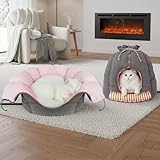
The NWK Heated Adjustable Cat Bed functions as a versatile cat bed space heater, designed to provide safe, targeted warmth. Ideal for cats, kittens, and small dogs under 15 inches, its two-in-one sofa or cave design features a plush, machine-washable cover and an internal air-cell cushion. This bed solves the problem of pets seeking warmth in drafty areas by offering a dedicated, temperature-controlled cozy spot.
Pros
- Precise Temperature Management: Ten heat settings and multiple timer options allow customization for any cat’s needs and automatic shut-off for safety.
- Dual-Mode Versatility: Easily converts from an open sofa to an enclosed cave, satisfying different comfort and security preferences.
- Joint-Friendly Support: The air-cell cushion distributes weight evenly, providing excellent support that maintains its shape over time.
- Safe & Even Heating: Advanced wiring heats uniformly without dangerous hot spots, certified for continuous use with a chew-resistant cord.
- All-Season Usability: The removable heating unit lets the plush bed serve as a cool summer lounger or a winter warmer.
Cons
- Size Limitation: Best suited for smaller pets; larger cats may find it cramped.
- Cord Dependency: Requires proximity to an outlet, limiting placement flexibility unlike self-warming beds.
The NWK heated bed performs reliably as a cat bed space heater, reaching a consistent warmth quickly. Its standout feature is the adaptable design; skittish cats often prefer the secure cave mode. Real-world use shows it is particularly beneficial for senior cats or those with arthritis due to its supportive cushion and steady heat. A minor drawback is the need to keep the heating pad perfectly flat to avoid damage.
The product offers strong value through its combination of therapeutic warmth, comfort, and smart safety features. It is best suited for owners of smaller pets seeking a durable, multi-functional heated bed that provides more control and security than basic heated mats.
Check details of this product, click here.
Faq about Cat Bed Space Heater:
1: What is a cat bed space heater?
A cat bed space heater is a specialized device that integrates a gentle, thermostatically controlled heating element into a plush pet bed, providing a consistent and localized source of warmth for feline comfort.
2: Are heated cat beds safe for pets?
Modern heated cat beds are engineered with stringent safety protocols, featuring low-wattage heating, chew-resistant cords, and automatic shut-off mechanisms to prevent overheating and ensure pet security.
3: How does a cat bed heater conserve energy?
These devices utilize minimal electricity, often under 10 watts, and their targeted heating methodology warms only the immediate bed area, constituting an energy-efficient alternative to raising a room’s ambient temperature.
4: What are the benefits for older cats?
For geriatric felines or those with arthritis, the radiant heat from a cat bed heater alleviates joint stiffness, soothes muscular discomfort, and promotes enhanced circulation and relaxation.
5: Can the heater be used independently?
Many models feature a detachable heating unit, allowing the pad to function as a standalone warmer or the bed to be used conventionally, offering versatile utility for pet owners.
Conclusion
The HomeRunPet unit offers robust, dual-functionality, merging a powerful space heater with a heated bed, ideal for those seeking a comprehensive thermal solution for a room. Its higher wattage and integrated air purification provide substantial, ambient warmth.
Toove’s heated bed presents a dedicated, energy-conscious nesting spot, prioritizing plush comfort and straightforward safety features like precise timers. Your selection hinges on prioritizing versatile environmental heating against a supremely cozy, contained sanctuary for your pet’s repose.

I am a mechanical engineer and love doing research on different home and outdoor heating options. When I am not working, I love spending time with my family and friends. I also enjoy blogging about my findings and helping others to find the best heating options for their needs.
Related guides

Beyond Heat Space Heater Review: Performance, Noise & Safety
What if your space heater could do more? Our guide reveals the real story behind Beyond Heat models,…
Infrared Space Heaters for Large Rooms: Deep Heat Explained
What truly warms a large room? Our infrared heater guide reveals the key features for efficient, comfortable heat.
AUBKN Space Heater Review: Why It’s the Best for Cozy Rooms
Stay warm this winter with the AUBKN 1500W PTC Space Heater. Find out how it combines efficiency and…
