

Choosing between propane and electric space heaters depends on your space size, ventilation, budget, and how you plan to use the heater. This guide compares their heat output, running cost, safety, noise, installation, and maintenance to help you pick the right one.
Most people make the mistake of picking a heater based only on upfront cost or heat output without considering fuel availability, ventilation needs, or safety features. That can cost you comfort, money, or safety later on.
Propane Space Heaters vs Electric Space Heaters at a Glance
| Factor | Propane Space Heaters | Electric Space Heaters |
|---|---|---|
| Heat Output and Room Size | Produces 4,000 to 9,000 BTU/hr, good for up to 225 sq ft | Produces up to 1,500 W (about 5,100 BTU/hr), good for up to 200 sq ft |
| Running Cost and Efficiency | Costs about $0.80 per hour; less efficient but high heat output | Costs about $0.20 per hour; more efficient for small spaces |
| Safety and Ventilation Requirements | Requires ventilation and CO alarm; includes low oxygen sensor | No combustion gases; tip-over and overheat protection built-in |
| Noise and Air Quality | Produces combustion noise and moisture indoors | Quiet operation with no emissions or moisture |
| Installation and Portability | Portable with wheels and self-contained fuel cylinder | Plug-and-play; lightweight but must stay near outlet |
| Maintenance and Lifespan | Requires periodic fuel cylinder replacement and safety checks | Minimal maintenance; dusting and safe storage only |
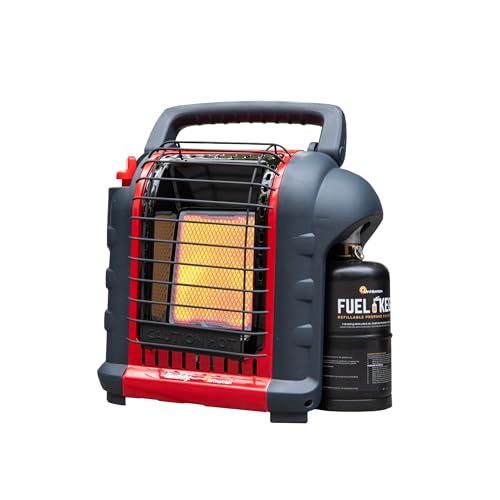
Mr. Heater Portable Buddy Radiant Propane Heater

DREO Portable Electric Space Heater with Thermostat
Heat Output of Propane and Electric Space Heaters
Propane heaters produce significantly more heat than typical electric space heaters, making them better for larger or poorly insulated spaces. A standard electric space heater runs at about 1,500 watts, which translates to roughly 5,100 BTU per hour. In contrast, a common portable propane heater like the Mr. Heater Portable Buddy puts out around 9,000 BTU per hour—almost twice as much heat energy.
Electric heaters convert nearly all their electrical input into heat, so their efficiency approaches 100%. Propane heaters burn fuel to create heat and usually operate at about 80 to 90% combustion efficiency, meaning some heat escapes with exhaust gases. Still, propane’s higher BTU output often compensates, delivering more warmth where it counts.
The type of heat these heaters produce also matters. Propane heaters mostly emit radiant heat, which warms objects and people directly without heating the air first. That makes them feel warmer quickly and effective in open or drafty spaces like garages and workshops. Electric heaters typically use forced air heating, blowing warm air around the room. This spreads heat evenly but can feel less immediate.
For bedrooms or small offices up to 150 square feet, a 1,500-watt electric heater generally suffices. Garages or workshops sized 300 to 600 square feet often need a propane heater with 9,000 to 18,000 BTU output for reliable warmth. Larger or unventilated areas especially benefit from propane’s heat density and portability.
Keep in mind, propane combustion produces moisture as a byproduct. Running a propane heater indoors without adequate ventilation can raise humidity levels and risk condensation. Electric heaters do not add moisture since they generate heat electrically without combustion.
Running Costs of Propane and Electric Space Heaters
Operating costs differ substantially between propane and electric heaters, mostly due to fuel price and efficiency. Propane prices vary but average around $2.50 per gallon, with each gallon producing roughly 91,500 BTU. That works out to about 2.7 cents per 1,000 BTU. Electricity costs about 17 cents per kWh, and at 1,500 watts, an electric heater uses 1.5 kWh per hour. That equates to about 11.3 cents per 1,000 BTU.
Take a 1,500-watt electric heater running 8 hours nightly for 30 days. It consumes 1.5 kW × 8 hours × 30 days = 360 kWh. At 17 cents per kWh, that’s about $61 a month. A 9,000 BTU propane heater running at low setting might burn about 0.3 gallons in 8 hours, totaling 9 gallons monthly. At $2.50 per gallon, propane costs around $22.50, less than half the electric in this example.
Propane heaters have slightly lower combustion efficiency, so some heat is lost, but their fuel’s higher BTU content often offsets that. Electric heaters convert nearly all electricity into heat, but electricity tends to cost more per usable BTU. Seasonal costs also depend on usage patterns and local energy prices.
Price volatility affects propane more strongly. Propane costs fluctuate with supply, demand, and season, while electricity rates tend to be more stable. That can make propane cheaper some years and more expensive in others. Budget planning should factor in this variability.
Safety Considerations for Propane and Electric Heaters Indoors
Electric heaters are generally safer for indoor use because they don’t produce combustion gases or require ventilation, unlike propane heaters.
Indoor propane heaters must have proper ventilation to avoid buildup of carbon monoxide, a deadly gas that’s colorless and odorless. That means either a vent to the outside or a room large enough to dilute the emissions. Many indoor-rated propane heaters include a low oxygen shutoff sensor that turns the unit off if oxygen levels drop too low, preventing suffocation risks.
A propane air and heat unit with no electric power needed, such as some portable models, still requires careful placement and ventilation. Without electricity, the unit relies on a thermocouple and pilot light for ignition and safety, which must be maintained to avoid gas leaks or flameouts.
Electric heaters come with built-in safety features like tip-over switches that shut the heater off if it falls, and overheat protection to prevent fires. They produce no combustion byproducts, so they don’t pose carbon monoxide risks or require fresh air intake.
Propane heaters can cause fire hazards if placed too close to combustibles or if fuel leaks occur. Health risks include exposure to nitrogen dioxide and carbon monoxide, especially if ventilation is inadequate. Electric heaters avoid these issues but still need clearance and should never run unattended during sleep unless explicitly designed for that use.
Choosing the safest option indoors usually means electric heaters for bedrooms, offices, and small enclosed spaces. Properly vented propane heaters can be safe but demand vigilance about air quality and ventilation. Propane heaters without electric components are useful where power is unavailable, but they require strict safety measures.
Noise and Air Quality of Propane and Electric Heaters
Electric heaters are quieter than propane heaters because they typically use ceramic elements or oil-filled radiators without fans, whereas propane forced air heaters rely on a combustion fan that produces noticeable noise.
Propane gas itself is odorless. An additive called ethyl mercaptan gives propane its distinctive smell so leaks can be detected early. However, propane heaters must always be used with proper ventilation indoors and a working carbon monoxide alarm, as incomplete combustion can produce dangerous gases without a noticeable odor.
Electric heaters do not produce odors but can dry out indoor air, which may irritate sensitive users or worsen respiratory conditions. Propane combustion releases water vapor, slightly increasing indoor humidity, which some find more comfortable.
For people with asthma or allergies, electric heaters offer cleaner air because they do not emit combustion gases or particles. Propane heaters, even with ventilation, may degrade air quality and aggravate sensitive individuals.
The noise level of a propane heater can be described as a low hum or fan whir, often louder than the whisper-quiet operation of electric heaters like the DREO Space Heater. Electric heaters make little to no noise except a faint clicking when switching on or off.
Electric heaters have no odor, so they’re better for indoor air freshness. In contrast, the propane smell indoors, while a safety cue, can be bothersome and a sign to check ventilation or leaks.
Installation and Portability of Propane and Electric Space Heaters
Electric heaters plug directly into any standard 120 V outlet, so there’s no installation beyond choosing a spot near a wall. You just unpack, plug in, and switch on. That makes electric heaters the simplest choice if you want quick setup or plan to move them often.
Portable propane heaters, like the Mr. Heater 9,000 BTU Portable Buddy, come with their own fuel cylinder and often wheels or handles for mobility. They don’t need electricity, so they work during power outages and in areas without outlets. The trade-off is you must keep spare propane tanks on hand and swap or refill cylinders when they run empty.
Permanent propane heaters are a different story. They require professional installation, including connecting to a larger propane supply and setting up proper venting to exhaust combustion gases safely outdoors. That installation involves plumbing and gas work, so it’s not a weekend DIY project. Once installed, they stay put and provide steady heat without worrying about cylinder changes.
Weight and size also affect portability. Electric space heaters typically weigh 10 to 15 pounds and fit easily into closets or under desks. Portable propane units are heavier—often 20 to 30 pounds—because of the fuel tank, but their wheels help. Keep in mind that propane tanks must be stored safely outside or in ventilated areas, so portability includes where you can legally and safely keep fuel.
If you want a propane air and heat unit that needs no electric power, look for models labeled as ‘no-electric’ or ‘unvented propane heaters.’ These are fully self-contained systems designed for off-grid use but still need ventilation and clearance like any propane heater.
When weighing electric heater vs propane heater, consider where and how often you’ll move the unit, if you have easy access to electricity, and your tolerance for refilling fuel cylinders. Electric heaters win on quick, no-fuss setup and indoor portability. Propane heaters excel in mobility where power is unavailable and for heating larger or open spaces.
Maintenance Needs for Propane and Electric Space Heaters
Electric heater maintenance is straightforward: keep the unit clean by dusting regularly and store it in a dry place when not in use. Avoid blocking air intake or exhaust vents and check the power cord for damage each season. No fuel or pilot lights to manage means fewer things can go wrong.
Propane heaters require more hands-on upkeep. You need to refill or swap the propane cylinder regularly, which depends on your usage rate—typically, a 20 lb tank lasts around 72 hours on low heat. Checking the pilot light is critical; if it goes out, the heater won’t operate and can pose safety risks if not handled properly. Many models have automatic ignition systems, but some older units need manual relighting.
Cleaning the burner and air intake ports occasionally prevents soot buildup and ensures efficient combustion. Follow the manufacturer’s instructions for cleaning intervals, usually once a year or at the start of the heating season. Neglecting this can cause poor performance or unsafe operation.
Propane heaters generally last longer than electric portable heaters, especially if maintained well. Electric units might fail first due to electrical component wear, while propane units can often be repaired or have parts replaced like thermocouples or igniters.
Maintenance for propane heaters isn’t complicated but demands more attention than electric heater maintenance. If you want a low-hassle option, electric heaters are easier to keep running safely. However, propane’s fuel flexibility and heat output pay off if you’re ready for the extra care.
More Questions, Answered
Can propane heaters be safely used indoors without ventilation?
How long does a 20 lb propane tank last on a space heater?
Are electric space heaters cheaper to run than propane heaters?
Do propane heaters produce moisture indoors?
What safety features should I look for in an electric heater?
Can I use a propane heater during a power outage?
Is it better to combine propane and electric heaters for comfort?

I am a mechanical engineer and love doing research on different home and outdoor heating options. When I am not working, I love spending time with my family and friends. I also enjoy blogging about my findings and helping others to find the best heating options for their needs.
Related guides

Indoor Tower Space Heaters Reviewed: Vertical Design, Better Coverage
Ever wonder how a tower space heater can warm your room? Get the essential indoor heating facts you…
Do Space Heaters Emit Harmful Radiation? Safety Facts
Space heaters do emit low levels of electromagnetic radiation, similar to all electrical appliances, but they are generally…
Why the Verminget Portable Space Heater is Perfect for Small Spaces
Stay warm this winter with our in-depth Verminget Portable Space Heater 900W review. Find out how it can…
