Space Heaters That Won’t Blow Fuses: Safe Options
On this page 6 sections
- Space Heaters That Blow Fuses: Common Causes
- Quick 60-Second Checks Before You Try Anything Else
- How to Fix Electrical Overload and Circuit Compatibility Issues
- Identifying and Fixing Internal Heater Faults That Blow Fuses
- When to Call a Licensed Electrician or Replace Your Heater
- Frequently Asked Questions
Space heaters are essential for cold nights, but when they keep blowing fuses, they become a headache instead of a comfort. The most common cause is electrical overload—your heater draws more current than your fuse or breaker can handle. This article walks you through quick checks and fixes, from simple circuit management to identifying faulty parts, so you can get heat without tripping your fuse.
Understanding your home’s electrical limits and your heater’s power needs is key to avoiding fuse trips. We’ll also cover when to call a professional and which parts might need replacing to fix the problem for good.
Space Heaters That Blow Fuses: Common Causes
Most space heaters blow fuses because their wattage exceeds the circuit’s amp rating or the heater has an internal fault. To stop fuse trips, you need a heater matched to your circuit’s capacity and one free of electrical defects.

Every household circuit has a fuse or breaker rated for a certain current, often 15 amps on a 120-volt line. That means the circuit safely handles up to 1,800 watts (15 A × 120 V) before tripping. Space heaters commonly draw 1,500 watts, which is close to that limit. Adding anything else on the circuit can push the load over the fuse’s rating and cause a trip.
Check your circuit’s amp rating by looking at the breaker panel. It’s usually marked on the breaker switch. Then check your heater’s wattage on its label or manual. If your heater is 1,500 watts and your circuit is 15 amps, you’re already near the limit. That’s why fixed 1,500-watt heaters often trip 15-amp circuits, especially if other devices share that circuit.
Internal faults in the heater can also cause fuse trips. A short circuit inside the heater, a damaged cord, or a failed component can draw excessive current suddenly and blow the fuse. If your heater won’t ignite or produce heat but trips the fuse, this is a likely cause. Fault diagnosis might require unplugging the heater and testing it separately or consulting a technician.
A space heater that won’t trip the breaker is simply one that stays within the circuit’s current limit and has no internal faults. Infrared heaters or those with multiple power settings can avoid overload by drawing less current. If you want a space heater Walmart or any other store sells that won’t blow fuses, look for models rated below your circuit’s capacity or with adjustable wattage.


Quick 60-Second Checks Before You Try Anything Else
Before diving into complicated fixes, run these quick checks to spot obvious causes of fuse trips. Confirm the heater’s wattage and the circuit’s amp rating first. A 1,500-watt heater on a 15-amp circuit leaves little room for anything else.

Make sure your heater is plugged directly into a wall outlet. Extension cords or power strips can overheat or cause voltage drops that lead to fuse trips or damage. Avoid them with space heaters.
Check if other devices are running on the same circuit. Even a few lights or appliances can add up and push the total current above the fuse rating. If your circuit breaker panel labels aren’t clear, unplug devices one by one and see if the fuse still blows.
Look for visible damage on the heater’s cord or plug. Burnt smells, melted insulation, or scorch marks on the outlet or heater are red flags. Stop using the heater if you find any of these and consider replacing or repairing it.
If you’re shopping for a space heater Walmart or browsing best small space heaters, these quick checks still apply. Choose models with wattage ratings suitable for your home circuits, plug them straight into the wall, and avoid overloading any circuit.
How to Fix Electrical Overload and Circuit Compatibility Issues
Fixing fuse trips starts with matching your heater’s wattage to what your circuit can handle. Standard household circuits supply 15 amps at 120 volts. The absolute maximum load is 1,800 watts (15 A × 120 V), but continuous loads should stay under 80% of that, about 1,440 watts. If your heater pulls more power or shares the circuit with other devices, the fuse might blow. Choose a heater with lower wattage or multiple heat settings to keep below this limit. Always plug the heater directly into a wall outlet. Avoid extension cords or power strips; they can cause voltage drops and raise current draw, increasing fuse trips. Older homes or circuits with 10-amp fuses have less capacity—sometimes even a 1,000-watt heater can overload them.
The general rule for continuous loads on a circuit is to stay under 80% of its rating. For a 15-amp breaker, that means safely using about 12 amps or 1,440 watts continuously. Running a 1,500-watt heater on that circuit leaves almost no room for anything else without risking trips.
Start by calculating the total load on the circuit. Check your breaker or fuse box to confirm the circuit rating—usually 15 amps for outlets in living areas. Add up the wattage of all devices plugged into that circuit, including lights, electronics, and the heater. If you exceed 80% capacity, reduce the load by unplugging nonessential appliances or moving the heater to another circuit.
Using a heater with adjustable wattage settings or an ECO mode helps manage the load. For example, a heater offering 700W, 1,000W, and 1,500W settings lets you dial back power when other devices are running or when less heat is needed. This flexibility reduces the risk of overload and prolongs the heater’s life.
Avoid plugging your space heater into extension cords or multi-outlet power strips. These can cause voltage drops and increase heat buildup, which risks tripping the fuse or even fire hazards. Always plug the heater directly into a wall outlet rated for its wattage.
If your home has older wiring or you frequently need to run several appliances alongside your heater, consider upgrading to a 20-amp circuit. A 20-amp circuit supports up to 1,920 watts safely at 80% load, giving you more headroom to run a 1,500-watt heater plus other devices without blowing fuses.
Some small space heaters designed for tight spaces or bedrooms use lower wattage, typically around 700 to 1,000 watts. These models are less likely to trip a fuse and can provide sufficient warmth for smaller rooms. Look for heaters with ETL or UL certification that include safety features like tip-over protection and automatic shutoff.
Space heaters that won’t trip breakers often have features like adjustable heat settings, ECO modes, and programmable thermostats to maintain consistent temperatures without maxing out power draw. Choosing one that fits your room size and circuit capacity is key to avoiding electrical overload.
 Winter Heating Bill CutterSee what every heater in your home really costs, heat the rooms you use, and cut the waste in 30 days.Cost-per-hour tables for every heaterThermostat schedule and draft-proofing planRunning-cost and bill calculator (Excel)
Identifying and Fixing Internal Heater Faults That Blow Fuses
Internal faults in your space heater can cause fuse trips even if the circuit and heater wattage match. The culprit could be the thermostat, thermal fuse, or heating element failing and drawing excess current or creating a short circuit.
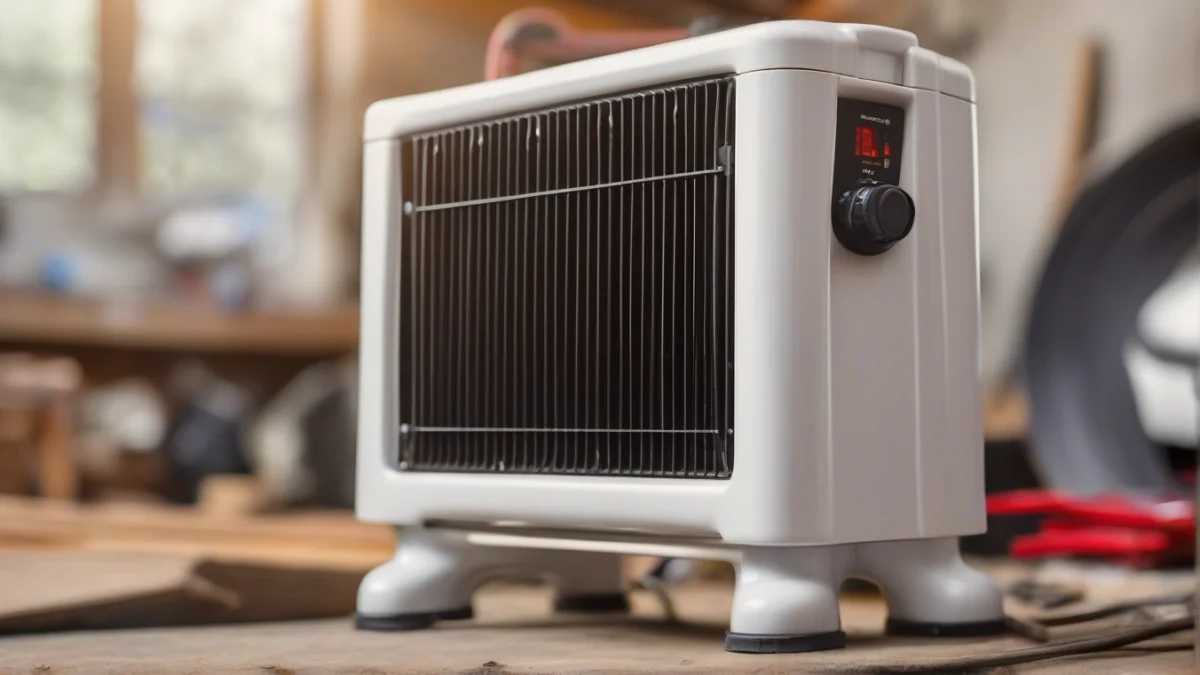
A space heater that won’t ignite or heat properly may have a faulty thermostat or a tripped thermal fuse. The thermostat controls when the heating element turns on and off; if it’s stuck closed or open, it can cause overheating or no heat at all. The thermal fuse is a safety cutoff that opens if the heater overheats, cutting power to prevent fire hazards.
Testing these parts requires a multimeter, a tool that measures electrical resistance and continuity. Set the multimeter to the ohms (Ω) scale and check the thermostat terminals. A healthy thermostat will show continuity when it’s calling for heat and open circuit when off. For the thermal fuse, the meter should show continuity if it’s intact; no continuity means it’s blown and must be replaced.
The heating element itself can break or short internally. Measuring resistance across the element should give a stable reading matching the heater’s specs; a very low or infinite resistance indicates a short or break, respectively. A shorted element can blow fuses immediately by drawing excessive current.
Replacing faulty parts often involves removing the heater’s back panel and disconnecting wiring terminals carefully. Use the manufacturer’s service manual or parts list to get exact replacement parts. Some parts like thermal fuses are designed to fail safely and are inexpensive to replace, while heating elements can be pricier.
When internal faults are multiple or the heater is old, replacement may be safer and more cost-effective than repair. Also consider UL certification when buying a new heater—UL-listed models meet strict safety standards and are less likely to have internal faults that trip fuses.
Space heaters that won’t blow fuses usually have internal components in good condition and are matched correctly to the circuit. If you’re not comfortable testing electrical parts or the issue persists after replacing faulty components, call a licensed electrician to avoid risks of shock or fire.
When to Call a Licensed Electrician or Replace Your Heater
A space heater that won’t trip the breaker is usually sized correctly for its circuit and free of internal faults, but persistent trips or flickering power hint at wiring or panel issues beyond the heater itself.
If your breaker trips with no obvious heater overload, or if multiple circuits buzz or lose power when the heater runs, these are signs of possible home wiring problems or an overloaded panel. Faulty wiring can cause dangerous heat buildup or shocks, so avoid DIY fixes beyond unplugging the heater and checking your breaker box.
Replace your space heater instead of repairing it if it is more than 10 years old, shows visible damage like frayed cords or burn marks, or has repeated fuse trips despite correct circuit sizing. Older heaters often lack modern safety certifications and can fail unpredictably.
Look for UL or ETL certification marks on new heaters to confirm they meet safety standards, including tip-over protection, overheat shutoff, and cool-touch exteriors. These features reduce fire risk and improve compatibility with typical home circuits.
Some safe space heaters available at popular stores like Walmart include models with adjustable thermostats and automatic shutoff features, making them easier to use without stressing your home wiring.
Avoid extension cords and always plug space heaters directly into a wall outlet rated for their wattage. Circuits with 15-amp breakers can support up to about 1,800 watts; heaters drawing close to 1,500 watts leave little room for other devices without risking trips.
More space heaters guides on HeaterGuides.