Why Is My Electric Fireplace Beeping? About 3 Causes to Check
Joye
Updated September 30, 2026 12 min read
Short answer
Electric fireplaces usually beep due to overheating or low remote batteries. The first thing to check is whether the unit is too hot or the remote batteries need replacing.
That annoying beep from your electric fireplace isn’t just noise — it’s a warning. Most often, it signals overheating or a low battery in the remote control.
Ignoring the beep can lead to damaged components or complete shutdown. This guide walks you through quick checks and fixes to stop the beeping fast without risking safety.
What to remember
Most electric fireplace beeps come from overheating or low remote batteries.
Always unplug the fireplace before any cleaning or internal checks to avoid shocks.
Clean vents and sensors regularly to prevent overheating triggers.
Check and replace remote batteries annually to avoid false alarms.
Call a licensed technician if beeping persists after basic troubleshooting or if you smell burning.
Why Is My Electric Fireplace Beeping? Check These Causes First
An electric fireplace usually beeps because its overheating protection has detected too much heat, the remote batteries are weak, or the controls have detected an electrical fault. For fast electric fireplace repair, turn the unit off, check the vents and remote, then note when the beep happens before you buy parts.
The control panel and remote can make similar sounds, but the timing gives you a useful clue. A beep immediately after pressing a button often points to the remote, while beeping after the heater has run for a while more often points to restricted airflow or an overheating sensor. Beeping that starts at power-up, repeats with no button press, or arrives with flickering lights deserves more caution.
What you notice
Likely meaning
First check
Beep after a remote command
Weak batteries or a missed command
Replace both remote batteries and aim at the receiver
Beep after several minutes of heat
Overheating protection
Turn it off and inspect the air inlets and outlet
Repeating beep while controls are idle
Sensor or electrical fault
Unplug it and check the manual’s fault guidance
Beep with burning smell, smoke or sparks
Unsafe electrical problem
Unplug it if you can do so safely and stop using it
Beep patterns vary by model, so the manual’s code list outranks any generic pattern.
1
Switch the heat off
Use the fireplace controls, then unplug the unit before checking vents or moving it. Give the cabinet time to cool; don’t reach through a grille while the heater may still be hot.
2
Check the air path
Look for furniture, curtains, dust or pet hair covering the intake or warm-air outlet. Keep the manufacturer’s clearance around the fireplace instead of treating the grille like a decorative shelf.
3
Test the controls
Press one button at a time on the fireplace and remote. If the panel responds but the remote doesn’t, replace the remote batteries; if neither responds, leave the unit unplugged and consult the manual.
4
Watch for electrical clues
A tripped breaker, hot plug, damaged cord, buzzing, flickering display or repeated beeping without a command can indicate an electrical fault. Don’t open the cabinet or bypass a safety switch.
Stop if the plug or cord is hot
Electric fireplaces should plug directly into a wall outlet, never an extension cord or power strip. Stop using the unit for smoke, sparks, a burning odor or a visibly damaged cord, and have the electrical problem assessed.
Keep the pattern
Write down whether the beep starts at startup, after heating, or after a button press. That small detail can save a technician from guessing and save you from ordering the wrong control board.
If the fireplace also fails to produce heat, use a guide focused on an electric fireplace that won’t heat before replacing a part: electric fireplace that won’t heat.
Parts and Tools to Fix Beeping Issues
You might need a replacement fireplace when the beeping points to a failed control, sensor or overheating problem.
Replacement Fireplace
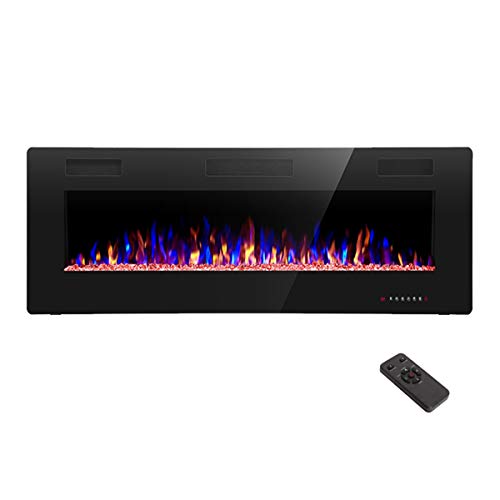
R.W.FLAME 50-Inch Recessed Fireplace
Product 1 gives you touch-screen and remote control operation, plus an auto-heat kill safety feature that shuts off heating if the unit gets too hot. Its 750W and 1500W heat settings also let you choose supplemental heat or a lower setting.
Electric fireplace overheating beeping usually starts after the heater has run long enough to build excess heat, and blocked electric fireplace vents are a common reason. An internal temperature sensor or thermal cutoff shuts the heating element down to prevent damage, so the beep is a warning—not an invitation to keep pressing the power button.
Check the vents for blockages that can cause beeping.
Dust buildup restricts the air moving across the heating element and fan. With less cool air entering and less warm air leaving, temperatures rise around the sensor even though the room itself may feel cold. A fireplace can be chilly at the front and still too hot inside; heaters are occasionally bad at sharing their feelings.
1
Turn off and unplug
Switch off the heat and unplug the fireplace. Let it cool completely before cleaning or repositioning it; automatic shutoff protects the unit, but it doesn’t make a hot grille safe to touch.
2
Inspect every grille
Check the lower intake, upper outlet and side openings for dust, lint, pet hair, toys or furniture. Move curtains and other combustibles away, following the clearance in your model’s manual.
3
Clean without forcing debris inward
Use a dry, soft brush or a vacuum’s brush attachment on the accessible grilles. Don’t spray liquid into the fireplace, insert tools through the openings, or remove panels unless the manual specifically directs that service.
4
Restart and observe
Reconnect the unit directly to the wall outlet and run the heat while you stay nearby. If the beep returns, the fan sounds abnormal, or the heater shuts off again, unplug it and stop troubleshooting from the outside.
Worked example
Say the fireplace runs quietly for 10 minutes, then begins beeping and stops producing heat. After cooling, you find a blanket covering the lower intake and lint packed into the upper grille. Clearing the air path may resolve the trigger; if the same pattern returns with open grilles, the sensor, fan or control circuit needs service.
Beep timingAfter heating begins
Likely first checkIntake and outlet grilles
If it repeatsStop and arrange service
Never bypass the cutoff
Don’t tape down, disconnect or bridge an overheating sensor. That device exists to stop the heating element before excess temperature damages the fireplace or surrounding materials.
Check the manual’s reset rule
Some models reset after cooling and unplugging; others show a fault until serviced. Follow the model’s instructions, and don’t keep resetting a unit that repeatedly overheats.
Test and Replace the Remote Control Batteries
A low remote battery can make an electric fireplace beep, ignore commands, respond slowly, or work only after you press a button several times. If the fireplace’s panel buttons work normally while the remote acts erratically, start with the remote before investigating the heater.
1
Remove the remote batteries
Turn the fireplace off, then slide or unscrew the remote’s battery cover. Take out the batteries and check the compartment for white crust, rust, dampness, or a loose contact. If the beeping stops after the batteries come out, the remote was sending weak or irregular commands; it still doesn’t prove the remote is the only fault.
2
Read the battery type
Look inside the compartment for the size and voltage marking, such as AAA, AA, or a coin-cell designation. Match that marking exactly. Don’t guess from the old battery’s shape, and don’t mix old and new batteries.
3
Install fresh batteries
Use a matched set from the same package, place each battery according to the plus and minus marks, and press the cover fully closed. Keep batteries away from children and dispose of leaking ones without touching the residue with bare skin.
4
Test the controls
Point the remote at the fireplace’s receiver and test power, heat, flame, and temperature commands one at a time. A beep after each valid command is normal on many models; repeated beeps with no command are not.
5
Reset pairing if needed
Some fireplaces pair the remote to the receiver after a power reset or a button sequence. Follow the pairing instructions in your owner’s manual rather than trying random combinations, because the sequence varies by model. If fresh batteries and the correct pairing procedure don’t restore control, remove the remote batteries and use the fireplace’s control panel until you identify the next fault.
Check the easy clue
A remote that works only from very close range may have weak batteries, a dirty battery contact, or an object blocking the receiver. Clean the contacts only with the unit’s batteries removed, and don’t bend the metal terminals.
Inspect for Electrical Issues and Wiring Problems
Electric fireplace electrical issues and wiring problems need more caution than a battery swap: a hot plug, burnt smell, melted insulation, crackling, smoke, or a breaker that trips is a reason to stop using the fireplace immediately. Unplug it if you can do so safely, then leave the internal repair to a licensed technician or electrician.
Inspect the power cord for any signs of damage.
1
Shut off power safely
Turn the fireplace off with its controls, unplug the cord by gripping the plug, and switch off the circuit breaker if the plug is hot, damaged, sparking, or difficult to reach safely. Don’t pull the cord, touch exposed copper, or keep resetting a tripped breaker.
2
Inspect the plug and cord
With power disconnected, look for scorch marks, softened plastic, cuts, crushed sections, loose prongs, or a cord that feels unusually hot. Check the receptacle too. A darkened outlet, buzzing sound, or loose fit points to a problem beyond the fireplace.
3
Consider a surge or outage
A power surge from a lightning event, utility fault, or restored outage can upset the fireplace’s control board and cause beeps, error indications, or lost settings. Unplugging the unit for the reset period listed in the manual may clear a temporary fault; it won’t repair damaged electronics.
4
Check the circuit arrangement
Plug the fireplace directly into a wall outlet, never an extension cord or power strip. Don’t share a questionable receptacle with another high-wattage heater, and don’t use an adapter to defeat the grounding connection.
5
Stop before opening the cabinet
Don’t remove the fireplace cover, probe wiring, bypass a fuse or safety switch, or work inside the unit while it is connected to power. Capacitors and other components can retain energy after unplugging, and a wiring mistake can create shock or fire risk.
Call before the next beep
Arrange professional service for a melted wire, burning odor, visible arcing, repeated breaker trips, water near the electrical parts, a damaged plug, or beeping that returns after a surge and reset. A licensed technician can test the control board and wiring with the right equipment; the sound alone can’t identify which part failed.
When to Call a Licensed Technician or Replace Your Electric Fireplace
Persistent beeping after you’ve checked the vents, remote and power is a service call, not an invitation to keep guessing at parts. For electric fireplace repair near me, start with the manufacturer’s authorized-service listings or a local appliance technician who specifically works on electric fireplaces; a licensed electrician is the right choice for fixed wiring, outlet or breaker problems.
Visible damage, a burning smell, melted insulation, smoke, crackling or a hot plug means stop using the fireplace, disconnect power if you can do so safely, and arrange professional help. Don’t open the cabinet or bypass a thermal switch. If you see smoke or an active electrical hazard, leave the area and call emergency services.
For electric fireplace replacement vs repair, repair makes sense when the unit is otherwise sound, the fault is a sensor, fan or control, and replacement parts are available. Replacement is usually the cleaner choice when the main board or heater is damaged, the cabinet or wiring has burned, the unit has repeated faults, or the repair estimate approaches the cost of a suitable new fireplace.
Before You Book the Call
Write down the brand, model number, age and exact beep pattern.
Ask the technician whether they service your model and can source its control board, heater or fan.
Request a diagnostic charge and a written estimate before approving parts.
Check the warranty before paying for work; opening the cabinet may affect coverage.
Choose the Right Trade
A technician who handles electric fireplaces can diagnose the controls and heater; an electrician should handle hardwired connections and circuit faults. The guide who can fix your electric fireplace can help you sort the job before you start calling.
Quick 60-Second Checklist Before You Buy Parts or Call for Help
An electric fireplace troubleshooting checklist can save you a service charge or a needless control board purchase. Run these checks with the heater switched off whenever you’re inspecting the plug, grille or cabinet.
Electric Fireplace Before Repair
Confirm the power source: make sure the plug is firmly inserted into a wall outlet that has power, and verify the breaker or GFCI hasn’t tripped. Avoid using extension cords or power strips, as they may not handle the heater’s current safel
Replace the remote batteries with the correct type, then test the fireplace’s built-in controls if the unit has them.
Inspect the intake and outlet vents, front grille and surrounding area for dust, curtains, furniture or other blockages. Clear only what you can reach without opening the cabinet.
Look for an error code, flashing light or display message. Write it down exactly, including letters and numbers.
Listen to the beep pattern and count the beeps: one beep, repeated beeps and a pause between groups can point to different faults.
Record the brand and model number, then note what happened just before the beeping began: startup, heating, remote use or a power interruption.
If the plug, cord or fireplace smells burnt, feels unusually hot, shows damage or makes crackling sounds, stop at that point and arrange professional service instead of buying parts.
Questions People Ask
Why does my electric fireplace beep continuously?
A continuous beep can indicate an overheating condition, a control fault, or an error code that varies by model. Turn the fireplace off and check the display, owner’s manual, and air intake for a code or blockage; repeated beeps after the unit cools need service rather than repeated resets.
How do I reset my electric fireplace to stop beeping?
Turn the fireplace off, unplug it, and let the heater cool before reconnecting it directly to a wall outlet. Some models also require a control-panel reset or breaker reset, so follow the manual for that model and stop if the beeping returns immediately.
Can low batteries in the remote cause the fireplace to beep?
Yes, weak remote batteries can cause delayed commands, repeated button presses, or unexpected beeps. Replace the full set with the correct battery type, check that the terminals are clean, and test the fireplace from its built-in controls to separate a remote problem from a unit problem.
Is it safe to use an electric fireplace that keeps beeping?
No—stop using it until you know why it is beeping, especially if the plug or outlet is hot, you smell burnt plastic, hear crackling, see smoke, or the breaker trips. Unplug the unit and arrange qualified service; never leave a malfunctioning fireplace running while you sleep or leave home.
Share
Written byJoye
HeaterGuides covers home heating, water heating and HVAC: how the equipment works, what it costs to run, and how to use it safely.
Free newsletter
Heater deals and guides, worth opening
Price drops, new guides and safety recalls. One email, only when it matters.