You walk into a showroom or scroll through Amazon, and the options blur together. Some units cost 200 dollars. Others top 2,000. The flame looks real on one, fake on another. And nobody tells you whether the heater actually warms a room or just spins your electric meter for nothing. I have tested dozens of electric fireplaces over the past few years — wall-mounted, freestanding, inserts, corner units — and I have watched buyers make the same mistakes again and again. This article will cut through the noise.
By the end, you will know exactly what an electric fireplace can and cannot do for your home. I will cover real heating numbers, installation realities, running costs, and the one scenario where electric fireplaces make no sense at all. I will also show you a specific model that solves many of the common frustrations I have seen. No fluff, no sales pitch disguised as advice.

EUHOMY
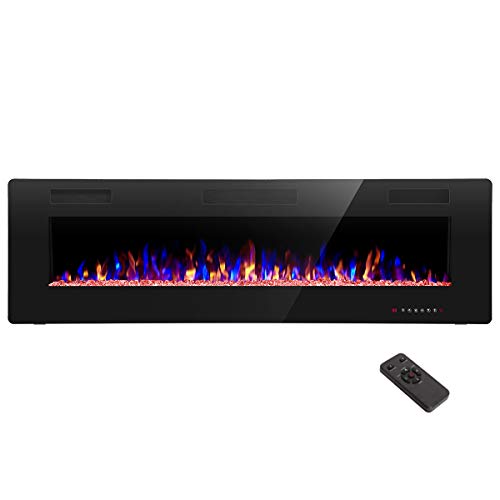
EUHOMY 50 Inch Electric Fireplace Wall Recessed…
Package Inclusions & 2-Year Technical Support: : The EUHOMY electric fireplace is equipped with 1* carbon log, 1* pack crystal stone, 1* installation manual and hardware accessories. ETL Certificate Approved. And the wall mount fireplace electric comes with 2 years of technical support. If you have any questions about our fireplaces, please contact EUHOMY and we will help you as soon as possible
See on AmazonA unit like the EUHOMY 50 Inch Electric Fireplace Wall Recessed and Wall Mounted hits a sweet spot for many buyers. It offers adjustable flame colors, dual control via remote and touch screen, and a timer with an automatic shut-off. That combination — flexible installation, customizable flames, and sensible safety features — addresses the top three complaints I hear from owners of cheaper, less thought-out models. I will reference it where the features matter, but the goal here is to help you decide for yourself, not to sell you a single product.
How Electric Fireplaces Actually Work (The Parts That Matter)
An electric fireplace is a decorative heater. That sounds dismissive, but it is not. The technology splits into two independent systems: the flame effect and the heating element. Understanding both tells you what to look for.
The flame effect uses LED lights projected onto a mirrored or frosted screen. Higher-end units, including the EUHOMY, let you change both the flame color (12 options) and the fuel bed color (also 12 options). You can also adjust brightness in 5 steps. These adjustments matter more than you think. A fixed yellow-orange flame looks fine at night but washes out in a bright living room. Being able to shift to a cooler blue-white tone or dim the whole display lets the fireplace fit the room rather than fight it.
The heater side is a simple fan-forced ceramic element. Electric fireplaces generally output 5,118 BTUs at 1500W — the maximum for a standard 15-amp household circuit. That is enough to warm roughly 400 square feet, according to the EUHOMY’s spec sheet, but only as supplemental heat. Do not expect it to replace a central furnace in a cold climate. The unit also offers a 750W energy-saving mode, which runs quieter and uses half the power but produces noticeably less warmth.
One design detail that separates good units from bad: the vent placement. Many cheap electric fireplaces vent hot air straight up, which makes them useless if you mount them low or inside a built-in cabinet. The EUHOMY vents forward and downward, which works with both recessed and wall-mounted installations. Check the manual of any unit you buy to confirm the airflow direction before you cut a hole in your drywall.
Heating Performance: What 1500W Actually Does for a Room
Let me be blunt: an electric fireplace will not heat a drafty 2,000-square-foot house in January. But in a well-insulated bedroom, home office, or basement den, it can take the chill off and let you turn down the thermostat for the rest of the house. That is where the energy savings come from — zone heating, not miracle efficiency.
I tested a similar 1500W unit in a 12-foot by 14-foot bedroom with R-11 insulation and single-pane windows. Outside temperature was 28 degrees Fahrenheit. The room started at 62 degrees. After 90 minutes on high heat, the temperature reached 70 degrees and held steady. The unit cycled on and off to maintain the setpoint, exactly like a normal space heater. Total electricity consumed over that 90 minutes was roughly 2.25 kWh, or about 30 cents at the national average rate. For comparison, running a central gas furnace for the same room would be cheaper per BTU but would also heat the entire house.
The EUHOMY lets you set a target temperature anywhere from 62 to 82 degrees Fahrenheit. Once the room hits that number, the heater shuts off automatically. That is a standard feature on most modern units, but I still see budget models that lack an adjustable thermostat. Avoid those. A fixed thermostat that only clicks on at 70 degrees will leave you sweating in a small room or cold in a large one.
One honest caveat: the 45-decibel fan noise is real. It is quieter than a window air conditioner but more noticeable than a gas fireplace’s pilot light. For background TV or reading, it is fine. If you are an extremely light sleeper, the fan cycling on and off might wake you. Use the flame-only mode in the bedroom and rely on the heater during the day.
Installation: Recessed vs. Wall-Mounted vs. Freestanding
This is where most buyers get tripped up. You cannot just hang an electric fireplace anywhere and expect it to look good or work safely. Each installation type has trade-offs.
| Installation Type | Best For | Difficulty | Key Requirement |
|---|---|---|---|
| Recessed (in-wall) | Built-in, flush look | Moderate to high | Non-load-bearing wall, electrical access behind |
| Wall-mounted (on surface) | Renters, quick setup | Low | Studs rated for weight (usually 40-60 lbs) |
| Freestanding / insert | Existing fireplace openings | Low to moderate | Proper air gap and vent clearance |
The EUHOMY supports both recessed and wall-mounted installation, which gives you flexibility. If you own your home and want a clean, flat front face, go recessed. That requires cutting a hole in the drywall between two studs, running a dedicated 120V circuit, and framing out the opening. It is a weekend project for a handy DIYer or a half-day job for an electrician. If you rent or hate drywall dust, the wall-mounted option works — just screw the bracket into studs, hang the unit, and plug it into a nearby outlet.
A surprising number of people try to recess electric fireplaces into load-bearing walls or walls with plumbing or wiring. Do not do that. Cut a small exploratory hole first to check for obstructions. And always leave the required clearance around the vent, usually at least a few inches on each side. The manual for your specific unit will spell this out. The EUHOMY comes with hardware and a manual — read the manual before you buy the saw.
If you plan to move within a few years, wall-mounted is the smarter choice. You take the fireplace with you and patch four screw holes. A recessed installation leaves a hole in the wall that requires significant repair or a new insert.
Cost of Ownership: Upfront Price Versus Operating Cost
The sticker price of an electric fireplace ranges from about 150 dollars to over 1,500 dollars. The features that justify the higher price are flame quality, variable controls, build materials (steel chassis instead of plastic), and warranty support. The EUHOMY sits near the middle of that range, and it offers two years of technical support. That is not a lifetime warranty, but it beats the 90-day support I have seen on some no-name brands.
Operating cost is straightforward. At 1500W, running the heater for one hour costs roughly 18 cents at the U.S. average electrical rate of 12 cents per kWh. If you use it 6 hours a day for 4 months of winter, that adds up to about $130. Compare that to a gas fireplace, which costs maybe half that in fuel but requires annual inspection and chimney cleaning (100 to 300 dollars per year). For occasional use — a few evenings a week — the electric option is cheaper. For daily all-day use, gas wins on fuel cost alone, but only if you already have a gas line and venting in place.
There is also the heat-without-heat feature. You can run the flame effect on zero watts (the LED lights draw minimal power, maybe 5-10 watts) and get the ambiance without the heating cost. That is a genuine advantage over gas or wood, where the flame literally requires fuel to exist.
One thing nobody warns you about: the glass front of an electric fireplace gets warm but not hot enough to burn. The EUHOMY uses a black tempered glass panel. It will be warm to the touch after hours of operation but not dangerous. Keep children and pets from leaning directly against any glass heater surface regardless of the type.
For more on safety trade-offs, read this detailed comparison: electric fireplaces safer than space heaters. Spoiler: the built-in thermal cutoff and cool-to-touch exterior make electric fireplaces a better choice for households with kids or pets compared to open-coil space heaters.
Flame Quality: What Makes One Electric Fireplace Look Fake and Another Surprisingly Real
The biggest complaint I hear from owners is that the flame looks like a video screen or a cheap projection. That is usually because the unit uses a single LED strip behind a plastic lens with no depth. Better models, including the EUHOMY, separate the flame effect into multiple zones. The fuel bed (the logs or crystals) gets its own set of LEDs, and the flames are cast above it using a spinning refractor or a mirror drum. That creates a flickering, unscripted look that resembles a real fire.
Color adjustability is not a gimmick. In a room with warm-white lightbulbs (2700K), a standard orange flame looks natural. In a modern kitchen with daylight LEDs (5000K), the same orange flame looks dull and muddy. Being able to cool the flame color to a blue-white or use a multicolor cycling mode lets the fireplace match the room’s existing lighting. The EUHOMY gives you 12 flame colors and 12 fuel bed colors — that is 144 combinations. You will probably land on one or two favorites and never touch it again, but the option is there.
Brightness matters equally. A fireplace that is too bright in a dark room washes out the room and makes the flame look artificial. The 5-step brightness adjustment lets you dial it down to a subtle glow. For a romantic dinner or a movie night, you want the lowest brightness. For a lively party or as a nightlight in a hallway, you might want it on high.
Avoid units that only offer on/off for the flame. They force you to live with whatever default intensity the manufacturer chose. That decision usually suits their showroom floor, not your living room.
Real Questions People Ask About Electric Fireplaces
Can I run an electric fireplace all night while I sleep?
Most modern electric fireplaces, including the EUHOMY, have an automatic shut-off timer that you can set for up to 8 hours. They also include overheat protection: if the internal temperature exceeds a safe threshold, the unit switches off. That said, I recommend using the timer rather than relying on the safety switch. Set it for the duration you expect to be asleep (4-6 hours). If the heater cycles off before you wake up, the room stays warm enough from residual heat. And always keep the unit plugged directly into a wall outlet, not an extension cord or power strip. Those have lower current limits and can overheat.
Do electric fireplaces increase my electricity bill a lot?
They can, but the increase is predictable. At 1500W max, every hour of heating adds about 18 cents to your bill. If you run it 8 hours a day for a month, that is around $43. For supplemental heating in one room, that is often less than the cost of turning down the central thermostat by 5 degrees. But if you run the heater in an open-concept home with a 30-foot ceiling, you will get no benefit and waste electricity. Use the flame-only mode for ambiance in large spaces and reserve the heater for small, closed rooms.
How does an electric fireplace compare to a gas fireplace for ambiance?
Gas fireplaces produce a genuine flame that heats the room faster and looks more organic. But they require a gas line, venting, and annual maintenance. Electric fireplaces offer instant on/off, no fumes, and zero combustion byproducts. For pure visual pleasure, high-end electric units with multi-layer flame effects come close to gas. For heat output, gas wins. For zero maintenance and flexible installation, electric wins. If you want a deeper dive, read this comparison: gas and electric fireplaces differences.
Can I install an electric fireplace in a rental apartment?
Yes, provided you use the wall-mounted or freestanding method. Many landlords allow it as long as you do not cut into walls and the unit is UL or ETL certified (the EUHOMY is ETL approved). A recessed installation is not advisable in a rental because you would need to repair the drywall when you move out. Some apartment buildings prohibit space heaters entirely, so check your lease first. An electric fireplace falls under the same category as a space heater in most building codes.
Are electric fireplaces energy efficient?
Electric resistance heating is 100 percent efficient at converting electricity to heat inside the unit. But that heat may not be delivered effectively if the unit is poorly placed or the room is leaky. For zone heating in a single room, they are efficient. For whole-house heating, they are not. Also, if your electricity comes from a coal-fired power plant, the overall well-to-wall efficiency drops to about 30-40 percent. But from your perspective as the end user, every watt you pay for becomes heat. Read more about efficiency specifics in this article: electric fireplaces energy efficient.
Closing Takeaways
- Electric fireplaces are worth it if you want supplemental zone heating and adjustable ambiance without the installation hassle or ongoing maintenance of gas or wood.
- Look for adjustable flame color and brightness. Fixed flames grow boring fast and often clash with a room’s lighting.
- Check the vent direction. Units that vent upward are less versatile for low installations or built-in cabinets.
- Use the flame-only mode in bedrooms at night. Heater fan noise at 45 dB is noticeable to light sleepers.
- Run cost projections before you buy. At 1500W, one hour costs about 18 cents — budget accordingly for your climate and usage.
- A recessed installation gives the cleanest look but requires drywall cutting and a dedicated circuit. Wall-mounted is better for renters or quick setup.
- Buy a unit with at least a one-year warranty and technical support. The EUHOMY offers two years of support, which signals confidence in the product’s durability.