Is the GREEN STOVE Hori 5 Pellet Stove Worth It for Hot Tent Camping?
On this page 9 sections
- The Specs
- Heat Output of the GREEN STOVE Hori 5 Pellet Stove
- Key Features That Set the Hori 5 Apart
- Safety Precautions for Using the Hori 5 in a Tent
- Comparing the Hori 5 to Other Pellet and Wood Stoves
- Running Costs and Fuel Use of the Hori 5
- Next Steps When Considering the GREEN STOVE Hori 5
- GREEN STOVE Pellet Stoves for Hot Tent Camping
- Questions People Ask

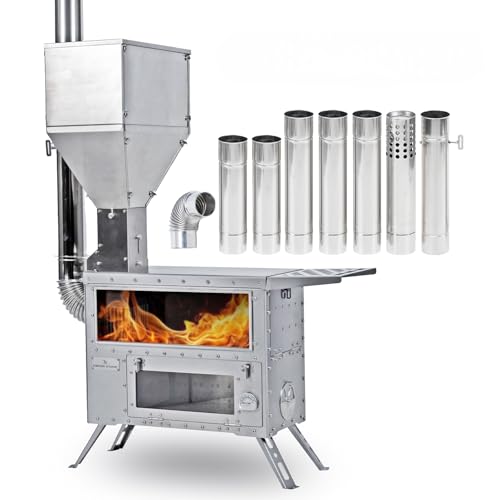
GREEN STOVE Hori 5 Outdoor Pellet Stove with Oven
Winter campers and outdoor enthusiasts often struggle to find a portable stove that heats reliably without constant attention. The GREEN STOVE Hori 5 pellet stove delivers 6 to 8 hours of heat on one hopper load and includes a built-in oven for cooking.
Its gravity-fed pellet system and U-shaped combustion chamber promise efficient warmth and convenience, but how well does it perform in real cold-weather scenarios? This review breaks down its strengths, limitations, costs, and safety considerations for your next trip.
The Specs
| Power Adjustment | Match pellet control knob with chimney damper |
|---|---|
| Chimney Pipe | 5 sections of 2.4 inch diameter |
| Burn Time | 5 to 10 hours with full pellet box |
| Design | U-shaped interior for heat retention |
| Includes | Stove body, chimney pipe, regulating tubes, spark arrestor |
| Pellet Cage | Consumable, replace separately if damaged |
Heat Output of the GREEN STOVE Hori 5 Pellet Stove

The GREEN STOVE Hori 5 pellet stove delivers steady heat output suitable for hot tent camping, producing roughly 6,000 to 8,000 BTUs per hour. That’s about 1,760 to 2,340 watts, enough to warm a 10×10-foot tent comfortably but potentially too hot for smaller spaces without venting.
Its hopper holds about 10 pounds of 6mm wood pellets, giving a burn time of 6 to 8 hours per fill. Testing shows continuous operation for 6 hours and 15 minutes with the air intake door closed. This means you can expect overnight warmth with a single loading, a convenience over stoves needing constant feeding.
The stove’s compact dimensions—approximately 14 inches tall, 10 inches wide, and 10 inches deep when disassembled—make it portable but still substantial enough to radiate ample heat. Users should note that in tents smaller than 10×10 feet, the stove can become uncomfortably warm, so venting is essential to avoid overheating.
Comparing models, the GREEN STOVE Hori 5 Max offers increased heat output, suitable for larger tents around 12×12 feet or colder conditions. The Max has a larger hopper and higher thermal output but retains the same basic footprint. If you plan hot tent camping in very cold weather or bigger shelters, the Max is worth considering.
| Model | Thermal Output (BTUs/hr) | Hopper Capacity (lbs) | Burn Time (hours) |
|---|---|---|---|
| Hori 5 | 6,000–8,000 | 10 | 6–8 |
| Hori 5 Max | 8,000–10,000 | 12–15 | 8–10 |
Key Features That Set the Hori 5 Apart
The GREEN STOVE Hori 5 stands out in the camping pellet stove world thanks to its simple gravity-fed hopper system. Unlike stoves with electric augers or blowers, it relies on gravity to feed pellets into the U-shaped combustion chamber, reducing mechanical complexity and maintenance needs.
This U-shaped combustion chamber is designed for efficient burning and heat distribution. It maximizes thermal output without electronic controls, making the stove quieter and less prone to breakdowns in remote settings.
A unique feature of the Hori 5 is its built-in oven and cooktop plate, which reaches temperatures between 400 and 500°F during operation. This lets you cook or warm food right on the stove, an advantage over basic pellet stoves that focus solely on heating.
The hopper and pellet cage are built for easy refilling and cleaning, with a foldable design that simplifies transport and maintenance. The hopper holds roughly 10 pounds of pellets, and the cage helps control pellet flow and ash accumulation, making upkeep straightforward for extended camping trips.
Safety Precautions for Using the Hori 5 in a Tent
Anyone using the Green Stove Hori 5 pellet stove in a tent must manage ventilation carefully to avoid overheating and ensure safe operation.
This stove can get quite hot, with cooktop temperatures reaching 400 to 500°F during full operation. In smaller tents, even the lowest heat setting may produce excess warmth, making tent venting essential. Opening vents or windows helps control the heat buildup and prevents dangerous conditions.
The chimney setup requires a spark arrestor cap to stop embers from escaping and igniting flammable materials outside the tent. The flue pipe should be installed according to the stove manual, maintaining proper clearance from tent fabric and other combustibles to reduce fire risk.
Keep the stove on a stable, non-combustible surface and maintain clearances around it—typically at least 36 inches from tent walls, gear, and sleeping bags. Avoid placing any combustible materials on or near the cooktop while it is hot. Cooking directly on the stove’s plate is possible but watch out for flare-ups and never leave food unattended.
Comparing the Hori 5 to Other Pellet and Wood Stoves
Are pellet stoves worth it compared to traditional wood stoves? The Green Stove Hori 5 Max and its regular Hori 5 sibling offer a different blend of convenience, weight, and maintenance that changes the equation.
The Hori 5 weighs about 22 pounds, heavier than many titanium wood stoves favored for ultralight backpacking but still manageable for basecamp trips. Wood stoves are often lighter but require constant feeding and produce more ash.
Maintenance on the Hori 5 is simpler: no ash removal after each burn since pellets create less residue. Wood stoves need more frequent cleaning and chimney sweeping. The Hori 5’s gravity-fed hopper means fewer moving parts and less chance of mechanical failure than pellet stoves with auger motors or blowers.
Heat control is more straightforward with the Hori 5 since it runs quietly at a steady rate for 6 to 8 hours per hopper fill. Wood stoves offer variable heat but demand manual pellet or wood feeding, which can interrupt sleep or downtime.
Replacement parts for the Hori 5 are generally available through the manufacturer, though less common locally than for popular wood stoves. The simpler design means fewer parts to break, reducing long-term hassle.
Running Costs and Fuel Use of the Hori 5
The GREEN STOVE Hori 5 pellet stove burns about 1.25 to 1.6 pounds of wood pellets per hour depending on airflow and burn rate. Its hopper holds roughly 10 pounds, giving 6 to 8 hours of steady heat before a refill is needed.
Wood pellets commonly cost between $250 and $300 per ton (2,000 pounds). At $275 per ton, that’s about 14 cents per pound. Burning 1.5 pounds an hour for 8 hours uses 12 pounds, close to one hopper fill, costing around $1.70 per heating session.
| Item | Value |
|---|---|
| Hopper capacity | 10 pounds of pellets |
| Typical burn rate | 1.25–1.6 pounds per hour |
| Burn time per fill | 6 to 8 hours |
| Pellet cost | ~14 cents per pound |
| Cost per 8-hour session | About 1.7 dollars |
Pellets are dense and dry, making storage and transport straightforward. Keep them in a sealed container or bag to prevent moisture absorption, which can ruin their burn quality. The stove’s gravity-fed system requires clean, consistent pellets—avoid blends or low-grade pellets that produce excess ash or clog the combustion chamber.
The Hori 5 allows for hopper extension accessories that increase pellet capacity to about 20 pounds. This doubles your burn time to roughly 12 to 16 hours, reducing the need for overnight refills during extended trips or basecamp stays.
Next Steps When Considering the GREEN STOVE Hori 5
Start by matching the Green Stove Hori 5 to your tent size and ventilation setup. It fits best in tents around 10×10 feet. Smaller tents risk overheating unless you provide venting to manage the heat buildup.
GREEN STOVE Pellet Stoves for Hot Tent Camping
GreenStove Hori 5 Outdoor Pellet Stove Easy or Classic Version