For sealing hot-air duct seams, choose product 2: its stated 600°F limit and 1.5-inch width suit that job. For heat-press crafts, pick a polyimide tape instead. No tape here is a countertop protector, so don’t use these rolls to shield a counter from hot cookware.
A temperature rating is only useful when the tape is made for the surface and job you have. Duct seams, sublimation transfers, and heat shields need different adhesives and backing materials.
The product data includes no countertop mats, so this guide ranks the supplied tapes by their stated uses. If you came looking for a counter protector, skip the tape picks and choose a mat specifically sold for that purpose.
The Best Tape for Each Heat-Related Job
#1Best for duct seams
3M High-Temperature Flue Tape
Best for Sealing hot-air duct seams
For hot-air duct seams, this is the clearest fit: it’s made to stop hot-air duct leaks and is rated to 600°F. The 1.5-inch width gives you a broad strip for covering a seam.
Max temperature 600°FWidth 1.5 inLength 5 yd (15 ft)Rolls 1
Why it made the cut
Made for hot-air duct leaks
Rated to 600°F
1.5 in x 5 yd roll
Good to know
The roll is 5 yd long
Skip it if Skip it for heat-press crafts, where polyimide tape is the better fit.
This polyimide film tape is intended for sublimation and is also listed for electronics, soldering, and circuit boards. Its 482°F limit and clean removal suit jobs where adhesive residue is unwelcome.
Max temperature 482°F (250°C)Width 10 mm (0.4 in)Length 33 m (108 ft)Rolls 2
Why it made the cut
Polyimide film with heat adhesive
Rated to 482°F (250°C)
Comes off clean with no residue
Good to know
Narrow 0.4-inch width
Skip it if Skip it for duct seams; choose tape specifically made for sealing hot-air ducts.
Best for Heat-press sublimation with more tape on hand
The four-roll pack gives you more rolls for repeated sublimation work. Each roll is 20 mm wide and 16 m long, and the polyimide film tape is rated to 250°C.
Max temperature 250°CWidth 20 mm (0.78 in)Length 16 m (52 ft)Rolls 4
Why it made the cut
Four rolls in the package
20 mm (0.78 in) width
Listed for heat sublimation presses
Good to know
Temperature limit is stated in Celsius
Skip it if Skip it if you need tape for duct seams or a Fahrenheit rating for your application.
Best for Securing heat-transfer designs during pressing
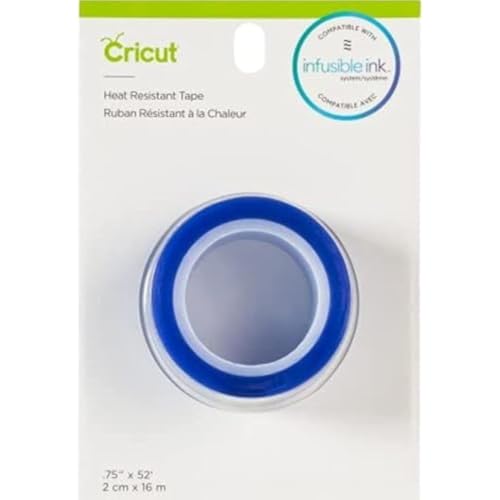
Cricut lists this tape for keeping designs in position during heat-transfer applications, including HTV and Infusible Ink. It’s rated to 400°F and leaves no residue, which suits craft projects where a clean finished surface matters.
Max temperature 400°F (205°C)Width 0.75 in (2 cm)Length 52 ft (16 m)Rolls —
Why it made the cut
Made for heat-transfer applications
Rated to 400°F (205°C)
Leaves no residue
Good to know
Narrow 0.75-inch width
Skip it if Skip it for ductwork; this roll is intended for heat-transfer crafts.
Best for Reflective heat shielding for exhaust and hose applications
This tape has a fiberglass fabric base with an aluminum-plated outer layer, and the product data lists exhaust and hose use. Its 2-inch width and 66-foot roll suit longer runs, but check that its 300°C rating and application match your specific job.
Max temperature 300°CWidth 2 inLength 66 ftRolls 1
Why it made the cut
Fiberglass fabric with aluminum-plated outer layer
Rated to 300°C
2 in x 66 ft roll
Good to know
The stated heat limit is in Celsius
Skip it if Skip it for heat-press crafts or duct seams when you need a product specifically listed for those jobs.
The best heat-resistant tape depends on what you’re fixing: product 2 is the stated match for hot-air duct seams, while heat-press crafts call for polyimide tape. If you searched for best heat resistant countertop protectors, a heat-resistant mat for the kitchen, or silicone heat resistant countertop protector, none of these tape rolls is the answer. They’re tapes, not countertop pads, and none is specified for cookware resting on a counter.
For a kitchen countertop heat resistant pad or heat resistant countertop mat, choose a purpose-made mat or pad and check its stated temperature limit and compatibility with your countertop material. Don’t assume that a silicone surface, or a high temperature number, makes a product suitable for every counter or hot pan. For product options made for that job, see best heat resistant countertops.
600°F
Product 2’s stated temperature limit
That limit belongs to 3M High-Temperature Flue Tape, 1 1/2 in x 5 yd. Temperature alone doesn’t establish that tape is suitable for a flue, stove, or other hot surface; check the product’s stated application and instructions.
For tape buyers, match the roll to the work: product 2 for hot-air duct seams; products 1, 3, or 5 for heat-transfer work; and product 4 for the foil/fiberglass repair applications its maker lists. Product 3 is Cricut Heat Resistant Tape for EasyPress. The temperature claims aren’t interchangeable: 600°F, 482°F/250°C, 400°F/205°C, and 300°C apply to different products, not to heat-resistant tape as a whole.
Myth
A tape with a high temperature rating can protect a countertop from hot cookware.
Fact
A tape rating doesn’t make a tape a countertop protector. Use a mat or pad specified for countertop use, and verify both its temperature limit and compatibility with your counter.
Check the Adhesive, Backing, and Roll Size
Strong heat resistant tape is tape whose backing, adhesive, dimensions, and stated application fit your job—not simply the roll with the biggest temperature number. Polyimide film suits heat-press work; flue tape is intended for hot-air duct seams; aluminum-plated fiberglass tape is for the applications listed by its maker.
Treat a maximum temperature as a product-specific limit, not a universal operating guarantee. Surface type, exposure time, and application matter, so follow the instructions for the exact roll. A stated temperature doesn’t prove suitability for a different surface or use.
Product
Dimensions
Roll count
1. 2 Rolls 10mm X 33m 108ft Heat Tape
10 mm × 33 m per roll
2
2. 3M High-Temperature Flue Tape
1.5 in × 15 ft
1
3. Cricut Heat Resistant Tape for EasyPress
2 cm × 16 m
1
4. FIREWESS Aluminum Foil Heat Shield Tape
2 in × 66 ft
1
5. MEBMIK Heat Tape
20 mm × 16 m per roll
4
Compare the width and length with the seam or workpiece; roll count alone doesn’t tell you how much tape you need.
Wider tape can cover a seam in fewer passes; narrow tape is easier to position on a small craft design. More total length means more tape, not a stronger bond. If you’re comparing foil-backed repair options, the best heat shield tape guide is a more relevant next stop than choosing by length alone.
Before You Buy
Confirm the surface is clean and dry before applying tape.
Check that the tape width covers the seam or workpiece without leaving gaps.
Match the stated temperature limit and intended use to the task, then follow the product instructions.
Use Tape Only Where Its Rating Applies
A tape’s temperature rating doesn’t make it safe for every hot surface or repair. Product 2 is described for heating duct seams; that does not establish that it’s suitable for a furnace flue, chimney, stove pipe, or any other exhaust connection. Those parts need materials and repairs that meet the appliance instructions and local requirements.
Pause Before Taping Near Equipment
Before applying tape near a combustion appliance, wiring, or moving vehicle parts, identify the equipment and the surface. If the repair could affect venting or safe operation, stop and use a qualified technician. A patch that holds for now can still create a dangerous failure.
Product 4’s heat-resistance claim doesn’t establish that it suits a particular exhaust, hose, painted surface, or vehicle component. Check the vehicle or equipment maker’s requirements for that exact location; don’t treat “heat shield” in a product name as approval for an unspecified repair.
Myth
A high temperature number means the tape can go anywhere that gets hot.
Fact
The number applies only within the product’s stated conditions and intended use. Surface material, adhesive, exposure, and the equipment maker’s instructions still matter.
For heat-press crafts, follow the heat press and transfer-material instructions, including where tape may be placed. Keep Cricut Heat Resistant Tape for EasyPress and other craft tape out of areas where the manufacturer doesn’t specify use. None of these product listings supplies a UL, ETL, or CSA listing, so don’t assume one.
Choose a Mat for Countertops, Not Tape
Color alone can’t tell you whether a countertop protector is more heat resistant: black isn’t reliably better than light brown, and light grey isn’t reliably better than blue. Check the protector’s stated material, maximum temperature, and intended use instead.
None of the five listed tapes has product data establishing it as a countertop mat or cookware rest. A strip of adhesive tape isn’t a stable, purpose-made surface protector, and these rolls aren’t substitutes for one.
Myth
A heat-resistant mat will protect any counter from any hot pan.
Fact
A mat’s protection depends on its stated temperature limit and intended use, and the counter material has its own care requirements. Check both manufacturers’ instructions; don’t assume a mat prevents damage from every hot pan.
Choose a mat specifically intended for countertop use, then confirm its maximum temperature and placement directions before setting cookware on it. Check your counter’s care instructions too; some surfaces have limits that a mat’s rating alone can’t resolve. If the mat maker doesn’t specify cookware as an intended use, choose a different rest.
Buy the Right Roll and Apply It
Choose heat-resistant tape by the surface and job first, then check that the product’s stated use, temperature limit, and dimensions fit. A bigger temperature number can’t make the wrong tape suitable.
1
Identify the surface and job
Name what you’re fixing: a hot-air duct seam, a heat-press craft, or something else. A leaking hot-air duct seam is different from a flue or exhaust joint; don’t treat those as interchangeable.
2
Match the product to the job
For a hot-air duct seam, consider 3M High-Temperature Flue Tape, product 2, whose stated 600°F limit and 1.5-inch width suit that application. For heat-press crafts, choose a polyimide tape, such as one of the listed heat-tape rolls, by comparing width, roll length, and number of rolls—not temperature alone.
3
Check the fit
Confirm the listed temperature limit applies to your exact use, and make sure the tape’s width and total length cover the seam or project. For a countertop, buy none of these tapes as a protector; look for a countertop mat with a stated heat limit.
4
Prepare, apply, and inspect
Clean and dry the surface if the product instructions call for it. Apply the tape as directed, then check that it lies flat and stays in place; follow the manufacturer’s instructions for any limits on use or exposure.
Compare the amount, not a running cost
Tape has no meaningful household running-cost calculation like an electric heater. Compare roll dimensions with the amount you need for the repair; leftover tape isn’t a bargain if the product doesn’t match the job.
Questions People Ask
Is light gray or blue more heat resistant?
Neither color is inherently more heat resistant; the material and its temperature rating determine that. Check the product’s stated use and limit rather than choosing by color.
Which color is more heat resistant, black or light brown?
Black isn’t reliably more heat resistant than light brown. For a hot surface, compare the materials and manufacturer’s specifications instead of relying on appearance.
Can a reptile radiant heat panel be water resistant?
Some panels may be designed to resist moisture, but don’t assume a radiant heat panel is waterproof. Check its manual for the specific moisture rating and installation limits, and keep it away from water unless the manufacturer explicitly permits that use.
What oil is heat resistant for cooking?
For high-heat cooking, choose an edible oil with a smoke point suited to the cooking temperature; refined avocado oil is one common option. Smoke point varies by oil type and refinement, and overheated oil can smoke or ignite, so don’t leave a hot pan unattended.