Propane Stoves for Heating Home: 26,000 BTU Dual Fuel Option
On this page 9 sections
- Compare Propane Heating Options
- Best Propane Stoves for Heating Home
- Match BTU Output to Room Size for Effective Heating
- Understand Venting Options and Their Impact on Safety and Efficiency
- Check Key Safety Features Before Buying and Using a Propane Stove
- Compare Running Costs and Efficiency of Propane Stoves
- Choose the Right Stove Material, Finish, and Controls for Your Home
- Final Safety and Installation Checklist
- Questions People Ask
Compare Propane Heating Options
| Rank | Model | Best for | Heat Output (BTU) | Max Room Size (sq ft) | Ignition Type | Price |
|---|---|---|---|---|---|---|
| 1 | Duluth Forge Dual Fuel Gas StoveBest Overall | Home heating up to 1,200 sq ft | 26,000 BTU | 26,000 BTU | Battery-assisted piezo | Check price |
| 2 | ProCom Ventless Dual Fuel Gas StoveBest For Smaller Rooms | Rooms up to 1,100 sq ft needing remote temperature control | 25,000 BTU | 1,100 sq ft | Battery-assisted piezo | Check price |
| 3 | R.W.FLAME Ceramic Space HeaterBest Electric Alternative | Small rooms and offices up to 130 sq ft | — | — | — | Check price |
| 4 | MOZODAWN Portable Propane Heater StoveBest Outdoor Portable | Outdoor heating and cooking at campsites, patios, or garages | 13,000 BTU | — | — | Check price |
| 5 | whicow Heat-Powered Stove FanBest Heat Circulator | Moving warm air from a compatible propane or pellet stove | — | — | — | Check price |
Propane stoves are a popular choice for home heating because they combine efficiency with flexibility. They can provide clean, radiant heat without the need for electricity or complicated venting in many models.
Some believe all propane stoves require ventilation, but ventless models with built-in oxygen depletion sensors offer safe, efficient heating indoors when installed and used properly.
Best Propane Stoves for Heating Home

Duluth Forge Dual Fuel Gas Stove
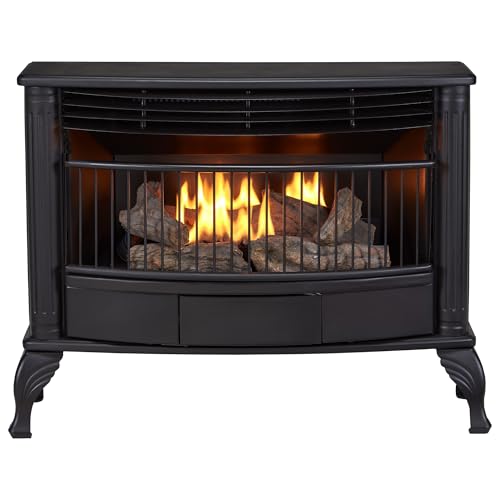
ProCom Ventless Dual Fuel Gas Stove

R.W.FLAME Ceramic Space Heater

MOZODAWN Portable Propane Heater Stove

whicow Heat-Powered Stove Fan
Match BTU Output to Room Size for Effective Heating
Match the propane stove’s BTU output to your room size for effective heating. A stove with 25,000 BTUs can heat roughly 1,100 square feet, so choose a model that covers your space without over- or under-sizing.

Top propane stoves vary widely: the Duluth Forge Dual Fuel Ventless Gas Stove delivers 26,000 BTU, enough for rooms up to about 1,000 square feet, while smaller models like the DeTeMoscor Portable Propane Heater provide closer to 6,000 BTUs, suited for spaces under 300 square feet. Knowing your room size helps you pick a stove with matching heat output.
Avoid undersizing your stove; it will run constantly and fail to keep the room warm. Oversizing is just as problematic: a stove too powerful will cycle on and off too quickly, wasting fuel and creating uneven temperatures. Both scenarios cost more and reduce comfort.
For most homes, a propane stove with 20,000 to 30,000 BTU covers living spaces comfortably, making models like the Duluth Forge a top choice for home use. Smaller rooms or secondary spaces can use models with 6,000 to 15,000 BTU output. Matching the stove to room size ensures safe, efficient heating without surprises.
 Heating System Upgrade PlannerChoose between a heat pump, a furnace, a boiler or a hybrid with your own numbers, and hire the right installer.Every system compared side by side25 questions for contractors, red flagsRunning-cost, payback and quote calculator (Excel)
Understand Venting Options and Their Impact on Safety and Efficiency
Venting options for propane stoves affect both safety and efficiency. Direct vent stoves exhaust combustion gases outside, reducing indoor pollutants but requiring more installation work. Ventless models recirculate air and need proper safety features and ventilation to avoid carbon monoxide buildup.
Ventless stoves include oxygen depletion sensors that shut off the unit if oxygen levels drop dangerously low. Even so, they need some ventilation and should never run in sealed rooms. Direct-vent stoves don’t affect indoor oxygen or air quality as much, making them safer for continuous use in enclosed spaces.
Installation costs differ: ventless models usually install easily with no vent pipe, reducing upfront expense. Direct-vent stoves require professional installation of venting systems, which raises costs and complexity but improves indoor air quality and safety.
Maintenance is simpler with ventless stoves, as there’s no vent to clean. Direct-vent models require regular inspection and cleaning of vent pipes to prevent blockages or leaks, which could cause carbon monoxide buildup.
Local building codes often restrict ventless stove use indoors or require specific safety features. Check your area’s rules before choosing. Indoor air quality matters: running a ventless stove in a poorly ventilated room can cause elevated nitrogen dioxide and moisture levels, impacting health and comfort indoor air quality implications of gas stoves.
If you’re asking, “Are ventless propane stoves safe?” the answer is they can be with proper ventilation, oxygen sensors, and adherence to manufacturer guidelines. For guaranteed air quality and safety, direct-vent stoves are the safer choice for home heating. Venting decisions affect your stove’s efficiency, installation, and the air you breathe.
For more on vented propane stoves and their installation, see our guide to the best vented propane heaters for home use best vented propane heaters.
Check Key Safety Features Before Buying and Using a Propane Stove
Check for safety features like a tip-over switch, oxygen depletion sensor, and automatic shut-off before buying a propane stove. These protect against accidents and unsafe air quality when running indoors.
Tip-over switches are critical for freestanding models. They cut fuel supply if the stove tips or falls, stopping fires caused by accidental knocks. Flame failure devices serve a similar role by shutting off gas if the burner flame goes out unexpectedly.
Regular maintenance keeps these safety features reliable. Check and clean the burner annually to prevent clogging, inspect the ODS sensor for dust or damage, and test the tip-over switch if accessible. Replace batteries in battery-powered ignition systems yearly to ensure ignition without needing household electricity.
Many propane stoves can run without house power thanks to battery ignition or manual piezo igniters. However, some models require electricity for fans or thermostats, so check the specs if you expect power outages or no wiring.
Compare Running Costs and Efficiency of Propane Stoves
Propane stoves can reach efficiency levels over 99%, surpassing oil heating that averages around 80%. Higher efficiency means more heat from each gallon of propane, lowering running costs despite propane’s higher price in some areas.
With efficiencies up to 99.9%, propane stoves convert nearly all fuel into heat. Compare that to oil heating, which averages around 80% efficiency, meaning propane stoves use less fuel for the same heat output.
Pellet stoves also offer high efficiency but require electricity for feed and fans and more frequent maintenance. Propane stoves excel in convenience, with instant heat and simpler operation.
Environmental impact varies. Propane burns cleaner than oil, producing fewer particulates and less carbon monoxide. It emits less CO2 per BTU than oil but more than natural gas. Propane’s high efficiency minimizes wasted fuel, helping reduce overall emissions.
The most efficient propane stoves for home heating combine ventless design with modern controls. The Duluth Forge Dual Fuel Ventless Gas Stove, for example, delivers 26,000 BTU at near 100% efficiency, translating to fuel savings and lower costs compared to less efficient models.
Choose the Right Stove Material, Finish, and Controls for Your Home
Cast iron stoves deliver durable heat and often come with enamel finishes in colors like black, Bordeaux red, and Majolica brown. Steel models heat faster but cool quicker. Controls range from manual valves to thermostats and automatic ignition for convenience.
Finishes affect maintenance and appearance. Enamel finishes, common on cast iron stoves like those from Vermont Castings, provide a smooth, glossy surface that’s easy to clean and resists rust and discoloration. Powder coating, often used on steel stoves, creates a durable matte surface that withstands scratches and high heat but may require gentle cleaning to avoid damage.
Controls have evolved beyond the basic on/off knob. The best propane stove with thermostat control can maintain room temperature automatically, improving fuel efficiency and comfort. Remote thermostat control, available on models like the Duluth Forge Dual Fuel Ventless Gas Stove, lets you adjust settings from across the room or even the house. Automatic ignition systems such as piezo ignitors simplify startup and enhance safety by eliminating matches or lighters.
Color options and styling matter if your stove is a visible feature. Cast iron models often come in traditional colors like black, Bordeaux red, or Majolica brown enamel. Steel stoves typically offer more modern finishes but fewer color choices. Pick a style and finish that fits your room’s decor while also matching your maintenance preferences.
Final Safety and Installation Checklist
Before installing a propane stove, confirm local codes, use a qualified installer for gas and vent connections, and ensure a working carbon monoxide alarm is present. Proper clearance to combustibles and ventilation is essential for safe operation.
Clearances matter. Confirm the stove’s required distances from combustible materials, usually at least 12 to 36 inches depending on the model, to prevent fire hazards. Check both side and rear clearances, plus the floor surface below if it’s combustible.
Propane stove indoor use safety depends heavily on the oxygen depletion sensor (ODS) and pilot light operation. The ODS shuts off fuel flow if oxygen levels drop too low, preventing carbon monoxide buildup. Test the pilot light and ODS regularly to ensure reliable ignition and emergency shutoff.
Have a carbon monoxide alarm installed in the same room as the stove and on every level of your home. Check the alarm’s batteries and functionality before lighting the stove. Even ventless propane stoves produce some combustion byproducts, so a working CO alarm is essential for safe home installation.