The R.W.FLAME Small Space Heater stands out as the best indoor heater for small house rooms, delivering fast 1500W ceramic heat, precise thermostat control, and quiet operation for spaces up to 200 sq.ft.
The essentials
Look for a 1500W ceramic heater with a thermostat for precise temperature control in small rooms up to 200 sq.ft.
Quiet operation below 35dB keeps bedrooms and offices comfortable without noise disturbance.
Safety features like tip-over shutoff, overheat protection, and child lock are essential for indoor use.
Energy-saving modes and timers reduce running costs without sacrificing warmth.
Portable heaters with remote controls and handles offer convenience for moving between rooms.
Choosing the right indoor heater for small house rooms means balancing power, safety, and running costs. A unit that overheats wastes energy and risks damage, while an underpowered heater leaves rooms chilly and uncomfortable.
This guide helps you pick a heater that warms quickly, fits your room size, and runs quietly with safety features that protect your home and family.
Top Indoor Heaters for Small House Rooms
#1Best Overall
R.W.FLAME Small Space Heater Ceramic 1500W
Best for Rooms up to 200 sq.ft needing fast, quiet, and safe heat
The R.W.FLAME heater delivers instant ceramic heat in 2 seconds with 1500W power, covering up to 200 sq.ft. Its precise thermostat with ±1℉ accuracy and 24-hour timer let you control comfort efficiently. It runs quietly at 35dB and includes four safety features plus child lock, ideal for homes with kids or pets.
Best for Small rooms where noise must be minimal, up to 200 sq.ft
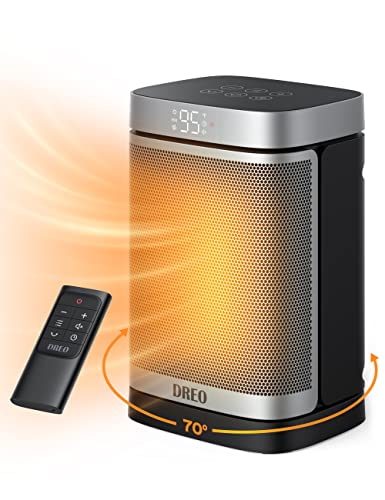
DREO’s heater uses an advanced PTC system with a heat funnel design to circulate warm air farther and faster within small rooms. It runs at an ultra-quiet 34dB thanks to a brushless DC motor and winglet fan. The thermostat adjusts from 41-95℉ in 1-degree steps, and safety includes tip-over and overheat protection with flame-retardant materials.
Best for Small to medium rooms needing wide heat coverage and quiet operation
This DREO heater uses 70° oscillation to help spread warmth evenly across a room. It heats quickly with 1500W power and offers precise thermostat control from 41-95℉. The brushless DC motor keeps noise low at 37.5 dB. Safety is solid with tip-over, overheat protection, and flame-retardant materials.
DREO Large Room Heater 1500W Ceramic with Oscillation
Best for Rooms up to 250 sq.ft needing strong, even heat
With dual DC motors and a 25% larger heating plate, this DREO heater efficiently warms rooms up to 250 sq.ft. It oscillates 70° for wide heat spread and runs quietly at 34dB. Safety features include child lock, overheat and tip-over protection. ECO mode helps reduce energy use without sacrificing warmth.
Best for Medium rooms needing reliable, even heating with timer
This DREO model heats rooms up to 250 sq.ft with 1500W PTC ceramic power and a 70° wide-angle heat distribution. It includes a 24-hour auto-off timer for convenience and safety. The digital thermostat adjusts from 41-95℉ with 1-degree precision. Noise stays low at 34dB thanks to a brushless DC motor and winglet fan.
A 1,500-watt heater is typically the right size for small house rooms up to about 200 square feet. That wattage delivers roughly 5,000 BTUs of heat, enough to keep a standard insulated bedroom or office comfortably warm without wasting energy.
Pick a heater too small and you’ll get cold spots and long run times that add up on your electric bill. Too large, and the heater cycles on and off frequently, using more power and stressing the components. Both oversizing and undersizing cost you extra.
Start sizing by measuring your room’s floor area in square feet: multiply length by width. For example, a 12-foot by 14-foot room is 168 square feet, so a 1,500 W heater fits well.
Worked example
Say your garage is 24 by 24 feet. That’s 576 square feet, which is too large for a typical small space heater rated 1,500 W; you’d need a unit rated closer to 4,500 W or several smaller heaters.
Don’t forget to consider insulation quality and ceiling height. Rooms with poor insulation or ceilings higher than 8 feet need more heat output. Add 10% to 20% capacity for each factor: a 200 sq.ft room with 10-foot ceilings and average insulation might require about 1,800 W instead of 1,500 W.
Tip
Measure twice, buy once: get accurate room dimensions and evaluate insulation before choosing your heater size.
If you’re looking for small room heaters for indoor use that are safe and efficient, sticking close to the 1,500 W mark for rooms up to 200 sq.ft is the simplest guideline. It balances effective heating with manageable energy use.
Understand Safety Features for Indoor Use
Small electric heaters designed for indoor use are safe when they have essential safety features like a tip-over switch and overheat protection. These cut power automatically if the heater falls or gets too hot, preventing fires.
Child locks are another important feature if you have kids around. They prevent accidental changes to temperature or turning the heater on or off, reducing the chance of unsafe operation.
Look for flame-retardant casing materials. These casings resist ignition and slow fire spread if something nearby catches fire, giving you critical seconds to react.
Placement and Clearance
Never place your heater too close to flammable items like curtains, papers or furniture. Keep at least 3 feet of clearance on all sides and never cover the heater. Poor placement is the top cause of indoor heater fires.
Safety certifications like ETL or UL listings show the heater has passed strict independent testing for electrical safety and fire hazard reduction. Always choose heaters with these marks for indoor use.
Are small electric heaters safe for indoor use? Yes, when you pick models with these safety features and follow proper placement rules. Small room heaters for indoor use safe enough to run while you’re home, but never leave them unattended overnight unless the manual explicitly allows it.
Safety Checklist Before Use
Confirm the heater has a tip-over switch
Check for overheat protection
Verify child lock if needed
Ensure ETL or UL certification
Maintain 3 feet clearance around the heater
Place on a stable, level surface
Compare Running Costs and Energy Efficiency
A 1,500-watt space heater running for 8 hours uses 12 kilowatt-hours (kWh) of electricity, which at 17 cents per kWh costs about $2.04. This makes electric heaters affordable for short-term use but costly as a primary heat source over long periods.
Heater Type
Power (W)
Hours
Cost ($)
Electric heater
1,500
8
2.04
Electric heater running costs at 17¢ per kWh
Look for heaters with ECO modes or programmable timers. ECO modes adjust power to maintain target temperature without running full blast, reducing electricity waste. Timers let you heat only when needed, avoiding costs from overheating empty rooms.
A thermostat further saves energy by cycling the heater on and off to keep the room at a steady temperature. Without it, a heater could run constantly and waste power once the room feels warm.
Alternatives like solar-powered heaters or non-electric options exist but usually need more setup and space. Indoor use of fuel-burning heaters like kerosene or propane requires careful ventilation and carbon monoxide detection—most small indoor heaters at Walmart or similar stores are electric to avoid these risks.
Small Indoor Heaters at Walmart
Walmart and similar retailers typically stock compact electric models with built-in safety features and energy-saving modes, ideal for small rooms.
Indoor Use of Non-Electric Heaters
Fuel-burning heaters must never be used indoors without proper ventilation and CO alarms. They are not recommended for typical small house rooms unless specifically designed and rated for indoor use.
Look for Quiet Operation and Convenient Controls
Quiet operation matters when your small portable indoor heater runs in bedrooms or offices. Models with noise levels around 34 to 35 decibels (dB) won’t disturb sleep or focus.
Remote controls add convenience, letting you adjust heat settings or timers without leaving your seat. Multiple heat modes allow you to balance comfort and energy use as conditions change.
Timers are handy for unattended heating. Set your heater to turn off after you sleep or leave the room, preventing waste and enhancing safety.
Portability features like built-in handles or compact size make it easy to move your heater between rooms or store it off-season.
Choose Quiet Heaters
Check product specs for noise levels under 35 dB and look for ceramic heaters—they tend to be quieter than fans or metal coil models.
Controls and Features Checklist
Remote control for easy adjustments
Multiple heat settings or ECO mode
Timer function for automatic shutoff
Portable design with handle or lightweight build
The R.W.FLAME Small Space Heater fits these needs well. It’s quiet, easy to control, and compact enough to carry between small rooms. This makes it the best small indoor space heater for most users.
Useful for this step
R.W.FLAME Small Space Heaters for Indoor Use
The R.W.FLAME Small Space Heater’s quiet operation and remote control make it ideal for bedrooms and offices.
Explore Options for Indoor Heating Without Electricity
Indoor heating without electricity often means relying on solar or fuel-based options, but each comes with important limitations.
Small solar-powered heaters for home use exist, but they depend entirely on sunlight. At best, these units provide supplemental warmth near windows or in sunlit spots during the day. Solar heaters don’t store enough heat to serve as a primary indoor heat source, especially in winter or cloudy weather.
Small Solar Power Heater Reality
Solar heaters convert sunlight into heat or electricity, but indoor use limits their effectiveness since glass and shade reduce available energy. You won’t get steady warmth from a small solar heater alone in a typical room.
Some turn to indoor kerosene or propane heaters without electricity, but these carry safety risks. They produce combustion gases including carbon monoxide and require proper ventilation and an oxygen depletion sensor for safe use. Without fresh air and functioning alarms, they can be hazardous.
Fuel-Burning Heaters Indoors
Never use outdoor-rated kerosene or propane heaters indoors. They lack safety features for enclosed spaces and risk poisoning or fire.
Electric heaters remain the safest, easiest, and most reliable choice for heating small indoor rooms. They produce no combustion gases, install instantly, and offer precise temperature control. Their only downside is dependency on power, but for indoor comfort, they’re unmatched.
Pre-Buy Checklist for Small Indoor Heaters
Before You Buy
Confirm the heater wattage matches your room size—around 1,500 watts for up to 200 sq.ft.
Look for safety certifications like UL, ETL, or CSA and essential features such as tip-over and overheat protection.
Plan heater placement with at least 3 feet clearance from furniture, curtains, and walls.
If buying a fuel-burning heater, prepare working smoke and carbon monoxide alarms and ensure proper ventilation.
Decide if you need timer or thermostat controls for convenience and energy savings.
Stores like Walmart offer a range of small heaters, but don’t buy solely on price or brand familiarity. Double-check specs and safety features before plugging in. A cheap heater missing overheat protection can cost far more in risk.
If you want quiet operation and easy controls, weigh those features alongside size and price. A heater that fits your room and lifestyle is worth a little extra upfront.
More Questions, Answered
Are small electric heaters safe for indoor use?
Small electric heaters are safe indoors when they have safety features such as a tip-over switch and overheat protection. Always plug them directly into a wall outlet, not an extension cord or power strip. Keep at least 3 feet of clearance from combustibles and never leave them unattended unless the manufacturer approves it.
How do I size a heater for a small room?
To size a heater for a small room, use about 10 watts per square foot of space. For example, a 1,500-watt heater typically covers up to 150 square feet comfortably. Rooms up to 200 square feet can also be served by a 1,500-watt unit if insulation is decent and airflow is minimal.
Can I use a solar-powered heater indoors?
Solar-powered heaters generally aren’t practical for indoor use unless paired with a solar battery system. They rely on sunlight to generate heat or electricity, so they don’t provide steady warmth at night or on cloudy days. Fuel-based or electric heaters remain more reliable for consistent indoor heating.
What safety features should a small room heater have?
Look for a tip-over switch that shuts off the heater if it falls, and overheat protection to prevent internal damage or fire risk. A cool-touch exterior is also helpful, especially in homes with children or pets. UL, ETL, or CSA certification ensures the heater meets recognized safety standards.
How much does it cost to run a 1500W heater daily?
Running a 1,500-watt heater for 8 hours uses 12 kWh of electricity. At 17 cents per kWh, that costs about $2.04 per day. Adjust the cost by your local electricity rate and the actual hours you run the heater to estimate your monthly expense.
Are heaters from Walmart reliable for indoor use?
Heaters sold at Walmart vary widely in quality and features. Check that the model has the essential safety features and fits your room size. Don’t choose solely on price or brand familiarity; read the product specs and user manual carefully before buying.