

You walk past the thermostat every day. Maybe you bump it up a few degrees when you feel chilly. Or you leave it at 72°F all summer because that used to work. Then the bill comes, and you wonder what went wrong. Most homeowners have no idea that half the things they believe about their thermostat are costing them real money.
This piece will walk you through the most persistent thermostat myths — the ones that keep your HVAC system running harder than it needs to, year after year. I’ll explain why each one is wrong, what actually works, and how much you can realistically save. If you are ready to stop guessing and start cutting your energy bills, read on.

ecobee
ecobee Smart Thermostat Essential - WiFi Thermostat,…
- Save up to 23% every year on heating and cooling costs, adjusts to your set schedule to save energy when you’re gone and optimize…
- Compatible with 85% of systems, check your system’s compatibility with our online ecobee Compatibility Checker on the ecobee suppo…
- Change your temperature by easily tapping the color touchscreen or using the ecobee app. Plus, free software upgrades ensure you g…
One tool that makes all this easier is a smart thermostat with real scheduling and remote control. The ecobee Smart Thermostat Essential claims to save up to 23% on heating and cooling costs compared to keeping your home at 72°F. It learns your schedule, adjusts when you are away, and pairs with an app so you never have to walk over to the wall again. It also includes a Power Extender Kit for homes without a C-wire, which removes a common barrier to upgrading. We’ll talk more about how it fits into the bigger picture later.
Myth 1: Cranking the Thermostat Heats or Cools Your Home Faster
This is the single most common myth. You want the room warmer fast, so you set the thermostat to 90°F. The furnace runs harder, right? Wrong. Your furnace or air conditioner operates at one speed. It turns on and runs until the set temperature is reached. Setting it to 90°F does not make the air come out any hotter — it just forces the system to run longer before it shuts off. You overshoot the target, waste fuel, and often feel uncomfortable while waiting. The only thing you accomplish is a bigger bill.
Better approach: set the thermostat directly to your desired temperature — say 70°F. The system runs exactly as long as needed. No wasted energy. If you are coming home from work, use a programmable or smart thermostat to start heating 30 minutes before you arrive. That takes the chill off without forcing the system to overwork.
Myth 2: Leaving the Thermostat at One Temperature All Day Saves More Than Letting It Drift
Some people insist that keeping a constant temperature uses less energy than letting the house cool down at night or while you are at work. Their logic: reheating a cold house takes a lot of energy, so it is better to never let it get cold in the first place. That logic fails a basic physics test. Heat loss through walls and windows depends on the temperature difference between inside and outside. The bigger the difference, the faster you lose heat. If you set back the thermostat 7–10°F for 8 hours, you reduce the temperature difference and slow the heat loss. Even though the furnace has to run to bring it back up later, the total energy used is lower.
Studies from the U.S. Department of Energy show you can save 10% on annual heating and cooling costs by setting the thermostat back 7–10°F for 8 hours a day. That is real money, and it only requires a small change in habit. If you have a programmable or smart thermostat, you can automate that setback and forget about it. Read our guide on programming summer schedule for specific tips. The key is to change the temperature when the house is empty or everyone is asleep. You won’t notice the difference, but your wallet will.
Myth 3: Programmable Thermostats Are Just as Good as Smart Ones
Programmable thermostats have been around for decades. They let you set a schedule for weekdays and weekends. In theory, they save energy. In practice, most people never program them. A study from the Lawrence Berkeley National Laboratory found that households with programmable thermostats often used more energy than those with simple manual ones. Why? People either set them wrong, disabled the programming, or left them on hold indefinitely. The technology only works if you use it correctly.
Smart thermostats fix that by learning from your behavior. They detect when you are home via motion sensors, occupancy detection, or your phone’s location. They adjust automatically. The ecobee Smart Thermostat Essential, for instance, lets you set a schedule on the app or the touchscreen, and you can override it from anywhere. You do not have to remember to turn down the heat before a trip — your phone does it. That eliminates the biggest failure point of programmable models: human error. For a deeper look at the mechanics, check out how smart thermostats save energy.
Myth 4: Closing Vents in Unused Rooms Saves Energy
This one sounds reasonable. If you are not using the guest bedroom, why heat or cool it? Close the vent, and the air goes to other rooms instead. Most residential HVAC systems are not designed that way. They are balanced for a certain number of supply vents and a certain duct pressure. Closing a vent increases static pressure in the ductwork. The blower fan has to work harder, which wastes electricity. In extreme cases, the increased pressure can cause air leaks in the ducts or even damage the compressor.
Plus, the system draws return air from the whole house. If you close a supply vent, the room becomes depressurized relative to the rest of the house, pulling conditioned air from other rooms through gaps. You end up wasting energy and making the system run less efficiently. A better strategy is to adjust the thermostat for the whole house and let the system run as designed. If certain rooms are always too hot or too cold, address the insulation or air sealing instead of closing vents.
Comparing Your Thermostat Options
| Approach | Control Method | Typical Energy Savings | Ease of Use | Upfront Cost |
|---|---|---|---|---|
| Manual thermostat | Twist or press buttons | 0% baseline, up to 10% if you manually set back | Low — you have to remember every time | $15–$30 |
| Programmable thermostat | Pre-set schedule (week/weekend) | Up to 10% if programmed correctly | Medium — most people never program it | $25–$80 |
| Smart thermostat (like ecobee) | App, touchscreen, auto-schedule, geofencing | Up to 23% compared to hold at 72°F | High — learns from you, remote access | $100–$250 (check current pricing) |
Numbers in the table come from manufacturer claims and DOE estimates. Your actual savings depend on your climate, home size, and usage patterns. But the trend is clear: automation beats manual effort.
Frequently Asked Questions
What temperature should I set my thermostat to save the most energy?
In winter, set it to 68°F when you are awake and lower it to 60–62°F while sleeping or away. In summer, aim for 78°F when home and raise it to 85°F when out. These are the recommended ranges from the Department of Energy. Each degree above 68°F in winter adds about 3% to your heating bill.
Does turning off the thermostat at night really save money?
Yes, if you can tolerate a cooler bedroom. Turning the system off entirely is risky in extreme cold — pipes can freeze. Instead, set a lower temperature, like 60°F. The key is a setback of at least 7°F for 8 hours. That reduces heat loss and saves fuel. Even a 5°F setback can cut 5–10% off your bill.
How much can I realistically save with a smart thermostat?
Manufacturers claim up to 23% on heating and cooling. Independent studies from the EPA’s Energy Star program show average savings around 8–15% for households that actively use the scheduling features. The ecobee Smart Thermostat Essential has earned Energy Star certification, which means it meets strict efficiency guidelines. Your mileage will vary, but the savings come from eliminating wasteful periods when nobody is home.
Is it worth replacing my old thermostat if it still works?
Depends on your current model. If you have a simple manual thermostat and you often forget to adjust it, a smart thermostat will pay for itself in 1–2 years through savings. If you already have a well-programmed thermostat that works, the upgrade is more about convenience. But many older thermostats drift out of calibration after 10–15 years, causing your system to run longer than needed. Replacing it can improve accuracy.
Do smart thermostats work with heat pumps or multi-stage systems?
Most do, but you need to check compatibility. The ecobee supports up to three stages of heating and two stages of cooling, plus heat pumps with auxiliary heat. It also handles dehumidifier controls. Always run the compatibility checker on the manufacturer’s website before buying. For homes without a C-wire, the included Power Extender Kit is a simple fix.
What You Can Do Right Now
- Stop cranking the thermostat. It never makes your house heat or cool faster.
- Start setting back the temperature 7–10°F at night and when you leave. Your system will run less overall.
- If you own a programmable thermostat, take 10 minutes to set the schedule correctly. Or replace it with a smart model that programs itself.
- Do not close vents in unused rooms. It strains the system and wastes electricity.
- Consider installing a smart thermostat like the ecobee Smart Thermostat Essential. It gives you remote control, scheduling, and real usage data to track your savings.
- Check the insulation and air leaks around windows and doors before blaming your thermostat. A well-sealed home holds temperature longer, cutting runtime further.
- Review energy savings calculator to estimate your personal potential based on your climate and utility rates.

I am a mechanical engineer and love doing research on different home and outdoor heating options. When I am not working, I love spending time with my family and friends. I also enjoy blogging about my findings and helping others to find the best heating options for their needs.
Related guides

How Smart Thermostats Slash Energy Bills by 10%+
Modern thermostats optimize energy savings by using smart algorithms, learning user habits, and offering remote control, ensuring efficient…
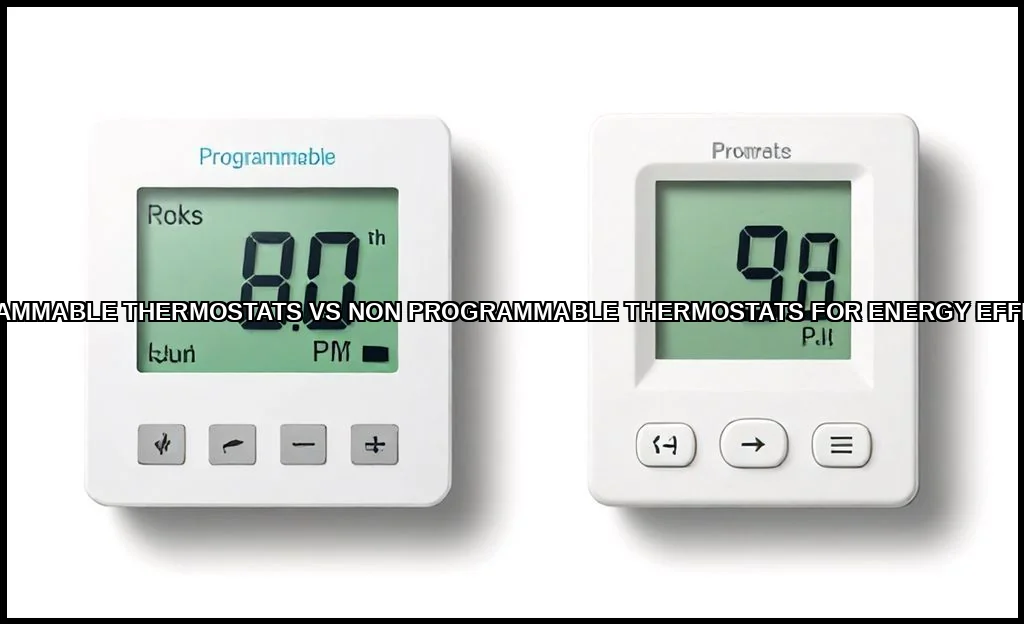
Programmable vs Non-Programmable Thermostats Compared for Efficiency
Decide whether a programmable or non-programmable thermostat saves more energy and money based on your routine, budget, and…
Smart vs Programmable vs Manual Thermostats: Energy Savings Compared
You walk into your living room and it feels like a freezer. Or a sauna. You crank the…
