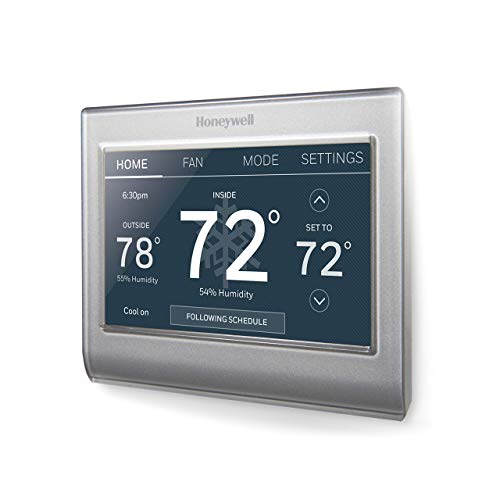
You walk in the door after a long day, tap the thermostat up to 72, and tell yourself it’s fine. Three months later you get a bill that makes you wince. Most people do exactly this — they treat the thermostat like a light switch, cranking it whenever they feel cold or hot. But the real savings live in the middle: the hours you’re asleep, the hours you’re gone, the days nobody is home.
This article walks you through the specific settings that actually cut heating and cooling costs. No vague advice like ‘set it and forget it.’ I’ll give you the numbers — how many degrees to setback, when to preheat, and which modes waste power. You’ll understand why each setting matters and how to program your thermostat so it works for your life, not against it.

ecobee
ecobee Smart Thermostat Essential - WiFi Thermostat,…
- Save up to 23% every year on heating and cooling costs, adjusts to your set schedule to save energy when you’re gone and optimize…
- Compatible with 85% of systems, check your system’s compatibility with our online ecobee Compatibility Checker on the ecobee suppo…
- Change your temperature by easily tapping the color touchscreen or using the ecobee app. Plus, free software upgrades ensure you g…
If you’re shopping for a thermostat that makes all this easier, the ecobee Smart Thermostat Essential is a solid choice. It’s Energy Star certified, works with 85% of home systems, and includes a color touchscreen plus free software updates. You can adjust settings from your phone and track energy use while you’re away. Check the current price on Amazon if you want a unit that handles schedules and setbacks without hassle.
Why constant temperatures cost you money
Heating and cooling make up nearly half of a typical home’s energy bill. That’s the biggest chunk. The funny thing is, your house doesn’t need to be at 72 degrees all day. When you’re sleeping under blankets, 65 is fine. When you’re at work, the house can drift into the 60s in winter or into the 80s in summer. Every degree you move the thermostat away from the outdoor temperature saves about 1-3 percent on your energy bill, according to the Department of Energy. A 7-degree setback overnight can cut heating costs by 10 percent or more.
The trap is the ‘hold’ button. Many people set their thermostat to 72 and leave it there for weeks. That’s the most expensive way to run an HVAC system. Your furnace or AC runs all day just to keep a steady temperature, even when nobody needs it. A smart thermostat breaks this habit by letting you program different temperatures for different times of day. The machine does the work, not your memory.
The 7-10 degree setback rule
I recommend a setback of 7 to 10 degrees for both heating and cooling when the house is unoccupied or you’re asleep. Here’s the logic: a larger setback saves more energy, but it also takes longer to recover. If you live in a moderate climate, go with 10 degrees. If you’re in extreme cold or heat, stick closer to 7 so your HVAC doesn’t struggle to catch back up.
For heating, set daytime away to around 62-65°F. Nighttime sleeping can drop to 60-62°F. For cooling, push the temperature up to 78-80°F when you’re not home, and 76-78°F at night. These are starting points — you can adjust based on how your house feels. The key is consistency. If you have a smart thermostat like the ecobee, you can set these schedules once and it runs automatically.
One common objection: ‘Won’t it take forever to heat the house back up?’ Most modern furnaces recover about 1 degree every 5-10 minutes. A 7-degree setback means the house will be back to comfort temperature in about 35-70 minutes. That’s why you set the thermostat to start preheating 30-60 minutes before you wake up or come home. The ecobee has a built-in Smart Recovery feature that learns how fast your house heats and starts early so you don’t feel cold.
Here’s a comparison of three common approaches to thermostat operation. The table shows how they stack up on savings, comfort, and convenience.
| Method | Annual Savings (estimate) | Comfort | Ease of Use |
|---|---|---|---|
| Manual hold (72°F constant) | 0% baseline | High – always same temp | Easy but mindless |
| Fixed daily schedule (7° setback) | 10-15% | Good – comfortable during occupied hours | Moderate – set once, then forget |
| Adaptive schedule + geofencing (10° setback) | 15-23% | Very good – recovers before you arrive | High – auto-adjusts to habits |
Note: Savings estimates assume a typical house in a moderate climate. Your actual savings depend on insulation, HVAC efficiency, and local weather. The adaptive schedule approach is what energy-saving features in models like the ecobee deliver automatically.
Build a schedule that matches your real life
Most people work roughly 9-to-5, but weekends are different. You need at least four periods per day: wake, leave, return, sleep. For example:
- 6:30 AM (Wake): Heat to 68°F. This gives you a comfortable shower and breakfast without blasting the furnace at 3 AM.
- 8:00 AM (Leave): Drop to 62°F in winter or 80°F in summer. The house coasts for eight hours.
- 5:00 PM (Return): Start recovery so it hits 68°F by 5:30 or so. The ecobee’s Smart Recovery handles the timing.
- 10:00 PM (Sleep): Drop to 62°F (winter) or 78°F (summer). Blankets and ceiling fans do the rest.
Weekends need a different ‘leave’ schedule or none at all. Many thermostats let you copy weekday settings to weekends and modify. If your house is empty for three hours or less, sometimes it’s better not to setback — the energy saved is small compared to the recovery blast. Three hours is the sweet spot. Any longer than that, setback saves money.
Another overlooked setting is fan mode. Running the fan continuously uses 30-50 watts per hour. Over a month that’s about 20-40 kWh, depending on your fan motor. Set the fan to ‘Auto’ and it runs only when heating or cooling calls for it. If you want air circulation, use a short periodic run (like 10 minutes per hour) instead of continuous. The ecobee lets you set a minimum fan runtime per hour through its menu.
What about vacation mode?
If you leave for more than 24 hours, push the setback further. In winter, 55°F is safe (keeps pipes from freezing). In summer, 85°F is fine (keeps humidity from building up). Don’t go below 55 in winter – pipes freeze at around 32°F, but you need buffer. And don’t turn the system off completely; your fridge and electronics still need a moderate environment. Some smart thermostats have a ‘Vacation’ preset that handles this. You can set it from your phone the day you leave.
Frequently asked questions
What is the best temperature to set my thermostat for energy savings when I’m home?
For winter, 68°F when awake and active. For summer, 78°F. These are the Department of Energy recommended settings. If 68 feels cold, try 69 or 70 and compensate with a sweater. Every degree above 68 in winter adds about 3 percent to your heating bill. For cooling, each degree below 78 adds roughly 6 percent to your cooling costs.
Should I use the ‘hold’ function or program a schedule?
Use a schedule. Hold is for temporary situations only — like if you’re home sick for a day and want a constant warm temp. A schedule automatically reverts to energy-saving temperatures when you don’t need them. Leaving the thermostat on hold at 72°F for two weeks will cost you more than any benefit from a smart thermostat.
How much can I save by lowering the temperature at night?
Around 10 percent of your heating bill for each 7-10 degree setback over an eight-hour night. If you spend $150 per month on heating in winter, that’s about $15 saved per month just from nighttime setbacks. Combined with daytime setbacks, total savings can reach 20-30 percent. Thermostat to reduce energy bills guidelines suggest a consistent schedule yields the best results.
Will a smart thermostat pay for itself?
Usually within one to two years, depending on your climate and utility rates. The ecobee Smart Thermostat Essential costs significantly less than some premium models. If you save even 15 percent on a $200 monthly bill, that’s $30 a month off-season and $60 in peak months. Even in a moderate climate, break-even happens well within two years. Plus, some utilities offer rebates for Energy Star certified thermostats.
What’s the best schedule for someone who works from home?
If you’re home all day, you can’t set a deep daytime setback. Instead, widen the comfort range. Set winter to 66-68°F and summer to 76-78°F. Use a ceiling fan in summer so you can tolerate the higher temperature. Let the thermostat drift a few degrees between runs – set a 2-degree deadband (e.g., heat kicks on at 66, shuts off at 68) so the system cycles less. You’ll still save compared to a constant 72 or 70.
What to do next
- Program a daily schedule with at least four transitions: wake, leave, return, sleep.
- Set heating setbacks to 62-65°F when away or asleep; cooling setbacks to 78-80°F.
- Use Smart Recovery or adaptive features so your home is comfortable when you need it.
- Set the fan to Auto — only run it continuously if you have a specific air quality need.
- Enable vacation mode (55°F winter, 85°F summer) when you travel for more than 24 hours.
- If you have a smart thermostat, check its energy report monthly to see where you can tighten the schedule.
- Consider a thermostat like the ecobee Smart Thermostat Essential if your current one lacks scheduling or phone control — check its current price on Amazon.

I am a mechanical engineer and love doing research on different home and outdoor heating options. When I am not working, I love spending time with my family and friends. I also enjoy blogging about my findings and helping others to find the best heating options for their needs.
Related guides

How Your Thermostat Controls Home Heat Distribution
The thermostat regulates temperature by signaling the heating system, impacting heat distribution and ensuring consistent warmth throughout the…

10 Powerful Benefits of Programmable Thermostats (Save Big!)
You set the thermostat to 68°F before bed, wake up shivering at 3 AM, and crank it to…
How Smart Thermostats Cut Energy Bills by 20%+
You get your monthly electric bill, stare at the number, and wonder how a house that feels lukewarm…