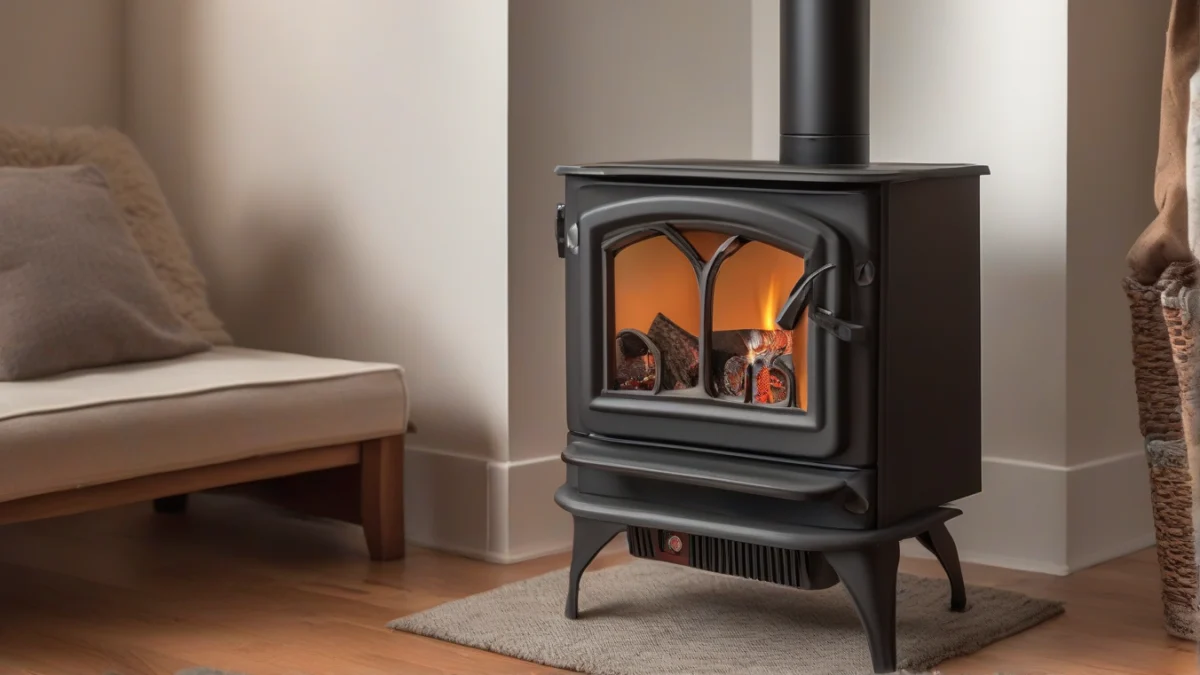
The Canyon Lodge Mini Pellet Stove typically heats 800 to 1,200 square feet at about 10 to 12 watts per square foot. Sizing right avoids wasted fuel and uneven heat.
Sizing your Canyon Lodge Mini Pellet Stove correctly means matching its heat output to your space’s needs. Too small, and you’re freezing; too big, and you waste pellets and money.
Most people underestimate the role of insulation and climate, which can skew the stove’s effective coverage by hundreds of square feet.
What to remember
The Mini Pellet Stove suits homes or rooms from 800 to 1,200 sq ft, roughly 10 watts per sq ft.
Adjust sizing up or down based on insulation, ceiling height, and local climate.
Undersizing leads to cold spots and constant running; oversizing wastes pellets and causes frequent cycling.
Always check your home’s heat loss before choosing a model to avoid costly mistakes.
Use the sizing chart and scenario example here to pick the right stove size for your space.
How to Size the Canyon Lodge Mini Pellet Stove
For the Canyon Lodge Mini Pellet Stove, use 10 to 12 watts of heating output per square foot, then adjust for the building rather than trusting the room size alone. A practical target is roughly 800 to 1,200 square feet, or about 8,000 to 14,400 watts of heat-rate equivalent, which works out to approximately 27,300 to 49,100 BTU per hour.
This stove is ideal for heating 800 to 1,200 square feet.
That rule answers the common question, what size pellet stove do I need, without pretending every house leaks heat at the same speed. The lower end suits a reasonably insulated home in a mild climate; the upper end makes more sense for colder weather, tall ceilings or noticeable drafts.
Area
Estimated watts
Approx. BTU per hour
800 sq. ft.
8,000–9,600 W
27,300–32,800 BTU/h
1,000 sq. ft.
10,000–12,000 W
34,100–41,000 BTU/h
1,200 sq. ft.
12,000–14,400 W
41,000–49,100 BTU/h
BTU figures use 1 watt = 3.412 BTU per hour; these are sizing estimates, not a substitute for the stove’s listed output.
A Simple Sizing Check
1
Measure the heated area
Add the square footage of rooms that can actually receive heat. A closed bedroom at the far end of the house shouldn’t quietly join the calculation.
2
Choose the heat factor
Start at 10 W per square foot for good insulation and a moderate climate. Move toward 12 W per square foot for older construction, colder conditions or more air leakage.
3
Compare the result with the model
The Canyon Lodge Mini Pellet Stove is listed for 800 to 1,200 square feet, so a calculated need well above 1,200 square feet points toward a larger model rather than forcing this one to work harder.
Worked example
Say your heated area is 1,000 square feet and the house has average insulation. At 11 watts per square foot, the estimate is 11,000 watts. Multiply by 3.412 and you get about 37,500 BTU per hour, which sits near the middle of this model’s stated coverage range.
Heated area1,000 sq. ft.
Sizing factor11 W per sq. ft.
Estimated heat rate37,500 BTU/h
The 24-lb. hopper affects how often you refill the stove, not how many square feet it can heat. A higher feed setting uses pellets faster, while a lower setting stretches the hopper; the exact runtime depends on the stove control setting, pellet quality and heat demand.
Useful for this size check
Canyon Lodge Small Pellet Stove
Product 1 fits homes in the 800-to-1,200-square-foot range and adds a 24-lb. hopper, automatic ignition and a cast iron fire pot for a straightforward small-stove setup.
If your estimate lands outside that range, compare the calculation with a broader guide on choosing the right pellet stove size for your home before buying. A stove that is technically powerful enough on paper can still struggle to spread heat through a divided or tall house.
What Affects the Mini Pellet Stove’s Heating Capacity
Pellet stove efficiency depends on the building, fuel and airflow as much as the stove’s label; pellet stove maintenance and regular pellet stove cleaning keep the available heat from being buried under ash. A clean, well-sealed 1,000-square-foot home can need less heat than a drafty home of the same size.
Insulation And Ceiling Height
Insulation slows heat loss through the attic, walls and floor, so poor insulation pushes your sizing choice toward the high end of the 10-to-12-watt rule. Drafty doors, leaky windows and an unsealed chimney chase have the same effect, because the stove ends up heating replacement outdoor air.
Ceiling height changes the volume the stove must warm. An 800-square-foot room with 8-foot ceilings contains less air than an 800-square-foot great room with 12-foot ceilings, and warm air can collect overhead instead of reaching the living zone. A ceiling fan on a low, gentle setting can help mix that air without creating a cold breeze.
Climate And Pellets
Climate determines how hard the stove must work on the coldest days. Mild regions generally fit closer to the low end of the coverage estimate, while colder regions, exposed homes and long heating seasons call for more reserve; local design temperatures are more useful than an annual average.
Pellet type and condition also change the result. Dry, consistent pellets usually feed and burn more predictably than damp or crumbling fuel, while excess ash can restrict airflow and reduce heat transfer. Follow the manual’s approved fuel guidance rather than treating every bag as interchangeable.
Cleaning changes the heat you get
Ash in the burn pot can block combustion air, and soot on heat-transfer surfaces can slow the movement of heat into the room. Clean the burn pot and ash areas on the schedule in the manual, inspect the exhaust path, and arrange the required vent and chimney maintenance before heating season.
Use the cold-room test
After the stove runs steadily, check the rooms you expect it to heat. A warm area beside the stove and cold rooms beyond a doorway points to air distribution or layout limits, not automatically to a larger hopper or a hotter setting.
Canyon Lodge Pellet Stoves by Size
Choose a model based on your home’s square footage
Smaller homes
Canyon Lodge Small Pellet Stove
This is the closer fit for the Mini Pellet Stove’s typical heating range, so it suits smaller spaces without stepping up to a larger stove. The 24-lb. hopper, automatic ignition and standard 3-inch exhaust keep the setup practical.
Choose this model when your square footage is beyond the Mini Pellet Stove’s range and you need broader heat coverage. Its 66-lb. hopper is also a better match for a larger heating area, while the bayfront window and air-washed viewing glass keep the fire visible.
What Happens If You Undersize or Oversize Your Pellet Stove
If you’re troubleshooting pellet stove problems, start with sizing: an undersized stove runs hard and still leaves cold spots, while an oversized stove can cycle, waste pellets and make the room uncomfortably hot. Pellet stove troubleshooting gets much easier when the heat load matches the stove’s coverage range.
An undersized stove may run for long stretches at a high setting without catching up. Rooms far from the stove stay cool, exterior walls feel chilly, and the unit has little reserve for a windy night or a sharp temperature drop. Turning the thermostat higher can’t create heat the fire pot and heat exchanger can’t deliver.
Oversizing causes a different headache. The stove reaches the thermostat setting quickly, shuts down or idles, then starts again after the room cools. Those repeated starts use pellets without giving the building steady heat, and the main room can feel hot while bedrooms remain cooler. Pellet stoves are happiest when they can run at a steady output.
Sizing mistake
What you’ll notice
Likely cost or comfort effect
Too small
Long high-output runs and cold rooms
More pellet use for less comfort
Too large
Short cycles, hot main room and frequent restarts
Pellets burned before the heat spreads evenly
Well matched
Longer steady runs with even room temperatures
More predictable fuel use and comfort
The table describes common patterns; insulation, layout and thermostat placement still affect the result.
Wrong sizing can also shorten service life over time. Long high-output operation stresses moving parts and fans, while frequent ignition cycles add wear to the igniter and leave more opportunities for ash or partially burned fuel to interfere with startup. Keep the fire pot and exhaust path clean, and treat repeated shutdowns, weak flame or a full ash pan as troubleshooting clues rather than proof that you need a larger stove.
Before changing stoves
Check pellet quality, the air inlet, the exhaust vent, the fire pot and the door gasket first. Never bypass a safety switch or keep operating a stove that spills smoke indoors; follow the manual and have venting inspected when the cause isn’t clear.
Sizing Canyon Lodge Pellet Stoves by Home Size
The canyon lodge bayfront pellet stove is the larger choice for homes needing coverage from 1,800 to 2,500 square feet; the small model fits the 800 to 1,200 square-foot range. Choose by the heated area and building heat loss, not by the largest number printed on a listing.
Consider the size of your home when choosing a stove.
Model
Listed coverage
Useful fit
Features that matter
Product 1
800–1,200 sq. ft.
Smaller homes or a defined heating zone
24-lb. hopper, automatic ignition and standard 3-inch exhaust
Product 2
1,800–2,500 sq. ft.
Larger open homes with enough heat movement
66-lb. hopper, bayfront window and automatic ignition
Coverage is a planning range, not a promise for every floor plan or climate.
Choose product 1 when the living area is within its range and you want to avoid overpowering a compact space. Its 24-lb. hopper and automatic ignition suit a smaller installation, while the cast iron fire pot and air-washed viewing glass support routine operation and a clear view of the flame.
Choose product 2 when the heated area approaches 1,800 to 2,500 square feet and the layout lets warm air move beyond the stove room. Its 66-lb. hopper can reduce refill frequency, and the cast iron fire pot, automatic ignition and air wash system carry the same practical features into the larger size. For a closer look at that model’s coverage, see canyon lodge bayfront pellet stove.
For larger open homes
Canyon Lodge Bayfront Pellet Stove
Product 2 makes sense when your heated area is 1,800 to 2,500 square feet and you can provide the clearances, venting and airflow its installation requires.
Brand reputation helps after the size is right, but it can’t rescue a stove placed in a poor location or fed with unsuitable pellets. If you’re comparing the best pellet stove brands, use best pellet stove brands as a separate reliability check after narrowing the field by coverage.
What To Do Next: Measuring and Choosing the Right Stove
Start with a room-by-room measurement, then match the Canyon Lodge Mini Pellet Stove to the heated area, insulation and local winter temperatures. To program a pellet stove, use its control panel or thermostat—if equipped—to set the target temperature and any weekday or overnight schedule; the exact buttons and limits belong to the owner’s manual.
1
Measure your heated space
Record each heated room’s length and width, then add the square footage. Note open doorways, stairwells and rooms the stove won’t reach well. A closed bedroom shouldn’t count as heated space simply because the stove is down the hall.
2
Assess the building
Use the lower end of the stove’s coverage in a drafty, poorly insulated home or a colder climate. Better insulation, moderate winters and an open floor plan support the higher end. Window drafts and high ceilings can change the result.
3
Pick the model and size
Compare that adjusted area with the Canyon Lodge model range from the sizing chart. Choose the smallest stove that can meet the design heat demand; oversized pellet stoves may cycle instead of running steadily.
4
Plan installation and care
Have a qualified installer follow the stove listing, vent requirements and local clearances. A practical pellet stove maintenance guide includes cooling and unplugging the unit before cleaning the burn pot, ash pan and glass, plus checking the vent and chimney on the manufacturer’s schedule.
Before the first fire
Confirm the thermostat or schedule operates as intended.
Use only the fuel specified by the manual; never burn trash or treated wood.
Arrange an annual chimney inspection and sweeping.
Keep the required clearances around the stove and vent.
For larger homes
Canyon Lodge Bayfront Pellet Stove
If your measured area is closer to 1,800 to 2,500 square feet, compare the canyon lodge bayfront pellet stove rather than forcing a mini stove to carry the whole house.
How long does a 20 lb hopper last on the Canyon Lodge Mini Pellet Stove?
There isn’t one fixed runtime: the stove’s heat setting, thermostat cycle, pellet quality and building heat loss determine how quickly it uses a 20 lb hopper. Low output can stretch the hopper considerably longer than high output, so time one full hopper at your normal setting before planning refills. Check the manual for the rated feed rate rather than treating 20 lb as a guaranteed number of hours.
Are pellet stoves worth the investment compared to other heating methods?
A pellet stove can make sense when you have a suitable chimney or vent route, affordable dry pellets and a space that needs steady heat. Installation, electricity for the auger and blowers, ash removal and annual chimney service all affect the payback. Compare the installed cost and your local pellet price with the fuel and service costs of your current heater before deciding.
How often should I clean and maintain my pellet stove for best performance?
During regular heating, inspect and clean the burn pot and remove ash as often as the manual requires; heavy ash can restrict combustion air and reduce heat. Empty the ash pan before it blocks airflow, inspect the vent for buildup, and have the chimney or vent system inspected and swept at least annually. Shut the stove down and let every part cool before cleaning.
Can I use the Canyon Lodge Mini Pellet Stove in a room larger than 1,200 sq ft?
You can use it as supplemental heat in a larger, well-insulated, open area, but it may struggle to heat the whole space during cold weather. A 1,500-square-foot home with closed rooms, poor insulation or cold winters can develop cold spots even if the stove runs continuously. Keep the larger heating area and local winter design temperature in the sizing decision.
What safety features should I look for in a pellet stove?
Choose a listed appliance with automatic overheat protection, a reliable door seal and controls that stop pellet feeding if combustion airflow or a safety switch detects a problem. The installation also needs the manufacturer’s clearances, approved venting and working smoke and carbon monoxide alarms. Never burn trash or treated wood, and follow the manual for ash disposal.
How do pellet stoves ignite and regulate heat output?
An electric igniter heats the incoming air until the pellets catch, while an auger meters pellets from the hopper into the burn pot. The combustion blower supplies air and moves exhaust, and the control board changes feed and airflow or cycles the stove to follow the thermostat. A power outage usually stops those automatic functions, so follow the model’s shutdown and backup-power instructions.
What are the signs my pellet stove is undersized or oversized for my home?
An undersized stove runs at high output for long periods yet leaves distant rooms or exterior walls cold. An oversized stove reaches the thermostat quickly, shuts down or cycles often, and may use pellets inefficiently during mild weather. Track room temperatures and hopper use across a cold day; frequent cycling points toward too much capacity, while constant maximum output with cold rooms points toward too little.