Electric Baseboard Heaters: When Wiring Gets Upgraded
On this page 6 sections
The common mistake is assuming any old baseboard wall unit can be swapped for electric without checking the circuit, wire size, and thermostat rating. That mistake can leave you with a heater that trips the breaker, warms unevenly, or costs more to run than you planned.
Electric baseboard heat is simple in one way: power goes through a resistance element, the element gets hot, and the room warms by convection and a little radiant heat. The catch is that simplicity puts the whole job on the electrical side, so the numbers matter before you buy anything.
Upgrading Baseboard Heating To Electric
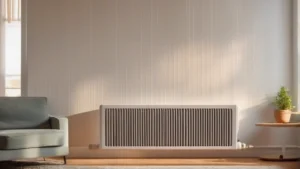
Upgrading baseboard heating to electric means giving a room its own electric resistance heater, circuit and line-voltage control instead of relying on a central or hydronic heat source. Electric baseboard heaters use 120 or 240 volts; the element heats metal fins, and those fins warm the room without a blower.
So, is baseboard heat electric or gas? Baseboard electric heat is common, while hydronic baseboard uses hot water and gas may heat the boiler. Baseboard heating installation is a real electrical upgrade when you add a heater and circuit; replacing an old cover or thermostat alone doesn’t convert the room.
What The Upgrade Changes
A new electric baseboard heater can give you room-by-room control in a bedroom, office or finished addition. You gain quiet operation, no ductwork and no combustion inside the room. You give up some wall space and accept electric resistance heat, which turns nearly all the electricity it uses into heat but can cost more to run during long, cold spells.
| System | Heat delivery | Wall space | Typical use |
|---|---|---|---|
| Electric baseboard | An electric element heats fins; warm air rises | Uses a low strip along the wall | Zoned bedrooms, offices and additions |
| Hydronic baseboard | Hot water warms a metal baseboard | Uses a low strip along the wall | Rooms served by a boiler or hot-water system |
| Electric fireplace | An electric element warms moving room air | Uses floor or wall space around the fireplace | Supplemental heat and visual appeal |
For a room that needs its own quiet heat, electric baseboard heaters are the straightforward choice. Keep the heater plugged or wired as the manufacturer specifies, maintain its clearance, and have new circuit work handled by a qualified electrician.
Where Electric Baseboard Fits Best

Electric baseboard heaters normally sit low on the coldest exterior wall, often beneath a window, with the manufacturer’s clearance from the floor, drapes, furniture and trim. There is no universal mounting height; keep the heater near floor level as listed, and don’t raise it to make room for a rug or cabinet.
A wood wall is usually a suitable mounting surface when the heater is listed for that installation and its brackets are fastened securely. Keep curtains, furniture and stored items away from the heater, and check that nearby receptacles, baseboard trim and door casings won’t crowd the required clearances.
Basement installation deserves an insulation check before you add watts. Sealing rim-joist leaks and insulating cold walls can reduce the heat the room loses; otherwise, the new baseboard may run for long periods while the floor and exterior walls still feel cold.
Open floor plans often need multiple shorter heaters along separate exterior walls because one long unit cannot spread heat evenly through a drafty or divided space. A room-by-room heat-loss calculation is more reliable than choosing wattage from floor area alone.
Thermostats And Wiring That Matter
Thermostats for electric baseboard heating must match the heater’s voltage and current, and many baseboard circuits operate at 240 V rather than the 24 V used by a typical furnace thermostat. A 1,500 W heater draws 6.25 A at 240 V or 12.5 A at 120 V, so the control and circuit must be rated for the actual load.
A single-pole line-voltage thermostat opens one side of the circuit when it calls for heat, while a double-pole thermostat opens both sides when off. The double-pole type fully disconnects the heater from the supply, but the correct choice depends on the heater, circuit and installation instructions.
A furnace-style low-voltage smart thermostat usually cannot control a line-voltage baseboard heater directly. Choose a line-voltage smart thermostat made for the heater’s voltage and load, or use the control setup specified by the manufacturer; compatibility includes wiring and maximum current, not merely the word “smart.”
If you’re shopping for a matched unit and control, electric baseboard heaters with thermostat can narrow the search, but still verify the voltage and amp rating against your circuit before ordering.
 Winter Heating Bill CutterSee what every heater in your home really costs, heat the rooms you use, and cut the waste in 30 days.Cost-per-hour tables for every heaterThermostat schedule and draft-proofing planRunning-cost and bill calculator (Excel)
What It Costs To Run
Electric baseboard heat cost per month is often higher than gas when electricity costs more than the gas needed to deliver the same heat, but your utility rates, gas-appliance efficiency and insulation decide the comparison. Electric baseboard heaters convert nearly all incoming electricity into heat at the room, while a gas system also loses some heat through combustion and venting.
The standard calculation is watts ÷ 1,000 × hours per day × days × your price per kilowatt-hour. For example, a 1,500 W heater running 8 hours a day for 30 days uses 1.5 × 8 × 30 kilowatt-hours at the assumed electric rate below.
| Heater | Watts | Per hour | Per day (8 h) | Per month (30 days) |
|---|---|---|---|---|
| 1,500 W electric baseboard heater | 1,500 W | 26¢ | $2.04 | $61.20 |
A heater cycling at a 50% duty cycle costs about half as much over the same period as one running continuously. The room can still feel drafty, though, if air leaks or poor insulation keep replacing the warmed air.
More wattage doesn’t cure heat loss by itself. A larger electric baseboard can keep up only when the room needs that output and the circuit, breaker, wiring and thermostat can support the load.
A thermostat with tighter temperature control can trim wasted run time, but it can’t change resistance heat’s basic arithmetic. Electric baseboard-compatible controls must still match the heater’s voltage and current; a 240 V heater isn’t compatible with a 120 V control.
When A Different Heater Fits Better
Electric baseboard is the wrong fit when a room has little clear perimeter wall, needs occasional spot heat or can’t accommodate the required hardwired installation. The best type of electric baseboard heater is still the one that fits the room’s heat loss and circuit, while hot-water baseboard depends on a boiler and piping rather than a line-voltage electric circuit.
A low-profile supplemental heater or fireplace-style unit can work better where furniture, doors or windows leave no sensible baseboard run. A true electric baseboard installation is generally a line-voltage wiring job, so an electrician should verify the circuit and heater connection; a plug-in unit avoids that wiring project but has less output and placement freedom than a hardwired system.

If you’re upgrading from oil-filled radiators, a fireplace-style heater can provide similar supplemental, room-by-room service without waiting for a boiler or moving hot water through pipes. It won’t deliver the even perimeter coverage of correctly sized electric baseboard, and it must plug straight into a wall outlet, never an extension cord or power strip.