Electric Baseboard Heaters With Thermostat: What To Buy
Joye
October 3, 2026 10 min read
The short fix
Choosing the right baseboard heater means matching heat output, voltage and thermostat control to the room, and it usually takes a few hours of planning before any wiring starts. The selection part is a DIY job; the hardwiring is only DIY if you already know local electrical rules and are comfortable working in a live panel.
A half-true belief causes a lot of bad buys: a bigger baseboard heater does heat a room faster. The half that matters is fast recovery after a setback; the wrong half is oversizing, which can make a room swing warm and cold and waste power.
Baseboard heat is simple on the outside and picky behind the wall. The details that matter are circuit voltage, wattage, thermostat type and where the heater can breathe without a curtain, sofa or toy box parked in front of it.
Key takeaways
Match the heater wattage to the room size and insulation, then choose the circuit voltage to fit the wiring you already have.
Use an external wall thermostat unless the heater is sold as a self-contained unit with its own control.
Keep the grille clear and leave the manufacturer’s clearance from furniture, drapes and trim.
If the room needs new 240 V wiring, a permit and a licensed electrician are often part of the job.
A baseboard heater that trips its overheat safety is telling you airflow is blocked or the unit is undersized for the way the room is used.
How To Choose The Right Baseboard Heater
Most residential baseboard heaters are electric units that require hardwiring to your home’s electrical system; they are not plug-in heaters. The best type matches your room size, voltage, and thermostat control for efficient, quiet convection heat.
Choose the right baseboard heater for your room size.
Sizing your baseboard heater depends on the room area and insulation quality. For example, a 500 W heater covers about 50 square feet, while a 1250 W heater covers up to 125 square feet. These figures come from manufacturer data for common models like the Stelpro Brava series.
Heater Size
Room Coverage
500 W
Up to 50 sq ft
1250 W
Up to 125 sq ft
Baseboard Heater Size vs. Coverage
Voltage compatibility is critical. Baseboard heaters come in 120 V, 208 V, and 240 V models, and you must match the heater voltage to your circuit voltage exactly. They are not interchangeable by guesswork; installing the wrong voltage can cause malfunction or hazards.
Most baseboard heaters require a separate wall thermostat for temperature control, as built-in thermostats are uncommon or sold separately. For example, both the 500 W and 1250 W Stelpro Brava models need external thermostats such as the SIBTE12F electronic or SIBT1W mechanical types.
Sizing Example for Two Rooms
Say you have a 10 by 12-foot bedroom (120 sq ft) with light insulation and a small 8 by 10-foot office (80 sq ft) with similar insulation. The bedroom needs a 1250 W heater since 500 W covers only 50 sq ft, too small to maintain comfort without running full blast. The office could work with a 500 W unit, which covers up to 50 sq ft but might run a bit more if insulation is poor. Choosing a heater that can hold the room temperature without constant full power saves electricity and extends heater life.
A quick decision rule is to pick the smallest heater that can maintain your room without running at full power all the time. Oversized heaters cycle on and off more, wearing parts faster and wasting energy; undersized heaters run constantly, pushing your electric bill up and leaving you cold.
Matching Heater Size and Voltage
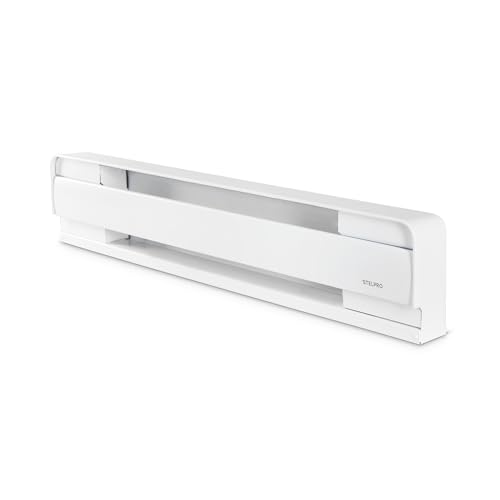
Stelpro Brava Electric Baseboard Heater
Product 1 works well for small rooms up to 50 sq ft on a 120 V circuit, making it a solid choice for bedrooms or offices with those specs.
Use these heaters and thermostat parts only where the step calls for a replacement or a matched install.
Small rooms up to 50 sq ft
Stelpro Brava Electric Baseboard Heater 500W 120V
This 500W heater fits small spaces and matches 120V circuits, offering quiet convection heat with a steel cabinet that resists damage. It requires an external thermostat, so you get precise control tailored to your wiring.
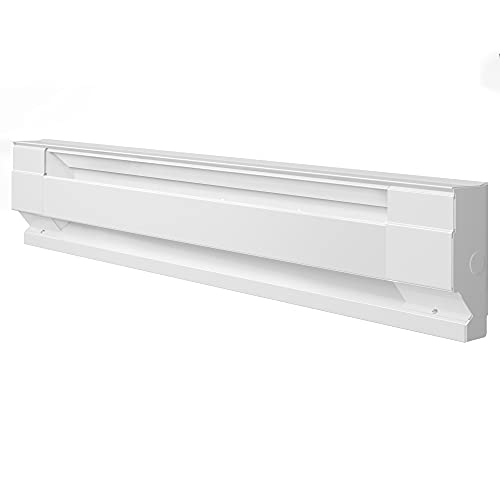
Cadet F Series 36″ Electric Baseboard Heater 750W 240V
This 750W heater handles larger rooms with multi-watt and voltage options, making it versatile for various setups. Its convection design spreads warmth evenly, and the universal wiring with knockouts speeds installation.
Stelpro Brava Electric Baseboard Heater 1250W 240V
Delivering 1250W on 240V, this heater suits larger spaces with silent convection warmth and a robust steel cabinet. Like its smaller sibling, it requires an external thermostat for precise temperature control.
Baseboard heating installation starts with assembling the right parts and tools so the job goes smoothly and safely. Installing electric baseboard heat isn’t a plug-and-play task; these heaters require hardwiring to your home’s electrical system, never a plug-in cord or power strip.
Assemble the right tools for a smooth installation.
Tools and Parts Checklist
Baseboard heater sized for your room
Matching thermostat (external or built-in)
Cable clamps
Appropriate wire for your circuit
Breaker capacity check tool or panel label
Screwdriver
Level
Wire stripper
Voltage tester
Mounting hardware if your wall requires it
Before You Touch Any Wiring
Turn off the circuit breaker feeding the heater’s circuit and verify with a voltage tester that the wires are dead. Never work on a live circuit. This is a non-negotiable safety step that prevents electric shock or worse.
Remember, the heater needs minimum clearances from combustibles and must not be buried behind furniture or drapes. These clearances ensure air can circulate freely for safe, effective heating and to avoid overheating or damage.
Plan Your Wall Space
Measure the wall length where you plan to install and leave open air space under the unit. Good airflow around the heater improves heat distribution and prevents hotspots.
How To Install Electric Baseboard Heaters With Thermostats
1
Confirm Circuit Voltage and Breaker Size
Check the heater’s voltage rating and make sure your circuit breaker matches it. For example, Product 1 runs on 120 V and requires a breaker sized for its wattage. If you’re unsure or need new wiring or breakers, call an electrician.
2
Mount the Heater at Correct Clearance
Install the heater on the wall ensuring it meets clearance requirements from floors, furniture, and curtains. Use a level for a straight fit and the included hardware or mounting brackets.
3
Run the Branch Circuit and Splices
Pull the properly rated wire from your breaker panel to the heater location. Secure cables with cable clamps as required. Make splices inside approved electrical boxes only.
4
Wire the Thermostat and Restore Power
Wire the thermostat according to the heater’s instructions. Single-pole thermostats switch one side of the circuit; double-pole switch both sides, so follow the exact wiring diagram. Then turn the breaker back on and test the heater’s operation.
Products 1 and 3 require external thermostat control and are available in multiple voltages, so match your wiring carefully. Product 2 offers 240/208 V options and universal wiring, simplifying installation in some cases.
Call an Electrician If Needed
If you need to install new cable, add a breaker, or cut into your wall for a thermostat box, hire a licensed electrician. These steps involve code compliance and safety beyond a typical DIY scope.
Example Step
Stelpro Brava Electric Baseboard Heater
Product 1 is a good example of a baseboard heater requiring external thermostat control, illustrating the wiring and mounting steps clearly.
Common Baseboard Heater Mistakes That Cause Damage
Cleaning dust from your baseboard heater before heating season is essential because accumulated dust restricts airflow and causes unpleasant odors at startup.
Blocked airflow is the most common mistake; it triggers nuisance shutdowns and overheats the heater cabinet, grille, and the nearby trim, potentially damaging them.
Avoid Blocking The Heater
Never install baseboard heaters where furniture, curtains, bedding, or stored boxes sit in front of the unit. These obstructions cut airflow and raise fire risk.
Mount baseboard heaters only on surfaces the manufacturer explicitly allows. If you wonder about installing on plywood, check the installation instructions and local code. Manufacturer rules and code override guesswork every time.
Wall height matters. Baseboard heaters need to be low enough to clear baseboards and trim but high enough to avoid damage or blocking by floor coverings. Follow the heater’s height requirements closely.
Electric baseboard heaters are compatible with standard residential wiring but require proper mounting and clearance to function safely and efficiently.
Signs To Stop And Inspect
If you see scorch marks, buzzing sounds, discolored wire insulation, or your breaker trips repeatedly, stop using the heater and inspect immediately. These are warning signs of electrical or heat damage.
When Permits Or A Licensed Pro Are Required
Installing baseboard heating often requires permits and a licensed electrician, especially when adding new 240 V branch circuits, breakers, panel work, or concealed wiring.
Replacing a like-for-like heater on an existing, correctly sized circuit can be simpler, but local electrical codes still apply and may require inspection or permits.
Call A Pro If Wiring Changes
If your wall thermostat box needs new cable, the circuit is shared with other loads, or the room has aluminum wiring, damaged insulation, or moisture signs at the wall, a licensed electrician should handle the installation.
Know Your Limits
You can do some prep and mounting if you understand local electrical rules and have experience. However, panel work, new circuits, and concealed wiring usually need a professional. Don’t risk safety or code violations.
Before You Buy Or Call A Technician
Baseboard heaters with a thermostat need matching controls: the best electric baseboard thermostats mount on the wall and communicate directly with your heater’s voltage and wattage requirements. Confirm this before buying to avoid under- or over-controlling your room temperature.
Pre-Purchase and Pre-Service Checklist
Measure your room size to estimate the required heater wattage.
Verify your line voltage matches the heater’s listed voltage.
Check the breaker size and confirm it suits the heater’s load.
Identify the thermostat type compatible with your heater and whether it’s wall-mounted or integrated.
Confirm there’s adequate wall clearance per the heater’s installation instructions.
Determine if your heater will be hardwired or replacing an existing unit with compatible wiring.
Always double-check the heater’s listed wattage and voltage on the label or spec sheet before buying. Mismatched specifications are the most common cause of headaches later.
If you don’t know your circuit voltage or can’t match the breaker to the heater’s electrical load, stop and call a professional. Electrical components that don’t line up create hazards and damage risks.
In short
Choosing the right heater and thermostat upfront is simpler than fixing a poor installation. Taking the time to get these details right saves time, money, and frustration.
A clear baseboard heater plan with these details in hand makes buying or calling a technician straightforward, avoiding surprises that turn a weekend project into a costly repair.
Frequently Asked Questions
How do I know what size baseboard heater I need for a room?
Calculate the room’s square footage and multiply by 10 watts per square foot for a rough estimate. For example, a 150 sq ft room needs about 1,500 watts. Adjust upward for poor insulation or high ceilings. Always check the heater’s wattage and your circuit capacity before buying.
Do baseboard heaters need a separate thermostat?
Most electric baseboard heaters require a compatible thermostat to control temperature efficiently. Some models have built-in thermostats, but many depend on an external wall-mounted control matched to voltage and wattage. Using the right thermostat avoids overheating and reduces energy waste.
Can I install an electric baseboard heater on plywood?
Yes, electric baseboard heaters can be mounted on plywood walls if the surface is stable and non-combustible materials are kept clear. Maintain manufacturer-recommended clearances from combustible materials. Avoid mounting on surfaces that might trap heat or block airflow.
When do I need a permit for baseboard heating installation?
A permit is usually required when adding new circuits, breakers, or running concealed wiring. Local codes often mandate a licensed electrician for 240 V installations or panel work. Check your jurisdiction’s rules before starting to avoid costly inspections or rework.
What are the most common baseboard heater installation mistakes?
Common errors include mismatching voltage or wattage with the circuit, failing to install a proper thermostat, inadequate clearance from combustibles, and neglecting dust buildup before use. Also, improper wiring or ignoring permit requirements can cause safety hazards and damage.
I am a mechanical engineer and love doing research on different home and outdoor heating options. When I am not working, I love spending time with my family and friends. I also enjoy blogging about my findings and helping others to find the best heating options for their needs.