

Get this wrong and you pay twice: once in gas use, again in comfort if the room feels dry, drafty, or uneven. Safety is the bigger cost, though, because vent-free units need the right room size, clearance, and code compliance.
Mission is a product line name, but readers usually mean the whole category of natural gas wall heaters. The job is simple enough: move combustion heat into one room without wasting most of it in ducts or a basement.
Mission Natural Gas Wall Heater
A mission natural gas wall heater is a wall-mounted gas appliance that delivers targeted heat to one room or zone, typically producing 10,000 to 30,000 BTU without ductwork or forced air. The name doesn’t point to one special technology—it describes the category of wall mounted natural gas heaters designed to hang on studs and pipe straight to your gas line.
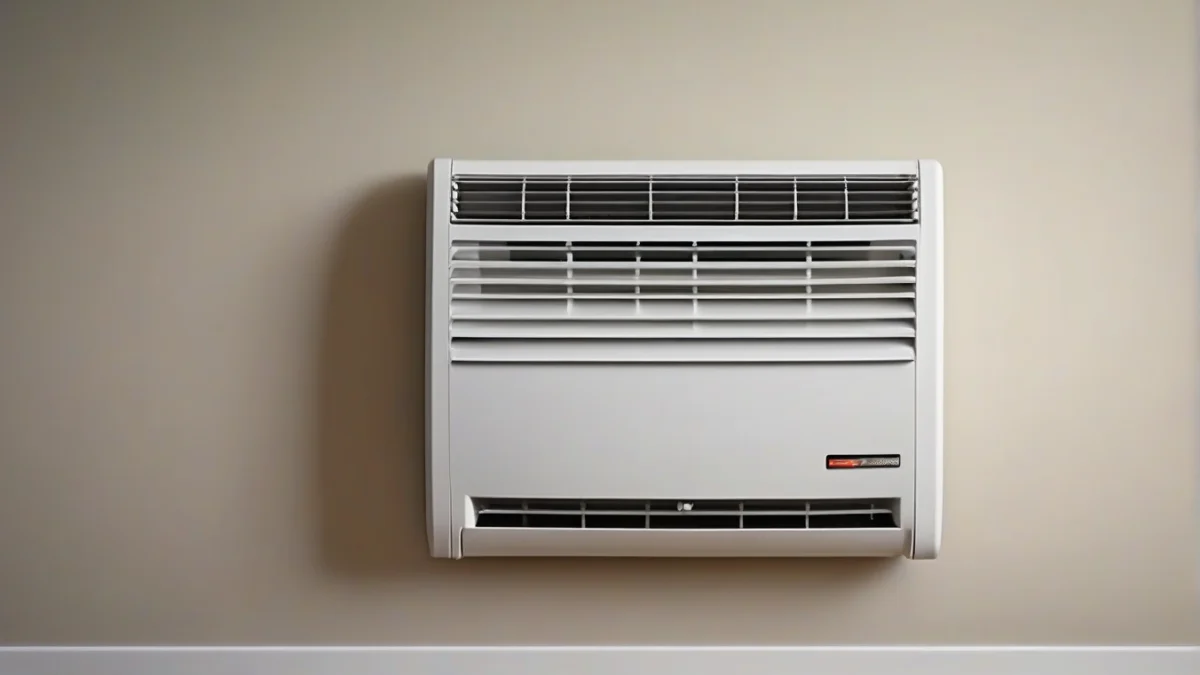
These heaters come in three main types. Vent-free blue flame models heat the air through convection: a burner warms the air around it, the warm air rises, and room temperature climbs steadily. Infrared or radiant plaque heaters warm objects and people directly with infrared waves, the way sunlight warms your skin on a cold morning. Direct vent units pull combustion air from outside through a sealed chamber and exhaust back out, keeping all fumes away from the room.
Most vent-free and many direct-vent models run on gas pressure alone, no electricity required. The pilot stays lit, you turn the control knob, and the burner fires. A thermostat—when included—may be manual or automatic, but the core operation is mechanical. An oxygen depletion sensor (ODS) monitors the room’s oxygen level and shuts the gas if it drops below a safe threshold, a feature required on every vent-free unit sold in the United States.
| Type | Heat delivery | Venting | Indoor air | Best for |
|---|---|---|---|---|
| Vent-free blue flame | Convection: warms the air | None | Adds moisture and combustion byproducts; ODS required | Quick whole-room heat where code permits |
| Vent-free infrared | Radiant: warms objects and people | None | Adds moisture and combustion byproducts; ODS required | Spot heat in living areas, faster perceived warmth |
| Direct vent | Convection or radiant, model dependent | Sealed pipe to outdoors | No byproducts enter room | Bedrooms, tight homes, moisture-prone areas |
The safety baseline is the same across all three: mount the heater at the height the manual specifies, keep combustible materials—curtains, furniture, bedding—at least 3 feet away from the front and sides, and confirm the unit carries CSA or ANSI certification. Local code determines whether vent-free models are allowed at all; some states and cities ban them outright or restrict the rooms where they can go. Direct vent is the safer fit when indoor air quality matters, when you’re heating a bedroom overnight, or when the space already runs humid.
What It Costs To Run
Natural gas heaters burn fuel at a fixed rate tied to their BTU input, so a 20,000 BTU model uses about 20,000 BTU of gas per hour when it’s firing—roughly 0.2 therms if your gas meter measures that way. At $1.50 per therm, eight hours of runtime costs around $2.40. A thermostat cuts the total by cycling the burner off when the room hits your set temperature, but it doesn’t lower the heater’s fuel consumption while the flame is on.
Vent-free models deliver nearly all their rated BTU into the room because combustion byproducts stay inside. Direct vent heaters exhaust outside, so you lose 20 to 30 percent of the fuel’s heat up the flue; a 20,000 BTU direct-vent unit might deliver only 14,000 to 16,000 BTU to the space, which means it takes longer to warm the room or won’t quite reach the square footage the label suggests.
Blue flame technology heats the air first, so the whole room warms gradually and you’ll feel comfortable once circulation evens out the temperature. Infrared models warm you and the furniture directly—you feel heat within minutes even if the air stays cool—which suits spaces where you sit in one spot, like a workshop or a corner of a garage.
Noise level depends on whether the heater moves air. Vent-free and most direct-vent units without a blower run nearly silent: you hear the whoosh of the burner lighting and a faint hiss from the flame, nothing more. Natural gas wall heaters with thermostat blower add a small fan to push warm air faster, and that fan hum—comparable to a bathroom exhaust—runs whenever the burner fires.
| Feature | Vent-Free | Direct Vent |
|---|---|---|
| Heat delivered | Nearly 100% of rated BTU | 70–80% of rated BTU |
| Typical range | 10,000–30,000 BTU | 10,000–30,000 BTU |
| Noise (no blower) | Flame hiss only | Flame hiss only |
| With blower | Fan hum when firing | Fan hum when firing |

Where It Belongs In The House
Bedrooms and living rooms are the most common fit for wall-mounted gas heaters when the BTU output matches the square footage and the manufacturer lists the unit for residential use. Garage heaters natural gas work only when the model is rated for that space—look for a listing that explicitly covers garages—and you can maintain the clearances the manual requires around the burner and vent. Never use one in a vehicle cabin, camper, or tent; combustion consumes oxygen and produces carbon monoxide even with an oxygen depletion sensor.
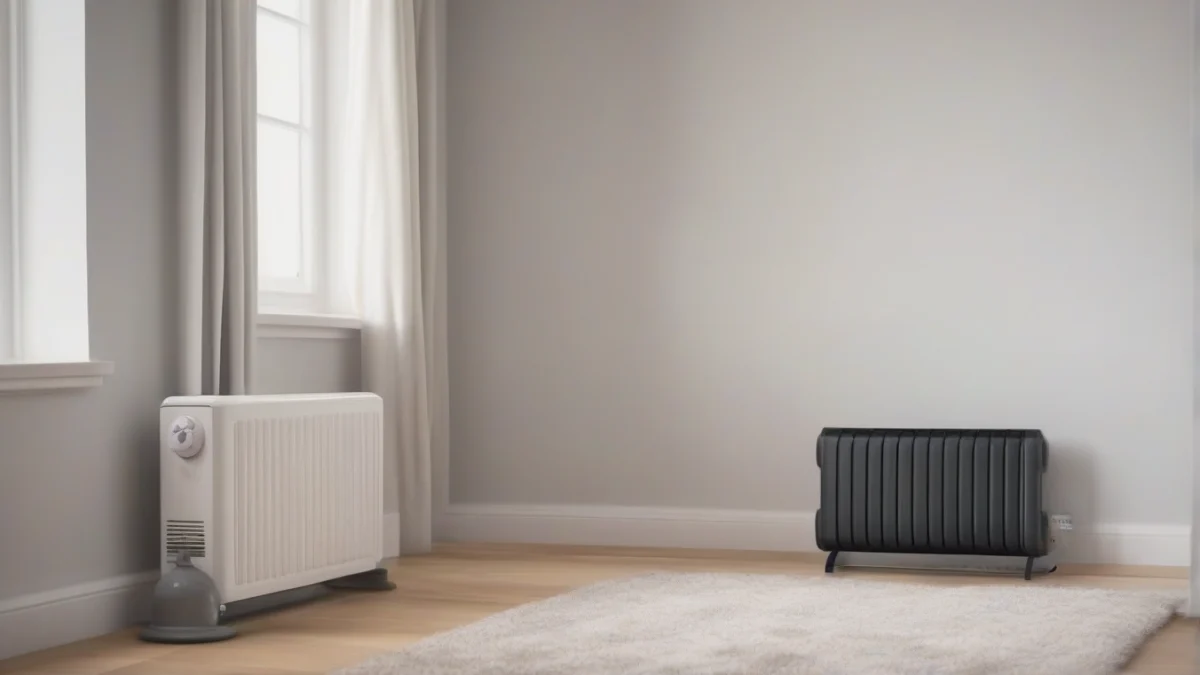
Apartments and condos present two hurdles: the building’s gas line may not support the BTU load without an upgrade, and many landlords and HOAs restrict or ban vent-free appliances altogether. Wall mounted natural gas heaters that use direct venting are easier to permit because combustion air and exhaust stay outside, but you’ll still need written approval and a licensed installer in most jurisdictions.
Altitude limits catch people off guard. Many vent-free models cannot be used above 4,500 feet because thinner air starves the flame and triggers the oxygen depletion sensor prematurely. Direct-vent units tolerate higher elevations—some work past 10,000 feet—because they pull combustion air from outside. Look for the altitude restriction on the rating plate or in the spec sheet before you order.
Vent-Free Versus Direct Vent
You’re choosing between two systems that handle combustion in opposite ways. Vent-free models burn gas inside the room and send all exhaust—water vapor, carbon dioxide, and trace nitrogen dioxide—into the air you breathe, relying on an oxygen depletion sensor to shut the burner if O₂ drops too low. Direct vent heaters pull combustion air from outside through a sealed pipe, burn it in a closed chamber, and push exhaust back out through a second pipe or coaxial vent, so indoor air stays separate.
| Feature | Vent-Free | Direct Vent |
|---|---|---|
| Combustion air source | Room air | Outside, through sealed intake |
| Exhaust destination | Room air | Outside, through wall or roof |
| Installation cost | Lower—no venting | Higher—vent pipe required |
| Efficiency | 99% (all heat stays inside) | 80–85% (some heat exits with exhaust) |
| Power outage use | Yes, most need no electricity | Some need a fan; millivolt ignition models work |
| Indoor moisture | Adds ~1 gallon per 100,000 BTU/day | None |
Indoor air quality goes beyond oxygen. Vent-free heaters produce water vapor—about one gallon per 100,000 BTU burned over 24 hours—which fogs windows, dampens walls, and feeds mildew in tight spaces. They also release trace nitrogen dioxide, a respiratory irritant that builds up when ventilation is poor. Cracking a window an inch helps, but that dumps the heat you paid for. Direct vent models sidestep both problems by keeping combustion sealed from the room.
Power outage performance tilts toward vent-free. Most infrared and blue-flame vent-free heaters run on millivolt standing pilots that need no electricity, so they keep firing when the grid goes dark. Many direct vent models use forced-air fans or electronic ignition that won’t work without power, though a few high-end units offer millivolt operation and convection-only heat distribution.
Pick vent-free when install cost, power outage resilience, and maximum efficiency matter more than indoor air concerns, and when local code allows it. Choose direct vent when you want clean indoor air, bedroom heating, or a system that works at any altitude without adding moisture to the room.
Installation Rules That Trip People Up
Gas piping, wall penetration and venting work belongs to a licensed plumber or HVAC technician in most jurisdictions, and you’ll need a permit before you start. The connections involve rigid black pipe or approved flexible CSST, pressure testing, leak checks with soapy water, and—if you’re installing a direct vent model—cutting through an exterior wall, sealing the vent termination against weather, and maintaining the clearances the manufacturer specifies from windows, doors and air intakes. Get it wrong and you risk gas leaks, carbon monoxide intrusion or a failed inspection that delays the whole job.
Mounting height and clearance to combustibles come from two places: the heater’s listing label and your local fire code. Most wall-mount gas heaters sit 6 to 12 inches off the floor to allow convection airflow beneath the case, though some hang higher when the manual permits it. Side and top clearances range from zero inches for zero-clearance direct-vent models to 6 or 12 inches for vent-free designs; the distance protects drapery, furniture and framing from radiant heat. Measure twice before you drill the mounting holes.
Wall mounting hardware ships with most models, but base feet are optional accessories you install only when you want the heater freestanding against the wall instead of bolted to studs. Base feet suit rentals and spaces where wall penetration isn’t allowed; wall mounts keep the unit secure and off the floor where a tip-over is less likely. Check the manual to see which fasteners the listing requires—lag screws into studs for a 30-pound heater, toggle bolts for lighter units into drywall—and don’t skip the step.
Inspectors flag three mistakes more than any others: undersized gas pipe that starves the burner at full fire, vent terminations pointed into a window well or soffit where exhaust can re-enter the house, and missing the required shutoff valve. Catch those early and the rest of the job goes quickly.
Cleaning And Maintenance Before Winter
Natural gas wall heater maintenance keeps the flame clean, the oxygen depletion sensor working, and ignition reliable when you fire it up after months of sitting idle. Once a year—ideally before the first cold snap—vacuum the burner area, wipe the pilot and thermocouple, and check that nothing blocks the grille or combustion air openings. Lint, pet hair and dust settle on the burner ports and ODS sensor during the off-season, and that buildup can choke the flame, slow ignition, or trip the safety shutoff when the heater’s actually fine.
Turn off the gas at the shutoff valve before you start. Pull the front grille or louvered panel—most lift off or are held by a couple of screws—then use a soft brush or a vacuum with a brush attachment to clean the burner surface, the pilot assembly, and the area around the ODS sensor. Don’t bend the thermocouple or knock the pilot orifice out of alignment. Wipe the glass or metal reflector on infrared heaters with a damp cloth, no harsh cleaners. Check the flame once you light it: blue and steady across the burner is what you want.
Between seasons, leave the gas valve in the off position and keep the area in front of the heater clear of storage, furniture, and anything that sheds fibers. If you’ve got a vent-free model, an annual inspection by a licensed HVAC or plumbing pro is the smart move: they’ll check gas pressure, clean the pilot orifice with the right size wire, test the ODS response, and catch small problems before they become cold-night failures. Direct vent units need the same burner cleaning, plus a look at the intake and exhaust terminals outside to be sure leaves, spider webs, or snow haven’t blocked them.
Questions People Ask
How do natural gas ventless wall heaters work?
Are natural gas wall heaters safe for bathroom use?
Can a natural gas heater be converted to propane?
What is the difference between ventless and vented wall mount natural gas heater?
How do blue flame heaters differ from infrared or radiant heat?
Are there height restrictions for installation?
Do these heaters require electricity to operate?

HeaterGuides covers home heating, water heating and HVAC: how the equipment works, what it costs to run, and how to use it safely.
