Best Infrared Heaters Indoor: Choose One That Heats Fast
On this page 9 sections
- Infrared Heater Features Comparison
- Best Infrared Heaters Indoor Ranked
- How Infrared Heaters Work Indoors
- How To Choose The Best Infrared Heater Indoor
- Sizing And Running Costs Of Infrared Heaters
- Safety And Certification You Must Check
- Why Quiet Operation Matters Indoors
- What To Do Next: Choosing And Using Your Heater
- Questions People Ask
Infrared Heater Features Comparison
| Rank | Model | Best for | Power (W) | Room Size (sq ft) | Safety Features | Price |
|---|---|---|---|---|---|---|
| 1 | R.W.FLAME Small Space Heater 1500WBest for Most Rooms | Small rooms up to 200 sq ft needing fast, quiet heat | 1500 | 200 | Overheat, tip-over, child lock, flame-retardant | Check price |
| 2 | DR. INFRARED HEATER DR-978 Hybrid PortableBest Hybrid Heater | Large rooms needing dual heating with low noise | 1500 | — | Tip-over, overheat, UL, cUL | Check price |
| 3 | Dr Infrared Heater DR-968 Portable 1500WBest for Large Rooms | Heating large rooms quietly with dual heat | 1500 | — | Tip-over, overheat | Check price |
| 4 | R.W.FLAME Smart Electric Fireplace 50 InchBest for Ambiance | Heating and decorating living spaces up to 400 sq ft | 750 / 1500 | 400 | — | Check price |
| 5 | Heat Storm HS-1500-PHX-WIFI Wall MountedBest Wall Mount | Saving floor space with Wi-Fi control in bedrooms or offices | 1500 | — | Tip-over, cool-touch grill | Check price |
Infrared heaters provide direct radiant warmth by heating objects and people instead of air, making them efficient for indoor use. Choosing the right model depends on room size, power, safety features, and control options.
This guide ranks the top infrared heaters for indoor use, highlighting their strengths and who they suit best. You’ll also get clear advice on sizing, running costs, and safety to help you pick fast and stay warm all winter.
Best Infrared Heaters Indoor Ranked

R.W.FLAME Small Space Heater 1500W
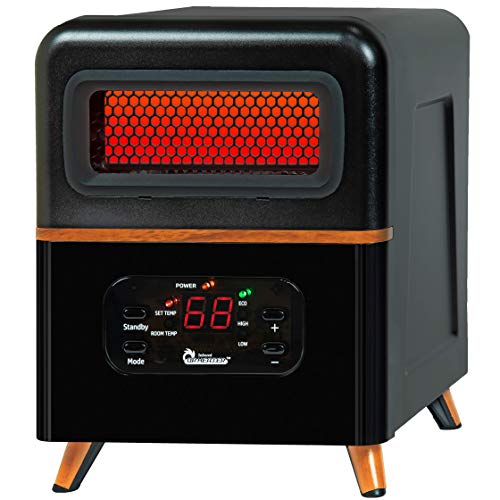
DR. INFRARED HEATER DR-978 Hybrid Portable

Dr Infrared Heater DR-968 Portable 1500W
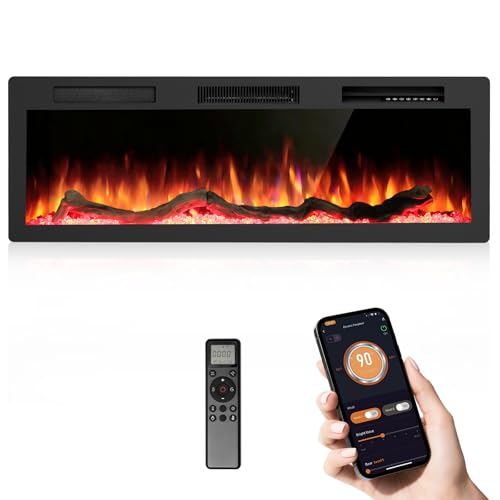
R.W.FLAME Smart Electric Fireplace 50 Inch

Heat Storm HS-1500-PHX-WIFI Wall Mounted
How Infrared Heaters Work Indoors

Infrared heaters warm objects and people directly, not the air. They emit infrared radiation, which heats surfaces it hits, so rooms heat quickly without wasting energy on air circulation.
Because infrared waves transfer heat by radiation, they don’t dry out the air or stir up dust, which is a common complaint with forced-air heaters. You get steady, comfortable warmth without the dry, stuffy feeling.
Infrared heaters are safe and quiet for indoor use since they don’t rely on combustion. There’s no flame, no fumes, and no ventilation needed. This also means they operate silently, which is ideal for bedrooms, offices, or living rooms.
You can keep an infrared heater indoors safely as long as you follow the manufacturer’s guidelines about placement and clearance. Their radiant heat is focused and won’t raise the room temperature as quickly as a gas or oil heater, but it provides targeted warmth where you need it.
An infrared heater’s main feature is its ability to heat surfaces and bodies directly, much like the sun on a chilly day. This makes them especially useful for spot heating or in rooms where you want fast, energy-efficient comfort without the side effects of drying or noise.
 Winter Heating Bill CutterSee what every heater in your home really costs, heat the rooms you use, and cut the waste in 30 days.Cost-per-hour tables for every heaterThermostat schedule and draft-proofing planRunning-cost and bill calculator (Excel)
How To Choose The Best Infrared Heater Indoor
Look for an infrared heater sized for your room, with a thermostat for steady warmth. Confirm it has safety certifications like UL or ETL listing. Choose models with tip-over and overheat shutoff for peace of mind.
Look for a heater with a built-in thermostat and timer. These features let you control the temperature precisely and set operating hours, which can save energy and keep your heating bills manageable.
Safety features are critical. Make sure your heater has a tip-over switch that shuts it off if it falls, overheat protection to prevent damage, and cool-touch surfaces to avoid burns. Also check for certifications like UL or ETL that confirm it meets safety standards.
Noise level matters indoors. Most infrared heaters run quietly, but models rated under 40 decibels are best for bedrooms or offices where silence helps you focus or sleep.
Controls vary from simple dials to remote controls and smart Wi-Fi connectivity. Choose what fits your lifestyle. Smart controls add convenience and let you adjust settings without leaving your chair.
Infrared heaters with thermostats are safe to use indoors when they include these safety features and are used as directed. They maintain a stable temperature rather than running full power constantly, which reduces fire risk and saves electricity.
Considering these specs will help you find a heater that fits your space, needs, and safety expectations. For more detailed options and recommendations, see our guide on Best Indoor Infrared Heaters: Worth the Investment!.
Sizing And Running Costs Of Infrared Heaters
Say your room is 12 by 14 feet with an 8-foot ceiling, about 1,344 cubic feet. Infrared heaters generally need 10 watts per square foot, so a 1,500-watt heater suits this space well. At 1,500 watts running 8 hours a day and 17 cents per kWh, expect about $2.04 per night.
Electric running costs are straightforward to calculate: a 1,500 watt heater running for one hour uses 1.5 kilowatt-hours (kWh). At an average US rate of 17 cents per kWh, that’s about $0.26 per hour. Running the heater for 8 hours overnight adds up to roughly $2.08.
Using a thermostat and timer can cut costs significantly by shutting off the heater when the target temperature is reached and turning it back on only when needed. This cycling avoids wasting electricity heating an overheated room.
Infrared heaters generally use less electricity to create the same comfortable warmth compared to convection heaters because they heat objects and people directly instead of warming the air first. That means your energy dollars go further.
Energy certifications like ETL and UL confirm that a heater has been tested for safety and meets electrical standards but do not guarantee energy efficiency. Infrared heaters designed for indoor use do not require specific energy labels, but these certifications ensure the unit operates safely and reliably indoors.
Safety And Certification You Must Check
Infrared heaters must have safety certifications like UL or ETL to ensure they meet electrical and fire safety standards. Features like tip-over switches and overheat protection reduce the risk of accidents. Always place heaters on stable surfaces and keep clearances as the manual requires.
A tip-over switch is essential; it cuts power immediately if the heater falls, preventing fires. This feature is especially important in homes with pets or children who might knock the heater over accidentally.
Overheat protection automatically shuts off the heater if internal components get too hot, stopping damage and fire risk before it starts.
Cool-touch housing keeps the heater’s exterior surface safe to touch, so you or your kids won’t get burned if you brush against it. This is a key feature for any indoor infrared heater.
Look for ETL, UL, or CSA certification marks on the heater. These confirm it meets US safety standards for electrical appliances. Avoid models without these certifications, as they may lack necessary safeguards.
Infrared heaters intended for outdoor use are not built to meet indoor safety standards and should not be used inside. Always choose a heater listed and rated explicitly for indoor use to ensure safety.
Why Quiet Operation Matters Indoors
Infrared heaters operate silently because they don’t rely on fans or moving parts. This makes them ideal for bedrooms, offices, or any quiet space where noise would be distracting.
Some infrared heaters use fans to spread the warmth, but these add mechanical noise that can be distracting or disrupt concentration and sleep.
Ceramic infrared heaters often run silently since they rely on radiant heat without forced air, making them a better choice for quiet environments.
Always check the noise rating in product specifications or the user manual to ensure the heater won’t disturb your indoor space.
A quiet heater lets you use it overnight or while working without distraction, supporting comfort and productivity.
What To Do Next: Choosing And Using Your Heater
Check the heater’s wattage and thermostat controls before you buy. Place it where it won’t be bumped or blocked. Keep at least 3 feet of clearance from combustibles. Use a dedicated wall outlet—never an extension cord. Run it only when someone is in the room unless the manual says otherwise.
Look for a model with both a thermostat and a timer. The thermostat keeps your room at a steady temperature without wasting electricity, while the timer lets you run the heater only when you need it, avoiding unnecessary energy use.
Before buying, confirm the heater has safety certifications like UL or ETL listings and features such as tip-over and overheat protection. These reduce fire risks and help meet local electrical codes.
Place the heater on a stable, flat surface with at least 3 feet of clearance around it. Keep it away from curtains, furniture, and anything that can catch fire easily. Avoid running it on carpet if the manual advises against it.
Plug the heater directly into a wall outlet. Extension cords or power strips can overheat or cause voltage drops, which might damage the heater or lead to fire hazards.
Use the timer to schedule heating around your daily routine, so the heater runs only when you’re in the room. Never leave an infrared heater unattended overnight unless the manufacturer specifically states it’s safe to do so.

