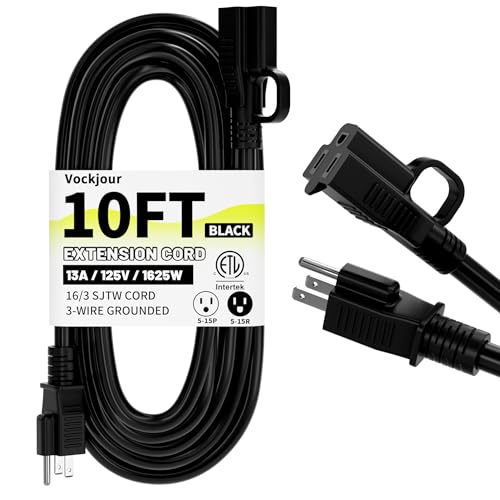
Using an extension cord with a space heater isn’t automatically unsafe, but most cords aren’t built for the sustained high wattage that heaters demand. Choosing the right cord means matching the wire gauge, length, and safety certifications to your heater’s power draw.
This guide highlights the best extension cords tested for durability and safety, explains key specs you need to know, and walks you through how to avoid common risks like overheating and voltage drop.
Extension Cord And Heater Comparison
| Model | Best for | Length | Wire Gauge (AWG) | Amp/ Watt Rating | Certification | Price |
|---|---|---|---|---|---|---|
| ELECTERY 6 ft 14 AWG Appliance Cord | Best Short Cord | 6 ft | 14 AWG | 15A, 125V, 1875W | ETL listed | See current price |
| ELECTERY 3 ft 14 AWG Appliance Cord | Best Tight-Space Pick | 3 ft | 14 AWG | 15A, 125V, 1875W | ETL listed | See current price |
| GREATIDE 12 ft 14 Gauge Appliance Cord | Best Longer Reach | 12 ft | 14 gauge | 15A, 125V, 1875W | UL listed | See current price |
| DREO 1500W Indoor Space Heater | Best Cord-Free Heater | — | — | 1500W | ETL-certified safety | See current price |
| DREO Indoor Space Heater | Best Temperature Control | — | — | 1500W | — | See current price |
Top Heavy-Duty Extension Cords for Safe Space Heater Use
ELECTERY 6 ft 14 AWG Appliance Cord
ELECTERY 3 ft 14 AWG Appliance Cord
GREATIDE 12 ft 14 Gauge Appliance Cord
DREO 1500W Indoor Space Heater
DREO Indoor Space Heater
Using Extension Cords with Space Heaters
A space heater should plug directly into a wall outlet. Use an extension cord only if the heater’s manual specifically permits one and the cord is heavy-duty, properly rated, fully unrolled, and short; a cheap, thin, or 100-foot cord is a bad match for a high-wattage heater.
Most portable electric heaters draw about 1,500 watts, or 12.5 amps at 120 volts. That leaves little spare capacity on a typical 15-amp circuit, so the cord’s amp rating and the heater’s wattage rating must match. A cord that fits the plug can still have wire too thin for the load.
Voltage drop is the other problem. A long or undersized cord has more electrical resistance; the heater receives less voltage while the cord turns some of the electricity into heat. The heater may run poorly, while a coil hidden under a rug or wrapped in a loop gets hotter than you can see.
For the question about a heavy-duty 100-foot cord, a 3,600-watt gas generator doesn’t make that setup safe. The generator’s running rating describes its total output, not the cord’s capacity, and 3,600 watts at 120 volts is 30 amps—far beyond a normal plug-in space heater circuit. Don’t use a 100-foot cord for a heater; place the heater near a properly rated outlet or choose a model with a longer built-in cord, such as those in our guide to space heaters with extra-long power cords.
If the manual allows an extension cord, the ELECTERY 6 ft Heavy Duty Appliance Extension Cord keeps the run short; the 3 ft version is better when the outlet is almost within reach. Inspect the plug, insulation, and connections first, and stop using the cord if any part becomes hot, smells like heated plastic, or shows damage.
Choosing the Right Wire Gauge and Length for Extension Cords
For a typical 1,500-watt heater, choose a heavy-duty 14 AWG or 12 AWG cord, keep it under 25 feet, and follow the heater manual. That answers both practical questions: lower AWG numbers mean thicker wire, and thicker wire handles the heater’s roughly 12.5-amp load with less resistance.
American Wire Gauge, or AWG, is the sizing system printed on many cord jackets. The scale runs backward: 12 AWG wire is thicker than 14 AWG, and 14 AWG is thicker than 16 AWG. A 14-gauge cord rated for 12 or 15 amps can handle heaters up to approximately 1,875 watts, but the cord still must meet the heater’s instructions and the circuit’s limits.
| What to check | Practical choice |
|---|---|
| Heater load | Typical 1,500 W; about 12.5 A at 120 V |
| Wire gauge | 14 AWG minimum; 12 AWG for higher loads or added margin |
| Cord length | As short as practical; under 25 ft |
| Rating | Cord amp rating and voltage rating must meet the heater |
Every extra foot adds resistance, so cords longer than 25 feet raise both voltage-drop and overheating risk. The current doesn’t become smaller: a 1,500-watt heater still draws about 12.5 amps, and that current passing through more wire resistance creates more heat along the cord. The exact voltage loss depends on the cord’s gauge, length, connections, and supply voltage, so a single percentage would be false precision.
Choose the nearest outlet that can carry the load, then buy only enough cord to reach it without tension. Don’t coil the spare length, knot it, run it under a rug, or place furniture on it; those choices trap heat and can damage insulation. A flat plug can help with clearance behind furniture, but it doesn’t increase the cord’s amp capacity.
For a higher-wattage heater, step up to 12 AWG only when its amp rating and the circuit support the load; thicker wire doesn’t turn a 30-amp appliance into a normal household plug-in load. The GREATIDE Heavy Duty Appliance Extension Cord 12 ft keeps the run below the 25-foot guidance, while a longer cord should be treated as a different safety decision, not extra convenience.
Indoor vs Outdoor Extension Cords for Space Heaters
Use an indoor-rated cord only in a dry indoor room, and choose an outdoor-rated cord when the cord will face moisture, cold, or rough surfaces. Heaters with cords still need the cord type, amp rating, and heater manual to agree; an outdoor jacket doesn’t make an indoor-only heater suitable for outdoor use.
Indoor extension cords usually have insulation intended for clean, dry conditions. Damp basements, garages with wet floors, porches, and exposed paths to an outdoor space heater can exceed that design. Moisture can reach the plug or damaged insulation, while cold and sunlight can make an indoor jacket less durable.
Outdoor-rated extension cords use tougher insulation that tolerates moisture and temperature changes, often with abrasion-resistant material around the conductors. That protection helps when a cord crosses concrete or gets occasional weather exposure, but it doesn’t excuse leaving a connection in rain or a puddle.
Match The Cord To The Heater Location
- For an indoor electric heater in a dry room, use a heavy-duty indoor cord that meets the heater’s wattage and amp rating.
- For an electric heater approved for outdoor use, use an outdoor-rated cord only if the heater manual permits an extension cord and specifies the required rating.
- For a propane, kerosene, diesel, or other fuel-burning outdoor heater, an outdoor cord only supplies electricity to controls or a fan; it doesn’t make the heater safe inside a room, tent, or vehicle cabin.
Electric heater extension cord problems usually start with a cord that is too thin, damaged, coiled, or used in a damp location. If the plug or cord feels hot, smells like hot plastic, shows discoloration, or trips the breaker, switch the heater off, unplug it, and stop using that cord.
Safety Features and Certifications to Look For
Look for a UL Listed or ETL Listed mark, a grounded three-prong plug, and a cord with the correct wattage and amp rating. Those marks help identify products evaluated to applicable safety requirements; they don’t override the heater manual or turn a power strip into a heater connection.
A grounded three-prong plug gives the heater a grounding path when the receptacle is properly grounded. Never remove the ground pin to fit a two-slot outlet. An angle plug or flat plug can reduce strain and leave more room behind furniture, but keep the heater and cord away from curtains, bedding, and other combustibles.
Features Worth Checking
- A lighted end shows that the cord is energized, which makes an easy-to-miss connection easier to spot before you move furniture.
- Safety shut-off technology can interrupt power when the cord or plug detects an unsafe condition, if the product specifically provides that feature.
- Molded plugs and a sturdy jacket are useful signs of a cord made for demanding appliance loads, but read the printed rating instead of judging by thickness alone.
There aren’t magic extension cords designed to fix every space-heater problem. A proper heavy-duty appliance cord with 12 or 14 AWG wire, a suitable amp rating, and the right listing is the useful category; the heater’s own plug and manual still set the rules.
Prevent Overheating Before You Turn It On
Long-Term Care and Maintenance of Extension Cords
Most electric heater extension cord problems start with heat damage, a loose connection, or a cord that was already worn before the heater was plugged in. Inspect the entire cord before each heating season and during regular use: look for cracks, fraying, exposed wire, flattened spots, melted insulation, bent prongs, loose plugs, or brown discoloration. Any of those signs means retire the cord; tape is not a repair for a cord carrying 12.5 amps.
Consult an electrician before using an extension cord if you can’t confirm the heater’s wattage, the cord’s amp rating, or the outlet and circuit wiring. That check also makes sense if the breaker trips, the receptacle feels warm, or you need to run a heater on a circuit shared with other high-wattage equipment. A dedicated circuit may be the safer answer than trying a heavier-looking cord.
Never knot, bunch, or tightly coil an extension cord while the heater is running. A coil holds heat around the wire, while a knot can stress the conductors and insulation; either problem can raise the chance of overheating. Keep the cord visible and loose instead of hiding it under a rug, where a hot spot can go unnoticed.
After the cord cools, unplug it by gripping the plug rather than yanking the cable. Wipe off dirt, let any moisture dry, and store the cord loosely coiled in a cool, dry place away from sunlight, sharp edges, chemicals, and rodents. A flat plug can reduce strain behind furniture, but it doesn’t make a damaged cord safe.
Questions People Ask
Can I use any extension cord with my space heater?
What gauge extension cord is required for a 1500 watt space heater?
How long can an extension cord safely be for a space heater?
Is it safe to use power strips or surge protectors with space heaters?
Are outdoor-rated extension cords safe for indoor space heater use?
Should I consult an electrician before using an extension cord with my heater?

I am a mechanical engineer and love doing research on different home and outdoor heating options. When I am not working, I love spending time with my family and friends. I also enjoy blogging about my findings and helping others to find the best heating options for their needs.
Related guides

Safest Indoor Space Heaters: Fire-Risk Features That Matter
What truly makes a space heater safe? Find your perfect, safest indoor space heater with our essential safety…
200-Watt Space Heaters Tested: Emergency Heat or Desk Companion?
What if a tiny heater could warm your desk? See how a 200-watt space heater provides safe, targeted…
3000-Watt Space Heaters Reviewed: Serious Heat for Demanding Spaces
What makes a 3000-watt space heater safe and efficient? Our guide reveals the key features you need for…