The best propane torch for heating metal is the one that matches your flame shape and heat output to the metal you’re working on; for most readers, that means a torch with steady flame control and enough reach to heat the joint, not the whole shop.
The essentials
Pick the torch that matches the job: soldering, brazing, pipe work, or general heating all want a different flame shape.
A steadier adjustable flame beats raw output for most metal heating jobs.
Longer hoses help with reach, but they also add clutter and snag points on a crowded bench.
Buy the fuel and fittings you can actually get locally, or the torch becomes a drawer ornament.
Use the safety gear and ventilation the torch manual calls for every time.
Say your steel bracket is 3/8 inch thick and you only need to bring one corner to a dull red. A broad, soft flame wastes time; a tighter flame heats the spot faster and keeps the rest of the part cooler.
For metal work, the real choice is between control, reach, and fuel cost. BTU gets the attention, but flame pattern, trigger control, hose length, and whether the setup uses disposable cylinders or a refillable tank usually decide how well it works.
Torch Picks That Fit Real Metal Work
#1Closest Portable Match
CAMPLUX Portable Propane Water Heater
Best for Outdoor hot water when portability matters more than metal heating
The CAMPLUX is the closest fit only because it’s compact, outdoor-rated, and runs from propane with a 1.32 GPM water output. Its folding handle, 10 lb weight, battery ignition, and included 5-foot regulator suit camping and off-grid showers—not heating a metal joint. It has no torch-style flame control or metalworking nozzle.
Water flow 1.32 GPM (5L)Weight 10 lbsFuel setup Propane; 5-foot gas regulator includedPower 2 D-size batteriesSafety CSA approved; 6-in-1 safety
Why it made the cut
Portable 10 lb design with folding handle
Includes a 5-foot propane regulator
CSA approved with six safety protections
Good to know
Designed for outdoor hot water, not metal heating
1.32 GPM water-heating output is not torch heat output
Skip it if Skip it if you need a directed flame for brazing, soldering, loosening fasteners, or heating a workpiece.
Best for Indoor supplemental room heat, not focused heat on metal
The Comfort Glow produces 26,000 BTU and can heat spaces up to 900 sq ft, so it’s built to warm a room rather than concentrate a flame on a small metal part. Dual-fuel operation, an adjustable thermostat, and one-button control make sense for indoor heating. The vent-free fireplace format makes it a poor substitute for a handheld torch.
Heat output 26,000 BTUCoverage Up to 900 sq ftFuel Liquid propane or natural gasEfficiency 99.9%Control Adjustable thermostat; one-button control
Why it made the cut
26,000 BTU heating capacity
Runs on liquid propane or natural gas
Adjustable thermostat and electric igniter
Good to know
Vent-free fireplace is not a directed torch
Designed for indoor room heating
No torch nozzle or metalworking flame control
Skip it if Skip it if your goal is to heat one joint, bolt, pipe, or small metal part.
Best for Heating a propane-access workshop, not heating metal directly
This unit delivers 30,000 BTU through a blue-flame convection burner for spaces up to 750 sq ft. The thermostat cycles the burner, and the oxygen depletion sensor shuts it off if oxygen drops below a safe threshold. Those features help heat a room, but they don’t provide the narrow, movable flame a metalworking torch needs.
Heat output 30,000 BTUCoverage Up to 750 sq ftFuel Liquid propaneControl On-board thermostatSafety Oxygen Depletion Sensor; automatic shut-off
Why it made the cut
30,000 BTU blue-flame output
Thermostat cycles the burner automatically
ODS automatic safety shut-off
Good to know
Room heater rather than a focused torch
Requires indoor or supplemental-heating installation conditions
No metalworking tip or torch handle
Skip it if Skip it if you need heat concentrated on a small area instead of warm air throughout a room.
Best for Heating up to 300 sq ft with a 20 lb propane cylinder
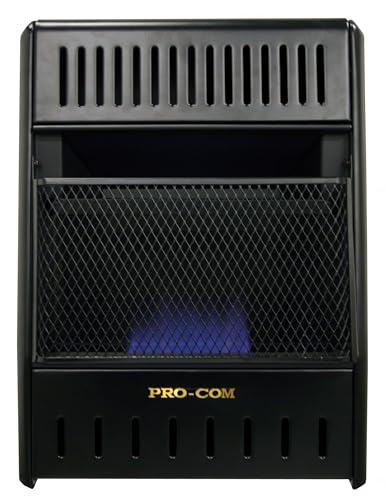
The ProCom is a 10,000 BTU blue-flame heater with thermostat control and a 10-foot hose with regulator for a standard 20 lb propane cylinder. That setup is useful for an ice house, hunting shack, or other listed space. Its burner spreads room heat instead of directing a working flame at metal.
Heat output 10,000 BTUCoverage Up to 300 sq ftFuel Liquid propane onlyFuel connection Standard 20 lb propane cylinderHose 10-foot hose with regulator
Why it made the cut
10,000 BTU output for spaces up to 300 sq ft
Includes 10-foot hose and regulator
Thermostat and oxygen depletion sensor
Good to know
Ventless room heater, not a torch
Designed for liquid propane only
No focused flame attachment
Skip it if Skip it if you need a torch flame that reaches and heats a specific metal joint.
Best for Whole-house hot water with outdoor installation
The Rheem provides 160,000 BTU/hr and 7.0 GPM at a 35°F temperature rise, which is substantial output for two to three simultaneous showers. Its digital control panel adjusts temperature by ±1°F, while freeze and flame-failure protection support its water-heating job. A tankless water heater is the wrong shape and control system for heating metal with a hand-directed flame.
Heat output 160,000 BTU/hrFlow rate 7.0 GPM at 35°F temperature riseFuel Liquid propaneInstallation Outdoor installationControl Digital LED temperature control; ±1°F adjustments
Why it made the cut
160,000 BTU/hr output
7.0 GPM at a 35°F temperature rise
Built-in freeze and flame-failure protection
Good to know
Water heater, not a propane torch
Outdoor installation required
Professional installation required
Skip it if Skip it unless you’re shopping for whole-house hot water rather than a metal-heating torch.
The best propane torch for heating metal gives you the right flame shape, adjustable output, and enough reach for the work in front of you. A propane torch for heating metal should warm the target without turning nearby parts, seals, or thin sheet into collateral damage.
Spec
What to choose
Why it matters
Flame shape
Pencil flame for focused work; broader flame for warm-up
A narrow flame puts heat on a bolt, joint, or small bracket. A broad flame heats larger areas faster.
Output control
A valve with a useful low setting
Thin metal and solder joints need restraint. Maximum heat is less useful if the flame only has two settings: off and alarming.
Reach
A hose and nozzle that keep your hand away from the hot work
Extra reach helps around brackets, tubing, and awkward joints.
Ignition
Trigger ignition, if you relight the torch often
Starting at the handle is quicker than reaching for a separate lighter.
Stability
A stand for hands-free warming; no stand for close control
A stand helps with repeatable heating, while a hand torch is easier to aim and reposition.
Small parts want control; larger parts want reach and sustained output.
Adjustable output matters more than the headline maximum for most shop jobs. Turn the flame down as the joint approaches temperature, then hold the heat there instead of flooding the whole piece.
Myth
The hottest torch is automatically the best propane torch for metal heating.
Fact
A torch that delivers only high output can overshoot thin stock and solder joints. Pick the output range you can control, then match the nozzle to the area you need to heat.
Fuel availability belongs on the spec sheet in your head: a torch you can’t refuel quickly is a poor shop tool, even if its flame looks impressive. Check the fuel cylinder or cartridge type before buying and make sure local suppliers keep it in stock.
Before choosing
Match the flame shape to the size of the heated area.
Confirm the torch has a controllable low flame, not only a high setting.
Check hose length and fuel connection type.
Choose a stand for steady warming or a hand-held setup for precise aiming.
Confirm replacement fuel is easy to find where you work.
Simple rule
Small parts want control. Larger parts want reach and sustained output. If the job changes from soldering a small fitting to heating a heavy bracket, a single tiny pencil flame may become frustratingly slow.
For a bolt-heating decision
Rheem RTG Series 7.0 GPM Liquid Propane Tankless Water Heater Outdoor
If your main job is freeing seized hardware, compare a torch built for concentrated heat with the broader heaters listed above; the naturally effective torch for heating bolts quickly guide focuses on that exact use.
The best torch for heating bolts quickly is a concentrated, high-output hand torch that can keep heat on the fastener while the surrounding metal pulls it away. HVAC brazing needs steadier flame control and a setup suited to repeatable joint heating, while light warming can use a softer wide flame.
Job
Torch style
What to look for
Light heating
Broad, softer flame
Useful for warming a larger surface or easing a part toward temperature without a tight hot spot.
Soldering
Small adjustable pencil flame
Low-output control keeps the solder joint localized instead of cooking the surrounding material.
Brazing
Steady adjustable torch with suitable reach
The flame must hold a consistent pattern while you heat the joint evenly.
Heating bolts or brackets
Concentrated flame with sustained output
The fastener and surrounding bracket act as heat sinks, so a weak or diffuse flame may warm the surface without freeing the joint.
General repair
Adjustable hand torch with a practical hose
A flexible setup handles mixed jobs better than a fixed flame or oversized burner.
Choose the flame for the metal mass and the precision the joint demands.
Worked choice
Say you’re loosening a seized bolt on a heavy bracket. A narrow flame aimed at the bolt head and threaded area gives you a better chance of overcoming the bracket’s heat loss than a soft wide flame that warms the whole assembly. For a small solder joint, choose the opposite priority: lower output and finer control.
A soft wide flame is fine for warming a broad piece, but it isn’t a precision tool. Brazing and HVAC work punish wandering heat, so choose a torch that holds a steady flame and gives you enough reach to work around tubing and fittings.
In short
Use a pencil flame for bolts, soldering, and tight joints; use a broader flame for general warming. For the best torch for HVAC brazing, prioritize stable control and repeatable reach over a dramatic maximum-flame claim.
For HVAC joints
Mr. Heater 30,000 BTU Vent Free Blue Flame Propane Heater
Readers doing repeated copper-tube work should compare the dedicated options in the best torch for hvac brazing guide rather than adapting a casual warming torch.
Propane stoves for home heating are separate appliances from a metal-heating torch; a torch heats a small work area, while a listed stove supplies room heat and follows its own venting rules. Propane stoves for heating home can help if your question is about warming a room. Does propane heating use electricity? Many basic torches need no power, though electronic ignition, blowers, or oxygen-assisted kits may need batteries or an outlet.
Disposable cylinders are convenient for short jobs, but a larger refillable tank usually makes more sense in a shop because you change cylinders less often. A propane heating system or torch setup still needs the correct regulator, hose, thread, and connector; a fitting that screws on isn’t automatically safe or compatible.
Use The Label For Cost
When the torch lists a burn rate, multiply propane used per hour by your local propane cost per unit. If it lists only cylinder size, divide the cylinder’s usable fuel by the torch’s estimated burn rate, then divide the cylinder price by those hours. That gives a working cost per hour without pretending every torch consumes fuel at the same rate.
Worked example
Say a torch uses 0.5 lb of propane per hour and propane costs $3 per pound. The fuel cost is 0.5 × $3, or $1.50 per hour. A 1 lb cylinder would last about two hours at that rate; wind, cold, and repeated reheating can shorten practical run time.
Burn rate0.5 lb per hour
Assumed fuel cost$3 per pound
Estimated run time2 hours per 1 lb cylinder
Check Before Connecting
Don’t adapt a disposable-cylinder torch to a refillable tank, or the reverse, unless the manufacturer specifies the regulator, hose, and connector combination. Wrong pressure can produce a poor flame, damage the torch, or create a leak.
Safety And Ventilation
Metal heating with propane needs ventilation, a clear work area, and a torch approved for the place where you’ll use it. Propane gas heating stoves vented through an approved flue are a different category from a torch; a vented propane gas home heating stove must follow its installation manual and local code.
What freestanding propane heating stoves will work without electricity? Some models with a standing pilot can operate without household power, but ignition, fans, and controls vary by model. A metal-heating torch doesn’t heat a room safely, and an outdoor-rated torch or heater belongs outdoors unless its manufacturer specifically approves indoor use.
Before You Light The Torch
Move solvents, gasoline, paint, cardboard, sawdust, rags, and other combustibles out of the flame path.
Keep spare propane cylinders away from the heated workpiece, sparks, and direct flame.
Wear safety glasses or a face shield, heat-resistant gloves, long sleeves, and closed shoes.
Set the metal on a stable, noncombustible surface that won’t tip when the piece gets hot.
Open the doors or use the ventilation the torch manual requires; never rely on smell to detect carbon monoxide.
Carbon Monoxide And Fire
Fuel-burning equipment can produce carbon monoxide in an enclosed shop or garage. Use only equipment approved for that location, follow the manual’s ventilation requirements, keep a working CO alarm where appropriate, and never use a torch in a vehicle, tent, or poorly ventilated room.
Heat Keeps Moving
A workpiece can stay hot long after the flame is off. Mark or isolate it, keep bystanders away, and don’t carry it bare-handed just because the surface color has faded.
Before You Buy Or Light It
Before buying or lighting a torch, match its fuel connection, flame control, and reach to the metal job. Searches for current reviews of propane heating stoves, propane heating stoves Home Depot, and the best propane stoves for home heating point to room-heating appliances, not metal torches; see propane stoves for home heating for that separate category.
Final Pre-Buy Check
Confirm the torch is made for your propane source and tank pressure.
Match the connector size and thread to the regulator, cylinder, or hose; don’t force a fitting.
Choose adjustable flame control if the joint needs gradual heating rather than one broad blast.
Check the ignition method: push-button ignition is convenient, while manual lighting requires the exact procedure in the manual.
Measure hose length so the torch reaches the joint without dragging or moving the propane tank.
Check the metal thickness and joint location. Thick steel may need a higher-output torch, and the flame must reach the joint without putting the cylinder beside the heat.
Confirm the torch has the flame shape and working position your task requires.
1
Dry-fit the setup
With the valve closed, connect the hose and torch by hand first, then verify the cylinder can stay upright and away from hot metal, sparks, and the work path.
2
Read before lighting
Use the manual for the lighting sequence, shutdown order, regulator position, and leak-check method. A fitting that looks tight can still leak; stop if you smell propane or see damage.
One-minute test
Set the workpiece in its final position and confirm the flame can reach the joint without repositioning the tank. Moving a cylinder after lighting is a needless way to create trouble.
Buy only if the torch matches the workpiece, flame control, connector, fuel source, and reach; if any one of those fails, keep shopping.
More Questions, Answered
What is the best propane torch for heating metal?
For most metal-heating jobs, choose a torch with adjustable flame control and a flame shape suited to the area you need to heat. A concentrated flame can put heat on a bolt or joint without heating as much surrounding metal; larger work may need a torch designed for higher heat output.
How do I choose a propane torch for metal heating?
Start with the metal and task: heating a small fastener calls for a more concentrated flame than warming a broad section. Check that the torch’s fuel connection matches your cylinder, and that its control and reach suit the work position. Follow the torch maker’s instructions for compatible fuel and use.
Can I use a propane torch for soldering metal?
Yes, if the torch can deliver controlled heat to the joint and its instructions allow the intended use. Soldering depends on heating the joint enough for solder to flow without overheating nearby parts; a torch that is too large or difficult to control can damage them. Use the solder and flux specified for the materials.
What safety precautions should I take when using a propane torch?
Work with ventilation, clear combustible material from the flame area, and use the torch only where its instructions permit. Check the hose and connections for damage or leaks before lighting, keep the cylinder in the position specified by the manufacturer, and shut off the fuel when finished. Keep a suitable fire extinguisher nearby and never leave a lit torch unattended.