For most readers, the FADOTY 100% Blackout Curtains are the best blind to keep heat out because their reflective layers, cut-to-fit sheet, and no-drill installation suit bedrooms, rentals, and temporary setups. They block light and may reduce direct-sun heat, but no blackout label alone proves a specific heat reduction.
A window covering can pursue three different jobs: reflect sunlight before it warms the room, add an insulating layer near the glass, or block glare and light. The best choice depends on the window’s size, sun exposure, and whether you need darkness, daylight, or a view.
The products below are passive covers, not powered smart blinds. Treat manufacturer heat claims as product claims unless the listing gives a comparable test method; fit around the edges still matters.
The Best Blinds to Keep Heat Out
#1Best Overall
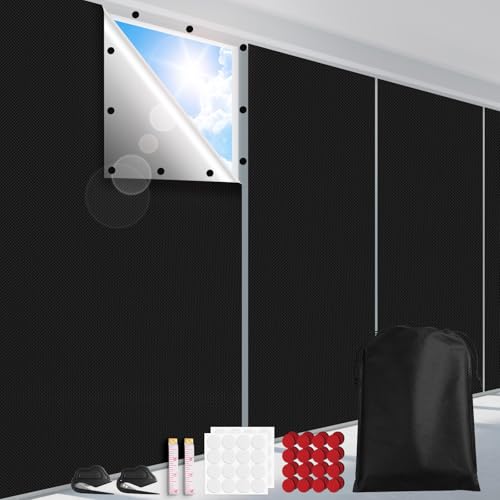
FADOTY Blackout Window Cover
Best for Bedrooms, rentals, and temporary setups that need a cut-to-fit cover
The 57 × 118-inch sheet can be trimmed to fit, and its reflective thermal layers are designed to reduce heat from direct sunlight. It applies without drilling or a curtain rod, then peels off for storage—handy for rentals, nurseries, and travel.
Cover size 57″ × 118″Installation Measure, cut, and apply; no drillingMaterial feature Reflective thermal layersIncluded Storage pouch
Why it made the cut
Reflective thermal layers target direct-sun heat
Cut-to-fit sheet measures 57 × 118 inches
No-drill installation and included storage pouch
Good to know
Blackout claims don’t state a measured heat reduction
Cutting the sheet to fit makes it less convenient to reuse on another window
Skip it if Skip it if you want a reusable cover that adjusts without cutting or peeling it off.
Best for Large windows where removable magnetic fasteners suit the frame
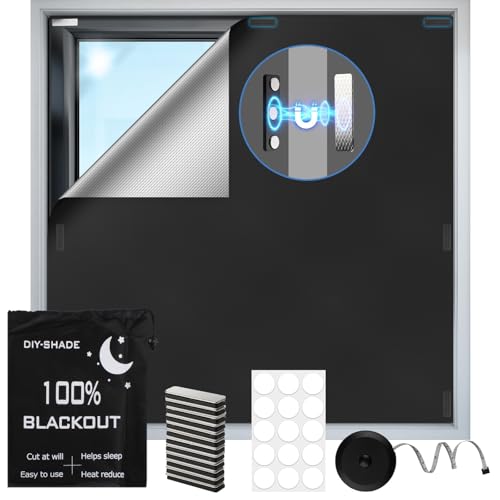
This 118 × 58-inch cover comes with magnetic fasteners, adhesive plates, and a tape measure for fitting it to the window. Its reflective coating and thick 420D fabric are described as helping reflect heat; check that your frame can take the adhesive plates before choosing it.
Cover size 118″ × 58″Fasteners 12 magnetic fastenersIncluded 15 adhesive dots, tape measure, and storage bagMaterial feature 420D black fabric with reflective silver coating
Why it made the cut
Includes 12 magnetic fasteners and 15 adhesive dots
Reflective silver coating and 420D black fabric
Tape measure and storage bag included
Good to know
Adhesive plates need a clean window frame
Direct sunlight may affect the adhesive hold
Skip it if Skip it if you can’t attach adhesive plates to the window frame or need a cover that installs without them.
Best for Skylights, curved windows, and other unusually shaped openings
The 118 × 57-inch cover can be cut to fit shapes such as skylights, curved windows, and sliding windows. Its 420D Oxford fabric has a silver coating, and nano adhesive stickers provide a no-drill attachment; air it out for 1–3 days if it has an odor after opening.
Cover size 118″ × 57″Material 420D Oxford fabricInstallation Nano adhesive stickers; no drillingOdor guidance Air out for 1–3 days if needed
Why it made the cut
Cuttable for unusual window shapes
420D Oxford fabric with silver coating
Portable bag included
Good to know
Thinner than traditional curtains
May need airing out for 1–3 days after opening
Skip it if Skip it if you want a thicker curtain or don’t want to trim the cover yourself.
Best for Smaller windows, travel, or spaces where a 40 × 57-inch cover fits
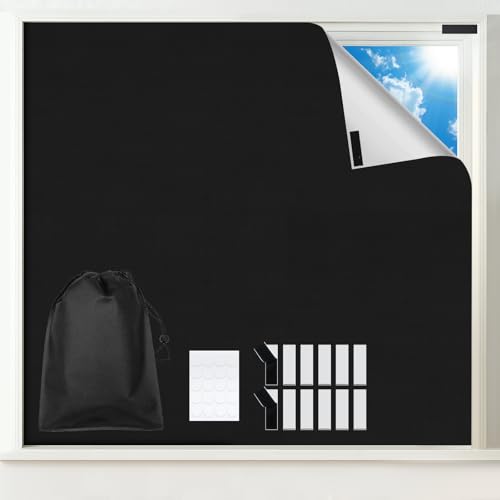
The 40 × 57-inch sheet is smaller than the other full-length covers here, which can suit compact windows and travel. It attaches with hook-and-loop fasteners and nano-adhesive stickers, and its silver coating is described as helping block summer sunlight.
Cover size 40 × 57 inchesInstallation 6 pairs of hook-and-loop fasteners and 12 nano-adhesive sticCut-to-fit Can be cut to different shapes and sizesMaterial feature Silver coating
Why it made the cut
Compact 40 × 57-inch size
Includes 6 pairs of hook-and-loop fasteners and 12 nano-adhesive stickers
Can be cut to shape
Good to know
Smaller cover may not span a large window
The surface must be clean and dry before installation
Skip it if Skip it if your window needs a larger cover or you want a magnetic fastening system.
Best for Travel and small windows where a 40 × 60-inch cover is enough
The 40 × 60-inch fabric cover uses adhesive hook-and-loop strips, so you can remove it without drilling. It can be cut for windows, doors, or sunroofs, but its stated heat benefits aren’t backed by a measured reduction.
Cover size 40″ × 60″Installation Self-adhesive hook-and-loop tape stripsMaterial feature Lightweight fabricCut-to-fit Can be cut to different shapes and sizes
Why it made the cut
Cuttable for different shapes
Lightweight and portable
Hook-and-loop strips attach to flat surfaces
Good to know
Single 40 × 60-inch cover may be too small for larger windows
Heat-loss reduction is claimed but not quantified
Skip it if Skip it if you need a wider cover or a fastening method other than adhesive hook-and-loop strips.
The best blind to keep heat out depends on the window: use reflection or blocking for direct-sun windows, while cellular shades and thermal curtains help more when your main problem is heat passing through the glass. For most temporary setups, FADOTY 100% Blackout Curtains 2 Pack is the practical pick; cellular shades are the stronger year-round insulator.
Fast choice
Choose FADOTY for a temporary bedroom or rental cover, grestar for a very large opening, solar shades when daylight and the view matter, and cellular shades when insulation matters in both summer and winter.
Treatment
What it does best
Trade-off
Cellular or honeycomb shades
Trap air near the glass as an insulating layer
Cost more than temporary covers and reduce some view
Solar shades
Reduce glare and solar heat while preserving some daylight and visibility
They don’t provide full blackout
Blackout covers
Block light and direct sun; useful for rentals and temporary setups
Add coverage beyond the window frame and can limit drafts
They need wall space and must be closed before sun reaches the glass
Shutters
Add a rigid barrier and can manage light, privacy, and airflow
They cost more and need a fitted installation
External shading or film
Stops or reflects sunlight before it reaches the glazing
Exterior work may need permission; film can be unsuitable for some glass
Material choice follows the job: reflection for sunlight, insulation for heat transfer, or filtering for glare.
For direct sunlight, a light or reflective surface facing the window generally sends more solar energy away than a dark surface. So white against the glass usually helps more than brown, although the close fit, reflective coating, window glass, and exposure also affect the result. A dark blackout fabric can make the room very dark without delivering the same heat-control evidence as a tested reflective or cellular design.
External shading works first because it blocks sunlight before the glass warms up; internal blinds and curtains are easier for renters but act after sunlight has reached the window. Reflective window film can work at the glass, though its suitability depends on the glazing and installation instructions. For comparing options, start with cellular shades for trapped-air insulation, or solar shades when you want a cooler room without losing the view.
76%
Sunlight heat entering standard double-pane glass
A Department of Energy figure puts about 76% of sunlight reaching a standard double-pane window into the home as heat during cooling seasons. In colder seasons, about 30% of a home’s heating energy can be lost through windows.
The five product cards here are temporary blackout-cover options, not interchangeable substitutes for tested cellular shades or professionally installed film: FADOTY, Black Out Window Cover Portable Blacout Curtains for Bedroom, 100% Blackout Curtains for Bedroom, the 100% Magnetic Black Out Window Cover, and NIGHTON Portable Blackout Curtains. They make sense when you need a removable cover quickly, especially in a rental or bedroom.
Best material by job
Choose a reflective or light-facing surface with a close fit to keep summer heat out. Cellular pockets suit year-round insulation because they trap air near the glass. Solar fabric controls glare while preserving daylight and some of the view. A blackout label alone doesn’t prove heat reduction.
Measure the Window Before Choosing a Cover
Temporary blinds keep heat out only when they cover the sunlit glass closely; thermal curtains help keep cold in by adding a barrier at the window. For window coverings to keep heat in, a close fit matters more than a blackout label. An enclosed patio often needs coverage over each exposed window or door, while cellular shades or shutters can help when you want an insulating layer. Off-white insulated curtains can reduce direct-sun heat, but color alone doesn’t establish performance; the backing and fit matter.
1
Measure the glass and frame
Record the glass width and height, then measure the full frame separately. Compare both with the product’s usable sheet size before cutting; leave enough material to cover the frame and seal the edges.
2
Match the cover to the opening
Cuttable sheets work well for skylights, curved or casement windows, RVs, and temporary doors, where rigid blinds can be awkward. Large patio doors may need multiple panels or a different treatment.
3
Choose light control for the exposure
A front-facing window’s needs depend on its direction and shade. West-facing glass gets strong afternoon sun; roof glazing can receive direct sun from above; a shaded north-facing window usually has less direct solar heat to block. Reflective or solar shades reduce glare while preserving some daylight and view. A black-backed blackout cover makes the room dark and removes daylight.
Product
Listed size
FADOTY 100% Blackout Curtains
57 × 118 in; two-pack
grestar
118 × 58 in
PATTENGO
118 × 57 in
ZUNGOUMC
40 × 57 in
NIGHTON
40 × 60 in
Check usable coverage and orientation against your measurements before cutting.
Worked Example: 36 × 48-Inch Window
A 36 × 48-inch window needs a cover at least that large. Reserve extra sheet for the frame and an edge seal, then trim only after checking the fit. Measure twice and cut once; a short cover leaves bright gaps where sunlight can enter.
Glass36 × 48 in
Minimum coverAt least 36 × 48 in
Allow forFrame and edge seal
Check the Surface Before Sticking
Adhesive, hook-and-loop fasteners, nano stickers, and magnetic plates need a clean, dry, compatible surface. Removal can affect paint, glass, or plastic differently, and humidity can change how well an adhesive holds. Test a small area and follow the product instructions before covering the whole window.
Close the Covering Before Afternoon Sun Arrives
Close the covering before direct sunlight reaches the glass; once sunlight warms the floor and furniture, those surfaces release heat into the room. To keep cool in extreme heat, shade sunlit windows early, then use air-conditioning as needed. For a garage in South Georgia, block sun through exposed windows and doors before the space heats up; a window cover can’t cool an uninsulated garage by itself.
Sunlight passing through glazing becomes solar heat gain: it warms indoor surfaces, which then warm the air. A window cover has no electrical running cost, but it may reduce air-conditioning demand; you can’t calculate the savings from the blind’s wattage because a passive cover uses 0 kWh. Actual results depend on the sun, glass, room size, insulation and thermostat settings.
Heater
Watts
Per hour
Per day (8 h)
Per month (1 days)
Portable heater comparison
1,500 W
26¢
$2.04
$2.04
Calculated at 17¢ per kWh. At $0.17 per kWh, a 1,500 W heater running 8 hours uses 1.5 kW × 8 × $0.17, or about $2.04. The passive cover uses 0 kWh; its value is any reduction in cooling demand, which varies by home.
Combine Treatments for the Problem
Pair external shade with an interior cover to block sun before it reaches the glass and add a barrier indoors. Reflective window film can help when a permanent treatment is acceptable; renters or owners of unusual windows may prefer a removable cut-to-fit cover. Solar shades can reduce glare while keeping some daylight and visibility; add a blackout cover when darkness for sleep is a separate need.
The side facing the sun matters more than the room-facing color: an off-white or reflective outer layer generally handles summer sun better than a dark outer surface. In winter, a close-fitting insulating cover can reduce drafts and heat loss after sunset, but closing it during sunny hours can block useful solar warmth. “Window tint to keep heat out” usually means reflective window film, not a darker room-facing fabric.
Choose by Season and Exposure
Energy-efficient blinds for summer heat need to match the window’s sun exposure and your daylight needs. A cover can limit incoming sun, but glass itself doesn’t keep all heat out; sunlight through standard double-pane glass can enter the home as heat. For a closer look at permanent film options, see reflective window film.
Check the Claim Before You Stick It Up
For direct-sun windows, an exterior shade or reflective treatment usually has the strongest heat-control advantage because it stops more sunlight before the glass warms up; for an interior cover, fit and construction matter more than the word blackout. Compare products by stated fabric construction, reflective coating, solar or thermal rating, test method, and the window conditions used in that test.
Myth
A 100% blackout covering blocks a guaranteed percentage of heat.
Fact
Blackout describes light blockage, not a measured heat-reduction result. A dark room can still be warm, and none of the listed products supplies a head-to-head heat-reduction test.
Need
Better match
What to check
Bedroom darkness
Blackout covering
Full glass coverage and small edge gaps
Daylight and a view
Solar shade
Glare, UV, and visibility claims with a stated rating
Year-round comfort
Cellular or honeycomb shade, or layered treatment
Air-trapping pockets, thermal construction, and close fit
Large window, door, or roof glazing
Measured reflective or cellular treatment
Enough material, secure fastening, and no blocked egress
The right covering depends on the job the window has to do.
A close fit matters because uncovered glass and edge gaps still admit direct sunlight. The FADOTY 100% Blackout Curtains 2 Pack, Black Out Window Cover Portable Blacout Curtains for Bedroom, 100% Blackout Curtains for Bedroom, 100% Magnetic Black Out Window Cover, and NIGHTON Portable Blackout Curtains list blackout, reflective or silver details, cut-to-fit sizing, or installation hardware; those are useful product facts, not proof of a specific cooling percentage.
Check The Surface And The Room
Follow the installation instructions, and keep adhesive away from peeling paint, damaged drywall, damp surfaces, and finishes the product doesn’t support. Don’t cover a required emergency-egress window, and don’t leave a loose hanging cover where children or pets can pull it down. Passive covers have no electrical certification or smart controls listed in the supplied product data, so don’t assume UL, ETL, ENERGY STAR, or fire ratings.
Permanent Changes Need Permission
Check local building rules and your lease before applying window film or installing permanent exterior shading. Reject a cover when the sheet is too small, the adhesive doesn’t suit the surface, or darkness is the only evidence offered.
Run This Window Cover Checklist First
Measure the glass and frame before buying; for keeping heat in, cellular or honeycomb material adds an insulating air layer, while an insulated curtain can serve as a temporary barrier across an open doorway.
Before You Buy Or Cut
Record the window width and height, then measure the frame and glass separately.
Note which direction the window faces and when direct sunlight reaches it.
Choose darkness, a clear view, daylight, or privacy as the main job.
Decide between temporary adhesive, removable hardware, and permanent installation.
Check the cover’s finished width, height, and edge gaps against the glass.
Confirm the adhesive, magnets, hooks, or fasteners suit the frame and wall surface.
Make sure the cover won’t block an emergency exit, handle, ventilation path, or safe door opening.
For a large window, glass door, or skylight, confirm the sheet or shade is large and secure enough before cutting.
1
Match The Material
Reflect direct sun with a reflective surface, insulate cold glass with cellular construction or a thermal layer, and block light with blackout fabric.
2
Install And Inspect
Fit the cover before the sunny period, close it before direct sunlight arrives, then check the adhesive or fasteners after installation and after the first few uses.
Final choice
Choose the product type that matches the job: reflect direct sun, insulate cold glass, or block light. An insulated curtain across an open doorway can hold heat in, but it doesn’t replace a door’s security or weather seal.
More Questions, Answered
Which window covering reduces heat gain most for my window?
For a strongly sunlit window, an exterior shade or reflective treatment usually has the edge because it stops sunlight before the glass heats up. For a window that also loses or gains heat through the glass, cellular shades or a close-fitting thermal curtain add an insulating layer.
How can I compare thermal performance across different covering types?
Look for measured heat-control or solar-performance data rather than relying on labels such as blackout or thermal. Then compare the material, fit, window exposure, and whether the treatment blocks sunlight, reflects it, or traps air beside the glass.
When should I close a covering to reduce afternoon heat?
Close it before direct sunlight reaches the window, not after the room starts feeling hot. Sun-warmed floors, walls, and furniture keep releasing heat after the covering goes down.
Which option best reduces heat while preserving daylight and the view?
Solar shades are usually the better compromise because they filter sunlight, reduce glare, and preserve some daylight and visibility. Choose the openness and fabric carefully: a more open weave keeps more view but generally blocks less sun.
Does a blackout covering offer meaningful heat reduction?
A blackout covering can reduce heat from direct sun by blocking the light, especially when it fits closely around the window. Blackout describes light control, though; it does not prove a specific heat reduction unless the product provides supporting performance data.
How much does a close fit matter?
A close fit matters most on a sunny window because gaps let sunlight reach the glass, floor, and nearby furniture. For an insulating shade, coverage near the frame also helps keep the trapped air layer working instead of letting room air circulate freely around it.
Which coverings work best for large windows, doors, or roof glazing?
Large sun-facing windows and glass doors benefit from coverings that can cover the full pane without sagging or leaving wide side gaps; cellular shades and well-fitted curtains are practical choices. Roof glazing needs a covering made for skylights, with hardware and clearance suited to the slope, rather than a standard window blind.