For most readers wanting warmth all winter, a combination of electric heated clothing and efficient room heaters offers reliable, cost-effective comfort without the complexity of permanent installations.
The essentials
Electric heated clothing extends warmth without heating the whole house.
Oil-filled and electric space heaters suit indoor rooms from small to large.
Programmable thermostats and adjustable heat settings cut energy use.
Layering heat sources—personal wearables and room heaters—boosts comfort and saves money.
Safety features like tip-over switches and UL listings are essential for indoor heaters.
Winter warmth demands solutions that fit your space, budget, and lifestyle. Choosing the wrong heater or relying on a single approach can leave you cold or overspending.
This guide recommends versatile heating options, explains key specs, and highlights safety and cost factors to help you stay warm all season.
Best Heating Solutions for Warmth All Winter
#1Best for Full-Body Warmth
XINSONYUELL Heated Vest Women 16000mAh
Best for Women needing reliable, all-day heat for outdoor or indoor winter use
This heated vest uses military-grade carbon fiber elements across 15 zones, delivering fast, even warmth to the neck, shoulders, chest, abdomen, and back. Its UL-certified 16,000mAh battery powers up to 10 hours on low heat, making it ideal for long winter days outside or commuting. The water-resistant nylon shell adds wind and light rain protection, while six available sizes ensure a proper fit for active women.
Heat Zones or Output 15 zonesHeat Settings 3Power Source 16,000mAh rechargeable batteryRun Time or Coverage Up to 10 hours on low
Why it made the cut
Rapid heating in under 10 seconds
Long battery life with fast USB-C charging
Water-resistant and machine washable
Six sizes for a tailored fit
Good to know
Battery must be removed before washing
Only designed for women’s sizing
Skip it if Skip this if you want a less bulky or less technical heating layer.
Best for Women looking for cushioned, durable winter socks for indoor and outdoor wear
These thermal socks combine soft, breathable knit fabric with full cushioning and an elastic cuff for all-day comfort and warmth. Reinforced toes and heels add durability for long-term use. Their above-ankle design provides extra protection against cold winds, making them great for boots or casual wear during winter.
Heat Zones or Output —Heat Settings —Power Source —Run Time or Coverage —
Why it made the cut
Soft, breathable knit fabric
Elastic cuff stays in place without pinching
Reinforced toes and heels for durability
Multiple colors to match footwear
Good to know
Limited to US women’s shoe sizes 5-11
No heating element, relies on insulation
Skip it if Skip these if you want active heat rather than insulated warmth.
Best for Anyone needing versatile, wind-blocking neck and lower face warmth
This fleece neck gaiter offers double-layer protection with a wind-blocking knit outer and a soft fleece lining to trap heat. Stretchy yarn fits most adults snugly without slipping, suitable for outdoor activities like skiing or motorcycling. It can be worn in multiple ways, including as a ski mask or half balaclava, adapting to changing conditions throughout the day.
Heat Zones or Output —Heat Settings —Power Source —Run Time or Coverage —
Why it made the cut
Double-layer wind and heat protection
Stretchy fit for most head sizes
Versatile 3-in-1 design
Lightweight and machine washable
Good to know
One size may be too loose for some
No active heating element
Skip it if Skip this if you want powered heating or a full face cover.
Best for Men and women needing adjustable, breathable face and neck protection in cold weather
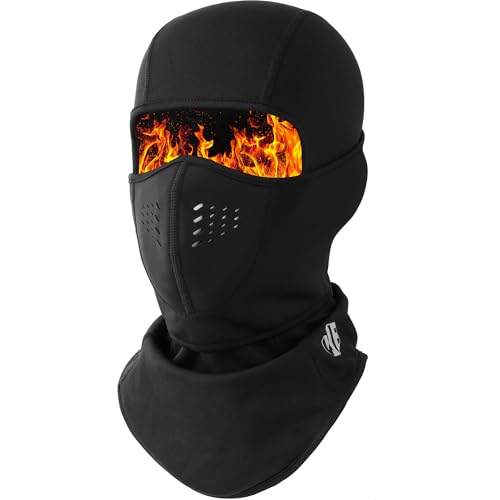
This fleece balaclava features a windproof design with an adjustable neoprene face panel for breathability and fog prevention. Its movable face cover allows easy access for eating or drinking without removing the mask. Designed to fit comfortably under helmets without bulk, it’s a solid choice for skiing, snowboarding, or outdoor winter work.
Heat Zones or Output —Heat Settings —Power Source —Run Time or Coverage —
Why it made the cut
Windproof, thermal fleece construction
Adjustable face cover for convenience
Neoprene panel with ventilation
Fits well under helmets
Good to know
May feel tight for some wearers
No active heating
Skip it if Skip if you need powered heating or a lighter neck-only warmer.
Best for Anyone needing a lightweight, breathable balaclava that fits under helmets
This balaclava combines a polyester-spandex outer shell with a fleece inner lining for warmth and wind protection. It stretches to fit most head sizes comfortably, making it suitable for activities like running, skiing, or motorcycling. The breathable fabric prevents overheating while keeping cold air out, offering all-day comfort without bulk.
Heat Zones or Output —Heat Settings —Power Source —Run Time or Coverage —
Why it made the cut
Stretchy, lightweight fit
Soft fleece lining for comfort
Blocks wind and UV rays
Fits under helmets without bulk
Good to know
No face ventilation panel
No heated elements
Skip it if Skip if you want active heating or adjustable face coverage.
Choosing a heater for winter means balancing heat output, power source, and safety to fit your space and lifestyle.
The heater temperature in winter should generally aim for a comfortable room range of 65°F to 72°F. Most indoor heaters can reach and maintain this without maxing out their capacity — the best temperature for a heater in winter is one you can adjust easily to avoid wasted energy and overheating.
Heat output matters most. Look for heaters rated in watts or BTUs that cover your room size or heating zones. For example, a small bedroom needs about 750 to 1,500 watts; larger living spaces require more. Adjustable heat settings give control so you can dial down when less heat suffices or ramp up on cold snaps.
Power sources fall into three main categories: electric plug-in, battery-powered heated clothing, and fuel-burning models (propane, kerosene). Electric heaters offer steady warmth and easy control but need proper circuits. Battery-heated clothing supplements room heat and offers mobility. Fuel heaters burn hotter and longer but need ventilation and safety checks.
Run time or coverage area is a practical concern. Electric heaters often cover one room continuously, while heated clothing runs on battery cycles of 3 to 8 hours per charge. Fuel heaters can last a full evening on a single tank but require refilling.
Choosing Your Heater Checklist
Confirm the heater’s wattage suits your room size
Choose a power source you can supply safely and affordably
Make sure adjustable heat settings are easy to use
Check run time for battery units or fuel capacity for fuel burners
Look for safety certifications like UL or ETL listings
Most modern heaters maintain consistent warmth at moderate temperatures, saving energy and increasing safety.
Safety Tip
Never use outdoor or construction heaters indoors; their emissions can be deadly without proper ventilation.
Sizing and Running Costs for Winter Heating
Sizing a heater correctly means matching wattage to room size: about 10 watts per square foot works well for typical insulated rooms.
A 300-watt winter room heater suits small spaces like bathrooms or offices up to about 30 square feet. It’s a low-cost, quick warm-up option, but won’t keep larger rooms comfortable.
Worked example
Say your living room is 12 by 14 feet, 168 square feet. Multiply by 10 watts per square foot gives 1,680 watts needed. A 1,500-watt heater covers this size closely.
Running costs depend on electricity rates and heater power. A 1,500-watt heater running 8 hours a night uses 12 kWh daily. At 17 cents per kWh, that’s about $2.04 per night.
Heater
Watts
Per hour
Per day (8 h)
Per month (30 days)
1,500 W space heater
1,500 W
26¢
$2.04
$61.20
Heated vest (battery)
20 W
0.3¢
2.7¢
82¢
Calculated at 17¢ per kWh. Electric heating cost comparison
Battery-powered heated clothing like the Heated Vest Women with 16000mAh Battery runs 3–8 hours per charge depending on setting and battery size. Recharging costs are minimal compared to electric heaters.
Comparing electricity to fuel, propane runs about $2 to $3 per gallon with 91,500 BTU energy content. A small fuel heater might burn 1/4 gallon per hour, costing roughly 50 to 75 cents per hour, often cheaper than electric heat but requiring ventilation and safety gear.
For affordable electric heating in winter, look for efficient 1,000 to 1,500-watt models with adjustable thermostats. The cheapest way to heat a bathroom is a small 300- to 600-watt ceramic or fan heater with a timer and moisture protection.
Average thermostat settings in winter hover around 68°F to 70°F to balance comfort and energy bills. Each degree higher can add 3% to 5% to heating costs.
Sizing and running costs are the key to staying warm without surprises. For all but the smallest spaces, a 1,500-watt electric heater or a combination of heated clothing and room heaters works well for winter warmth.
You can leave an oil-filled radiator on overnight if it has proper safety features like tip-over and overheat protection, but never leave any heater unattended without these safeguards.
Winter heaters must carry UL, ETL, or CSA certification to guarantee they meet strict safety and performance standards set for indoor use. These marks confirm the product has passed tests for electrical safety and fire risk.
Tip-over switches shut a heater off immediately if it falls, preventing fires. Overheat sensors cut power if internal temperatures exceed safe limits. Both features are essential for any heater you plan to run for hours or overnight.
Fuel Heater Indoor Use
Fuel-burning heaters require proper ventilation and a functioning carbon monoxide alarm. Never use outdoor-only propane or kerosene models indoors. Oxygen depletion sensors on propane heaters are mandatory for safe indoor operation.
Electric heated clothing and battery-powered wearables must follow manufacturer instructions closely to avoid overheating or battery damage. Use only the recommended chargers and never operate damaged units.
Winter Heater Safety Essentials
Confirm UL, ETL, or CSA certification on the heater.
Check for tip-over and overheat protection switches.
Install a carbon monoxide alarm if using fuel heaters indoors.
Use only indoor-rated fuel heaters with oxygen depletion sensors.
Follow battery care instructions for heated clothing and accessories.
Why Layered Heating Makes Sense All Winter
The best winter temp settings keep your thermostat around 68°F during the day and lower at night. Layered heating lets you stay comfortable without cranking the central heat all the time.
Heated vests and socks target your core and extremities, which lose heat fastest. Keeping these areas warm helps your whole body feel comfortable even when room temps are a bit lower.
Using space heaters only when you need extra heat in one room saves energy and cuts bills. You avoid heating the entire home at once, which can waste fuel or electricity.
Energy Saving Tip
Wear your heated clothing indoors while running a space heater in your main living area. This combo reduces the heater’s workload and keeps you cozy longer on less power.
Layered heating is flexible for both indoor and outdoor use. Battery-powered heated socks and vests keep you warm outside without bulky coats, then indoors you can switch to room heaters for quick comfort.
Myth
You need to heat the whole house to stay warm.
Fact
Targeted heat from wearable gear and spot heaters lets you stay warm comfortably without blasting central heating all day.
This approach lowers overall heating costs, improves comfort by reducing cold spots, and lets you adapt easily to changing weather and activity levels without fuss.
Pre-Buying and Pre-Season Checklist for Winter Warmth
Start winter with a plan: check insulation, heating needs, and your gear before the cold hits.
1
Check Room Insulation and Window Sealing
Look for drafts around windows and doors. Reseal or use weatherstripping to prevent heat loss, which can cut your heating costs significantly.
2
Decide on Heating Type and Size
Match your heater’s wattage to room size—about 10 watts per square foot is typical. Pick electric, oil-filled, or other types based on your space and cost preferences.
3
Inspect Existing Heaters and Thermostats
Test all heaters and thermostats for proper operation. Clean dust from coils and vents. Replace batteries in wireless thermostats to avoid service interruptions.
4
Plan Installation or Maintenance Early
Book professional service or schedule DIY maintenance before temperatures drop. Waiting until the first cold snap risks delays and discomfort.
Winter Prep Essentials
Seal all windows and doors against drafts
Confirm heater wattage fits room size
Test heaters and clean them
Replace thermostat batteries
Schedule service or repairs before cold weather
Should you prebuy oil this winter? If you use an oil heater, buy fuel early when prices tend to be lower and supplies stable. That avoids last-minute shortages and price spikes.
When to turn the heat on varies by location and personal comfort, but a common rule is to start when nighttime temps drop below 60°F consistently.
To drain your water heater for winter, turn off power or gas, shut off the water supply, open a hot water tap, attach a hose to the drain valve, and fully drain the tank to prevent freezing damage.
Save Energy
Lower your thermostat at night or when away to reduce heating costs without losing comfort.
More Questions, Answered
Can I use an oil-filled radiator safely in an unheated garage during winter?
Oil-filled radiators can work in unheated garages if the space is reasonably sheltered from moisture and drafts. They warm by convection and stay on longer after switching off, but garages often lack insulation, so heat loss is high. Use a model with built-in safety features like tip-over and overheat protection, and never leave it unattended for long periods.
What is the best temperature setting for a heater in winter to balance comfort and cost?
Keeping your thermostat around 68°F during the day balances comfort with energy savings. Lowering it by 7 to 10 degrees at night or when away can cut heating costs without sacrificing warmth when you return. Each degree you lower saves roughly 3 to 5 percent on heating bills.
How long does a 20 lb propane tank last when used for heating in winter?
A 20 lb propane tank contains about 4.7 gallons, roughly 430,000 BTU of energy. If your heater burns 20,000 BTU per hour, the tank lasts about 21 hours of continuous use. Actual runtime varies with heater size, outdoor temperature, and usage patterns.
Are electric heated vests effective for outdoor winter activities?
Electric heated vests provide targeted warmth and can extend comfort during outdoor activities by supplementing your layers. They usually run on rechargeable batteries lasting 4 to 10 hours depending on heat setting. They don’t replace insulation but help maintain core temperature efficiently.
Why does HVAC freeze up in winter and how can I prevent it?
HVAC systems freeze when airflow is restricted or refrigerant levels drop, causing evaporator coils to get too cold. Dirty filters, blocked vents, or low refrigerant are common culprits. Regular maintenance, filter changes, and ensuring proper airflow prevent freeze-ups.
Can I leave an oil heater running overnight safely?
You can leave an oil-filled heater running overnight only if it has tip-over and overheat protection and you follow the manufacturer’s instructions. Never use a model without these safety features unattended. Place the heater away from combustibles and keep a working smoke alarm nearby.
What is the most efficient home heating system for cold climates?
Heat pumps, especially cold-climate models, and high-efficiency gas furnaces rank high for efficiency in cold climates. Heat pumps work best with good insulation and moderate cold, while gas furnaces provide reliable heat even in deep cold. Combining a heat pump with a gas furnace can optimize efficiency and comfort.