For the best central heating replacement services, choose a licensed local contractor who works on your system type and provides a written scope, equipment details and permit plan. The products listed here are repair parts, not replacement services; for a full system replacement, get at least two itemized quotes before approving work.
The essentials
Ask whether the contractor replaces your exact system type before booking a visit.
Compare written quotes that name equipment, labor, permits and disposal separately.
Treat the listed parts as targeted repair components, not complete replacement equipment.
Get a licensed professional for gas, venting or 240 V work.
The most common mistake is treating a part listing as proof that a contractor can replace your whole heating system. A mismatched condensate cup or flame sensor can waste money and leave the real fault untouched.
If your heat is out tonight, ask a contractor about emergency diagnosis and safe temporary options first; replacement planning comes after the cause is clear.
Parts for Specific Central Heating Repairs
#1Boiler Condensate
LOORGVEL Boiler Condensate Catch Cups
Best for Containing condensate on compatible residential boilers
The plastic cup is designed to collect unwanted condensation around residential boilers and fireplaces, helping keep water away from sensitive parts. Its listed wind pressure switch feature may suit a repair where that component is needed; confirm the part matches your boiler before ordering.
Material PlasticPart type Condensate reservoir cupListed feature Wind pressure switchQuantity 4 pieces
Why it made the cut
Designed to contain boiler condensation
Described as compatible with a variety of models
Quick installation is listed
Good to know
No specific compatible boiler models are named
No dimensions are provided
Skip it if Skip it if you need a complete boiler replacement or cannot verify the part fits your model.
Best for Collecting condensation on a wall-hung boiler with confirmed fit
For a wall-hung boiler repair, these plastic collector cups are described as gathering excess condensation and include accessories for installation. The listing calls them universal, but it doesn’t name specific boiler models, so check the manufacturer’s part information first.
Material PlasticPart type Boiler condensate collector cupListed compatibility Most wall-hung boiler models and fireplacesListed feature Wind pressure switch
Why it made the cut
Designed for wall-hung boilers and fireplaces
Includes accessories, according to the listing
Wear-resistant plastic construction is described
Good to know
Specific compatible models are not listed
No cup dimensions are provided
Skip it if Skip it if you need a documented model-specific fit or a full heating-system replacement.
Best for Replacing a listed Goodman furnace flame sensor
A furnace that lights briefly and then shuts down may have a flame-sensing problem, and this part is listed as a replacement for several Goodman sensor numbers. Its stated 3.8-inch total length and 2.5-inch rod drop give you dimensions to compare with the existing sensor before buying.
Material Stainless steel sensing rod; alumina ceramic insulatorTotal length 3.8 inchesRod drop below bracket 2.5 inchesListed replacement numbers B11726-06, 20488501, P1257001F, AP4513976Operating temperature listed Up to 1800°F
Why it made the cut
Lists multiple replacement part numbers
Provides total length and rod-drop dimensions
Stainless steel sensing rod is specified
Good to know
Compatibility is focused on listed Goodman furnace series and part numbers
Installation involves a gas furnace safety component
Skip it if Skip it if your furnace model or existing sensor part number isn’t among the listed compatible options.
Best Central Heating Replacement Services Start With System Fit
The best central heating replacement services are contractors who work on your fuel, equipment and heat distribution—not simply whoever advertises heating work nearby. Central heating makes heat at one source, such as a boiler or furnace, then distributes it through the home; unitary systems heat individual rooms or zones with separate equipment, such as electric baseboards.
A central system may use hot water in pipes and radiators, or heated air in ducts. Unitary heating usually has no single central source serving the whole home. That difference matters: replacing a boiler is a different job from replacing a ducted furnace, and neither is the same as installing several room heaters. For more detail on the two system types, see central heating replacement system types.
Identify Your Existing System
Fuel: natural gas, propane, oil, electricity, or another source.
Equipment: boiler, furnace, heat pump, or individual room heaters.
Distribution: ducts, hot-water pipes and radiators, or direct room heating.
Brand and model number from the equipment label, if you can reach it safely.
Heating services on offer can include diagnosis and repair, routine maintenance, equipment replacement, or a change in fuel or system type. Tell the contractor what you have and whether you want a repair or a full replacement before booking; a company that handles furnaces may not service your boiler.
A Part Is Not a Replacement
The listed condensate cups address a boiler component, while the Goodman flame sensor is a specific furnace part. Those may suit a repair, but they don’t replace a central heating system. For help choosing an installer, see our heating installation service guide.
From HeaterGuides · our own guidePage 6 is the decision guide: heat pump, furnace, boiler or hybrid, with your own numbers.Heating System Upgrade PlannerChoose between a heat pump, a furnace, a boiler or a hybrid with your own numbers, and hire the right installer.Every system compared side by side25 questions for contractors, red flagsRunning-cost, payback and quote calculator (Excel)$14.99$9.99Get it for $9.99See what's inside and watch the 2-minute video →16-page printable PDF + Excel calculator · instant download · 30-day refund
Compare Scope, Credentials and the Written Quote
Compare replacement proposals by what each contractor will install and do, not by the headline total. There’s no reliable single price for replacing an oil-fired central heating boiler with a heat pump: the cost depends on the equipment, fuel conversion, changes to ducts or piping, electrical work, permits and site conditions.
1
Ask for an itemized scope
Request equipment details, labor, permit costs, disposal and commissioning—the checks and adjustments made when the system is put into service. Confirm who will obtain permits and arrange inspections.
2
Check credentials and responsibility
Verify that the contractor holds the licenses and insurance required for the work in your area. Ask who will perform each part; gas connections, venting and 240 V electrical work generally require licensed trades.
3
Compare equivalent proposals
Get at least two written quotes. Check that they cover the same equipment and work, including any fuel conversion or distribution changes, before comparing totals.
Ask About Ongoing Coverage
What does the service contract cover, and what does it exclude?
Are repair parts, labor and emergency visits included or charged separately?
What warranty applies to the new equipment, and who handles a claim?
A maintenance contract pays for specified service; a replacement warranty covers defined defects or failures in new equipment, subject to its terms. They aren’t interchangeable. If you’re comparing ongoing coverage, see our guides to central heating service plans and central heating service contracts.
Don’t Approve a Vague Scope
A total without equipment details, permit responsibility and a clear list of included work is hard to compare—and easy to misunderstand. Ask for those details in writing before you sign.
Size the New System Before Choosing Equipment
Energy efficient central heating radiators depend on the heat source, water temperature, controls and each room’s heat loss; a radiator alone doesn’t make a system efficient. Central energy efficient heating radiators are sized to deliver enough heat at the system’s operating temperature, while the best type of radiator for central heating depends on the boiler or heat pump and the home’s existing pipework. The most efficient gas central heating radiators still need a correctly sized, well-controlled heat source.
Ask the contractor to calculate the heating requirement room by room and inspect the existing radiators, pipework or ducts before specifying equipment capacity. A whole-house estimate can miss a cold north-facing room or an extension with different insulation. Existing equipment may be reusable, but only if it can deliver the required heat under the proposed design.
Match Emitters to the Heat Source
If a heat pump will replace an oil boiler, ask whether the existing radiators can heat each room adequately at the heat pump’s proposed lower water temperature. Get any radiator, pipework or control upgrades listed in the quote, along with the assumptions behind them. A heat pump may need larger radiators or other changes; don’t assume the old oil-boiler setup transfers unchanged.
Design choice
What to check
Radiator capacity
Can each room reach its target temperature at the planned water temperature?
Controls
Can the system adjust heat to room needs rather than run one setting everywhere?
Distribution
Are the existing pipes or ducts suitable for the new equipment and required output?
Ask for the design checks in writing, not just an efficiency label.
Right-sized equipment is designed around the home’s calculated heating needs. Oversizing can mean higher upfront cost and, depending on the equipment and controls, inefficient cycling or less steady comfort; undersizing can leave rooms short of heat on cold days. There’s no reliable rule based only on square footage. Ask the installer to show how the proposed capacity follows from the room-by-room assessment.
Check Safety and Certification Before Work Starts
Central heating leaks water can come from a radiator, pipe joint or heating equipment, and fixing central heating water leaks may call for a repair rather than a replacement. Water leaks can damage the home; a fuel leak creates a separate fire and exposure hazard. If the burner section on your oil fired central heating is leaking kerosene, stop using the equipment and contact a qualified technician—don’t attempt burner or fuel-line repairs.
Fuel leak: stop and get help
Don’t operate equipment with a suspected fuel leak, and don’t try to locate or repair the leak yourself. Keep flames and other ignition sources away. If you can shut the equipment off without approaching the leak or contacting fuel, do so; otherwise leave it alone and call a qualified technician.
Gas equipment needs installation by a professional licensed or otherwise qualified for the work under local rules, with correct venting and commissioning. Replacing a heating system isn’t a simple appliance swap: the vent, fuel connection and system operation all need to suit the installed equipment. Ask who is responsible for permits and inspections, and confirm the requirements with your local authority if the quote is unclear.
Before work starts
Confirm who will obtain required permits and arrange inspections.
Ask the installer to follow the equipment’s listed clearances and installation instructions.
Get the planned venting and any fuel or electrical work included in the written scope.
Ask for documented startup checks, including confirmation that the equipment operates and vents as intended.
Have the technician identify the source of a water leak before deciding on a replacement; a leaking radiator valve may need repair, not a new heating system. For a fuel leak, treat it as an urgent safety issue first, not as a reason to wait for competing replacement quotes.
Know What a Replacement Quote Leaves Out
Extending a radiator central heating system can require more than adding a radiator: the new heat source, pipe sizes, system water volume, controls and balancing all need to work together. To add another central heating radiator, have a qualified heating contractor check the available pipework and system capacity, specify the connection and controls, then balance the system after installation.
There’s no standard extra volume of water needed to pressurise a typical central heating system. The system’s total water volume depends on its pipework, radiators and equipment; the correct expansion-vessel capacity and filling pressure depend on the system design and installation. Ask the contractor to calculate these for your layout rather than quote a rule-of-thumb number.
Changing the heat source or adding radiators may mean changes to pipe sizing, pump settings, expansion capacity or controls. Ask for any required system modifications, balancing and commissioning to appear in the written scope, not as a surprise after the old equipment is out.
Ask before approving
Have the contractor state what stays, what changes and how they’ll verify the completed system is operating as designed. A quote that lists only the new boiler or furnace leaves important questions unanswered.
Record the system type, fuel and any model information you can read safely from the equipment label.
2
Document the symptoms
Note what’s failing, when it happens, which rooms are affected and any recent changes to the system.
3
Request comparable quotes
Ask at least two contractors for itemized written proposals that include equipment, system changes, controls and commissioning.
4
Confirm permits and schedule
Ask who will obtain any required permits, confirm the work dates and approve the scope before installation begins.
More Questions, Answered
Is central heating the same as unitary heating?
No. Central heating uses one heat source to distribute warmth through a building, often by ducts or hot-water pipes; unitary heating usually means a self-contained unit serving one room or zone. A heat pump can be part of either setup, so the equipment arrangement matters more than the label.
How does water flow around a central heating radiator?
A circulator pump moves heated water through supply pipes into each radiator, where the water releases heat into the room. Cooler water leaves through the return pipe and goes back to the boiler or other heat source. A two-pipe system gives radiators separate supply and return connections.
How much does a heat pump cost to replace an oil-fired central heating boiler?
There isn’t one reliable price without a site assessment: the total depends on heat-pump size, electrical work, existing radiators or ducts, and whether the oil tank needs removal. Ask contractors to itemize equipment, installation, any distribution upgrades and tank work separately, then compare quotes for the same scope.
What should I do if my central heating is leaking water?
Turn off the heating system and, if you can identify the correct valve, shut off the water supply feeding it; catch drips and keep clear of wet electrical equipment. Don’t loosen fittings or open the boiler casing. Call a qualified heating professional promptly, especially if water is near wiring or the leak is coming from the boiler.
How do I add another radiator to central heating?
Have a heating professional check whether the existing heat source and pipework can handle the added room heat loss before installing a radiator. The work may require new pipe runs, suitable radiator sizing, system balancing and control adjustments; simply connecting a radiator can leave it cold or reduce heat elsewhere.
How much extra water does a typical central heating system need when pressurised?
There is no standard extra amount: a sealed, pressurised system is filled to its specified pressure, and the required water volume depends on the pipework, radiators and boiler. If pressure keeps falling and you have to top up repeatedly, look for a leak or a faulty component rather than treating refill water as routine.
Before you go · a welcome giftGet the Heating System Upgrade Planner for $4.99Choose between a heat pump, a furnace, a boiler or a hybrid with your own numbers, and hire the right installer. Normally $14.99; your welcome price saves $10.00. We'll email your link right now.or buy it now for $9.99 without the gift →One email with your link now. We never share your address.


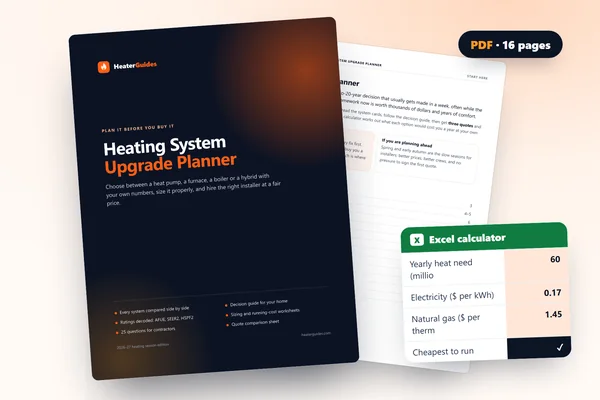 Heating System Upgrade PlannerChoose between a heat pump, a furnace, a boiler or a hybrid with your own numbers, and hire the right installer.Every system compared side by side25 questions for contractors, red flagsRunning-cost, payback and quote calculator (Excel)