You crank the thermostat, wait ten minutes, and the room still feels cold. The heater runs and runs, but heat leaks out through walls, attic, or floors. That wasted energy shows up on your bill every month. The fix isn’t a bigger heater. It’s better insulation.
This article covers the top insulation materials for maximum heater efficiency. You’ll learn R-values per inch, where each material works best, and honest trade-offs based on real installation experience. By the end, you’ll know exactly what to buy and where to put it.
For small repair patches or DIY crafts that double as insulation, a rigid foam board works well. The GVERELD High Density XPS Foam Board (2-pack, 15.6×11.7×2 inches) is a closed-cell board with an R-value of about 5 per inch. It cuts easily with a utility knife, resists moisture, and can be painted or glued to surfaces. Good for leveling a subfloor, insulating a cold window, or building props that also block drafts. Check current price on Amazon if you need something rigid and waterproof.
How R-Value Works and Why It Matters
R-value measures how well a material resists heat flow. Higher numbers mean better insulation. But the number alone doesn’t tell the whole story. Thickness, density, and installation quality all affect real-world performance.
Fiberglass batts have an R-value of roughly 3.0 to 4.3 per inch. Spray foam reaches R-6 to R-7 per inch. XPS foam board sits around R-5 per inch. Each material behaves differently when compressed, wet, or exposed to air movement.
Match insulation R-value to your climate zone. The U.S. Department of Energy recommends R-49 for attics in cold climates, and R-13 to R-21 for walls. Overselecting a high R-value in a damp basement without proper vapor barriers can cause mold problems. Know your zone before buying.
Fiberglass Batts: Cheap but Tricky
Fiberglass batts are the most common insulation material. They cost little, are widely available, and a DIYer can install them between studs. But performance depends heavily on installation discipline.
Gaps around electrical boxes, compression behind wires, and uneven spacing slash effective R-value by 20% or more. A batt rated R-19 can behave like R-13 if stuffed too tight. Pro tip: split batts around wires rather than cramming them behind. Use a utility knife to cut clean rectangles around outlets.
Moisture is fiberglass’s weakness. Wet batts lose most of their insulating ability and can grow mold. Never install fiberglass in a basement wall without proper drainage and a vapor barrier on the warm side of the wall.
Spray Foam: Best Seal, Higher Cost
Closed-cell spray foam expands to fill every crack. It seals air leaks far better than any batt or board. Air leakage can account for 30% of heat loss in a typical home, so stopping air movement often matters more than raw R-value.
Spray foam reaches R-6 to R-7 per inch. A 2-inch layer gives roughly R-13. It also adds structural strength to walls. Cost runs 2 to 3 times higher than fiberglass for the same R-value. Professional installation is recommended because mixing ratios and safety gear matter.
Open-cell spray foam is cheaper (R-3.5 per inch) but absorbs moisture. Use closed-cell below grade or in bathrooms. Open-cell works in attics and interior walls where dryness is guaranteed.
For maximum heater efficiency, sealing the attic floor and rim joists with spray foam yields the fastest payback. Think of it this way: every dime spent on air sealing saves two dimes on insulation later. <a href='https://heaterguides.com/understanding-r-values and air sealing help your heater run less often.
Rigid Foam Boards: XPS vs. EPS vs. Polyiso
Rigid foam boards offer consistent insulation in a flat, easy-to-cut panel. They are the go‑to for basements, exterior walls, cathedral ceilings, and under slabs.
- XPS (Extruded Polystyrene) – R-5 per inch. Closed cell, water resistant. Strong compressive strength (300+kPa). The GVERELD board is XPS. Good for damp environments like basement walls or under a concrete slab.
- EPS (Expanded Polystyrene) – R-4 per inch. Cheaper than XPS, but more permeable to water vapor. Requires a separate vapor barrier below grade. Beads can crumble if cut poorly.
- Polyisocyanurate (Polyiso) – R-6 to R-6.5 per inch. Highest R-value per inch of rigid foams. But R-value drops in cold weather (below 40°F). Best for warm climates or attic applications with foil facing.
Layering rigid foam boards over existing fiberglass can bump up R-value without major demolition. Tape seams with foil tape to prevent air movement between the layers.
| Material | R-Value per Inch | Cost per Sq Ft (approx.) | Best Use | Notes |
|---|---|---|---|---|
| Fiberglass Batt | 3.0 – 4.3 | $0.50 – $1.00 | Walls, attics (dry spaces) | Must avoid gaps & compression; vapor barrier needed |
| Closed‑Cell Spray Foam | 6.0 – 7.0 | $1.50 – $3.00 | Air sealing, rim joists, crawlspaces | Professional install; high upfront cost |
| XPS Foam Board | 5.0 | $0.80 – $1.20 | Basements, subfloors, concrete slabs | Water resistant; easy to cut; can be left exposed in low‑risk areas |
| Reflective Foil | R-1 to R-3 (air gap required) | $0.30 – $0.70 | Attic rafters, metal buildings, radiant floors | Only works with air space; does not replace bulk insulation |
Reflective Insulation and Air Sealing: The Overlooked Pair
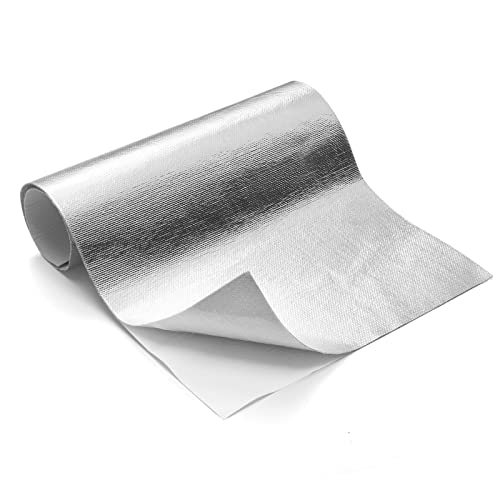
Reflective foil (radiant barrier) reflects heat instead of soaking it up. It works only when facing an air gap of at least 1 inch. In attics, stapling foil to the underside of rafters can reduce summer heat gain. For winter heating, the benefit is smaller because heat loss is mostly conductive, not radiant.
Duct tape and caulk matter more than fancy materials. Seal gaps around pipes, wires, and windows before adding insulation. A dollar tube of caulk often saves more energy than an expensive spray foam kit on a small leak. Optimizing insulation includes air sealing as step one.
How to Match Insulation to Heater Type
Different heaters move heat differently. The right insulation strategy changes with each type.
- Forced-air furnace – Duct insulation matters almost as much as wall insulation. Wrap ducts in unheated spaces with R-8 or R-11 duct wrap. Seal all joints with mastic, not tape.
- Radiant floor heating – Insulate underneath the slab or subfloor with rigid foam (XPS or polyiso). The foam directs heat upward into the living space. Without it, a third of the heat goes into the ground.
- Baseboard heaters (electric or hydronic) – Walls behind baseboard units stay cold. Place reflective foil behind the baseboard to push heat into the room. Use fiberglass batt with foil facing in the wall cavity.
- Space heaters (portable) – Close off unused rooms, block drafts under doors with a draft stopper, and add a temporary insulating panel (like the GVERELD foam board) inside a window frame. Planning heater usage with insulation cuts runtime by half in many cases.
FAQ
What is the single best insulation material for heater efficiency?
Closed-cell spray foam gives the highest R-value per inch and seals air leaks. If budget is tight, focus on air sealing first and use fiberglass batts for bulk insulation.
Can I put insulation over existing insulation?
Yes, but avoid moisture traps. On attic floors, you can lay unfaced fiberglass batts perpendicular over old batts. Do not add a vapor barrier on top. For walls, rigid foam panels work if you remove the drywall first.
Does insulation type affect heater lifespan?
Indirectly. A well-insulated home reduces heater run time, which reduces wear on moving parts and thermal cycling. Heaters in poorly insulated homes often short-cycle, leading to early failure.
What R-value do I need for a garage heater?
Garages usually need R-13 to R-19 in walls and R-30 in the ceiling if there is living space above. Insulate the garage door with a foam panel kit. Uninsulated metal garage doors bleed heat faster than walls.
Is reflective insulation worth it for a space heater?
Only if placed behind the heater or on an exterior wall with an air gap. A piece of XPS foam board with foil facing once side works better than plain foil alone.
Practical Takeaways
- Seal air leaks before adding insulation. Caulk, weatherstrip, and foam gaps first.
- Match installation material to the location: XPS for damp areas, fiberglass for dry walls, spray foam for rim joists.
- Never compress insulation to fit behind obstacles. Cut around them instead.
- Add insulation to attic access doors and basement rim joists for the biggest heat loss reduction.
- Consider a rigid foam board like the GVERELD XPS board for small one‑off patches, window inserts, or basement subfloor leveling.
- Check the R-value per inch before buying: polyiso and spray foam give more insulation per inch than fiberglass or EPS.
- Hire a professional for spray foam – the chemical mixture and safety gear are not worth guessing.

I am a mechanical engineer and love doing research on different home and outdoor heating options. When I am not working, I love spending time with my family and friends. I also enjoy blogging about my findings and helping others to find the best heating options for their needs.
Related guides

How Sound Insulation Boosts Heater Efficiency & Saves Money
You close every window, crank the thermostat, and still feel a cold draft creeping in. Maybe you hear…
Top Challenges When Installing and Maintaining Heater Insulation
Common challenges include ensuring proper installation to avoid gaps, selecting the right insulation material, managing moisture, and maintaining…
How Insulation Boosts Heater Efficiency (And How To Calculate It)
That extra $150 on your heating bill last month? It's not your furnace getting old. It's the heat…