What Is the Link Between Insulation and Temperature?
On this page 7 sections
Get this wrong and you pay for it twice: once in higher heating bills, and again in rooms that still feel cold because the heat is leaking through the shell. In some assemblies, poor insulation also leaves pipes, rim joists, or other cold spots close enough to freezing for comfort to stop being the only problem.
The useful part is that insulation does not “add heat” to a house. It reduces the rate at which heat escapes, which changes the temperature profile across the wall, ceiling, or floor and can make one room hold warmth much longer than another.
The Link Between Insulation And Temperature
Insulation slows heat flow between two spaces at different temperatures, and the amount it slows that flow—measured as R-value—changes slightly with temperature itself. The link isn’t that insulation heats or cools a room, but that it reduces the rate at which heat escapes in winter or enters in summer, so your heater or air conditioner keeps the space closer to your setpoint with less work.
Heat moves in three ways: conduction through solid materials, convection through air currents, and radiation across空间 空. Insulation reduces all three. Fiberglass batts trap air pockets to block conduction and convection. Foam boards limit conduction with their cellular structure. Reflective barriers turn back radiant heat before it crosses an attic or crawl space. The better the insulation, the less heat crosses the assembly per hour for each degree of temperature difference between inside and out.
R-value is thermal resistance: the inverse of the U-value, or overall heat transfer coefficient. Higher R means more resistance. A wall with R-13 batts loses heat half as fast as the same wall with R-6.5, all else equal. That slower loss means the furnace cycles less often, the room stays warmer between cycles, and you burn less fuel per day.
| Assembly R-value | Heat loss (BTU/hr per sq ft) | What you notice |
|---|---|---|
| R-5 (low) | 8.0 | Cold walls, constant furnace run time, high bills |
| R-15 (medium) | 2.7 | Comfortable near the center, cooler by windows |
| R-30 (high) | 1.3 | Even warmth, longer off-cycles, lower fuel use |
How Temperature Changes R-Value
R-value isn’t a fixed number. For many insulation materials, thermal resistance rises as temperature drops and falls as temperature climbs. The relationship is often close to linear across the range of temperatures a wall or attic sees—say 0°F to 100°F—but it means the R-value printed on the label reflects lab conditions, not necessarily the coldest night of January or the hottest afternoon in July.
Extruded polystyrene is a clear example. XPS foam tested at the standard mean temperature may rate R-5 per inch, but that same board performs closer to R-5.2 in a cold-climate wall where the average temperature across the foam is 20°F, and closer to R-4.8 in a hot roof where the mean hits 90°F. The swing isn’t huge, but it’s real: a Minnesota attic gets more resistance than the label promises, while a Phoenix roof gets a bit less.
Lab ratings are measured at controlled mean temperatures—often around 75°F—with no wind, moisture or air leakage. Field performance shifts because the insulation sits in a temperature gradient: the indoor face might be 68°F while the outdoor face is 15°F, and the middle of the batt or board settles somewhere between. That gradient changes the effective conductivity. In practice, you design with the label R-value and accept that cold-climate assemblies outperform it slightly in winter, while hot-climate roofs underperform it slightly in summer.
| Mean temperature | Fiberglass batt | XPS foam | Polyiso foam |
|---|---|---|---|
| 20°F (cold attic) | R-13.2 | R-5.2/inch | R-6.3/inch |
| 75°F (lab standard) | R-13.0 | R-5.0/inch | R-6.0/inch |
| 90°F (hot roof) | R-12.8 | R-4.8/inch | R-5.5/inch |
How Temperature Moves Through An Insulated Assembly

Each layer in a wall or ceiling takes a share of the total temperature drop in proportion to its R-value. If you’re heating a room to 68°F and it’s 20°F outside, that 48-degree difference divides across drywall, insulation, sheathing and siding—with the insulation, having the highest R-value, carrying most of it. Drywall might drop a degree or two, the batt might drop forty, and the sheathing another few. That’s why the inside surface of an insulated wall stays close to room temperature, while the sheathing behind the siding drops nearly to outdoor air.
Studs, joists and framing create thermal bridges that carry more heat than the insulated cavity. Wood conducts better than fiberglass or foam, so the temperature profile flattens where framing runs through the assembly. A 2×4 stud at 16 inches on center might account for 20 percent of the wall area and double the heat loss through that strip. Ceilings often perform differently because warm air rises and collects against the top plate, increasing the temperature difference between the attic and the room below. An attic at 10°F puts more demand on ceiling insulation than a wall facing the same outdoor temperature, since the indoor surface sees both conduction and convection from buoyant air.
Adding insulation makes cavity surfaces warmer in winter, which lowers freeze risk for pipes near exterior walls. Upgrading from R-13 to R-21 in that same wall moves the batt’s outer face from roughly 28.7°F to about 24°F when it’s 20°F outside, but the drywall stays near 68°F. Pipes between studs now sit in a slightly colder cavity, so if they’re close to the sheathing, insulating the wall can push them closer to freezing. Route supply lines on interior walls, or leave a gap in the batt so room air warms the pipe chase.
 Winter Heating Bill CutterSee what every heater in your home really costs, heat the rooms you use, and cut the waste in 30 days.Cost-per-hour tables for every heaterThermostat schedule and draft-proofing planRunning-cost and bill calculator (Excel)
What Insulation Does For Comfort And Bills
A better-insulated room loses heat more slowly, so the heater cycles less. Cutting heat loss in half doubles the time between cycles, and fewer cycles mean fewer hours at full draw. That shows up as lower run time on your meter and a smaller monthly bill. It also means comfort: fewer drafts, warmer interior wall and floor surfaces, and less chill near exterior walls where bare feet notice it first.
Say you’re running a 1,500 W space heater in a poorly insulated bonus room that loses 6,000 BTU per hour at a 20-degree indoor-outdoor difference. A 1,500 W heater puts out about 5,100 BTU per hour, so it runs constantly and never quite holds 68°F. Upgrade the walls and ceiling to R-21 and cut the loss to 3,000 BTU per hour. Now the heater holds setpoint and cycles roughly 60 percent of the time—nine hours instead of fifteen on a cold night. At 17 cents per kWh, that’s $2.30 instead of $3.83.
| Heater | Watts | Per hour | Per day (15 h) | Per month (30 days) |
|---|---|---|---|---|
| 1,500 W heater, poor insulation | 1,500 W | 26¢ | $3.83 | $114.75 |
| 1,500 W heater, upgraded insulation | 900 W | 15¢ | $2.30 | $68.85 |
Good insulation helps a heater maintain setpoint, but it can’t replace heating capacity in an underheated room. If the space is too large for the heater or the outdoor temperature drops below the heater’s design range, adding insulation will slow the temperature decline and reduce the shortfall, but the room will still drift below target. Insulation and capacity work together. Rooms that benefit most are bedrooms, bonus rooms, basements and home offices on outside walls, where occupants feel drafts and cold floors most acutely.
If room temperature exceeds the heater’s setpoint, that usually means the heater is oversized, the thermostat is miscalibrated, or heat is arriving from another source—not that insulation is exceptional. Different insulation types do affect temperature retention: closed-cell spray foam and rigid boards hold R-value better across temperature swings than loose fill or fiberglass batts, so a room insulated with foam will stay closer to setpoint longer after the heater cycles off.
Which Insulation Works Best By Climate
Picking the right insulation means matching the material to your climate, the assembly, and how much moisture it’ll see—not just chasing the highest labeled R-value. Insulation is most effective against conductive heat transfer, which is how heat moves through solid materials, but some types also address radiant heat, especially in hot climates where the sun heats roof decking all day.
Fiberglass and mineral wool batts work well in moderate climates and framed assemblies where you can fit them between studs or joists. Rigid foam boards—extruded polystyrene (XPS) and polyisocyanurate (polyiso)—shine as continuous insulation over sheathing, covering framing members and cutting thermal bridging that batts alone can’t fix. Polyiso delivers higher R-value per inch but loses performance below about 25°F, so XPS is the better pick for cold-climate foundations and below-grade work.
| Material | Best Use | Climate Fit |
|---|---|---|
| Fiberglass batts | Between studs and joists | Moderate, low moisture |
| XPS rigid foam | Continuous sheathing, below grade | Cold climates, basements |
| Polyiso rigid foam | Continuous sheathing, roofs | Mild to warm climates |
| Reflective foil | Attics, sunny roof cavities | Hot, high solar gain |
Reflective insulation helps most where radiant heat is the problem: under a metal roof in July, or in an attic where the sun bakes the decking. It reflects up to 97% of radiant energy but does little for conduction, so it’s a supplement, not a replacement for batts or foam.
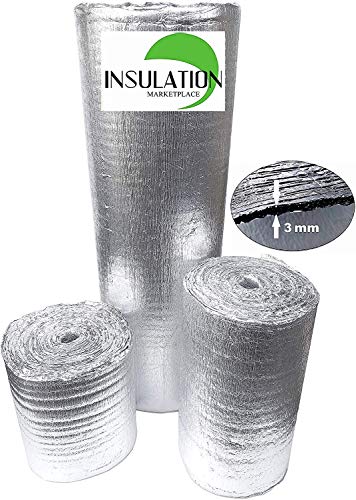
Layered assemblies—say, XPS sheathing over fiberglass batts—can outperform a single thicker layer when the outer layer covers studs and plates, stopping the heat that would otherwise bypass the cavity fill. Continuous insulation isn’t about adding more; it’s about covering the bridges.
When Insulation Needs More Than Insulation
Insulation lowers your heating and cooling load, which lets your HVAC system run less and hit setpoint faster, but it can’t fix a furnace that’s the wrong size, ducts that leak half the air into a crawlspace, or a house so tight that indoor air goes stale. Better insulation and a well-matched HVAC system work together; how HVAC and building insulation work together for efficiency covers the details.
Tighter houses still need controlled fresh air. Stopping heat loss through walls is not the same as providing ventilation, and a well-sealed envelope without makeup air traps humidity, cooking smells, and carbon dioxide. Most building codes now require mechanical ventilation—an energy recovery ventilator (ERV) or heat recovery ventilator (HRV)—when the house is tight enough that it won’t leak naturally.
Insulation won’t fix blocked return ducts, a heat pump sized for the old leaky house, or air that hasn’t moved since breakfast. It slows heat flow, and that’s all it does. On a global scale, better insulation cuts the energy buildings use for heating and cooling, which in turn reduces greenhouse gas emissions from power plants and furnaces—but only if the rest of the system is set up to take advantage of it.