

You walk past the utility closet and catch it out of the corner of your eye: a small red light on your electric water heater, steady or blinking. Your first thought is probably, “Is that normal?” The honest answer is: sometimes yes, sometimes no. It depends on the brand, the light’s behavior, and what stage of the heating cycle you’re in.
This guide breaks down what that red light is telling you, how to check the obvious things first, and when to stop poking around and call a licensed electrician or plumber. You’ll walk away knowing exactly what to look for, what to test safely, and what’s worth fixing yourself versus leaving to a pro.
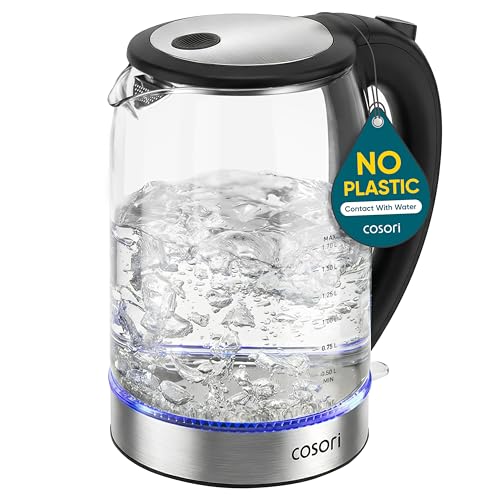
Cosori
Cosori Electric Kettle, No Plastic Contact with…
- No Plastic Contact with Your Water——With no plastic inside, water never touches plastic, ensuring a pure taste and safer drinking…
- Faster Than a Stovetop Kettle——Heats 0.5L (2 Cups) water in under 3 minutes for less wait time
- Easy to Clean——Wide mouth and large-angle lid lets you reach every corner with ease
And if you’re dealing with a slow-heating electric kettle on your counter instead of a tank, that’s a different problem. But the same principle applies: check the power source and the heating element. A Cosori electric kettle with no plastic contact with water is a solid replacement if your old one is acting up.
What the Red Light Means on Different Electric Heaters
Electric water heaters don’t have a pilot flame, so the red light is usually tied to the heating elements or the thermostat. On many models, a steady red light simply means power is reaching the unit. On others, a blinking red light points to a fault code. You need to know which one you have.
Check the front panel or the inside of the access cover for a wiring diagram or a legend. Most manufacturers print a small chart that shows what each light pattern means. If you don’t see one, look up the model number online. It’s usually on a sticker near the bottom of the tank.
Here are the common scenarios:
- Steady red light after a heating cycle: This often means the upper thermostat is satisfied and the heater is in standby mode. Not a problem.
- Blinking red light when the tank is full and cold: Could be a bad thermostat, a tripped high-limit switch, or a failed heating element.
- Red light with no hot water at all: Likely a blown element or a tripped circuit breaker. Check the breaker first.
- Red light that stays on even when the water is hot: The thermostat might be stuck closed, causing the element to run nonstop. That wastes energy and can overheat the tank.
Some newer smart electric heaters use a red light to indicate a Wi-Fi or sensor error. If your heater is app-connected, check the app for a specific error code. The light alone won’t tell you much.
Step-by-Step Troubleshooting: What to Check First
Before you call anyone, work through these steps in order. You’ll solve maybe half of the issues yourself.
1. Confirm Power to the Unit
Go to your breaker panel and find the circuit labeled for the water heater. If the breaker is tripped, reset it. If it trips again immediately, you have a short or a ground fault — stop and call a pro. If it stays on, wait 10 minutes and check the water temperature at a faucet.
2. Test the High-Limit Switch (Reset Button)
Most electric heaters have a red reset button on the upper thermostat, behind the access panel. Press it firmly. If you hear a click, the high-limit switch had tripped. That happens when the water gets too hot, often due to a failed thermostat or a sediment buildup. Wait an hour and see if the red light goes off and the water heats.
If the button won’t stay in or the light returns within a day, replace the thermostat or the element — or call someone who can.
3. Inspect the Heating Elements
With power off at the breaker, remove the access panels and insulation. Use a multimeter to test each element for continuity. A reading of zero or infinite resistance means the element is dead. A working element should read somewhere between 10 and 30 ohms, depending on wattage. Replacing an element is a DIY job if you’re comfortable with basic wiring, but it’s also a common service call.
4. Check for Sediment Buildup
If your water heater is more than five years old and you’ve never flushed it, sediment is likely the culprit. Minerals settle at the bottom, insulate the water from the element, and cause overheating. That triggers the high-limit switch and the red light. Drain a few gallons from the tank until the water runs clear. Do this every six months to prevent recurrence.
When the Red Light Is Flashing — Fault Codes Explained
Flashing patterns are like Morse code for your heater. A single flash every few seconds might mean one thing, while three rapid flashes mean something else. Look for a chart on the unit or in the manual. Here’s what I’ve seen most often:
- 1 flash per second: Normal operation on some models (especially heat pump hybrids).
- 2 flashes, pause, repeat: Usually a sensor issue — either the thermistor or the temperature sensor is out of range.
- 3 flashes, pause, repeat: Often a heating element failure or a wiring issue.
- 4 flashes or more: Could be a control board fault. This one usually needs a professional.
Don’t guess. If you can’t find the code chart, search for your model number plus “fault code” or “red light flashing.” You’ll likely find a PDF manual or a forum post from someone who had the same issue.
One caveat: some budget heaters have a simple red indicator that flashes when the element is actually heating. That’s not a fault — it’s just a status light. So before you panic, read the manual or watch the light through a full heating cycle. If it goes off when the water reaches temperature, you’re fine.
Comparing Common Causes and Fixes
| Light Behavior | Likely Cause | DIY Fix | When to Call a Pro |
|---|---|---|---|
| Steady red, water hot | Normal standby mode | None needed | Never |
| Steady red, water cold | Tripped breaker or blown element | Reset breaker, test/replace element | If breaker trips again |
| Blinking once per second | Normal on some models | Check manual | If not in manual |
| Blinking 2–3 times | Sensor or element failure | Test sensors, replace element | If code is for control board |
| Red light stays on after heating | Stuck thermostat or high-limit | Press reset, replace thermostat | If it recurs |
Notice the pattern: most red light issues come down to power, elements, or thermostats. If you’ve checked all three and the light still misbehaves, the control board is the next suspect. That’s not a cheap part, so get a second opinion before buying one.
Safety First: What Not to Do
Electric water heaters run on 240 volts. That’s enough to kill you if you’re not careful. Never work on the heater with the power on. Always flip the breaker and put a note on the panel so nobody flips it back while you’re inside the cover.
Also, never remove the access panels without turning off the power first. The terminals inside are live. Even if you’re just looking, assume they’re hot.
If you smell gas or see water pooling around the base, stop. Those are separate emergencies. A red light won’t fix either.
Real Questions People Ask About the Red Light
Why is my electric water heater red light on but no hot water?
That combo points to a dead upper element or a tripped high-limit switch. The upper element is the one that heats the top half of the tank, and if it fails, you get lukewarm water at best. Test the element with a multimeter or press the reset button. If neither works, replace the element or call a pro.
Does a blinking red light always mean something is broken?
No. On some models, the red light blinks during normal heating. Look at the pattern — if it’s steady and rhythmic, check the manual. If it’s erratic or accompanied by no hot water, that’s a fault. The manual is your best friend here.
Can I reset the red light without calling a plumber?
Yes, if it’s the high-limit switch. Press the red reset button on the upper thermostat. If the light goes off and the water heats, you’re good. But if it trips again soon after, you have a deeper issue — likely a failed thermostat or heavy sediment. Resetting it repeatedly without fixing the root cause is just delaying the problem.
Why does the red light come on after I flush the tank?
Flushing can stir up sediment that then settles on the lower element, causing it to overheat and trip the high-limit. Also, if you turned off the power during the flush and turned it back on while the tank was empty, the elements may have burned out. Always refill the tank fully before restoring power.
Is a red light on an electric water heater a fire hazard?
Not directly. The light itself is just an indicator. The hazard would be a stuck thermostat that keeps the element running, which could overheat the tank or melt wiring. If the light stays on and the water is scalding hot, turn off the breaker and call a pro. That’s a real risk, not a theoretical one.
What to Do Next (Practical Steps)
- Find your model number and manual. Look up the light pattern before touching anything.
- Check the breaker first. It’s the cheapest fix and the most common cause.
- Press the high-limit reset button once. If it trips again, investigate why.
- Test the elements with a multimeter if you’re comfortable. Replace any that read open.
- Flush the tank every six months to prevent sediment buildup.
- If the light still won’t behave, call a licensed electrician or plumber. Don’t keep resetting and hoping.
That red light is your heater’s way of talking to you. Listen to it, but don’t let it panic you. Most issues are straightforward fixes you can do in an afternoon. The few that aren’t are worth the cost of a professional.
For more on specific red light patterns, see our guide on red light flashing or the one about red blinking lights. They cover the exact fault codes for popular brands.

I am a mechanical engineer and love doing research on different home and outdoor heating options. When I am not working, I love spending time with my family and friends. I also enjoy blogging about my findings and helping others to find the best heating options for their needs.
Related guides

Perfect Fit! Rheem Water Heater Insulation for Tall 50-Gallon
Keep your Rheem tall 50-gallon water heater efficient with this insulation blanket wrap designed for a perfect, snug…
Water Heater Flashing Red? Here’s What It Means
If your water heater is flashing red, it typically indicates a fault or error, such as overheating or…
Rheem Water Heater Legionella Prevention Kit Works Great!
Stop Legionella risks with the Rheem water heater Legionella prevention kit featuring a smart periodic heating cycle timer.…
