Top 5 HVAC Thermostats That Will Transform Your Home Comfort
Joye
Updated October 11, 2026 12 min read
Straight answer
The best HVAC thermostat for most homes is the Sensi Smart Thermostat, because it combines easy DIY installation, Wi-Fi control, and no common wire requirement in most setups. If your system is a plain single-stage furnace and air conditioner, a simpler model can be the smarter buy. The wrong thermostat usually fails at compatibility, not comfort.
What to remember
Check whether your system is 1 heat/1 cool, multi-stage, heat pump, or line-voltage before you buy.
A thermostat with a c-wire note matters more than a glossy screen if your wiring is limited.
Programmable models fit steady routines; smart models help more when your schedule changes.
Battery backup and filter reminders help, but they do not make an incompatible thermostat work.
If the display reads wrong, calibration and battery checks come before replacement.
A half-true belief keeps showing up in thermostat shopping: smart models do save effort, but only if your HVAC system can actually use them. The wiring and system type matter first; the app comes second.
The useful question is simple. Match the thermostat to your heat pump, multi-stage system, or basic 1 heat/1 cool setup, then decide how much scheduling and remote control you really need.
Top 5 HVAC Thermostats for Faster Buying Decisions
#1Best for Most Homes
Sensi Smart Thermostat ST55
Best for DIY installation, Wi-Fi control, no c-wire needed
The Sensi Smart Thermostat combines easy DIY installation with step-by-step app guidance and a built-in level, making it a top choice for most homes. It works with HVAC equipment found in most setups and usually doesn’t require a common wire, which simplifies installation. ENERGY STAR certification means it helps cut HVAC energy use by about 23%, and it offers remote access plus system maintenance alerts.
Privacy No personal data soldInstallation DIY with app instructionsCommon wire Not required in most systemsEnergy Star CertifiedControl Wi-Fi, remote access
Why it made the cut
Simple DIY setup with built-in level and app instructions
Works without a common wire in most homes
Energy Star certified for savings and efficiency
Smart alerts and maintenance reminders
Good to know
Requires Wi-Fi for smart features
App setup may be confusing for some users
Skip it if Skip if your system is a basic single-stage without Wi-Fi needs or you want a simpler programmable thermostat.
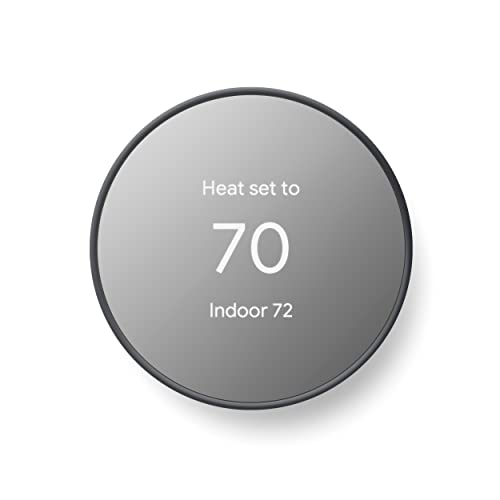
Best for Smart home integration, energy-saving auto scheduling
Google Nest Thermostat is designed to learn your schedule and adjust temperature settings to save energy, turning itself down when the house is empty. It works without a common wire in many homes but needs one or a power accessory for some systems. The Nest app lets multiple family members control the thermostat remotely and offers a Savings Finder to suggest further energy tweaks.
Certification ENERGY STARWi-Fi 2.4 GHz and 5 GHzWireless interconnect Bluetooth Low EnergyCommon wire Not always requiredControl App remote control
Why it made the cut
Smart auto-scheduling saves energy
Remote control from multiple devices
Works without c-wire in many setups
Savings Finder suggests energy tweaks
Good to know
Needs c-wire or power accessory for some systems
No lock feature to prevent manual changes
Skip it if Skip if your system lacks a c-wire and you don’t want to add one or a power accessory.
Honeywell Home RTH6360D1002 Programmable Thermostat
Best for 5-2 day scheduling, simple programmable comfort
Honeywell’s RTH6360D offers flexible programming with 5-2 day or 1-week schedules and Smart Response Technology to preheat or precool your home on time. It has a backlit LCD that shows current and set temperatures simultaneously, plus auto changeover between heating and cooling. Battery and filter change alerts keep maintenance on track, and the program stays saved through power outages.
Schedule 5-2 day or 1-weekDisplay Backlit LCDAuto changeover YesMemory Retains program in power outageAlerts Low battery and filter change
Why it made the cut
Flexible 5-2 or 1-week scheduling
Smart Response preheats or precools
Backlit display shows current and set temps
Retains schedule during power outages
Good to know
No Wi-Fi or smart features
No common wire info provided
Skip it if Skip if you want remote control or smart thermostat features.
Best for Multi-stage HVAC, easy install, flexible programming
This Coiiwsei thermostat supports single-stage and multi-stage heating and cooling systems, including forced air, electric furnace, and hot water systems. It has a large, clear backlit LCD and flexible 7-day or 5/1/1 programming menus. Installation is straightforward with large terminal blocks and universal sub-base. The factory pre-set energy efficiency program helps sync comfort with your schedule.
Compatibility Single and multi-stage systemsDisplay Backlit LCDProgramming 7-day, 5/1/1 optionsInstallation Large terminal blocks, universal sub-baseControl Programmable
Why it made the cut
Compatible with multi-stage and various system types
Large clear backlit display
7-day and 5/1/1 programming options
Easy installation with large terminal blocks
Good to know
Not compatible with heat pump auxiliary or emergency heat
No smart control or Wi-Fi
No common wire info
Skip it if Skip if you want smart features or have a heat pump with auxiliary heat.
Best for Single-stage heating and cooling, no c-wire needed on most systems
The Suuwer S701 is a non-programmable thermostat designed for conventional single-stage heating and cooling systems. It runs on 24VAC or 2 AAA batteries and usually doesn’t require a common wire. The blue backlit display is easy to read, especially for middle-aged or elderly users. It includes selectable compressor delay and a low battery indicator for system protection.
System Single-stage heat/coolPower 24VAC or 2 AAA batteriesDisplay Blue backlightFeatures Compressor delay, low battery indicatorCompatibility No multi-stage or heat pump
Why it made the cut
No common wire needed on most systems
Blue backlit display easy to read
Selectable compressor delay protection
Low battery indicator
Good to know
No programmable or smart features
Does not support multi-stage or heat pump systems
Installation requires careful adherence to wiring instructions
Skip it if Skip if you want programmable or smart control or have a multi-stage or heat pump system.
A thermostat’s job is simple: it tells your heating and cooling system when to turn on and off to keep your home comfortable.
Not all thermostats work with every HVAC system. Most fall into four categories: conventional single-stage, multi-stage, heat pump, and line-voltage. Single-stage systems have one level of heating or cooling, while multi-stage units adjust output in steps for better comfort and efficiency. Heat pump thermostats handle systems that can both heat and cool by moving heat rather than generating it. Line-voltage thermostats control electric resistance heaters like baseboards and wall units, which operate differently from low-voltage HVAC systems.
Basic plug-in electric heaters and electric baseboards use line-voltage thermostats, which are distinct from the low-voltage thermostats used on furnaces, heat pumps, and central air conditioners. Installing the wrong type is a common mistake. If the thermostat fits your wiring but not your system type, it simply won’t control the equipment correctly.
Thermostat
System Compatibility
Wiring Needs
Suuwer Non-Programmable
Single-stage, Multi-stage
2-4 wires
Sensi Smart Thermostat
Single-stage, Multi-stage, Heat pump
C-wire preferred but adapts
Google Nest Thermostat
Single-stage, Multi-stage, Heat pump
C-wire preferred but adapts
Honeywell Home RTH6360D1002
Single-stage, Multi-stage
2-4 wires
Programmable Thermostat
Single-stage, Multi-stage
2-4 wires
Basic thermostat compatibility and wiring
Myth
All thermostats are interchangeable if the wires fit.
Fact
Thermostats must match your HVAC system type, not just wiring. A heat pump needs a different control than a simple furnace.
Electric Heater Thermostats
Electric baseboard heaters use line-voltage thermostats, different from HVAC controls. Don’t use a low-voltage thermostat on electric heaters or you’ll risk damage or no heat.
Pick Between Programmable And Smart Controls
Adjusting a home thermostat is about matching your daily routine. A simple programmable thermostat lets you set a fixed schedule of temperature changes, usually by the hour.
For many homes, a programmable thermostat is enough, especially if your schedule is steady. You program it once to lower heat during work hours and raise it before you get home. It saves energy without you having to think about it daily.
Smart thermostats add features like remote control via smartphone, learning your habits, and sending usage reports. These are useful if your schedule changes often, or you want alerts for maintenance or unusual energy use.
Override behavior varies by model. Basic programmable thermostats often let you “hold” a temperature until you manually reset it. Smart thermostats usually allow temporary changes through an app that revert automatically, giving you flexible comfort without permanent schedule changes.
Choose Simplicity
Pick the least complicated thermostat that can handle your schedule. If you don’t need remote access or learning features, a basic programmable model will do the job reliably.
Programmable Thermostats
Simple to set up and use
Lower cost
Reliable schedule control
Smart Thermostats
No remote access
No usage reports
No adaptive learning
Smart Thermostats
Remote control and alerts
Adaptive scheduling
Energy reports
Programmable Thermostats
Higher cost
Requires Wi-Fi
More complex setup
Check Wiring, Batteries, And C-Wire Needs
Most home thermostats run on either batteries or hard wiring, and knowing which yours uses is the first step to fixing or upgrading it.
Change batteries by opening the thermostat’s faceplate or sliding off the cover, then swapping in fresh AA or AAA batteries or a 9-volt, depending on the model. Low batteries often cause blank screens, delayed response, or the thermostat not working properly.
Smart thermostats usually need a common wire, or C-wire, to provide continuous power. Without one, many models either won’t work or will drain batteries quickly. Check your thermostat wiring for a blue or black wire on the C terminal—if it’s missing, plan for either running a new wire or choosing a thermostat designed to work without a C-wire.
Avoid Wrong Wiring
Line-voltage systems, heat pumps, and multistage equipment require a thermostat designed specifically for those systems. Trying to force a standard low-voltage thermostat on them can cause your system to malfunction or not work at all.
Wiring Assumption Waste
Say you buy a smart thermostat assuming your system has a C-wire, but it doesn’t. Installation stalls, batteries die fast, and you waste time and money until you realize you need a different model or professional rewiring.
Troubleshooting common home thermostat problems starts with checking these basics. Blank or flickering displays often mean dead batteries. If the unit won’t control heating or cooling properly, wiring or compatibility issues are likely.
Electric thermostats that aren’t accurate often suffer from poor wiring, low batteries, or a mismatch with the furnace or air conditioner. Confirm the system type before buying replacements or upgrades.
Calibrate The Display Before You Replace A Good Thermostat
Calibration adjusts the thermostat’s displayed temperature, not the actual room temperature or the HVAC system’s output.
If your thermostat reads higher or lower than the room feels, first check for drafts, direct sunlight, or proximity to supply vents. Poor placement often causes inaccurate readings more than the thermostat itself.
You can calibrate many thermostats yourself by comparing their reading to a reliable thermometer placed nearby. Fresh batteries and level mounting also help ensure accuracy.
Myth
Every inaccurate thermostat reading means the thermostat is broken.
Fact
Most errors come from poor placement or environmental factors, not the thermostat itself.
Calibrating a Honeywell Home thermostat or similar model typically involves a few button presses or dial adjustments; consult the manual for exact steps.
If calibration doesn’t fix the problem, or the thermostat is older than about 10 years, replacement usually makes more sense. Accurate temperature readings are key to comfort and energy savings.
Use The Safety And Compatibility Checks Competitors Skip
Troubleshooting HVAC thermostats usually starts with confirming compatibility and proper installation, not with the thermostat itself. Many problems trace back to dirty air filters, faulty sensors, or duct leaks, which no thermostat can fix.
A thermostat’s listed certifications—UL, ETL, or CSA—are your first guardrail for safety and quality in electric models. These marks mean it meets electrical and fire safety standards you want for any device wired into your HVAC system.
Installing a thermostat is often straightforward if it uses low-voltage wiring, but line-voltage systems or anything beyond basic connections should be handled by a qualified technician. Mistakes here risk damage or unsafe operation.
Before You Buy, Confirm These
Voltage type: low-voltage (24V) or line-voltage (120/240V)
Number of stages your system requires (1-stage, 2-stage, heat pump, etc.)
Whether you have a common wire (C-wire) or if the thermostat can work without one
Visibility and placement of the display for easy reading and control
Recovery behavior: how the thermostat manages to reach your set temperature efficiently
Common Mistake
Buying a thermostat without checking your system’s voltage or wiring can lead to incompatibility or even damage. Don’t assume one thermostat fits all HVAC setups.
Calibration checks and troubleshooting internal thermostat sensors usually require manufacturer instructions or professional tools. Don’t confuse thermostat accuracy issues with HVAC system performance problems.
In short
Start with safety certifications and wiring compatibility. Confirm your system’s voltage, stages, and wiring needs before buying. Treat thermostat calibration and HVAC faults as separate issues.
Questions People Ask
What is the best HVAC thermostat for a basic 1 heat/1 cool system?
For a simple single-stage heating and cooling setup, a basic programmable thermostat can provide reliable comfort without extra cost. These models focus on straightforward scheduling and manual control, avoiding the complexity and potential compatibility issues of smart thermostats.
Can I install a new home thermostat myself?
You can install many modern thermostats yourself if you have basic electrical skills and follow the manufacturer’s instructions. Always turn off power at the breaker before working on wiring, and double-check compatibility with your HVAC system to avoid damage or poor performance.
How do I change batteries in a home thermostat?
Most battery-powered thermostats have a removable faceplate or cover that reveals the battery compartment. Use the correct battery type specified in the manual and replace all batteries at once to maintain consistent operation and prevent unexpected shutdowns.
Can I calibrate my home thermostat on my own?
You can adjust the displayed temperature offset in many thermostats to match a room thermometer, but this only changes what the thermostat shows, not the actual temperature it senses. If your system is heating or cooling improperly despite calibration, the issue likely lies elsewhere.
Why is my home thermostat not working properly?
Common causes include incorrect wiring, missing or dead batteries, or compatibility issues with your HVAC system. Before replacing the thermostat, verify these factors and check for loose connections or tripped breakers.
Share
Written byJoye
HeaterGuides covers home heating, water heating and HVAC: how the equipment works, what it costs to run, and how to use it safely.
Top Pick
Suuwer Non-Programmable Thermostats for Home 1 Heat/1…