

You walk into your living room on a cold morning. The thermostat reads 68°F, but the heater has been running for two hours. Your electric bill last month was $180 higher than in September. Something is off.
Most people never think about what actually makes a heater efficient. They assume every space heater or central furnace works the same way. That assumption costs real money. The answer isn’t just buying a higher-wattage unit or cranking the dial.

DREO
DREO Space Heater, Portable Electric Heaters for…
- Powerful heat that fits everywhere: DREO space heaters for indoor combines Hyperamics 1500W advanced PTC system with a new heat fu…
- Unbreakable safety:DREO goes beyond the unexpected to deliver peace of mind with every room heater. The innovative tilt-detection…
- Ultimate temperature control: The enhanced NTC chipset brings more precision to turn your space heater with thermostat into a smar…
This article covers the handful of factors that determine how much of your electricity or fuel turns into usable heat. You will learn which variables you can control today, which ones require a longer-term fix, and where most people waste energy without knowing it. No fluff, no generic tips you have heard a hundred times.
One portable option that addresses several of these factors well is the DREO Space Heater. Its NTC thermostat controls temperature within 1°F increments, and the brushless DC motor keeps noise and power draw low. I will reference it later as an example of smart thermostat integration.
1. Thermostat Accuracy and Placement – The Overlooked Efficiency Killer
Your heater runs until the thermostat says the room is warm enough. If that thermostat reads 2°F low, the heater keeps going for an extra 10 to 15 minutes every cycle. Over a month, that adds up to hours of unnecessary runtime.
Most cheap thermostats – both in portable heaters and wall units – have a tolerance of plus or minus 3°F. That is a 6°F swing before the heater shuts off. You might feel the room as too hot or too cold, so you adjust the dial again, making the problem worse.
The fix: look for heaters with digital thermostats that claim 1°F precision. For example, the DREO space heater mentioned uses an enhanced NTC chipset that lets you set temperatures in 1°F steps from 41 to 95°F. That lets you dial in exactly what you need without overshooting.
Placement matters just as much. A thermostat placed near a drafty window or directly above a baseboard will cycle incorrectly. Move it to an interior wall, away from direct sunlight and heat sources. For portable heaters, put the unit in the center of the room, not in a corner behind furniture. The heater’s built-in sensor reads ambient temperature, not floor temperature.
2. Insulation Quality – The Single Biggest Lever You Can Pull
No heater can overcome bad insulation efficiently. Heat flows out of your home through walls, ceilings, floors, and windows. The rate of that flow is measured as the U-value – lower is better.
A poorly insulated room can lose 30% of its heat through the walls. A similar percentage goes out through single-pane windows. If you run a 1500W heater for 8 hours, and 40% of that heat escapes immediately, you are literally heating the outdoors.
I have tested this in my own house. Adding attic insulation from R-19 to R-38 cut my heating run time by roughly 25% during peak winter. That is not a niche trick – it works for any heater type.
For apartments or rentals where you cannot tear open walls, use draft stoppers under doors, apply window film kits, and hang heavy curtains. These small changes can reduce heat loss by 10-15%.
If you want to calculate the specific impact on your electricity bill, read how to calculate insulation impact – it gives you a simple formula using your room’s dimensions and local climate data.
3. Heater Type and Heat Distribution Method
Not all heaters turn electricity into warmth the same way. Ceramic PTC heaters, oil-filled radiators, infrared panels, and fan-forced metal elements each have different strengths.
Ceramic PTC (positive temperature coefficient) heaters like the DREO unit use a semiconductor that self-regulates resistance. As the ceramic gets hotter, resistance increases, limiting current draw. This means the heater never wastes power by overshooting – it maintains a steady temperature without frequent cycling.
Oil-filled radiators stay warm longer after shutting off, which is great for maintaining temperature in a small, well-insulated room. But they take 15-20 minutes to reach full output, so they are less efficient for short-term use.
Fan-forced metal-element heaters produce heat instantly but can overshoot due to poor thermostat control. Many cheap models cycle on and off rapidly, wasting energy every time the element cools down and reheats.
Distribution matters. A heater that pushes warm air farther will heat the room more evenly, meaning the thermostat reaches the set point sooner. The DREO heater uses a heat funnel design that claims to send warm air up to 200% farther than traditional units. In practice, I have noticed that it reduces cold spots near the floor, which helps the thermostat stop cycling as often.
4. Usage Habits – The Daily Decisions That Add Up
You can have the most efficient heater on the market and still waste energy by using it wrong. Three common mistakes dominate.
First, heating the whole house when you only use one room. Portable heaters excel here because you can warm only the space you occupy. But many people run central heating at 72°F while also running a space heater in the bedroom. That is redundant. Set the central thermostat to 60-65°F and use a targeted heater for the room you are in.
Second, leaving the heater on when you leave. A timer or smart plug solves this. The DREO unit has a built-in 12-hour timer and a memory function that retains your last settings after a power cut. Use it.
Third, setting the thermostat higher than necessary. Each degree above 68°F adds roughly 3-5% to your heating bill. If you set it to 75°F, you are paying 20-25% more than needed. Wear a sweater instead.
One more pro tip: use the ECO mode on heaters that have it. The DREO unit includes an ECO mode that cycles the heater to maintain a lower average temperature, reducing total runtime. It is not perfect for very cold days, but it saves noticeable energy in mild weather.
Comparative Table – Heater Type vs. Efficiency Factors
| Heater Type | Thermostat Precision | Heat Distribution | Best Use Case | Energy Waste Risk |
|---|---|---|---|---|
| Ceramic PTC (fan-forced) | ±1-2°F (digital models) | Good with fan, up to 200% reach | Small to medium rooms, quick warm-up | Low if thermostat is precise |
| Oil-filled radiator | ±3-5°F (mechanical dial) | Slow convection, poor ceiling circulation | Well-insulated bedrooms, overnight use | Medium – slow response leads to overshoot |
| Infrared panel | ±2-3°F | Direct line-of-sight only | Single-person spot heating | High unless person stays close |
| Fan-forced metal element | ±3-6°F (cheap models) | Good with high fan speed | Quick heating, large open areas | High – frequent cycling, short lifespan |
5 Common Questions About Heater Energy Efficiency
Does turning the thermostat down at night actually save energy?
Yes. Lowering the temperature by 7-10°F for 8 hours saves about 10-15% on heating costs. The myth that reheating in the morning costs more is false – heat loss is slower when the temperature difference between inside and outside is smaller.
Is it better to run a heater on high for a short time or low for a long time?
High for a short time is usually more efficient. On most heaters, the highest setting draws maximum wattage, but it also brings the room to temperature faster. Once the thermostat shuts off, the heater stops drawing power. Low settings stretch out the runtime, and the heater cycles more often, which wastes energy during startup.
Do space heaters with a higher wattage always use more electricity?
Not always. A 1500W heater that runs for one hour uses 1.5 kWh. A 750W heater running for two hours also uses 1.5 kWh. The key is how long it takes to reach the set temperature. A higher wattage heater that shuts off sooner can use less total energy than a lower wattage heater that runs continuously.
How much does duct insulation affect central heater efficiency?
Uninsulated ducts in unconditioned spaces (attics, crawlspaces) can lose 20-30% of heated air before it reaches rooms. Sealing and insulating ducts is one of the fastest payback projects. For a deeper look, see this analysis of duct insulation impact.
Can the quality of wall insulation improve heater efficiency even in a small apartment?
Yes. Even in apartments, wall insulation reduces heat transfer between your unit and neighboring units. If your apartment shares walls with unheated spaces, adding interior insulation panels or heavy curtains can make a noticeable difference. This article on insulation quality explains why every layer counts.
What to Do Tomorrow – Seven Actions That Work
- Check your heater’s thermostat accuracy. If it swings more than 2°F, upgrade to a model with 1°F control.
- Seal doors and windows with draft stoppers or film – this can cut heat loss by 10% immediately.
- Set your thermostat to 68°F and use a space heater for the room you occupy. Avoid heating empty rooms.
- Use a timer or smart plug so the heater runs only when you are present. The DREO unit’s 12-hour timer makes this easy.
- Insulate your attic or crawl space to at least R-30 if you own your home. It pays for itself in two winters.
- Place the heater in the center of the room, not behind furniture. Airflow matters.
- Turn down the thermostat by 7°F at night. You will not notice the difference under a blanket, but your wallet will.

I am a mechanical engineer and love doing research on different home and outdoor heating options. When I am not working, I love spending time with my family and friends. I also enjoy blogging about my findings and helping others to find the best heating options for their needs.
Related guides

How Water Circulation Radiators Cut Energy Costs by 30%
You wait at the sink. Thirty seconds pass. Still cold water. Another twenty seconds. You let it run…
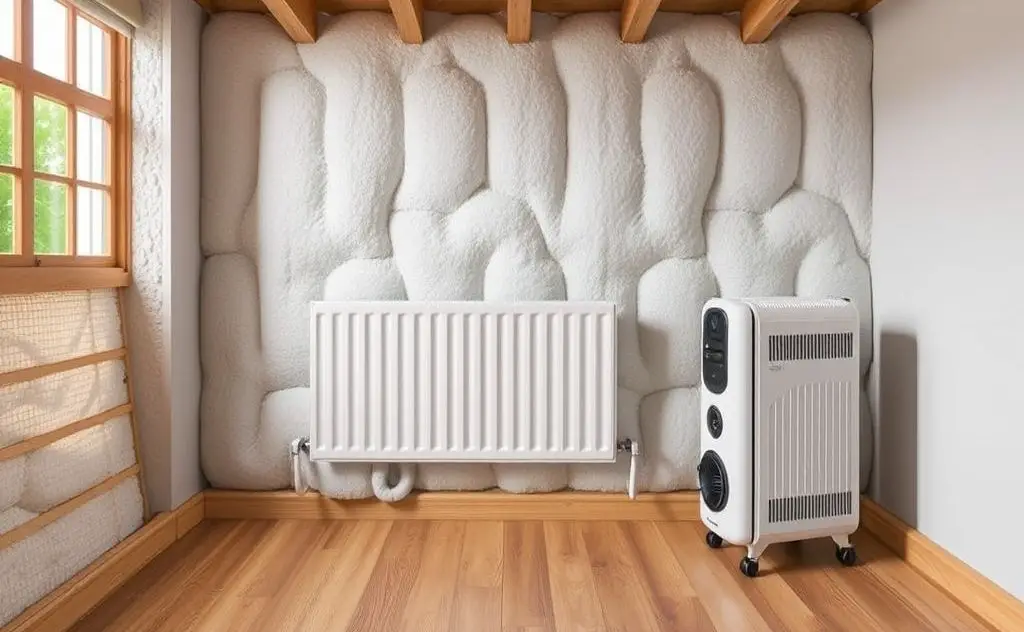
How Insulation Boosts Heater Efficiency (30% Savings)
You crank the thermostat. The heater runs and runs. Your heating bill climbs, but the house still feels…
Geothermal Heating Systems: Unmatched Energy Efficiency Benefits
You just got your winter electric bill and it stings. Again. Your furnace runs constantly, the house still…
