Infrared Heating: What It Costs To Run
On this page 7 sections
Get this wrong and you buy the wrong kind of comfort. A heater that warms empty air can feel weak in a drafty space, while an infrared unit can be perfect at a desk and underwhelming if you want the whole house evenly warm.
The tradeoff is simple: infrared heat is good at spot warming, but it does not fix poor insulation, and it won’t heat through walls the way people sometimes hope it will.
Infrared Heating
Infrared heating works by sending invisible infrared radiation directly to people and objects, not by warming the air first. This means you feel the heat as soon as the rays hit your skin or nearby surfaces, making infrared heating immediate and focused.
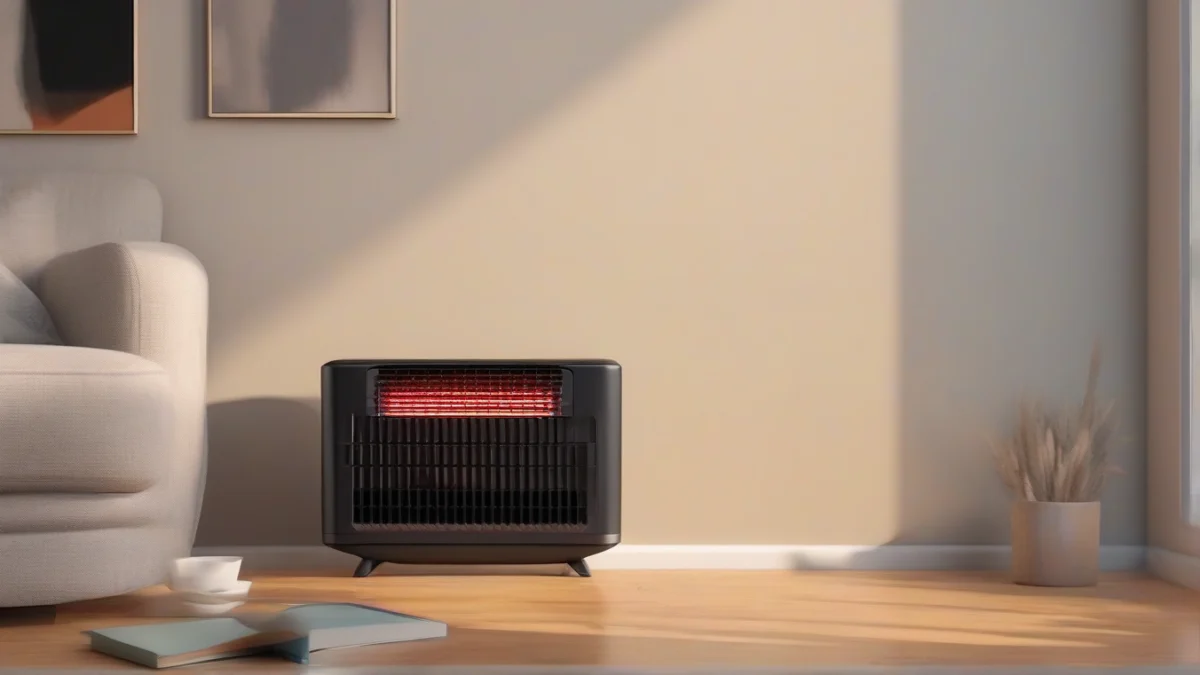
Common infrared heaters use quartz, ceramic, or carbon elements to generate these infrared waves. Far infrared heating pads also rely on the same principle, emitting radiation that your body absorbs rather than heating the air around it first.
When infrared waves strike a surface, that surface absorbs the energy and warms up. The warmed surface then slowly transfers heat to the surrounding air. This is why a room with an infrared heater might feel cooler overall compared to traditional convection heating, but still warm where you sit in the beam.
The heat feels immediate because infrared radiation travels in straight lines and heats only what it reaches. If something blocks the beam, you won’t feel much heat behind it. That’s different from convection heaters, which warm air that then circulates around the room.
Where The Heat Actually Goes

Infrared heating works by sending invisible infrared radiation directly to people and objects in its path, rather than warming the air around them first. The heater’s element—usually quartz, ceramic, or carbon—emits this radiation, which you feel as warmth when it hits your skin or nearby surfaces.
Convection heating works differently: it heats the air, which then circulates through the room by natural or forced airflow. Radiant floor heating is another form of radiant heat, but it warms the floor surface, which then transfers heat to the room by conduction and slow radiation.
| Type | How It Heats | Speed | Comfort | Room Coverage |
|---|---|---|---|---|
| Infrared | Direct radiation to people and objects | Fast—you feel it within seconds | Feels instant and targeted, but only in line of sight | Limited to the area the heater ‘sees’ |
| Convection | Heats air, which circulates | Slower—minutes to warm whole room | Even warmth but delayed; air movement can cause drafts | Heats entire room over time |
| Radiant Floor | Heats floor surface | Slowest—takes time to warm floor and room | Gentle, even heat from the ground up | Covers whole floor area, indirect to people |
The key with infrared is line-of-sight heating: only objects and people directly in front of the heater absorb the radiation. A person, chair, or wall placed between you and the heater soaks up much of the heat first, reducing what reaches you. If you block or misdirect the heater, you lose the benefit.
Infrared heaters excel in garages, workshops, sunrooms, or over a desk area, where you want fast, focused warmth without heating the entire space. In large open rooms, they’re less effective as the sole heat source because the radiation doesn’t spread around corners or behind obstacles.

What It Costs To Run
Infrared heaters can reduce your heating bill only if you lower your thermostat and heat people directly instead of the whole room. Running a 1,500 W infrared space heater for 8 hours a day at 17 cents per kWh costs about $2.04 each night. Here’s the math: watts divided by 1,000, then multiplied by hours used and by the electricity rate. Specifically, 1,500 ÷ 1,000 × 8 × 0.17 equals $2.04.
That adds up to about $61 a month if you run the heater daily. Infrared heating cuts costs only when you can lower the main thermostat because you feel the radiant warmth directly on your skin. The heater doesn’t waste energy warming all the air that drifts away or escapes through drafts.
Smaller personal infrared heaters like heating pads use far less power and cost much less to run. A 100 W heating pad running 8 hours a day at the same rate costs about 14 cents per day—under $5 a month.
| Heater | Watts | Per hour | Per day (8 h) | Per month (30 days) |
|---|---|---|---|---|
| 1,500 W infrared space heater | 1,500 W | 26¢ | $2.04 | $61.20 |
| Heating pad or personal infrared heater | 100 W | 1.7¢ | 14¢ | $4.08 |
You’ll get the most cost-effective home heating by combining infrared heaters for spot warmth with a lower thermostat setting on your main heating system, not by running infrared to try to replace the whole system. Infrared works best when you want quick, targeted heat for short periods.
 Winter Heating Bill CutterSee what every heater in your home really costs, heat the rooms you use, and cut the waste in 30 days.Cost-per-hour tables for every heaterThermostat schedule and draft-proofing planRunning-cost and bill calculator (Excel)
Which Rooms It Fits Best
Infrared heating fits best in drafty garages, workshops, bathrooms used briefly, basements, patios rated for outdoor use, and specific indoor spots like desks or reading chairs. It shines where you need intermittent, focused heat rather than constant whole-room comfort.

Heating large spaces efficiently usually calls for a whole-house system or better insulation rather than just infrared heaters scattered around. Infrared doesn’t warm air, so it can’t replace the main system for steady warmth in large or well-sealed homes.
Some outdoor patio heaters, construction heaters, or torch-style infrared units are not for indoor use. Using them inside risks carbon monoxide poisoning or fire hazards.
For whole-house efficiency, your building’s insulation, air sealing, and thermostat settings have a bigger impact than the heater type. Infrared is a tool for targeted warmth, not a magic fix for your heating bills.
If your goal is the best home heating system for large spaces, focus first on your home’s shell and a properly sized main heating system. Infrared heaters can supplement but not replace these.
Safety And Setup That Matter
You can safely heat indoors without electricity, but only with fuel-burning infrared models rated for indoor use and installed exactly as the manual directs.
Electric infrared heaters plug straight into a wall outlet and must keep at least 3 feet of clearance around them to avoid fire hazards. Look for models with tip-over and overheat protection, especially if you have kids or pets.
Fuel-burning infrared heaters produce carbon monoxide. Only bring indoor-rated units inside, use the ventilation the manual requires, and always run a working CO alarm in the same room while it’s on.
Infrared heating pads need the usual caution: use the auto shut-off feature and never fold or bunch the pad when it’s on. They aren’t safe for anyone who can’t feel heat, such as infants or people with certain medical conditions.
A Simple Choice Guide
Choose infrared heaters when you want quick, direct warmth for a spot or short time. Go for convection heaters if you need an even, steady room temperature. For whole-house heating, a central system or built-in solution works best.
Skip infrared if you want one thermostat to hold every room evenly or if you expect a plug-in heater to replace your central heating system. Infrared works best as a supplement, not a substitute.
| Heater Type | Best For | Skip If | Typical Use |
|---|---|---|---|
| Infrared Heater | Direct, temporary warmth in drafty or open spaces | You need even heat throughout the whole house | Garages, patios, workshops, spot heating |
| Oil-Filled Radiator | Quiet, steady heat for medium-sized rooms | You want instant heat or to move it often | Bedrooms, living rooms, offices |
| Heating Pad | Personal warmth and muscle relief | You can’t feel heat well or want room heating | Desks, beds, chairs |
For setting exact temperatures rather than picking a heater type, see our guide on best temperature for heating a house.