


Why Tie Water Heaters Together? The Core Benefits
You’re standing in a cold shower at 7 AM because the tank ran dry after the third person used hot water. The fix seems obvious: add a second water heater. But should water heaters be tied together in a house, or is that asking for trouble?
The short answer: yes, you can tie them together, and it works well if you do it right. The long answer involves flow rates, pressure drops, local plumbing code, and a decision about whether you actually need more capacity or just better recovery. This article walks through the physics, the configurations, and the code requirements so you can decide with confidence.
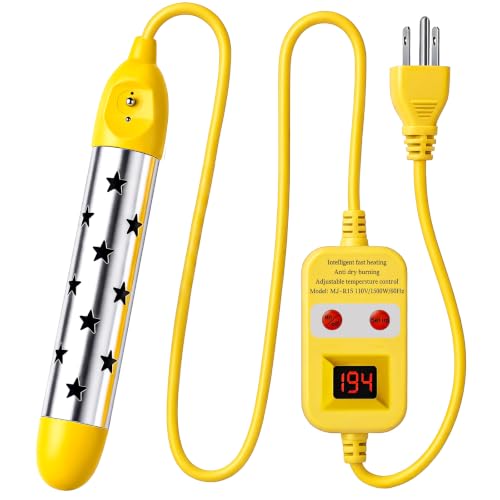
KINEMORA
1500W Immersion Water Heater, Smart Thermostat, 14…
- ⚡ Hot Water in Minutes: Powered by a true 1500W element, this heater raises 5 gallons of cold water from 68°F to 86°F in just minu…
- 🎯 Smart Thermostat Maintains Temp:Choose from 14 preset temperatures (68°F–194°F) – the smart thermostat locks it in and keeps it…
- 🛡 Safety You Can Trust: Water and electricity don't mix – so we built three layers to keep you safe. Layer 1: UL-Certified Plug &…
You’ll learn the difference between parallel and series hookups, how to balance two heaters so one doesn’t starve the other, and when a single larger tank is the smarter move. I’ll also cover troubleshooting common problems and what to do when one unit needs repair without shutting down your whole system.
If you’re dealing with a temporary hot water shortage—say, for a small pool, a rental property, or a workshop—a portable immersion heater like the KINEMORA 1500W immersion water heater can fill the gap without any plumbing changes. It’s not a replacement for a real tank, but it’s handy for spot heating.
Parallel vs. Series: The Two Configurations Explained
Before you buy a second tank, understand the two ways to connect them. They produce very different results.
Parallel Setup (The Standard Choice)
In a parallel setup, cold water splits to feed both heaters, and hot water from both merges into a common hot line. Each heater sees the same cold inlet temperature and works independently. This doubles your flow rate capacity—you can run two showers at once without pressure dropping.
The catch: you must balance the flow. If one heater has shorter pipes or a larger diameter, it will hog the cold water, and the other heater will sit idle. Use balancing valves or equal-length piping to keep things even.
Series Setup (The High-Demand Option)
In series, cold water enters the first heater, and its hot outlet feeds the cold inlet of the second heater. The second heater then boosts the temperature further. This gives you a higher temperature rise but not more flow. You’ll get very hot water (say, 160°F) that you then mix down with cold water at the fixtures.
Series makes sense in commercial buildings with high demand for continuous hot water, like a restaurant or a laundromat. In a typical home, it’s overkill and can cause problems—the first heater works harder, and the second one may cycle on and off frequently.
For most residential situations, parallel is the right call. It’s simpler to balance, easier to repair, and gives you redundancy.
The Critical Rule: Balancing Flow and Pressure
Here’s where most DIY installations go wrong. You can’t just tee two water heaters together and hope for the best. Water follows the path of least resistance. If one heater has a shorter run of pipe or fewer fittings, it will get more cold water, and the other will be underfed. The result: one tank runs hot, the other runs lukewarm, and you get inconsistent temperatures.
To balance flow, follow these steps:
- Measure the distance from the cold water manifold to each heater’s inlet. Make the piping lengths equal, within a foot or two.
- Use the same pipe size for both branches. Don’t use 3/4-inch for one and 1/2-inch for the other.
- Install balancing valves (also called flow-balancing valves) on each heater’s cold inlet. These let you throttle the flow so each tank gets roughly the same volume per minute.
- Check the pressure drop across each heater. The manufacturer’s spec sheet lists the pressure drop at a given flow rate. If one heater has a higher drop, it will restrict flow more—adjust the balancing valve to compensate.
- Test with a thermometer at each hot outlet. They should read within 5°F of each other. If not, tweak the valves.
Pro tip: Use a ball valve with a memory stop so you can close it fully for service and then return to the exact same setting. That saves you from re-balancing every time you drain a tank.
If you skip balancing, you’ll likely end up with one heater short-cycling and the other running constantly. That wastes energy and shortens the life of both units.
Code Compliance and Safety (Expansion Tanks and Check Valves)
Local plumbing code often dictates how you can tie water heaters together. Two common requirements: backflow prevention and thermal expansion control.
When you connect two heaters, you have a single cold water inlet feeding both. If the city water pressure fluctuates, or if you have a check valve on the main line, the heated water expands and has nowhere to go. That pressure buildup can damage the tanks or the plumbing. An expansion tank installed on the cold water line between the main and the heaters absorbs that expansion. Most codes require one for any closed system, and with two heaters, the risk is higher because you have double the volume.
You also need a check valve on each heater’s cold inlet. This prevents hot water from one tank from flowing backward into the other tank’s cold inlet when one heater is off or being serviced. Without check valves, you could get a thermosiphon effect where hot water rises into the other tank and causes standby loss.
Check your local code for the exact requirements. Some jurisdictions require a licensed plumber for any water heater installation, and tying two together is definitely not a DIY-friendly job unless you know what you’re doing. If you’re unsure, call a pro. The cost of a permit is nothing compared to a failed inspection or a water damage claim.
When NOT to Tie Them Together (Single-Unit Alternatives)
Adding a second tank isn’t always the best answer. Sometimes a single larger tank or a tankless unit makes more sense.
If your problem is occasional high demand—like a holiday gathering—a single 80-gallon tank with a higher BTU input might cover it. Two 40-gallon tanks tied in parallel give you the same total capacity but with more surface area for standby loss. That means more energy wasted keeping both tanks hot all day.
Also, two tanks take up space. If your mechanical room is tight, a single high-capacity unit fits better. And the installation cost of a second tank—piping, valves, possibly a new circuit—can be higher than upgrading to one bigger unit.
Consider a tankless water heater if you need endless hot water but don’t have room for two tanks. A single tankless unit can deliver continuous hot water at a fixed flow rate, and it doesn’t have standby loss. The trade-off: higher upfront cost and a higher flow rate requirement for the unit to kick on.
For most homes, the best decision logic is: if you need more flow (multiple simultaneous showers), parallel tanks work. If you need more total capacity for occasional heavy use, a single larger tank is simpler. If you need endless hot water for a long soak or a big family, tankless might be the way.
Troubleshooting Common Dual-Heater Problems
Even with a good installation, things can go wrong. Here are the three most common issues and how to fix them.
Lukewarm water from one fixture. This usually means one heater is not keeping up. Check the thermostat settings—they should match. Then check the balancing valve on that heater’s cold inlet. If it’s too far closed, that tank gets less cold water, so it produces less hot water. Open it slightly and re-test.
Uneven heating between tanks. If one tank is always hotter than the other, you likely have a check valve stuck open or a thermosiphon. Feel the cold inlet pipe on the cooler tank—if it’s warm, hot water is flowing backward. Replace the check valve.
One tank short-cycles. Short-cycling means the burner or element turns on and off rapidly. That happens when the tank’s thermostat senses a small temperature change quickly, often because the cold water inlet is feeding directly into the thermostat area. Make sure the dip tube is intact and that the cold water enters at the bottom of the tank, not the top.
If you have a recirculation pump in the system, it can also cause short-cycling if the pump runs too often. Set the pump timer to match your usage patterns.
For a quick fix when one heater is down, you can isolate it with the ball valves and run the other heater alone. That’s the beauty of a parallel setup—you don’t lose all hot water, just half your capacity.
Maintenance Implications: Isolating One Unit for Repair
One of the biggest advantages of tying two heaters together is the ability to repair one without losing hot water. But that only works if you’ve installed isolation valves.
Each heater should have a shut-off valve on both the cold inlet and the hot outlet. That way, you can close both valves, drain the tank, and replace the element or anode rod while the other heater keeps supplying hot water. If you skip the valves, you’ll have to shut down the whole system and drain both tanks just to fix one.
Also, think about the future. Water heaters last 8-12 years. When one fails, you’ll want to replace it without touching the other. Isolation valves make that swap straightforward.
One more maintenance tip: check the anode rods on both tanks annually. Sacrificial anodes corrode over time, and if they’re gone, the tank will rust out quickly. With two tanks, that’s double the maintenance, so set a reminder.
Comparison Table: Parallel vs. Series vs. Single Tank
| Factor | Parallel (Two Tanks) | Series (Two Tanks) | Single Large Tank |
|---|---|---|---|
| Total capacity | Sum of both tanks | Sum of both tanks | One large tank |
| Flow rate | Doubled (both feed simultaneously) | Same as one tank (water passes through both) | Limited by tank size and dip tube |
| Temperature rise | Standard (each heater same rise) | Higher (second heater boosts temp) | Standard |
| Redundancy | Yes—one can fail, other still works | No—if one fails, no hot water | No—single point of failure |
| Installation complexity | Moderate (balancing required) | High (need to manage pressure drops) | Low |
| Space needed | Two footprints | Two footprints | One footprint |
| Standby loss | Higher (two tanks lose heat) | Higher | Lower per gallon |
| Best for | Homes with high simultaneous demand | Commercial high-temp needs | Homes with occasional heavy use |
Frequently Asked Questions
Can I tie two water heaters together if they have different capacities or ages?
Yes, but it’s not ideal. If one tank is 40 gallons and the other is 50, the 40-gallon tank will finish first, and you’ll get a mix of hot and cold from the parallel connection. Over time, the older tank will likely fail first, and you’ll have to replace it. It’s better to use matching tanks, but if you’re in a pinch, install balancing valves to equalize flow as much as possible.
Will tying two water heaters together increase my energy bills?
Yes, somewhat. Two tanks lose heat through their jackets, so standby loss doubles. But if you use the extra hot water, the efficiency is similar. The bigger factor is the thermostat settings—if you keep both at the same temperature and don’t overheat, the increase is modest. You can reduce it by insulating the tanks and pipes.
Do I need a recirculation pump if I have two water heaters?
Not necessarily. A recirculation pump is for instant hot water at distant fixtures, not for the heaters themselves. If you have long runs, a pump helps, but it adds complexity. With two tanks, you’ll have two hot outlets, so make sure the pump is installed on the combined hot line, not on each tank.
Can I tie a tankless water heater to a tank-type heater?
Technically yes, but it’s rarely worth it. The tankless unit has a high flow rate requirement, and the tank heater will supply cold water to it. You’d need a mixing valve to temper the output. It’s simpler to just use the tankless alone or the tank alone. Mixing technologies usually causes more problems than it solves.
What size pipe should I use to connect two water heaters?
Use 3/4-inch for the common lines, and 1/2-inch for the branch to each heater if the run is short. If the run is long (over 20 feet), go with 3/4-inch to the heaters as well. The goal is to minimize pressure drop and keep flow balanced. Always follow the manufacturer’s recommendations and local code.
Final Verdict: Is It Worth the Complexity?
So, should water heaters be tied together in a house? The answer depends on your situation. If you have a large family that uses multiple showers at once, tying two tanks in parallel gives you redundancy and flow. If you just need more total capacity for occasional events, a single larger tank is simpler and cheaper.
The complexity isn’t in the connection—it’s in the balancing and code compliance. Get that right, and you’ll have a system that works for years. Get it wrong, and you’ll have lukewarm showers and a plumber’s bill.
Here are the key points to remember:
- Parallel is for flow, series is for temperature rise.
- Balance flow with equal pipe lengths and balancing valves.
- Install check valves and an expansion tank to meet code and protect the system.
- Use isolation valves on each tank for easy repair.
- If you don’t need redundancy, a single high-capacity tank is simpler and more efficient.
- When one tank fails, you can run the other alone—if you have isolation valves.
- Always check local plumbing code before starting.
If you’re still on the fence, talk to a licensed plumber who’s done dual-tank installs. They can look at your home’s layout and demand patterns and give you a straight answer. And if you just need a temporary boost for a specific task, a portable immersion heater is a low-cost workaround that doesn’t require any plumbing changes.

I am a mechanical engineer and love doing research on different home and outdoor heating options. When I am not working, I love spending time with my family and friends. I also enjoy blogging about my findings and helping others to find the best heating options for their needs.
Related guides
Optimal Pipe Sizing for Tankless Water Heater Flow: The Engineer’s Guide to GPM, Pressure Drop, and Friction Loss
You bought a 9.5 GPM tankless unit, the biggest your money could get. The shower still turns lukewarm…

Rheem Water Heater App: Leak Alerts & Maintenance Made Easy!
Stay ahead of leaks and maintenance with the Rheem water heater mobile app accessory. Get instant alerts and…
Easy Rheem Electric Water Heater Dual-Element Kit Replacement Review
Get your Rheem electric water heater running smoothly with this dual-element kit replacement, including thermostat and elements for…
