Infrared Sauna Benefits: Science-Backed Health Improvements
On this page 7 sections
Getting this wrong costs money, comfort, and sometimes safety. A sauna that runs too hot, too often, or with unrealistic expectations can leave you lighter by a utility bill and not much else.
The useful question is simpler: what does infrared heat actually do to your body, what does it cost to run, and who should skip the whole idea?
Benefits Of Infrared Heating

Infrared heating mainly offers relaxation, temporary muscle relief, and a mild cardiovascular boost. These are the most defensible benefits of infrared heater use, while many other claims don’t hold up as well.

Infrared heaters warm your body directly by emitting infrared light, which penetrates the skin and raises tissue temperature without needing to heat all the air. That warming triggers muscle relaxation and a gentle increase in heart rate, similar to light exercise or a hot bath.
Sweating from infrared heat feels intense, but it’s not the same as detoxification. Your liver and kidneys handle removing toxins, not your sweat glands. So, sweating is more about cooling your body than flushing out dangerous substances.
| Common Claims | Evidence Strength |
|---|---|
| Relaxation and muscle comfort | Strong and consistent |
| Increased heart rate and circulation | Moderate, linked to heat stress |
| Detoxification through sweating | Weak; body organs do this |
| Skin improvement and weight loss | Limited and often indirect |
| Curing or preventing diseases | Unsupported by reliable data |
Claims about skin changes, rapid weight loss, or curing illnesses usually depend on other lifestyle factors, not just infrared exposure. These benefits might appear if heat sessions are long enough and hot enough, but results vary widely by person and how well they tolerate heat.
How Infrared Heat Feels Different
Infrared heating panels directly warm your skin and nearby surfaces instead of first heating the air around you. This means the air in the room often feels cooler than it does in a traditional sauna, where hot air circulates and envelops your whole body.
That cooler air temperature often feels easier to tolerate, especially during longer sessions or for people sensitive to dry, hot air. You get the sensation of heat where it counts—on your skin and muscles—without the oppressive blanket of hot air.
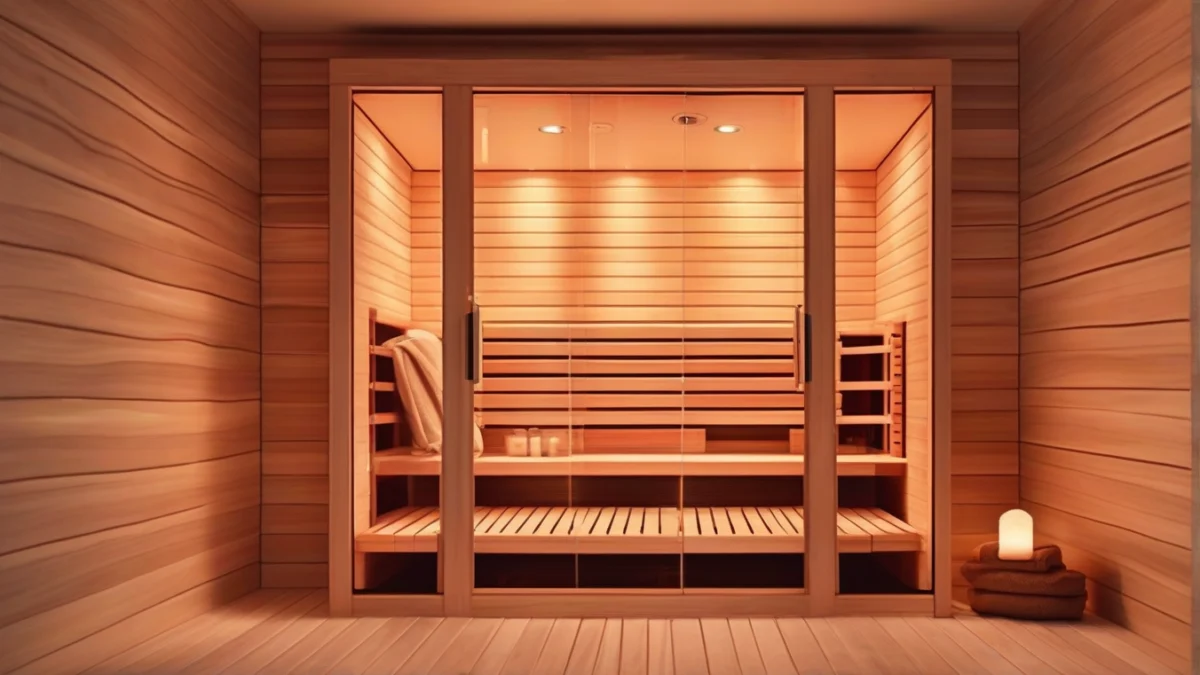
Infrared heaters work best in small, enclosed sauna rooms or dedicated wellness spaces. Rooms like a dry bathroom-adjacent area with proper ventilation can also suit infrared panels. Proper clearances and airflow help keep the environment comfortable and safe.
More heat on your body doesn’t mean better benefits. Once your skin temperature rises past a certain point, extra heat just makes you hotter without adding any new gains. Think of it like turning a volume knob past where you can stand the noise—it’s not more effective, just more intense.
A worked example illustrates this: say you use a 1,500 W infrared sauna heater in a 6-by-6-foot wood-paneled room. Even if the air temperature stays around 110°F, the panels close to your skin can raise your surface temperature enough to feel intense heat after 20 minutes. The lower air temperature masks how much your body is actually warming.
What The Running Cost Looks Like
The main infrared sauna benefit is warmth with a mild cardiovascular effect, but running cost matters if you use it regularly. The electricity formula to estimate cost is simple: watts ÷ 1,000 × hours × your electricity rate.
For example, a 1,500 W infrared sauna heater running for 30 minutes (0.5 hours) uses 1,500 ÷ 1,000 × 0.5 = 0.75 kWh per session. At 17 cents per kWh, that’s about 13 cents per session. If you sauna five times a week, that’s roughly $2.60 a month.
Longer sessions increase cost more than small changes to temperature settings once the heater cycles on and off. The insulation and size of your sauna room influence how hard the unit works and how quickly it recovers its temperature, which affects your power bill more than marketing claims about efficiency.
Don’t expect exact savings without checking your own model’s power rating and usage patterns. If you’re comparing units, look for the rated wattage and consider your typical session length first.
The Health Claims That Need A Guardrail
Infrared heating can help you relax and ease muscle tension but isn’t a medical treatment. While some users report feeling looser and calmer after a session, these effects don’t replace professional care for health conditions.
Claims that infrared saunas detoxify your body, boost immunity, or prevent serious diseases often exceed what research supports. These promises sound good but lack solid evidence and shouldn’t be your main reason to buy one.
People with heart disease, low blood pressure, pregnancy, or heat sensitivity must check with their doctor before using an infrared sauna. The heat raises your heart rate and dilates blood vessels, which can be risky for some.
Where Infrared Heat Makes Sense
Infrared heaters work best in enclosed rooms where their radiant warmth can reach you and nearby surfaces directly and quickly. That makes sauna rooms and bathrooms practical spots for infrared panels.
A greenhouse can benefit from infrared heat in cold spots or to warm seedlings, but heat alone won’t grow plants. They also need humidity, fresh air circulation, and steady temperature control to thrive.
Large open spaces, drafty garages, or leaky basements lose heat fast because surfaces cooled by air movement radiate less warmth back. Infrared heat isn’t efficient in these settings without supplemental insulation or airtightness.
| Space Type | Infrared Heat Suitability | Why |
|---|---|---|
| Sauna Room | High | Enclosed, retains radiant heat well |
| Bathroom | Moderate | Small enclosed space, quick warm-up |
| Greenhouse | Targeted | Good for cold corners but needs airflow and humidity control |
| Open Basement | Low | Heat dissipates quickly due to drafts and volume |
Who Should Skip It
Infrared sauna therapy offers clear benefits like relaxation and a gentle cardiovascular boost, but it’s not for everyone.
Before you buy, install, or book a session, make sure you can safely handle the heat and the setup. Hydration is key because infrared heaters make you sweat, and that fluid loss can sneak up on you. Keep a clear path to the door at all times in case you need to exit quickly. Use the timer and control the thermostat to avoid overheating, especially if you’re new to this.
Even if you have the right health profile, use only indoor-rated equipment designed for sauna rooms. Follow the manufacturer’s clearance instructions carefully to prevent fire hazards or damage. Your safety depends on proper installation and use.