Skip to content

Expert home heating guides, reviews & repairs

Heater GuidesHeaterGuides
Energy Saving

Wood Heaters Save Energy & Cut Heating Costs

Cold months hit hard. You check your heating bill and wince. Natural gas prices climb. Electric resistance heaters pull huge wattage. One option most people overlook is a wood heater. It’s not just for cabins or remote houses. Modern EPA-certified wood stoves deliver serious heat with far less fuel waste than old fireplaces. They also let you rely less on utility companies for warmth.

This article breaks down how wood heaters save energy and cut heating costs. You’ll learn the real numbers behind fuel savings, what efficiency ratings mean, and how to pick a stove that fits your home without overpaying. I’ll also walk through common mistakes that kill efficiency and answer the questions buyers ask most. By the end you’ll know whether a wood heater makes sense for your situation.

Comfort Glow

Comfort Glow Cast Iron Wood Stove –…

  • HEATS UP TO 900 SQ. FT.: This indoor wood burning stove delivers reliable, efficient heat for small to medium living spaces
  • FITS 22" LOGS: Large firebox accommodates full-size logs for extended burn times and consistent warmth
  • HEAVY-DUTY CAST IRON: Durable cast iron construction ensures long-lasting performance and excellent heat retention

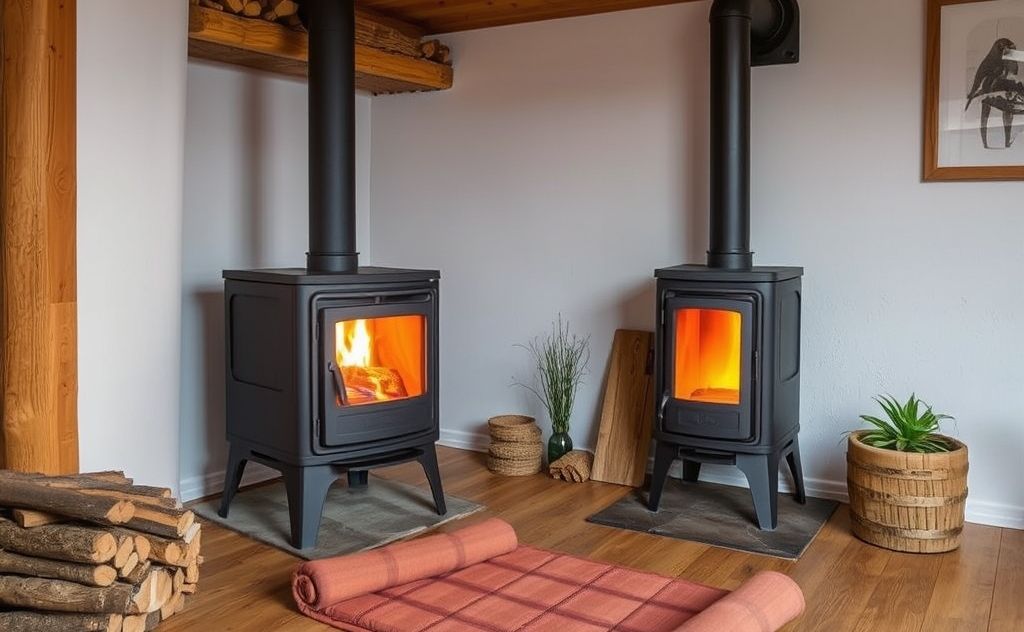
One model worth a close look is the Comfort Glow Cast Iron Wood Stove. It’s EPA certified, heats up to 900 square feet, and fits 22-inch logs for longer burn times. Its cast iron body holds heat well, and the flat top doubles as a cooking surface. Not every stove needs to be massive — this one hits a sweet spot for small to medium homes.

How wood heaters actually save energy

Most home heating systems waste a lot of heat. Forced-air furnaces push warm air through ducts that leak into attics. Electric baseboards convert energy to heat at 100% efficiency at the point of use, but the electricity itself came from a power plant that lost 60-70% of its fuel energy before it reached your outlet. A wood stove is different. It burns a solid fuel directly where you need heat.

An old open fireplace is roughly 10-15% efficient — most heat goes up the chimney. Modern EPA-certified wood stoves run between 70% and 80% efficient. That means a stove turns three-quarters of the wood’s energy into usable warmth for your room. The rest goes out the flue as exhaust. That’s a huge jump from a fireplace.

The second savings comes from zone heating. Instead of heating your whole house to 72°F, you run a wood stove in the main living area and keep the rest of the house cooler. The furnace kicks on less often. According to the EPA, zone heating with a certified wood stove can cut your overall heating bill by up to 50% compared to a furnace alone. Actual savings depend on your climate, home size, and wood cost.

Wood itself is a renewable fuel. Trees absorb carbon as they grow. Burning wood releases that carbon back, but if you source wood from sustainable harvests the net effect is carbon-neutral. That’s not the case with natural gas or oil.

Cutting heating costs with wood: the numbers

Let’s talk dollars. A cord of seasoned hardwood (about 4 feet by 4 feet by 8 feet) costs between $200 and $400 depending on where you live. One cord contains roughly the same BTU energy as 150 gallons of heating oil or 200 therms of natural gas. At current US average prices, wood costs about half as much per BTU as heating oil and about 30% less than natural gas. If you cut and split your own wood, the savings go even higher.

Of course wood heat isn’t free. You spend time splitting, stacking, and hauling. You also need to clean the chimney yearly. And if you buy a stove like the Comfort Glow model, you’ll pay upfront. But that cost is a one-time investment that pays back over several seasons. Most owners see a payback period of two to four years depending on how much they use it.

One thing to watch: house size and layout. A stove that heats 900 square feet won’t warm a 2500-square-foot open plan all by itself. You’ll still need your central system for bedrooms and far rooms. But running the furnace less often still lowers total fuel use.

For comparison, pellet heaters vs electric heaters show a similar cost advantage for biomass fuels, though pellets are more processed and usually cost more per BTU than split firewood.

Choosing a wood heater that saves energy

Not all wood heaters are equal. The biggest factor is EPA certification. Stoves made after 2026 must meet stricter emissions limits. Certified models burn cleaner and extract more heat from each log. Non-certified stoves (often sold secondhand or in rural areas) burn dirtier and waste fuel. Always buy certified.

Material matters too. Cast iron stoves like the Comfort Glow retain heat longer than steel stoves. They radiate warmth for hours after the fire dies down. Steel stoves heat up faster but cool off quicker. If you want steady heat through the night, cast iron is better.

Firebox size determines how long you can go between reloads. A stove that fits 22-inch logs (like the Comfort Glow) accepts standard cut firewood without extra splitting. Smaller fireboxes require shorter pieces, which means more work. A large firebox also lets you load more wood at once, extending burn time to 6-8 hours.

Consider placement. Place the stove in your most-used room. That way you heat the space you’re actually in — the zone heating principle. If you’re looking for energy-efficient heaters for large rooms, a wood stove might be overkill for a single room, but for an open living and dining area it works great.

Heater Type Typical Efficiency Fuel Cost per Million BTU Best For
EPA Wood Stove 70-80% $10-20 Living rooms, cabins, home additions
Open Fireplace 10-15% $50-80 Ambiance only
Pellet Stove 70-85% $15-25 Homes needing auto-feed
Electric Baseboard 100% at point of use $30-40 Small rooms, supplemental heat
Natural Gas Furnace 80-95% $15-25 Whole-house heating

That table makes it clear: wood stoves offer the lowest fuel cost per million BTU. The upfront price and labor are the trade-offs.

Best practices to maximize savings

Efficiency isn’t automatic. Burn only seasoned wood with moisture content below 20%. Wet wood sizzles, produces creosote, and gives off less heat. A moisture meter costs $15 and tells you instantly if your wood is ready.

Load the stove properly. Put larger logs on the bottom, kindling on top, and leave space for air circulation. Don’t cram the firebox full — air needs to move. A smoldering fire wastes fuel and pollutes.

Use a stove thermometer to keep the flue temperature between 250°F and 500°F. Too low and you get creosote buildup. Too high and you’re wasting heat up the chimney.

Seal your home. A wood stove doesn’t work well if your house leaks air. Caulk windows, add weatherstripping to doors, and consider insulating the attic. That way the heat stays inside.

Frequently asked questions about wood heaters and cost savings

How much can I really save per year with a wood stove?

Typical savings range from $500 to $1,500 per winter, assuming you replace 50-70% of your furnace usage. A household in the Northeast using 800 gallons of heating oil at $3.50 a gallon spends $2,800. Switching to wood heat for primary living areas can cut that to $1,200, saving $1,600. Your mileage depends on local wood prices and how often you burn.

Do wood heaters save energy compared to heat pumps?

Heat pumps are very efficient — they move heat rather than create it. A modern cold-climate heat pump can have a COP of 2.5 or higher. But electricity costs vary widely. In areas where electricity is expensive (above $0.15/kWh), wood heat still beats heat pumps on cost per BTU. The wood heater uses a renewable fuel that doesn’t depend on the grid.

Can I use a wood stove as my only heat source?

Yes, in a well-insulated home under 1500 square feet. Many people in rural areas do exactly that. But you need to manage the fire carefully. A stove that holds enough wood for overnight burns helps. If your home is large or drafty, plan on keeping your furnace as backup for bathrooms and bedrooms.

How long does a cord of wood last in a wood stove?

A cord burned in a 70% efficient stove running 12 hours a day during peak winter gives about 6-8 weeks of heat. In milder shoulder seasons, a cord can stretch 10-12 weeks. A typical household burns 2-4 cords per heating season.

Is it safe to leave a wood stove burning overnight?

Yes, if the stove is EPA-certified and properly installed. Many models are designed to burn on a low setting for 6-8 hours. You need a clean chimney, a tight door seal, and a spark arrestor if the stove is near combustibles. Never leave a fire unattended if you haven’t used the stove before — learn its burn patterns first.

What to remember before buying a wood heater

  • Look for the EPA certification label. No cert means lower efficiency and more pollution.
  • Cast iron holds heat longer than steel. Pick your material based on how quickly you want warmth.
  • Match firebox size to your time between reloads. A 22-inch log capacity gives 6+ hour burns.
  • Zone heating works. Place the stove in your main living area and turn down the thermostat elsewhere.
  • Seasoned wood is non-negotiable. Wet wood wastes money and creates dangerous creosote.
  • Installation matters. Hire a certified chimney sweep or use a prefab metal chimney that meets code.
  • Expect a payback period of 2-4 years if you heat with oil or propane. After that, the heat is nearly free.
Share
Written by Joye

I am a mechanical engineer and love doing research on different home and outdoor heating options. When I am not working, I love spending time with my family and friends. I also enjoy blogging about my findings and helping others to find the best heating options for their needs.

Keep reading

Related guides

Free newsletter

Heater deals and guides, worth opening

Price drops, new guides and safety recalls. One email, only when it matters.

No spam. Unsubscribe in one click. Privacy policy.