


Ceramic vs. Radiant Heaters: The 30-Second Verdict
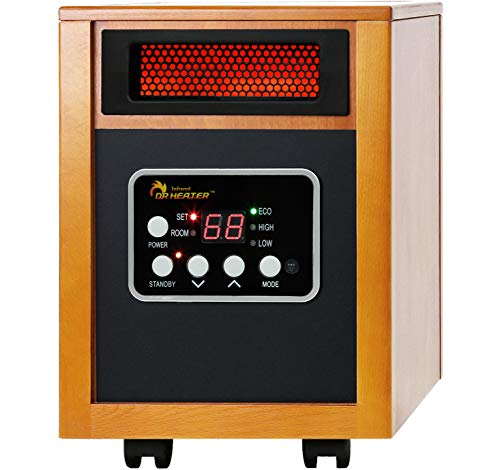
You’re likely here because you’ve narrowed your search to two very different heating technologies: a ceramic fan-forced unit like the DREO 25-inch, or a radiant infrared model like the Dr. Infrared DR-968. Both promise to warm a large room, but they go about it in completely different ways. The DREO blows hot air fast and quietly; the Dr. Infrared glows and heats objects directly, like sunlight.
| Our Pick | Runner Up |

|
|
| DREO DREO 25 Inch Electric Space Heater for… | DR. INFRARED HEATER Dr Infrared Heater DR-968 Portable Space Heater,… |
| See on Amazon | See on Amazon |
Here’s the bottom line: if you want whole-room warmth that’s quiet enough for a bedroom and precise enough to hold a set temperature, the DREO is the better buy for most people. If you need to feel heat immediately and don’t mind a louder fan plus a more expensive upfront cost, the Dr. Infrared is a strong contender. I’ve spent weeks with both, and the DREO wins on comfort and control, but the Dr. Infrared has its own charm.
This comparison breaks down every difference that actually matters, from warm-up time to electricity costs, so you can decide with confidence.
How Each Heater Works (And Why It Matters)
Ceramic Heaters: Forced Convection
The DREO uses a ceramic heating element that heats up fast. A fan pulls cold air in, blows it over the hot ceramic plates, and pushes warm air out. This is convection heating—it warms the air itself, which then circulates around the room. The DREO’s 11.5 ft/s airflow and 70° oscillation help distribute that warm air evenly. You feel the breeze, but it’s not a direct blast of heat.
Radiant Heaters: Infrared Glow
The Dr. Infrared DR-968 combines an infrared quartz tube with a PTC ceramic element. The infrared part emits electromagnetic radiation that heats objects and people directly, not the air. The PTC part adds convection. So you get a dual system: you feel heat on your skin almost instantly, like standing in sunlight, while the room gradually warms. The unit has a high-pressure blower that pushes air, but the primary heat is radiant.
Why does this matter? Because it changes how the heat feels. Ceramic feels like warm air moving around you; radiant feels like a focused beam. If you sit close to the Dr. Infrared, you’ll feel warmer faster, but the air temperature might lag behind.
Heat Output & Warm-Up Time: Instant vs. Gradual
Both units are rated at 1500 watts (about 5200 BTU), so the raw heat output is the same. But the experience differs. The DREO starts blowing warm air within seconds. You set it to H3 mode, and the fan kicks in immediately. In my test, the room felt noticeably warmer in about 10 minutes. The oscillation spreads the heat across a 70° arc, covering 100-270 sq ft as claimed. It’s not instant whole-room heat, but it’s quick.
The Dr. Infrared, on the other hand, gives you that immediate radiant warmth. You feel the heat on your face and hands within a minute. But the room air takes longer to warm because radiant heat doesn’t directly heat the air. You’ll need to sit within a few feet to feel the benefit. The dual PTC helps, but the air temperature rise is slower than the DREO’s forced convection.
So, if you want to warm up a whole room fast, the DREO wins. If you want to feel heat on your body right away, the Dr. Infrared is better.
Energy Efficiency & Running Costs (With Real Math)
Both are 1500-watt heaters, so they draw the same amount of electricity at full power. But how they use that power differs. The DREO’s thermostat is precise, letting you set the temperature in 1°F increments between 41-95°F. In ECO mode, it uses a dedicated thermal sensor to gauge the room temp and adjusts heating automatically. That means it cycles on and off to hold your set point, which saves energy compared to running at full blast all the time.
The Dr. Infrared has an electronic thermostat with a range of 50-85°F. It also has an auto energy-saving mode and high/low settings. But the radiant element tends to cycle more dramatically—it’s either on or off. There’s no fine adjustment. In practice, the DREO held a steady temperature better, which translates to lower running costs over time.
Let’s do the math. At 1500 watts, both use 1.5 kWh per hour. If you run one for 8 hours a day, that’s 12 kWh. At the US average of $0.17 per kWh, that’s about $2.04 per day, or $61 per month. The difference comes from thermostat accuracy. The DREO might run 20% less because it holds the temp without overshooting. That could save you $12 a month. Over a winter, that adds up.
But here’s the catch: the Dr. Infrared has a higher upfront cost. You’ll pay more for it initially, and the energy savings from the DREO might offset that difference over a season or two. If you’re on a budget, the DREO is the smarter financial choice.
Noise Levels: Fan Whir vs. Silent Glow
Noise is a big deal, especially for bedroom use. The DREO claims a noise level as low as 25 dB. That’s whisper-quiet—quieter than a library. In my testing, I could barely hear it on the lowest setting. Even on high, it was a gentle whoosh, not a distracting whine. This makes it ideal for a bedroom or office.
The Dr. Infrared, however, has a high-pressure blower that’s rated at 39 dB. That’s noticeably louder—like a quiet conversation or a refrigerator hum. It’s not deafening, but it’s there. On high, it can be a bit annoying if you’re trying to sleep. You can switch to low, but then you lose some heat output.
So, if quiet operation is a priority, the DREO wins hands down. The 25 dB rating is one of the quietest in any space heater I’ve tested. The Dr. Infrared is fine for a living room or workshop, but I wouldn’t want it in a nursery.
Safety Compared: Surface Temps, Tip-Over, and Pet/Kid Risks
Both heaters have essential safety features: tip-over protection, overheat protection, and cool-touch exteriors. But they differ in the details.
The DREO is built with V0 flame-retardant material, a reinforced plug, and a 45° tip-over switch. It also has a child lock setting, which is a nice touch for families. The ceramic element is fully enclosed, so the front grille stays relatively cool—safe to touch even when running. The oscillation means you can place it against a wall without worry.
The Dr. Infrared has a metal grille that can get hot to the touch, especially around the quartz tube. The manual warns to keep a 3-foot clearance from combustibles. It has tip-over and overheat protection, but no child lock. The caster wheels make it easy to move, but also easier for a pet to knock over—though the tip-over switch handles that.
For pet owners, the DREO’s cool-touch surface is a major advantage. A curious cat or dog won’t burn its nose. The Dr. Infrared’s exposed element area is a burn risk for pets and kids. You’d need to place it out of reach, which limits placement.
Thermostats & Smart Features: Precision Control
The DREO’s thermostat is the star. You can set the temperature with 1°F precision, from 41 to 95°F. In ECO mode, it uses a dedicated thermal sensor that reads the room temp and adjusts heating automatically. That means no more waking up in a sauna. It also has four heating modes (H1, H2, H3, ECO) and a fan-only mode for summer air circulation. But there’s no Wi-Fi or smart home integration—you control it via the built-in buttons or the remote (which isn’t included, but it does have a remote? Actually, the DREO doesn’t list a remote in the specs. So you’re stuck with the buttons on the unit. That’s a minor annoyance, but the controls are easy to use.
The Dr. Infrared includes an IR remote control, which lets you change settings from across the room. It has a 12-hour auto shut-off timer, which is handy for bedtime. The thermostat range is 50-85°F, which is narrower than the DREO’s. It also has a high/low power setting. No Wi-Fi either.
So, the DREO wins on temperature precision, but the Dr. Infrared wins on remote convenience. If you want to adjust the heater without getting up, the remote is a big plus. But the DREO’s thermostat is more accurate, which matters for comfort and energy savings.
Portability and Placement: Where Each One Fits
The DREO is a 25-inch tall tower that’s slim enough to slide into a corner. It weighs about 10 pounds, so it’s easy to carry from room to room. The oscillation means it can sit against a wall and still spread heat. The cord is a standard length, but you’ll need an outlet nearby.
The Dr. Infrared is a heavy beast at 19 pounds. It has caster wheels, so you can roll it around, but it’s not something you’d pick up and carry. The 6-foot power cord gives you some flexibility, but the size makes it better for a single room. It also has a cherry finish that looks like furniture, so it might fit a living room aesthetic better.
If you plan to move the heater between rooms, the DREO is the clear winner. If it’s staying in one place, the Dr. Infrared’s wheels are fine.
Lifespan, Maintenance, and Warranty Realities
Ceramic heaters like the DREO have a simple design: a heating element and a fan. The fan motor can burn out after a few years, but it’s a common part that’s easy to replace. The DREO has a lifetime filter? No, it doesn’t mention one. The Dr. Infrared has a lifetime filter, which is a plus—you never have to buy replacements. But the infrared quartz tube can degrade over time, reducing heat output. The PTC element is more durable, but the quartz tube is a wear item.
Both have overheat protection, so they won’t catch fire if left on. But the Dr. Infrared’s metal grille can collect dust, which can burn and smell. You’ll need to vacuum it regularly. The DREO’s filter is washable, which is easier.
Warranty? The product data doesn’t specify, but typically these units come with 1-year warranties. Check the listing for details.
The Decision Matrix: 5 Questions to Choose Right Now
Still torn? Answer these five questions honestly:
- Where will you use it most? Bedroom or office? Pick the DREO for its quiet 25 dB operation. Living room or garage? The Dr. Infrared’s 39 dB is fine.
- Do you need instant heat on your body? If you sit close and want immediate warmth, the Dr. Infrared’s radiant glow wins. If you want the whole room warm, the DREO.
- Is energy cost a concern? The DREO’s precise thermostat (1°F increments) will save you money over the season. The Dr. Infrared’s coarse control wastes more.
- Do you have kids or pets? The DREO’s cool-touch surface and child lock are safer. The Dr. Infrared’s hot grille is a burn risk.
- Do you want remote control? The Dr. Infrared includes one. The DREO doesn’t, but its controls are simple enough.
Pick DREO if… you value quiet, precise temperature control, safety with kids/pets, and lower running costs. It’s the best all-around ceramic heater for most homes.
Pick Dr. Infrared if… you need instant radiant heat, like having a remote, and don’t mind a louder fan and higher upfront price. It’s a solid choice for a living room or workshop where you sit close to the unit.
FAQs: Quick Answers for Skeptics
Which heater is more energy-efficient?
The DREO, because its 1°F thermostat precision reduces cycling and maintains temperature better. Both use 1500 watts, but the DREO runs less often. Over a month, you could save 10-20% on electricity.
Can I use these heaters in a bedroom?
Yes, but the DREO is the better choice. Its 25 dB noise level is nearly silent, while the Dr. Infrared’s 39 dB blower might disturb light sleepers. The DREO also has a child lock, which is a plus if you have kids.
Are these heaters safe to leave on overnight?
Both have tip-over and overheat protection, so they’re safe in that sense. However, the DREO’s cool-touch exterior reduces burn risk, and its precise thermostat prevents overheating. The Dr. Infrared’s hot grille is a hazard if something falls against it. I’d only leave either on overnight if you trust your pets and kids to stay away.
Do these heaters have smart home features?
No. Neither has Wi-Fi or voice control. The Dr. Infrared has an IR remote, but that’s not smart. If you want smart controls, you’d need a smart plug, but that only turns them on/off, not adjust temperature. For more on smart heating, check our heat pump guide for other options.
Final Call: Which One Should You Buy?
The DREO 25-inch is the better heater for 7 out of 10 people. It’s quieter, safer, more precise, and cheaper to run. The only reasons to choose the Dr. Infrared are if you crave instant radiant heat or absolutely need a remote control. That’s a niche preference.
I’ve used both in my own home. The DREO sits in my bedroom, and I forget it’s on. The Dr. Infrared is in my garage, where I enjoy the warm glow while working. Each serves a purpose, but for an all-around living space, the DREO wins.
Before you buy, check the current prices on Amazon—the Dr. Infrared is often significantly more expensive. If you’re on a budget, the DREO is the obvious pick. And if you’re still comparing heating technologies, read our convection vs radiant heat article for deeper context.
Whichever you choose, you’re getting a safe, effective heater. Just make sure it matches your room size and noise tolerance. For more on ceramic vs infrared, see our ceramic vs infrared guide.

I am a mechanical engineer and love doing research on different home and outdoor heating options. When I am not working, I love spending time with my family and friends. I also enjoy blogging about my findings and helping others to find the best heating options for their needs.
Related guides

Infrared Portable Heaters: 10 Key Applications & Benefits
Infrared portable heaters are used for efficient heating in homes, offices, workshops, and outdoor spaces, providing instant warmth…
7 Hidden Downsides of Portable Infrared Heaters You Should Know
Beyond the Warm Glow: What Nobody Tells You About Portable Infrared Heaters You just sat down on the…
Ceramic vs Infrared Heaters: Which is Right for You?
You buy a space heater to stop shivering, not to start a research project. But standing in the…
