Solar Powered Outdoor Heater: What It Really Means
On this page 7 sections
Say your patio is 12 by 16 feet and the evening air has dropped to 42°F. A small solar panel on the roof won’t make a conventional patio heater run all night by itself; you’d need enough solar generation, battery storage, and heater wattage to match the load.
That’s the part most search results skip. The useful question is not whether sunlight can help heat outdoors, because it can, but what kind of system you mean and whether it can deliver usable heat after sunset.
Solar Powered Outdoor Heater
A solar powered outdoor heater is usually a battery-backed electric heater or a solar thermal system, not a panel plugged straight into a patio heater. A solar powered heater can work well for targeted comfort, but a heater powered by solar still needs enough stored energy for wind, darkness and the heater’s high electrical demand.
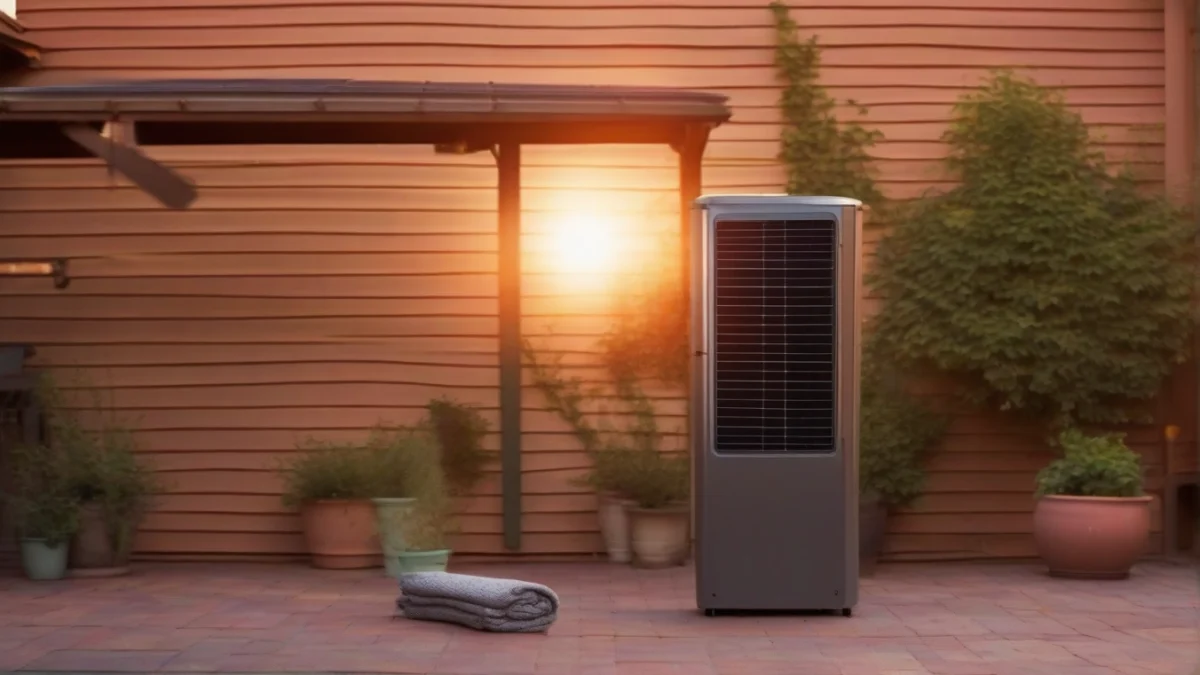
Most solar-electric setups use panels to charge a battery, then an inverter supplies an electric infrared heater. Solar thermal systems take a different route: sunlight heats air or water, which is moved through the space or stored for later. Both approaches can have very low running costs after installation, but the panel, battery, controller and heater must move or store enough energy first.
| Part of the setup | Job |
|---|---|
| Solar panel | Makes electricity while useful sunlight is available |
| Battery | Stores energy for evening use or cloudy periods |
| Inverter | Changes battery power into the form an electric heater uses |
| Infrared heater | Warms people and nearby surfaces instead of trying to heat all outdoor air |
Outdoor heating is difficult because wind carries warmth away, open air gives heat nowhere to collect, and night use begins after the panel stops producing. Radiant heat makes more sense than heating the whole deck: infrared energy reaches your chair, clothing and skin directly, much like standing in a patch of winter sun.
How Solar Heat Works Outside

Solar powered heat reaches an outdoor space in three different ways: a collector can transfer sunlight into air or water, solar panels can run an electric heater, or panels can charge a battery for heating later. Solar powered air heaters usually use the first method, while a solar powered heating unit may use the second or third.
| System | What captures the sun | Where the heat goes | Best fit |
|---|---|---|---|
| Solar thermal | A dark air or water collector | Directly into air or water | Greenhouses, sunrooms, hot water |
| Solar-electric | Photovoltaic panels | Electric resistance or infrared heater | Short, sunny heating periods |
| Solar plus battery | Photovoltaic panels and a battery | Stored electricity runs a heater later | Small enclosed areas, limited runtime |
Solar thermal works best in a closed or semi-closed space because the warmed air has somewhere to stay. A greenhouse or sunroom can hold that heat; an open patio usually cannot. Outdoor air rises, mixes with colder air and drifts away, so heating the air itself wastes much of the collected energy before your chair feels warmer.
For a DIY residential solar-powered air harvester, mount a dark, insulated collector where it gets winter sun, route its outlet into the room through a controlled duct, and provide a separate return path so air can circulate. Add a fan only when the collector and wiring are rated for it, seal the wall penetration, and include a way to close the duct at night. Keep the system separate from any gas appliance, chimney or flue; a homemade collector must never change combustion-air or exhaust paths.
If your goal is warm moving air from sunlight, see solar powered air heaters for collector layouts and limits. If the space is open and windy, direct infrared heat aimed at people and nearby surfaces usually makes more sense than trying to warm the whole sky.
Which Outdoor Heating Types Make Sense
For solar powered heaters for outside, the sensible choice depends on how enclosed the space is: infrared or propane can warm people on a patio, solar thermal can help a greenhouse, and battery-backed electric heat suits a small sheltered space better than a wide-open deck.
| Heating type | Fits best | Where it fails |
|---|---|---|
| Solar thermal | Greenhouses, sun-facing sheds, and sheltered spaces that can hold warmed air or water | A fully open patio loses the collected heat as quickly as wind carries it away |
| Solar-electric with battery | Small sheds, covered patios, and short heating periods where a battery and inverter can supply the heater | Large spaces or all-night heating can require more stored energy than a practical home system holds |
| Infrared patio heater | Open or partly covered patios where you want to warm people and nearby surfaces | It doesn’t warm the whole outdoor air volume, and sunlight alone won’t run it after dark without stored electricity |
| Propane patio heater | Open patios and events where portable heat matters more than solar operation | It needs fuel, ventilation, and outdoor placement; it isn’t a solar-powered heater |
| Greenhouse use | A greenhouse can trap solar heat, making a collector or stored electric heat more useful than on an open deck | Cold nights, poor insulation, and large glass areas can still overwhelm the available heat |
Solar powered heaters for sheds can work when the shed is small, reasonably insulated, and used for limited periods. A solar-electric system stores daytime power in a battery, then sends it through an inverter to an indoor-rated electric heater; a solar air collector can instead move warmed air directly into the shed. A drafty shed turns both options into an expensive way to heat the neighborhood.
Solar powered heaters for greenhouses have a better starting point because the glazing traps some heat. Solar thermal air or water systems can shift daytime warmth into the growing space, while a battery-backed heater can cover a cold evening. For detailed greenhouse sizing, see solar powered heaters for greenhouses.
A solar powered heater for a room is usually a storage question, not a heating-source question. A solar powered space heater still needs enough electricity at the moment it runs, so panels alone won’t solve nighttime heating unless the battery, inverter, wiring, and heater are sized together. Small indoor systems may help one room for a limited time; whole-house heat demands a much larger energy system. These solar powered space heaters for indoor use explain that trade-off without pretending the sun sends a free extension cord through the window.
 Winter Heating Bill CutterSee what every heater in your home really costs, heat the rooms you use, and cut the waste in 30 days.Cost-per-hour tables for every heaterThermostat schedule and draft-proofing planRunning-cost and bill calculator (Excel)
Running Cost And Storage Math
A solar powered space heater still uses a large amount of electricity, even when the sunlight makes its operating cost close to zero. That applies to a solar powered indoor space heater, home solar powered space heaters, and an electric heater powered by a solar panel: panels generate the energy, while an inverter, battery and wiring deliver it at the heater’s required voltage.
Use watts ÷ 1,000 × hours × electricity rate to compare the load with grid power. A 1,500 W heater running for 3 hours uses 1.5 × 3 = 4.5 kWh; at 17 cents per kWh, 4.5 × $0.17 = $0.765, or about 77 cents. Solar power may avoid that usage charge on a sunny day, but the panels, battery, inverter and replacement parts still have a cost.
| Heater | Watts | Per hour | Per day (3 h) | Per month (1 days) |
|---|---|---|---|---|
| 1,500 W electric heater | 1,500 W | 26¢ | 77¢ | 77¢ |
Battery sizing starts with the heater draw, then adds inverter losses and the battery capacity you can’t use safely. At 12 V, 1,500 W works out to about 125 A before those losses; 4.5 kWh for three hours equals about 375 amp-hours at 12 V in ideal arithmetic. Real systems need more capacity, so a small 12 V battery can run out surprisingly fast.
A panel alone usually can’t keep a high-wattage heater running through clouds or after sunset. The panel must produce enough power to cover the heater while also charging the battery, or the battery becomes the fuel tank and empties at roughly the heater’s demand. For a closer look at indoor options, see solar powered space heaters for indoor use.
Safety And Code Limits To Check
A solar powered indoor heater still has to meet ordinary heater safety rules: use a listed appliance, stay within the circuit and inverter rating, keep the required clearance, and plug a heater directly into a wall outlet. A 1,500 W heater on a 120 V circuit draws about 12.5 A, so it leaves little room on a typical 15 A circuit for other loads.
The best solar powered electric heaters are the ones with a clear UL, ETL, or CSA listing, tip-over protection where applicable, overheat protection, and instructions that match your battery and inverter. Keep electric heaters at least 3 feet from curtains, furniture, boxes, and stored fuel; an extension cord or power strip is a poor substitute for a properly rated outlet.
Battery storage adds another set of limits. Match the heater’s wattage and startup demand to the inverter, keep batteries where the manufacturer allows, provide the specified ventilation, and protect wiring from damage, water, and hot surfaces. Blocked vents, loose connections, and overheated cables can start a fire even when the sunlight itself is doing nothing dramatic.
Apartment renters need extra caution because a balcony, roof, exterior wall, or shared electrical area may be governed by local code or the building owner. Searches for “solar powered heaters for apartments during power failure video download” often promise a simple backup setup, but a downloaded video can’t verify your circuit, battery enclosure, ventilation, or building rules. For indoor options, start with the practical limits covered in solar-powered indoor space heaters rather than assuming a patio device belongs inside.
Solar Heating For Greenhouses And Small Rooms
Greenhouses are the best fit for solar heating because glazing admits sunlight during the day and the enclosure can hold some of that heat after sunset. The best solar powered greenhouse heaters usually supplement daytime solar gain, insulation, and thermal storage rather than carrying the entire winter load alone.
A solar powered heater for a small room can work more predictably than one aimed at an open patio, but the room needs decent insulation, limited drafts, and a system sized to its heat loss. A solar powered mini heater is still an electric load; the panel, battery, inverter, and heater must all agree on watts and run time. Small does not mean magically exempt from arithmetic.
For greenhouse use, protect electrical parts from condensation and follow the heater’s clearance and moisture instructions. A solar powered heater for small rooms works best as supplemental heat during sunny periods or short outages; a poorly insulated space may still need a conventional winter heating system. Readers comparing compact equipment can start with small solar powered heaters, then check the actual wattage instead of trusting the word “mini.”


