

Clay pots work by storing some of the candle’s heat in the pot and then releasing it as radiant heat and warm air around it. That gives you a little comfort after the flame goes out, but it also means slow, limited output.
For winter prep, the real question is whether this setup can buy you time safely. The answer depends on room size, ventilation, candle type, and how much fire risk you’re willing to accept while the power’s out.
Emergency Heat Using Clay Pots

A clay pot heater uses one or more candles beneath an inverted unglazed terracotta pot to capture and radiate heat; it can warm a small room for a few hours, but only as short-term backup heat. The setup is simple: candles sit on a fireproof base, a dry terracotta pot sits upside down over them with a gap for airflow, and the pot absorbs heat from the flames then radiates it outward.
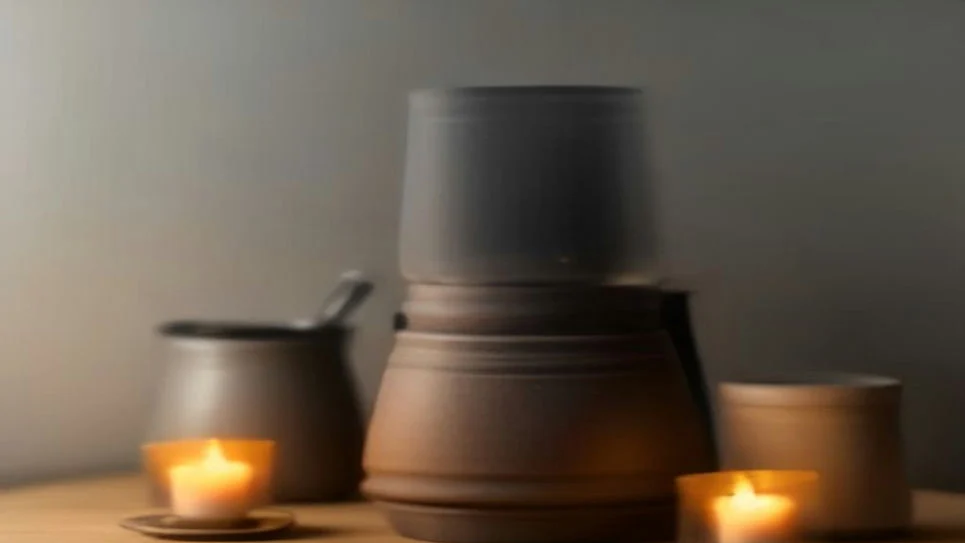
The flame heats the pot’s inner surface by convection. That energy conducts through the clay, warming the whole pot. The hot outer surface then radiates heat into the room and warms the air around it, which rises and pulls cooler air in from below. The pot continues radiating for a short time after the candles go out, though the extra warmth is modest.
This is supplemental heat for one person in a very small space, not a solution for heating a bedroom or living room to comfort. A handful of tealights produce 150 to 200 watts at best; a plug-in space heater delivers 1,500 watts. You’ll feel the difference within arm’s reach of the pot, less so across the room. Comfort fades as the candles burn down, usually within three to four hours, and you’ll need to replace them to keep going.
| Heat source | Approximate output | Power source | Practical use |
|---|---|---|---|
| Clay pot with 4 tealights | 150–200 W | Candles | Supplemental warmth for one person in a very small space |
| Candles alone (no pot) | 40–50 W per candle | Candles | Light and a little radiant warmth directly above the flame |
| 1,500 W electric space heater | 1,500 W | 120 V outlet | Heats a small to medium room; adjustable thermostat |
The pot does help. Bare candles radiate heat straight up and lose most of it to the ceiling. The pot intercepts that energy, spreads it across a larger surface, and sends it outward where you can feel it. You’re not amplifying the candles—physics won’t let you create energy—but you are redirecting what they produce.
If the power is out and you have no other heat source, a clay pot setup can take the edge off in a closet-sized space or under a blanket tent. It won’t warm the room the way a heater does. Keep a working carbon monoxide alarm nearby, crack a window for ventilation, and never leave it unattended or use it while you sleep unless you’re awake and watching it.
What A Clay Pot Heater Can Warm
A clay pot heater works best in one small, enclosed room—think 100 to 150 square feet, roughly a bedroom or home office. Open-plan spaces lose heat too fast for a few candles to matter. You’ll feel warmth within arm’s reach of the pot, but the air across the room won’t rise more than a few degrees.
Pot size changes how much heat the clay can hold and how long it takes to warm up. A 6- to 8-inch pot heats through in about 20 minutes with three or four tealights underneath; it’s light, easy to handle, and stores enough warmth to radiate heat for 10 to 15 minutes after the flames go out. A 10- or 12-inch pot holds more thermal mass, so it takes 30 to 40 minutes to reach full temperature and stays warm a bit longer, but you’ll need more candles to heat the extra clay—five or six at minimum—and the larger footprint makes safe placement trickier.
Adding candles increases output, but the gains flatten quickly. Four tealights under one pot put out roughly twice the heat of two, but eight candles don’t double it again—you’re burning more wax for a smaller improvement, and you’ve introduced more open flame, more oxygen consumption, and a higher risk of tipping or flare-up. Most setups stop at four to six candles per pot. Stack a second, smaller pot inside the first and you’ll spread the heat across more clay surface, extending the radiant warmth slightly without adding more flame.
| Pot diameter | Candles | Warm-up time | Best for |
|---|---|---|---|
| 6 to 8 inches | 3 to 4 | 20 minutes | Bedroom, small office |
| 10 to 12 inches | 5 to 6 | 30 to 40 minutes | Larger bedroom, enclosed porch |
Which Candles Make The Cleanest Heat
Soy and beeswax candles produce less soot and smoke than paraffin, which matters when you’re burning several at once in a closed room. Paraffin candles leave a black film on the pot and ceiling over time, and the smoke irritates throats and lungs faster than cleaner fuels. Soy costs a bit more but burns with almost no visible soot; beeswax sits in between and smells better than either.

Tealights burn for about four hours and fit easily under most pot setups. Votives last six to ten hours depending on size, which means fewer interruptions to swap them out. Longer burn time doesn’t increase heat output—a votive and a tealight of the same diameter make roughly the same BTU per hour—but it does mean less handling of hot pots and open flame in the middle of the night.
All candles consume oxygen and can add carbon monoxide to the air, especially in a small, sealed room. Crack a window an inch or leave a door to another room open while the setup runs. Burning four or five candles for several hours in a bedroom with no ventilation will make you feel sluggish and headachy long before it becomes dangerous, but that’s the warning to add air.
Keep wicks trimmed to about a quarter inch so flames stay low and controlled. Tall, flickering flames make more soot and can catch the edge of a pot if it shifts. Candles belong on a stable metal tray or ceramic tile, never directly on carpet, wood or anything that scorches.
How Long It Can Run Safely
Treat a clay pot heater as a short-duration, attended emergency measure—two to three hours at most while you’re in the room and awake. Continuous use beyond that raises several risks: the flame can tip or flare, the pot grows hot enough to burn skin on contact, oxygen levels drop as the candles consume air, and soot accumulates faster than most people expect. Leaving one unattended or running it overnight is a poor choice; if you need heat while you sleep, a heater designed for that job is the safer answer.
Each candle you add increases oxygen consumption and carbon monoxide production, especially in a tightly sealed room. Even a handful of tea lights burn through enough air over a few hours to make a small bedroom feel stuffy, and poor ventilation magnifies the problem. Crack a window an inch or leave a door to an adjacent room open to allow fresh air exchange without losing all the heat you’re trying to keep.
Air quality concerns grow with each added candle and with every hour the setup runs. Soot coats walls and ceilings faster than you’d think, and the faint smell most people dismiss as “waxy” is often incomplete combustion. Running a single tea light for an hour or two won’t pose much trouble; burning four or five candles for six hours in a closed bedroom will leave a haze and a headache.
How To Reduce Fire Risk With Clay Pots
Fire risk with a clay pot heater comes down to three things: the pot itself, what you put underneath it, and how many flames you’re running. Unglazed terracotta is the only material that works safely here—the clay absorbs heat through its porous structure and radiates it slowly. Glazed pots don’t breathe, so heat builds up unevenly and the glaze can crack or shatter when thermal expansion kicks in.
Wet or damaged pots crack for the same reason. Water trapped in the clay turns to steam under heat, and steam needs somewhere to go. Check the pot for hairline cracks before the first burn; even a small split can widen fast once the candles are lit. Store your pots dry, and never use one that’s been sitting outside through a freeze.
Base material matters more than most setups admit. Candles sit on something, and that something can’t burn, melt or crack from sustained heat. Concrete pavers, ceramic tile, a steel baking sheet or a fireplace hearth all work. Paper, cardboard, carpet, vinyl flooring and wooden tables do not. Melted wax pools and spreads; if it reaches an edge and drips onto fabric or wood, you’ve got an ignition source with no shutoff.
Metal trays catch drips and contain the mess, but they also conduct heat downward. Set the tray on a noncombustible surface, not directly on anything that scorches. Don’t box the candles in or cover the tray with foil—trapped heat has nowhere to go and will overheat the base or crack the pot. Leave airflow around the bottom and sides.
Adding more candles raises heat output and fire risk in lockstep. Four tealights under a six-inch pot is manageable; eight tealights crowd the base, increase flame height and produce more soot, more wax vapor and more radiant heat than the pot can dissipate safely. If you need more warmth, use a bigger pot with proper spacing between candles, or accept that a real emergency heater will do the job without the juggling act.
| Setup | Candles | Safe base clearance | Risk level |
|---|---|---|---|
| Single 6-inch pot | 2–4 tealights | 12 inches all sides | Low if attended |
| Stacked 6 and 8-inch pots | 4–6 tealights | 18 inches all sides | Moderate |
| Single pot, 8+ candles | 8 or more | 24 inches minimum | High even when attended |
Never leave a clay pot heater unattended, even for a minute. Candles burn down at different rates, wax pools shift, and flames gutter unpredictably. If you’re not in the room watching it, shut it down.
When To Use A Real Heater Instead
Skip the clay pot if you need to heat more than one small room, if the space is open to the rest of the house, or if the outage will last more than a few hours. Candles cost about the same per hour as a best heater for emergency heat when you factor in burn time, and the electric option delivers ten times the heat without the flame risk or the need to sit and watch it.
Scaling up means more candles, more pots, more babysitting and more fire risk. Two or three clay pot setups running at once in different corners of a larger room will push you past the point where a single 1,500 W plug-in heater—drawing power from a generator if the grid is down—becomes the simpler, safer and more effective choice.
Alternative heat sources do exist. Propane, kerosene and diesel heaters deliver real BTUs, but only models rated for indoor use belong inside, and every fuel burner brings carbon monoxide risk, ventilation rules and local code restrictions. Most municipalities require oxygen depletion sensors on indoor propane units and ban unvented kerosene heaters outright in multifamily buildings. Check your jurisdiction before buying fuel-burning emergency backup.
For readers with a heat pump, the issue is often the system itself, not the power supply. Your thermostat’s emergency heat mode bypasses the outdoor compressor and runs the electric resistance strips inside the air handler—slower to warm than a space heater, but designed to heat the whole house when the pump can’t keep up in extreme cold. That’s the right fix when the compressor has failed or frozen, not a candle under a pot.
Frequently Asked Questions
How much area can a clay pot heater effectively warm?
What is the ideal number and size of pots for best heat?
Which candle types produce the least soot and longest burn?
How long can clay pot heaters safely operate continuously?
Can clay pot heaters be used safely overnight or unattended?

HeaterGuides covers home heating, water heating and HVAC: how the equipment works, what it costs to run, and how to use it safely.
