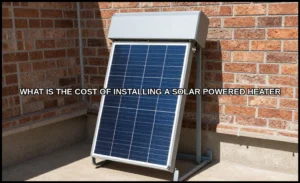
Small portable solar space heaters rarely deliver useful room heat unless they have a large panel and battery system. An infrared heater is a heater that warms objects and people directly rather than the air. A 30-watt unit uses only a fraction of the power of a standard 1,500-watt plug-in heater, so expect modest spot warmth, not a heated room.
Getting the wattage wrong can leave you with a cold room and a battery drained before bedtime. Buying a conventional heater for a small solar setup can also overload the inverter or exceed what the panel can replenish.
The useful comparison is watts in, heat out, and how long the stored energy lasts—not whether a product has “solar” in its name.
What to remember
A 30-watt heater uses one-fiftieth the power of a 1,500-watt space heater, but also produces far less heat.
A solar panel’s rated output depends on sunlight; it can’t provide steady heat after dark without stored energy.
Check the heater’s wattage against the inverter’s continuous output, not just the battery’s advertised capacity.
For reliable room heat, use a properly sized grid-powered heater or a heating system designed for the space.
Small Portable Solar Space Heaters Usually Fall Short
Myth
A 30 W solar heater can warm a room because it runs on free sunlight.
Fact
Thirty watts is far below the power draw of a typical plug-in space heater, so it may provide limited personal warmth but won’t replace room heating. A battery can store solar electricity for later, but it doesn’t increase the heater’s output.
So, are the portable solar power 30 W heaters any good? They can offer modest warmth nearby; don’t expect them to heat a room. “Solar powered portable heater” can mean either an electric heater supplied by solar panels and a battery, or a solar thermal device that captures heat directly. Those are different systems.
Device
What it does
What to expect
30 W electric heater
Turns electricity into heat
Modest personal or spot warmth
1,500 W plug-in heater
Turns electricity into heat
50 times the power draw of a 30 W heater
Solar thermal collector
Captures heat from sunlight
Provides heat directly, not electricity for an electric heater
Photovoltaic panels convert sunlight into electricity; solar thermal collectors capture heat.
A solar powered space heater portable enough to carry still depends on its energy supply. Photovoltaic panel output changes with sunlight, while a battery stores electricity for use when sunlight isn’t available. Without stored energy, a cloud or sunset can leave the heater short of power.
Claims that a small portable solar space heater will run all night or heat a small room need a stated heater wattage, battery capacity and operating conditions to be credible. If those details are missing, the claim doesn’t tell you how much warmth to expect.
Solar Panels Need a Large System to Run a Heater
Yes, a solar panel can run a portable heater if the panel, battery and inverter can supply its power, but a typical small portable panel won’t run a standard electric space heater. For a solar power heater setup, check the full system’s ratings rather than the panel’s headline wattage alone.
A 1,500 W Heater for Eight Hours
A 1,500 W heater uses 1.5 kWh in one hour: 1,500 watts ÷ 1,000. Over eight hours, that’s 1.5 × 8 = 12 kWh before conversion losses. The battery needs enough usable energy for the planned run time, and the inverter must support the heater continuously.
Heater draw1,500 W
Energy for 1 hour1.5 kWh
Energy for 8 hours12 kWh before conversion losses
Check Before Connecting the System
Heater label: confirm its wattage.
Inverter: confirm its continuous output meets or exceeds the heater’s wattage.
Battery: check usable watt-hours, not only headline capacity.
Solar panel: check its output and the battery’s permitted panel input limits.
Panel output varies with sunlight, shade, orientation and weather, so there’s no fixed number of charging hours or guaranteed runtime. A panel in direct sun may provide more power than one shaded or poorly angled, but actual output still depends on conditions.
Read the Ratings Together
Before buying or connecting equipment, compare the heater label, inverter continuous rating, battery usable watt-hours and panel input limits. For a fuller guide to the system math, see powering a portable heater with solar energy.
What a Solar-Powered Portable Heater Can Warm
A solar portable heater for indoor use is practical only when the complete system can supply the heater’s electrical demand and the heater is approved for indoor use. A solar-powered room heater that’s portable may warm a person or object nearby, but low-watt output isn’t proof it can heat the whole room.
Resistance heaters turn electricity into heat; a sunny panel doesn’t make that process more efficient. The panel and battery determine how much electricity is available, which limits how much heat the heater can produce. For indoor system options, see solar powered indoor space heater.
Spot Heat Is Not Room Heat
A low-watt heater may take the chill off your hands at a desk. Don’t count on it to raise the temperature across a room, especially if the space is large or poorly insulated.
Use It Safely Indoors
Plug an electric heater directly into a wall outlet, never an extension cord or power strip. Keep 3 feet of clearance, and choose a UL-, ETL- or CSA-listed model with tip-over and overheat protection. Don’t leave it running while you sleep or leave home unless the manufacturer says that model is designed for it.
When a Regular Portable Heater Makes More Sense
If you have wall power and need actual small-room heat, a standard 1,500 W portable heater is a more practical choice than small portable solar space heaters. Its power draw makes it a poor match for a small battery system; anyone looking for a portable solar powered space heater for off-grid use needs equipment sized for the heater and its battery and inverter.
The product data for product 1 lists 1,500 W, a thermostat, tip-over shutoff, overheat protection and ETL certification. Its stated coverage of 200 sq ft is a manufacturer claim, not a guarantee: insulation, ceiling height and outdoor temperature all affect the result.
For a small room with wall power
R.W.FLAME Small Space Heaters for Indoor Use
The thermostat and listed safety shutoffs suit ordinary plug-in use. It still needs a wall outlet and won’t solve off-grid heating.
A 1,500 W heater draws about 12.5 A at 120 V, leaving little room for other appliances on the same circuit. Plug it straight into a wall outlet, keep 3 feet clear, and never use an extension cord or power strip. For off-grid heat, choose a heater and power system designed and sized to work together.
Questions People Ask
Are 30-watt portable solar heaters any good?
A 30-watt model can offer modest warmth close to your body, but it produces only a small fraction of the heat from a standard 1,500-watt space heater. It may suit a desk or other personal spot; it won’t heat a room.
Can a portable solar heater warm a room?
Usually not if it relies on a small panel or battery. Room heating takes sustained power, and clouds, shade and short winter days can reduce solar output; check the heater’s wattage and the system’s continuous output before expecting whole-room warmth.
Can a solar-powered heater work at night?
Yes, if a battery stores enough energy for the heater’s power draw and runtime. For example, a 30-watt heater running for 8 hours needs 240 watt-hours before conversion losses, while a 1,500-watt heater needs 12,000 watt-hours.
How many solar panels does a portable heater need?
There’s no single panel count: it depends on heater wattage, usable sun, battery capacity and system losses. Size the battery for the hours you need after sunset, then size the panels to recharge it; the panel’s rated output won’t be available all day.
Can a portable heater run directly from a solar panel?
Some low-power heaters may run when sunlight is strong enough, but direct connection can make output fluctuate or stop when a cloud passes. A compatible charge controller and battery provide steadier power; AC heaters also need an inverter sized for their load.
Are solar-powered portable heaters safe to use indoors?
Use an electric heater indoors only if its manufacturer approves indoor use, and plug it into a wall outlet rather than an extension cord or power strip. Keep 3 feet of clearance and use tip-over and overheat protection; never bring an outdoor fuel-burning heater inside.
Can a solar heater work during a power outage?
It can if the panels, battery and inverter form a separate system that still operates during the outage. A typical grid-tied solar array shuts off when the grid fails unless it has approved backup capability, so check the system manual before relying on it.