Off-Grid Approved: Direct-Vent Propane Heaters That Don’t Need Power
Joye
Updated October 7, 2026 17 min read
At a glance
The Comfort Glow 25,000 BTU Direct Vent Propane Wall Heater is the best off-grid-approved pick for most homes that need reliable, no-electricity heat. It runs entirely without power, vents safely through the wall, and heats large rooms or small cabins even during long outages.
What to remember
Only sealed, direct-vent propane heaters are safe and legal for off-grid indoor use.
Check the BTU rating against your room size—too small, and you’ll be cold; too large, and you waste propane.
Every model here works with zero electricity, using a pilot and mechanical thermostat.
Installation must follow the manufacturer’s clearance and venting instructions for safety and code compliance.
Professional installation is recommended for vented propane heaters in most homes.
A true off-grid heater keeps running when the lights go out. Direct-vent propane wall units deliver steady heat, require no electricity, and keep indoor air safe by sealing off the combustion system.
The right model depends on your room size and how you plan to use it. Below are the safest, most reliable direct-vent units that heat without a single watt, plus what to check before you buy or install.
Best Off-Grid Approved Direct-Vent Propane Heaters
#1Best For Most Homes
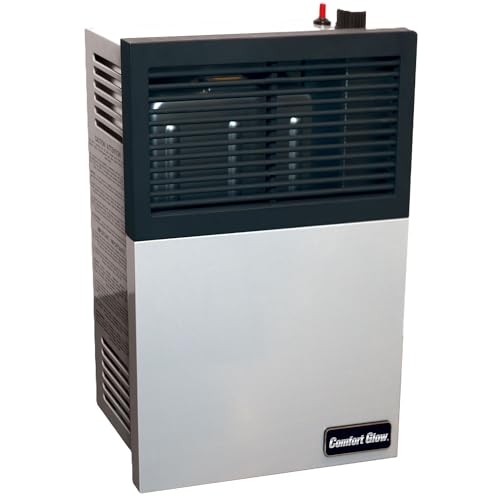
Comfort Glow 25,000 BTU Wall Heater
Best for Large rooms, small cabins, and long power outages
The 25,000 BTU output reaches up to 750 square feet, making this the strongest fit for a main room or small cabin. Its thermostatic heat control, sealed burn system, electronic ignition, and safety pilot make it easier to regulate while the direct vent sends combustion gases through the wall. It’s also approved for bedrooms, bathrooms, HUD housing facilities, and mobile or modular homes.
Heat output 25,000 BTURoom coverage Up to 750 sq. ft.Ignition Electronic ignitionDimensions 26.5 H × 32.25 W × 8.75 D inchesBurner 430 stainless steel
Why it made the cut
Heats up to 750 sq. ft.
Thermostatic heat control
Sealed burn system with safety pilot
No chimney needed; vents through the wall
Good to know
Larger wall footprint than the smaller models
Uses liquid propane only
Skip it if Skip it if your room is small enough for an 8,000 or 11,000 BTU heater and you want a smaller wall unit.
Best for Bedrooms and living spaces up to 350 square feet
This 11,000 BTU model covers up to 350 square feet while keeping the wall-mounted design compact. Thermostatic control helps maintain a set temperature, and the sealed burn system with a safety pilot stops gas flow if the pilot goes out. Bedroom, bathroom, HUD housing, mobile-home, and modular-home approvals give it a broad range of listed uses.
Heat output 11,000 BTURoom coverage Up to 350 sq. ft.Ignition Electronic ignitionDimensions 20 H × 17 W × 7 D inchesBurner 430 stainless steel
Why it made the cut
Heats up to 350 sq. ft.
Thermostatic heat control
Compact 20-inch height
Quiet 430 stainless steel burner
Good to know
Less heating capacity than the 25,000 BTU model
Room coverage is limited to 350 sq. ft.
Skip it if Skip it if your space approaches 750 square feet or needs the higher output of a main-room heater.
Best for Compact rooms up to 375 square feet, including mobile homes
The 11,000 BTU ported burner is rated to heat up to 375 square feet, which gives compact bedrooms and living spaces a little more listed reach than the similarly sized 11,000 BTU option. Its complete kit includes a heat shield, air intake pipe, and connecting rod, while matchless Piezo lighting starts the heater without matches. The sealed burn system and safety pilot suit spaces where quiet operation matters.
Heat output 11,000 BTURoom coverage Up to 375 sq. ft.Ignition Matchless Piezo lightingDimensions 17.36 L × 6.61 W × 20.00 H inchesBurner Stainless steel ported burner
Why it made the cut
Heats up to 375 sq. ft.
Complete installation kit included
Matchless Piezo lighting
Approved for mobile and modular homes
Good to know
No thermostat is listed in the product data
Uses liquid propane only
Skip it if Skip it if thermostatic heat control is a priority or your room needs more than 375 square feet of listed coverage.
Best for Small rooms and cabins up to 250 square feet
The 8,000 BTU output is sized for spaces up to 250 square feet, so it avoids bringing a larger heater into a room that doesn’t need one. Matchless Piezo ignition works without household power, and the sealed burn system, safety pilot, and direct wall vent support off-grid use. Manual heat control keeps the controls simple.
Heat output 8,000 BTURoom coverage Up to 250 sq. ft.Ignition Matchless Piezo ignitionHeat control ManualDimensions 29.5 H × 16.75 W × 9.8 D inches
Why it made the cut
Heats up to 250 sq. ft.
Matchless Piezo ignition
Manual heat control
Approved for bedrooms, bathrooms, and mobile homes
Good to know
Lowest heat output among the indoor wall heaters
No thermostat is listed in the product data
Skip it if Skip it if your room is larger than 250 square feet or you want automatic thermostatic temperature control.
Best for Off-grid outdoor showers, camping, and RV hot water
The 1.32 GPM output and low 3.0 PSI starting pressure suit an outdoor camp shower or RV water setup. Two D-size batteries power ignition, and the package includes a gas regulator, shower head, and garden hose. Its CSA certification and six listed safety protections are useful outdoors, but the product data identifies this as an outdoor water heater rather than an indoor direct-vent space heater.
Water flow 1.32 GPM (5L)Power 2 D-size batteriesStarting water pressure 3.0 PSIWeight 10 lbsSafety listing CSA approved
Why it made the cut
1.32 GPM continuous hot water
Runs on two D-size batteries
Starts at 3.0 PSI water pressure
Portable 10 lb design
Good to know
Outdoor use only
Not a room heater
Needs batteries and a water connection
Skip it if Skip it if you need indoor space heat, a direct-vent wall heater, or a heater for a tent or vehicle cabin.
Which Direct-Vent Propane Heaters Work With No Electricity?
Direct-vent propane wall heaters with a standing pilot, piezo igniter, and mechanical thermostat work without electricity. If you’re searching for a propane air and heat unit with no electric needed, an LP gas heating unit that does not use electricity, or an off-grid vented propane heater, that’s the design to look for. None of the direct-vent wall-heater picks here needs 120V power.
The Ashley Hearth Direct Vent Liquid Propane Wall Heater, Comfort Glow 25,000 BTU Direct Vent Liquid Propane Gas Wall Heater, Comfort Glow 11,000 BTU Direct Vent Liquid Propane Gas Wall Heater, and Comfort Glow Direct Vent Propane Wall Heater use sealed combustion. The heater draws combustion air from outdoors and sends exhaust outdoors through the wall, so the room isn’t being used as the fire’s air supply.
What to check
Why it matters
Standing pilot
Keeps a small flame ready without an electric control board.
Piezo ignition
Creates the pilot spark with a push of the igniter.
Mechanical thermostat
Opens and closes the gas control without a powered thermostat.
BTU output and room size
Tell you if the heater can deliver enough heat without excessive cycling.
Those four details separate a genuinely non-electric direct-vent heater from a heater that merely has a backup mode.
0 W
Electricity required by the direct-vent picks
A standing pilot and mechanical gas controls replace the fan, electronic ignition, and powered thermostat found on many other heaters.
Models with electronic ignition need electricity or batteries for the ignition system. That doesn’t make every electronic model unusable off-grid, but it does mean you must maintain a power source. The picks in this guide avoid that dependency. The CAMPLUX Portable Tankless Water Heater is a different category and shouldn’t be treated as a room-heating substitute.
Worked example
Say a cabin loses grid power for three days. A direct-vent wall heater with its own piezo igniter and mechanical thermostat can still light and regulate heat from the propane supply; a heater that needs a 120V control board cannot, unless your battery or generator is running.
Ask for the ignition and thermostat type before you buy. Search the manual or specification sheet for standing pilot, piezo ignition, and mechanical thermostat—not merely “works during outages.”
Don’t substitute an unvented heater
Unvented and portable propane heaters send combustion products into the room and aren’t a safe or legal choice for permanent indoor off-grid heating. Outdoor, patio, and construction heaters belong outdoors. For a broader look at non-electric outage heat, see non-electric heaters for power outages and off-grid living.
What to Check Before You Buy or Install
The primary installation considerations are the wall opening, vent clearances, propane supply, permits, and the heater’s listing. A direct-vent propane heater can serve as a gas furnace that doesn’t need electricity when its standing pilot, piezo igniter, and mechanical thermostat operate without power—but the installation still has to satisfy local code.
1
Confirm the wall route
Direct-vent installation requires cutting through an exterior wall for the vent kit. Measure the opening and keep the vent termination away from combustible siding, windows, doors, and other openings exactly as the manual shows. Don’t substitute a different vent kit because it appears to fit.
2
Check the fuel system
The direct-vent heater needs an approved propane supply, the correct regulator, a shutoff, and gas piping installed for that appliance. A licensed propane technician should verify the connection and test it for leaks; a 20-pound cylinder setup isn’t automatically suitable for a permanently installed wall heater.
3
Verify the listing and permit
Look for a UL listing or CSA approval on the appliance label and installation paperwork. Most codes require professional installation for propane appliances, and your building or fire department may require a permit and inspection before use.
4
Check the building type
Mobile and modular homes can have separate installation rules. Confirm that the exact model is approved for your home type before cutting the wall or ordering the vent parts.
Never Bring These Indoors
Never use a non-vented propane heater or an outdoor, patio, construction, or torpedo heater inside a home, cabin, tent, or vehicle. Those appliances can discharge combustion products into the room, including carbon monoxide. A working CO alarm is still required protection, not a substitute for proper venting.
Myth
A propane zero-clearance wall heater can touch any wall material.
Fact
“Zero clearance” only applies when the exact heater and installation are listed for it. The vent assembly still needs every clearance shown in the manual, and nearby curtains, trim, insulation, and siding may have separate requirements.
Before You Buy
Ask the local building department which permit and inspection apply.
Confirm the model’s UL listing or CSA approval.
Read the vent-kit clearances before choosing the wall.
Verify mobile-home or modular-home approval if applicable.
Have a licensed propane professional confirm the tank, regulator, shutoff, and piping plan.
Sizing and Running Costs: BTU, Room Size, and Propane Use
Choose a direct-vent propane heater by heat loss first: an insulated room needs about 25–30 BTU per square foot, while an old cabin with leaky windows may need more. A 30k propane thermostatic wall heater can run without electricity when it has a standing pilot, piezo igniter, and mechanical thermostat, but its burner still produces roughly 30,000 BTU whenever it fires.
Small LP gas heating units that don’t use electricity usually use the same setup: a pilot flame, thermocouple, piezo button, and non-electric thermostat. A small direct-vent radiant heater that works without power is useful for a bedroom, office, or cabin, though even the 11,000 BTU Comfort Glow may cycle frequently in a small, well-insulated room. The thermostat turns the burner off; it doesn’t reduce the flame to a tiny continuous output.
Space
Starting heat target
Practical direction
150 sq ft insulated bedroom
3,750–4,500 BTU
The 11,000 BTU model will likely cycle often; size by the room’s actual heat loss.
800 sq ft insulated living area
20,000–24,000 BTU
The Comfort Glow 25,000 BTU model is in the sensible range.
600 sq ft old, leaky cabin
More than 15,000 BTU
Measure drafts and insulation before choosing; a 25,000 BTU unit may fit better than an 11,000 BTU unit.
Use these figures as a starting estimate, not a substitute for the heater’s listed installation limits.
Worked Example
Say your living area is 20 by 30 feet, or 600 square feet. At 30 BTU per square foot, the starting target is 600 × 30 = 18,000 BTU. A 25,000 BTU heater gives some recovery capacity for cold snaps, while a 50,000 BTU propane furnace that works without electricity would be oversized for this example and may be a poor fit unless the building loses heat rapidly and the unit is specifically listed for it.
Room20 × 30 ft = 600 sq ft
Estimate600 × 30 = 18,000 BTU
Likely rangeAbout 18,000–25,000 BTU
Propane use comes from the input rating, not the room’s square footage. One gallon of propane contains about 91,500 BTU, so a 25,000 BTU-per-hour heater uses 25,000 ÷ 91,500 = about 0.27 gallon per hour at full burn. At an assumed $3 per gallon, that is about $0.81 per hour, or $6.48 for eight continuous hours; your local tank price changes the result.
A heater that cycles half the time would use roughly half that fuel, but don’t count on an oversized unit to save money. It may shut off quickly, heat the room past the thermostat setting, and waste usable heat through the vent while delivering uneven comfort. For a home without power, direct-vent propane heating works best when the smallest listed heater can still cover the building’s cold-weather heat loss.
Check the real heat loss
Drafty cabins often need more heat than their floor area suggests. Sealing door gaps and obvious window drafts can let you choose a smaller unit; a tiny house may need less heat than you expect, as this sizing guide explains: tiny house needs less heat.
How Off-Grid Propane Heaters Stay Safe and Legal
A direct-vent propane heater burns propane in a sealed chamber, draws combustion air from outdoors, and sends exhaust outdoors through a wall or approved vent. That sealed-combustion design is what makes listed units suitable for many bedrooms and living spaces, provided the installation follows the manual and local code.
“Off-grid approved” means the heater can operate without utility electricity, not that you can install it anywhere without permission. A standing pilot, piezo igniter, and mechanical thermostat supply the controls; the direct-vent assembly handles combustion air and exhaust. The Ashley Hearth and Comfort Glow wall heaters in this guide fit that basic arrangement, while the CAMPLUX portable tankless water heater is a different type of appliance and shouldn’t be treated as a room heater.
AFUE Above 80%
Yes, some direct-vent propane heaters have AFUE ratings above 80%. Check the model’s data plate or installation manual rather than guessing from its BTU input: AFUE measures how much fuel energy becomes useful heat over a season, and most direct-vent wall heaters are rated at 80% or higher.
Check
Why it matters
UL or CSA listing
A recognized listing supports code compliance and is often required by insurers.
Direct-vent listing
The heater, vent, cap, and clearances are tested as one installation system.
Flame-safety controls
The gas supply must shut off if the pilot or flame fails.
Manual and data plate
They identify fuel type, clearances, vent parts, and permitted installation locations.
Use the heater’s listing and manual as the installation rulebook.
Direct-vent propane heaters are legal in most states and counties, but local rules can still require a building or mechanical permit, inspection, or approval for propane work. County-level code often decides the practical answer, especially in manufactured homes, cabins, and outbuildings. Ask the building department before cutting the wall.
Don’t Modify A Listed Heater
Removing the vent hood, changing the vent parts, converting fuel, or using an unlisted homemade heater can create an exhaust hazard and may void insurance coverage. A non-listed or DIY-modified appliance can also fail inspection and leave you liable for damage.
Legal File
Model number and proof of UL or CSA listing
Installation manual and approved vent-kit details
Permit and inspection requirements from your county
Insurer’s written requirements for a permanently installed propane appliance
A Checklist Before You Buy or Light Up
Before you buy or light an off-grid propane heater, verify the listing, vent system, room size, permits, and fuel connection in that order. An unpermitted installation can bring fines, an order to remove or correct the work, failed insurance claims, and trouble selling the property.
Before Buying
Confirm the product says direct-vent, not vent-free, and that it is approved for propane.
Check for a UL or CSA listing on the appliance or its documentation.
Match the BTU rating to the room’s heat-loss estimate; a larger heater isn’t automatically safer or cheaper.
Confirm the vent kit, wall thimble, termination cap, and installation instructions are included or specifically available.
Ask your county whether a permit and inspection are required before installation.
1
Check the location
Measure wall thickness, window and door positions, clearances, and the outside termination area against the manual. Keep the intake and exhaust clear of snow, plants, and obstructions.
2
Check the home type
A mobile or manufactured home may use an off-grid heater only if the exact model is listed or approved for that home type and installed under the applicable code. Never assume a cabin-rated wall heater is mobile-home approved.
3
Check the propane work
Confirm the fuel type, regulator requirements, shutoff location, and leak-test procedure. Have gas piping and connections handled by a qualified professional where local rules require it.
4
Check the yearly plan
Schedule annual maintenance and a vent inspection. Direct-vent equipment doesn’t normally use a chimney, so inspect the vent assembly and exterior cap; inspect a chimney too if the property has another vented appliance.
Before First Flame
Stop if the vent parts don’t match the manual, the listing cannot be verified, the permit question is unresolved, or the propane connection leaks. Don’t light the pilot to “see if it works”; that turns a paperwork problem into a combustion problem.
Keep The Paperwork
Save the manual, model number, permit, inspection approval, and service records with the property documents. The next owner, inspector, or insurance adjuster may need them.
Questions People Ask
Do all direct-vent propane heaters work without electricity?
Only models with a standing pilot, piezo igniter, and mechanical controls can run during a power outage. A unit that needs electronic ignition, a blower, or a powered thermostat won’t operate unless you provide electricity. Check the installation manual for the exact ignition and control setup.
How do you light a non-electric direct-vent propane heater?
Turn the gas control to the pilot position, press and hold it as directed, then use the built-in piezo igniter until the pilot lights. Keep holding the control for the manual’s specified time so the thermocouple can sense the flame and keep the gas valve open. If the pilot won’t light or goes out repeatedly, shut off the gas and have the heater inspected rather than bypassing the safety control.
Are vent-free propane heaters safe for off-grid indoor use?
Vent-free heaters can work without electricity, but they release combustion products and water vapor into the room and are restricted or banned in some states and cities. Use only an indoor-rated model with the required oxygen depletion sensor, ventilation, and a working carbon monoxide alarm. A direct-vent model is the better choice for a tight cabin because combustion air and exhaust move outdoors.
Can I install a direct-vent propane heater myself?
You may be able to handle simple wall preparation, but gas piping, venting, and the final connection often require a licensed professional or inspection under local code. The wall sleeve, clearances, propane regulator, shutoff valve, and flue termination all have to match the heater’s listing. Ask your building or fire department which work requires a permit before cutting the wall.
How much propane does a direct-vent heater use per hour?
Fuel use depends on the heater’s BTU input and how long its burner runs. A 25,000 BTU-per-hour heater at full output uses about 0.27 gallons per hour: 25,000 ÷ 91,500 BTU per gallon = 0.273 gallons. A thermostat cycles the burner, so real use is usually lower than that full-fire figure.
What permits or inspections are needed for off-grid propane heaters?
Your county or city may require building, mechanical, fuel-gas, or fire permits, followed by an inspection before regular use. Requirements can change with the fuel tank size, wall penetration, vent termination, and whether the heater is in a dwelling or accessory building. Call the local authority having jurisdiction before buying the unit and keep the approved manual and inspection record with the property files.
Share
Written byJoye
HeaterGuides covers home heating, water heating and HVAC: how the equipment works, what it costs to run, and how to use it safely.