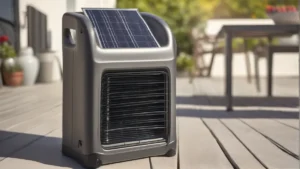
The most cost efficient space heater for most homes is a 1500W ceramic model with a thermostat and ECO mode, and the DREO is the best pick here because it adds 70° oscillation, quiet 34 dB operation, and ETL-listed safety. A 1,500 W heater draws about 12.5 A, so the real question is how well it trims run time in the room you actually need to heat.
The essentials
A 1,500 W heater costs the same to run at full power, so the savings come from thermostat control and shorter duty cycles.
Oil-filled heaters are quiet and hold heat after the element clicks off, but they warm a room more slowly.
Ceramic heaters are the usual best buy for bedrooms and offices because they heat fast and give you useful controls.
A 1500W plug-in heater belongs on a wall outlet, never on an extension cord or power strip.
If you want one model for most rooms, pick ETL, UL, or CSA listed, with tip-over and overheat protection, and use the built-in thermostat.
Say your bedroom is 12 by 14 feet and the heat keeps falling off after sunset. A 1,500 W heater can cover that kind of room, but the cheaper one on the shelf is only cheaper if it holds temperature without running flat out all night.
Most cost efficient home heating starts with the same rule: heat the room you use, not the whole house. A space heater wins when you need short, local heat; a central system still wins for whole-home heating.
Best Cost-Efficient Space Heaters
#1Best for most homes
DREO 1500W Ceramic Heater with Oscillation
Best for Living rooms and bedrooms where you want even heat without constant repositioning
The 70° oscillation spreads heat across large rooms without hot spots, and the trackball system keeps it whisper-quiet through 750,000 cycles. ECO mode cuts between 1000 W and 1500 W to hold your target temperature, which trims run time more than any fixed-output heater can. At 34 dB it’s quieter than most bedroom fans, and the ETL-listed tip-over and overheat protection plus V0 flame-retardant materials cover the safety basics.
Power 1500 W ceramic PTCOscillation 70° wide-angleNoise 34 dBTimer 12-hourSafety ETL-certified, tip-over, overheat, V0 flame-retardant
Why it made the cut
70° oscillation boosts heating coverage by 20% over stationary models
ECO mode adjusts between 1000 W and 1500 W to maintain set temperature
34 dB operation, quieter than a library
ETL-certified with tip-over, overheat protection, and 24-hour auto shutoff
Good to know
No carrying handle for room-to-room moves
2-prong plug limits grounding options
Skip it if If you heat a single small room and never move the unit, a simpler stationary model costs less up front.
Best for Households that move a heater from bedroom to office to garage throughout the day
The built-in handle and lightweight build let you carry it between rooms in seconds, and the thermostat holds your target within ±1°F so the heater cycles off the moment the room hits temperature. ECO mode claims 20% energy savings over baseline operation, which matters when you’re heating 200 sq ft all day. Remote control, 24-hour timer, and a child lock cover the convenience and safety checklist for families with kids and pets.
Power 1500 W ceramic PTCCoverage Up to 200 sq ftNoise 35 dBTimer 24-hourSafety ETL-certified, tip-over at 45°, overheat, flame-retardant ca
Why it made the cut
Lightweight with carry handle for easy room-to-room moves
Thermostat accurate to ±1°F reduces wasted run time
35 dB quiet operation, softer than turning a page
Child lock prevents accidental setting changes
Good to know
ETL certification mentioned but safety details less specific than competing models
Remote required for mode switching from across the room
Skip it if The oscillation-free design leaves cold spots in larger open spaces.
Best for Uninsulated garages and basements where you want objects and walls to hold heat longer
The dual infrared quartz tube and PTC system delivers 5,200 BTU and warms surfaces as well as air, so the room holds temperature longer after the unit cycles off. That cuts total run time in spaces with poor insulation. The 12-hour timer and electronic thermostat from 50°F to 85°F give you the control to match the room’s actual need, and caster wheels let you roll it without lifting 19 lbs.
Best for Small bedrooms and home offices under 150 sq ft where you control cost by sizing down
Three settings—High at 1500 W, Low at 900 W, and fan-only—let you step down output when the room warms up, which cuts run time by 40% compared to leaving it on high all day. At 3 lbs and compact dimensions it fits under a desk or beside a nightstand, and tip-over and overheat protection cover the safety essentials. The trade-off is no thermostat, no timer, and no remote, so you manage efficiency by hand.
Power High 1500 W, Low 900 W, Fan onlyWeight 3 lbsDimensions 7.5″L × 6.3″W × 9.5″HNoise 43 dBSafety Tip-over, overheat protection
Why it made the cut
900 W Low setting uses 40% less energy than full power
No thermostat or timer means manual on-off control only
No oscillation or remote; single-point heat
Not rated for bathrooms or high-moisture areas
Skip it if Without a thermostat to cycle the heater off, you’ll spend more on electricity than a model with ECO mode unless you remember to switch it to Low or turn it off yourself.
The most cost efficient space heater for your home is one that delivers 1,500 W—the ceiling for a standard 120 V outlet—and shuts itself off when the room reaches the temperature you set. Plug-in electric heaters all convert watts to heat at nearly 100% efficiency, so the question isn’t which type wastes less energy, it’s which one keeps you comfortable with the fewest hours of run time. A thermostat, ECO mode, and oscillation do that job better than a higher price tag or a smartphone app.
Ceramic heaters blow hot air fast and suit bedrooms, home offices, and living rooms where you want heat now. They’re light, oscillate to spread warmth evenly, and pair well with a thermostat that cycles the element on and off. Oil-filled radiators heat more slowly but run quieter—no fan—and the thermal oil inside keeps radiating after the element clicks off, which can smooth out temperature swings in a well-sealed room. Infrared heaters throw heat at objects and people rather than warming the air, so they’re best for a desk, a workshop bench, or a drafty corner where you sit in one spot. For most homes, ceramic wins on speed and control.
Type
Best for
Trade-off
Ceramic fan
Fast room heat, oscillation
Fan noise, cycles often
Oil-filled radiator
Quiet, steady warmth
Slow to warm up
Infrared
Spot heat, no air movement
Feels cold when you step away
Match the heater type to how you use the room.
ECO mode adjusts output to hold a target temperature instead of running full blast until you turn it off, and that’s where the savings live. A real thermostat—one that measures room temperature, not just high-medium-low—cuts run time by cycling the heater only when needed. Oscillation spreads heat across the room instead of baking one wall, so the thermostat sees the actual air temperature instead of a hot pocket near the vent. Smart controls help if you program a schedule or drop the setpoint from another room, but convenience isn’t the same as efficiency. If you’re home and awake, a manual dial does the job.
In short
A 1,500 W ceramic heater with a thermostat and ECO mode is the most energy efficient space heater for most rooms. Oil-filled radiators suit quiet spaces; infrared suits a single seat.
The DREO ceramic model adds 70° oscillation, a digital thermostat, and quiet 34 dB operation that won’t wake a light sleeper. The Amazon Basics ceramic heater delivers the same 1,500 W and thermostat control at a lower price, though it skips the oscillation and runs a bit louder. The Dr Infrared Heater suits workshops and garages where you need spot heat aimed at a workbench, not circulating air. Readers comparing most energy-efficient electric heaters will find the same 1,500 W ceiling and the same advice: thermostat first, features second.
From HeaterGuides · our own guidePage 4 shows what every heater costs per hour; the Excel sheet works out your own bill.Winter Heating Bill CutterSee what every heater in your home really costs, heat the rooms you use, and cut the waste in 30 days.Cost-per-hour tables for every heaterThermostat schedule and draft-proofing planRunning-cost and bill calculator (Excel)$14.99$9.99Get it for $9.99See what's inside and watch the 2-minute video →14-page printable PDF + Excel calculator · instant download · 30-day refund
Size The Heat For The Room
A 1,500 W heater can warm about 150 to 175 square feet in a room with standard 8-foot ceilings, decent insulation, and a closed door. That’s a 12 by 14 bedroom, a 10 by 16 home office, or a 13 by 13 den. Go smaller and the heater will cycle off sooner; go larger and it’ll run continuously without ever hitting the thermostat setpoint, which wastes money and leaves you cold. Space heater efficiency drops sharply when the room is too big, the ceiling is high, or cold air pours in under the door and past single-pane windows.
A heater rated for 200 square feet assumes an insulated room with a closed door and no competing drafts. If your room sits over an unheated garage, has a cathedral ceiling, or leaks air around old window frames, expect half that coverage—or plan to address the insulation before you buy a second heater. Sealing gaps and hanging thermal curtains can double the effective heat you get from the same 1,500 W, which is the most cost efficient home heating move you can make short of upgrading the walls.
Worked example
Say your home office is 12 by 14 feet with 8-foot ceilings and a solid exterior wall. That’s 168 square feet. A 1,500 W ceramic heater will raise the temperature about 10 to 15°F above the rest of the house if you close the door and let the thermostat do its job. On a 50°F morning, you’ll hit 65°F in about twenty minutes. Leave the door open or add a vaulted ceiling, and the heater runs constantly without ever getting there.
Room12 × 14 ft, 8 ft ceiling
Heater1,500 W ceramic
Warm-up20 min to +15°F
Oil-filled radiators feel slower because they heat the thermal fluid first, then radiate warmth into the room. Once the oil is hot, though, it keeps radiating after the element shuts off, which reduces the short on-off cycling common with ceramic fan heaters in a well-sealed room. That stored heat doesn’t save energy—watts in equals heat out—but it can make the temperature feel steadier and the heater run quieter. Oil filled space heater efficiency is about control and comfort, not a lower power draw.
10 W per sq ft
Rough sizing rule for insulated rooms
A 1,500 W heater covers about 150 square feet. Double that wattage only if you’re heating a poorly insulated space or running two heaters in separate rooms.
What Running Costs Really Look Like
Running a 1,500 W space heater for 8 hours costs about $2.04 at the national average of 17 cents per kWh. You’ll find that number by dividing watts by 1,000 to get kilowatts, multiplying by hours, then multiplying by your rate: 1,500 ÷ 1,000 = 1.5 kW, times 8 hours = 12 kWh, times $0.17 = $2.04. Over a 30-day month that’s $61.20 if it ran those 8 hours every single night, though a thermostat typically cuts actual run time in half once the room reaches temperature.
Heater
Watts
Per hour
Per day (8 h)
Per month (30 days)
1,500 W ceramic heater
1,500 W
26¢
$2.04
$61.20
1,500 W oil-filled radiator
1,500 W
26¢
$2.04
$61.20
Calculated at 17¢ per kWh. Both draw the same power and cost the same when running; the difference is how often the thermostat cycles them off.
Oil-filled heaters don’t use less electricity at the outlet than ceramic or fan-forced models. Every electric resistance heater turns 100 percent of its watts into heat, so a 1,500 W oil radiator costs exactly the same per hour as a 1,500 W ceramic unit. What changes the bill is how long each one runs. Oil-filled models hold heat in the thermal fluid and keep radiating warmth after the element clicks off, so the thermostat cycles less often and the room feels steadier. That lower duty cycle is where the savings come from, not from the technology itself.
Myth
A 1,500 W oil radiator is more efficient than a 1,500 W baseboard heater.
Fact
Both turn every watt into heat with the same efficiency. An oil radiator may heat a single room more effectively if it’s portable and has a better thermostat, but watt for watt the physics are identical.
Most cost-efficient home heating isn’t about the heater type—it’s about heating only the occupied space for the fewest hours. Running a 1,500 W heater in the room you’re in and turning the whole-house thermostat down by 3°F saves more than buying the newest model with better marketing. Pick a unit with a responsive thermostat, close the door, and let it shut itself off. That’s the formula.
In short
Every 1,500 W heater costs the same per hour; savings come from smarter run time, not from oil, ceramic, or infrared technology. Heat only the room you’re in and let the thermostat do its job.
Safety And Certification Matter
Plug your space heater straight into a wall outlet, never into an extension cord or power strip. Extension cords and strips aren’t rated for the sustained 12.5 A draw a 1,500 W heater pulls, and that’s where house fires start. Keep 3 feet of clearance on all sides—no curtains, bedding, or laundry baskets—and don’t leave it running while you sleep or leave the house unless the manual explicitly says the model is designed for unattended use. Most aren’t.
Look for a UL, ETL, or CSA listing on the box or the heater’s base plate. These certifications mean an independent lab tested the unit against North American safety standards for electrical and fire hazards. Tip-over protection cuts power if the heater gets knocked over; overheat protection shuts it down if internal temperature climbs too high. Both are baseline features on any safe, efficient electric space heater, and every model in this guide has them.
Skip outdoor heaters for indoor rooms
Outdoor patio heaters, construction torpedo heaters, and propane radiant models are not safe for indoor use. They lack oxygen depletion sensors, produce carbon monoxide, or run too hot for enclosed spaces.
Bathrooms and laundry rooms need a heater rated for damp or humid environments. Not every compact electric heater qualifies; check the manual’s moisture rating before plugging one in near a shower or washer. Water and live heating elements are a bad combination, and a standard bedroom heater isn’t built for steam.
Safety checklist
UL, ETL, or CSA listing on the label
Tip-over and overheat shutoff
Wall outlet only, no extension cord
3 feet of clearance around the unit
Manual allows unattended use if you’ll be away
Check The Pick Before You Buy
Run through five quick checks before you order: wattage (1,500 W for full output on a standard circuit), a built-in adjustable thermostat, a UL or ETL safety listing, stated noise level if you’ll use it in a bedroom, and coverage that matches your room’s square footage.
Pre-purchase checklist
1,500 W output for maximum heat
Thermostat with degree markings, not just Low-Medium-High
UL, ETL or CSA safety certification
Tip-over and overheat shutoff
Noise rating under 45 dB for bedrooms
Coverage rating that fits your room size
Searches for a solar energy efficient space heater usually mean low running cost, not a panel-powered unit—solar can’t generate the 1,500 W a room heater needs indoors. Walmart and other big-box retailers stock many of the models here, so compare the checklist above in-store if you’d rather see the controls and build before buying.
Right-size, then throttle
Pick the smallest heater that’ll hold your room at temperature, then lean on the thermostat and timer instead of running full blast. You’ll cut runtime without losing comfort, and that’s where real efficiency lives.
More Questions, Answered
Are oil filled space heaters more efficient?
Oil-filled radiators and ceramic heaters both convert electricity to heat at close to 100 percent efficiency, so a 1,500 W oil-filled model costs the same to run per hour as a 1,500 W ceramic heater. The difference is heat retention: oil-filled units stay warm for 20 to 30 minutes after they click off, radiating stored heat without drawing power, which can trim total run time if the thermostat cycles often. That edge matters most in well-insulated rooms where the heater cycles on and off frequently rather than running continuously.
Are oil space heaters efficient?
Oil-filled space heaters convert electricity to heat just as efficiently as any other electric resistance heater—nearly 100 percent of the wattage becomes warmth. What sets them apart is thermal mass: the oil inside retains heat and keeps radiating after the element shuts off, so the room temperature drifts less between cycles. For steady, longer heating sessions where you want the heater to maintain a set temperature overnight, that retained heat can reduce the number of times the unit kicks back on.
Is a 1500W oil radiator more efficient than a baseboard heater?
A 1,500 W oil-filled radiator and a 1,500 W baseboard heater draw the same power and produce the same BTU output, so their running costs are identical when both cycle under thermostatic control. The oil radiator’s advantage is portability and the thermal inertia of its oil reservoir, which continues to radiate heat after the element switches off and can smooth out temperature swings. Baseboard heaters respond faster when you first switch them on because they have no thermal mass to heat up, but they also cool down immediately when power cuts.
Which electric space heaters are most efficient?
All electric resistance space heaters—ceramic, oil-filled, quartz, and panel models—convert close to 100 percent of their wattage into heat, so a 1,500 W unit costs the same to run regardless of heating element type. The measure of efficiency in practice is how well the heater’s thermostat, oscillation, and placement trim total run time by heating only the space you occupy. Look for an adjustable thermostat, an ECO mode that cycles to maintain temperature rather than running full blast, and oscillation or a fan to spread warmth without cranking the wattage.
What kind of space heater is most energy efficient for use in Spain?
Electric space heaters in Spain face the same physics as anywhere else: a 1,500 W ceramic or oil-filled model with a thermostat is your most practical choice, since all electric resistance heaters convert power to heat at nearly 100 percent efficiency. Spain’s residential electricity rates averaged around 0.28 to 0.32 euros per kWh in 2026, so an hour at 1,500 W costs roughly 0.42 to 0.48 euros; a thermostat that cycles the heater off when the room is warm will save more than any difference in heating element type. Make sure the heater’s plug and voltage rating match Spanish outlets—230 V, 50 Hz, Type F or C plug.
Are safe efficient electric space heaters worth it?
Safe, efficient electric space heaters are worth the cost when you need to heat one or two rooms without running central heat for the whole house, especially if your furnace burns oil or propane at higher per-BTU rates. A 1,500 W heater with tip-over shutoff, overheat protection, and a UL or ETL listing costs about $2 a night to run for eight hours at typical US rates, and the upfront price for a certified model runs $50 to $120. Skip the investment if you’ll be heating most of the house most of the time—that’s what central systems do more cheaply at scale.
What is the most cost effective room heater for a bedroom?
A 1,500 W ceramic space heater with an adjustable thermostat and quiet fan operation is the most cost-effective choice for a bedroom up to about 150 square feet, since it delivers full output on a standard outlet and cycles off when the room reaches your set temperature. Look for a noise rating at or below 40 dB if you’re a light sleeper, and confirm the unit carries tip-over and overheat shutoff so it’s safe to run while you sleep—some manufacturers explicitly design models for unattended overnight use. Running one for eight hours at 17 cents per kWh costs about $2.04, though a thermostat will cut actual run time and cost by 30 to 50 percent once the room is warm.
Before you go · a welcome giftGet the Winter Heating Bill Cutter for $4.99See what every heater in your home really costs, heat the rooms you use, and cut the waste in 30 days. Normally $14.99; your welcome price saves $10.00. We'll email your link right now.or buy it now for $9.99 without the gift →One email with your link now. We never share your address.





 Winter Heating Bill CutterSee what every heater in your home really costs, heat the rooms you use, and cut the waste in 30 days.Cost-per-hour tables for every heaterThermostat schedule and draft-proofing planRunning-cost and bill calculator (Excel)