Solar Heaters for Homes Indoor Deliver About 750 Watts of Heat
On this page 6 sections
- How Solar Heaters for Homes Indoor Work and What They Deliver
- Compare Solar Air Heaters to Conventional Electric Space Heaters
- How to Install Solar Air Heaters Indoors with Ducting and Grilles
- Managing Heat When the Sun Is Not Available: Battery and Storage Options
- Maintaining Solar Air Heaters for Peak Performance and Safety
- More Questions, Answered
Solar heaters designed for indoor use capture sunlight to heat air and circulate it inside living spaces. They typically mount on south-facing walls or roofs and include a small solar panel powering a fan that moves warm air indoors.
Unlike conventional electric space heaters, solar air heaters operate only when sun is available, making them a supplemental and energy-saving option rather than a primary heat source.
How Solar Heaters for Homes Indoor Work and What They Deliver

Solar heaters for homes indoor use sunlight to warm air that a fan moves inside your living space. A small photovoltaic (PV) panel powers the fan, which runs only when a thermostat senses the room needs heat, making these solar powered indoor heaters a cost-efficient supplemental option during daylight hours. For more options, check out the best 750 watt heater.
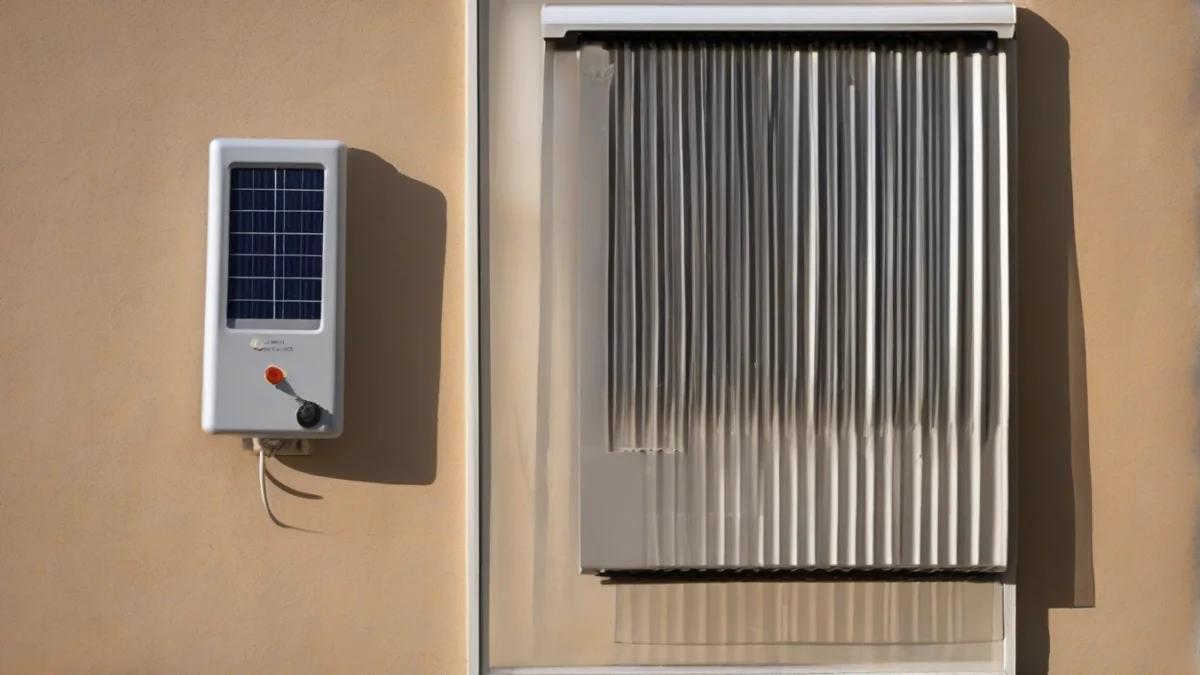
The main components are the solar collector, the PV panel, a fan for air circulation, and a thermostat to control operation. The collector absorbs sunlight and heats the air inside it. The PV panel converts sunlight into electricity to run the fan, which pushes warm air into the room. The thermostat switches the fan on and off to maintain comfortable temperature and prevent overheating.
| Component | Function |
|---|---|
| Solar collector | Captures sunlight and heats air |
| PV panel | Powers circulation fan using solar energy |
| Fan | Moves warm air indoors |
| Thermostat | Controls fan to maintain room temperature |
Heat output varies with sun exposure but models like the Arctica Solar 750 Series deliver about 750 watts (2,500 BTU/hr), enough to warm 100 to 125 square feet effectively on sunny days. Because the heater depends on sunlight, it only operates during daylight hours and won’t provide heat at night or on very cloudy days.
Thermostat control is essential. It stops the fan when the room reaches the set temperature, preventing wasted energy and overheating. This makes solar powered indoor space heaters safer and more efficient than a fan running constantly.
Compared to conventional electric heaters, solar air heaters use no grid electricity for heat, cutting running costs during sunny periods. However, they don’t replace a primary heat source but supplement it, especially when the sun is available.
Compare Solar Air Heaters to Conventional Electric Space Heaters
Solar powered indoor heaters save electricity by using sunlight, but their heat output depends on sun availability and daylight hours. Conventional electric space heaters run on grid power and provide heat anytime, regardless of weather or time.
Electric heaters often use resistive heating elements, converting electricity directly into heat. Infrared heaters warm objects and people directly, which feels more comfortable without drying the air. Solar air heaters warm the air, circulating it with a fan powered by a PV panel.
| Feature | Solar Air Heater | Electric Space Heater |
|---|---|---|
| Power source | Sunlight via PV panel | Electricity from grid |
| Operation hours | Daylight and sun only | Anytime |
| Heat delivery | Warm air circulated | Air or radiant heat |
| Noise level | Low fan noise | Low to moderate, some oscillation |
| Safety features | Thermostat control prevents overheating | Overheat protection, tip-over switch |
| Running cost | Free solar energy | Consumes electricity (kWh cost) |
Solar air heaters run quietly with just the fan motor; some electric heaters include oscillating fans that produce more noise. Both have safety features, but electric models often come with overheat protection and tip-over switches for added security indoors.
Running costs for electric heaters vary with wattage and electricity price. A 1,500 W electric heater running 8 hours at 17¢/kWh uses about 2 kWh daily, costing roughly 34¢. Solar air heaters produce heat without electricity cost but only when the sun shines.
Choosing between solar powered space heaters for indoor use and electric heaters depends on your climate, heating needs, and electricity costs. Solar heaters suit sunny climates and supplemental warmth, while electric heaters offer reliable heat anytime but at higher energy cost.
For more on how these solar powered indoor heaters work and their installation, see solar air heaters for homes.
How to Install Solar Air Heaters Indoors with Ducting and Grilles
Solar air heaters for homes typically mount on a south-facing wall or roof to catch maximum sunlight. Indoor versions include a small PV panel that powers a fan circulating warm air inside your room. These are true solar space heaters for homes indoor use, relying on daylight to generate heat.
 Winter Heating Bill CutterSee what every heater in your home really costs, heat the rooms you use, and cut the waste in 30 days.Cost-per-hour tables for every heaterThermostat schedule and draft-proofing planRunning-cost and bill calculator (Excel)
Managing Heat When the Sun Is Not Available: Battery and Storage Options
Solar air heaters provide heat only when sunlight is available. They do not generate heat during cloudy days or at night because their fan and heater rely on solar power.
Adding battery storage to power the fan when sunlight is absent is technically possible but uncommon. It increases system complexity and cost with limited payback since no actual heat is generated without sun exposure.
Maintaining Solar Air Heaters for Peak Performance and Safety
Regular maintenance keeps your solar air heater running efficiently and safely through the heating season.
Clean the collector surface periodically to remove dust and debris that block sunlight and reduce heat output. Clear any vents or fan grills to ensure good airflow.
Check the thermostat and fan operation before cold weather hits. The thermostat controls the fan to turn on only when the air is warm enough, preventing the fan from running unnecessarily.
This thermostat also prevents overheating by cutting power to the fan when room temperature rises, stopping hot air circulation once the space is comfortable.
Noise from these fans is usually low, but if you hear grinding or rattling, inspect the fan bearings for wear or lubrication needs.