How Propane Boilers Heat Your Home and What They Cost to Run
On this page 7 sections
- What A Propane Boiler Does And How It Works
- How To Choose The Right Size Propane Boiler
- Running Costs And Efficiency Compared To Other Heating
- Maintenance And Lifespan Of Propane Boilers
- Safety And Installation Considerations For Propane Boilers
- Integrating Propane Boilers With Renewable Energy Systems
- Questions People Ask
Say your 2,000-square-foot home in a cold climate needs a heating system. A propane boiler rated at 100,000 BTU, running at 90% efficiency, burns about 1.2 gallons of propane per hour at full output. That translates to roughly 112,000 BTUs delivered per hour, enough for moderate to large homes.
Understanding how propane boilers work and what they cost helps you decide if it fits your heating needs and budget, especially compared to electric heat pumps or oil boilers.
What A Propane Boiler Does And How It Works
A propane boiler heats water by burning propane gas, converting chemical energy into heat that warms your home through a hydronic system.
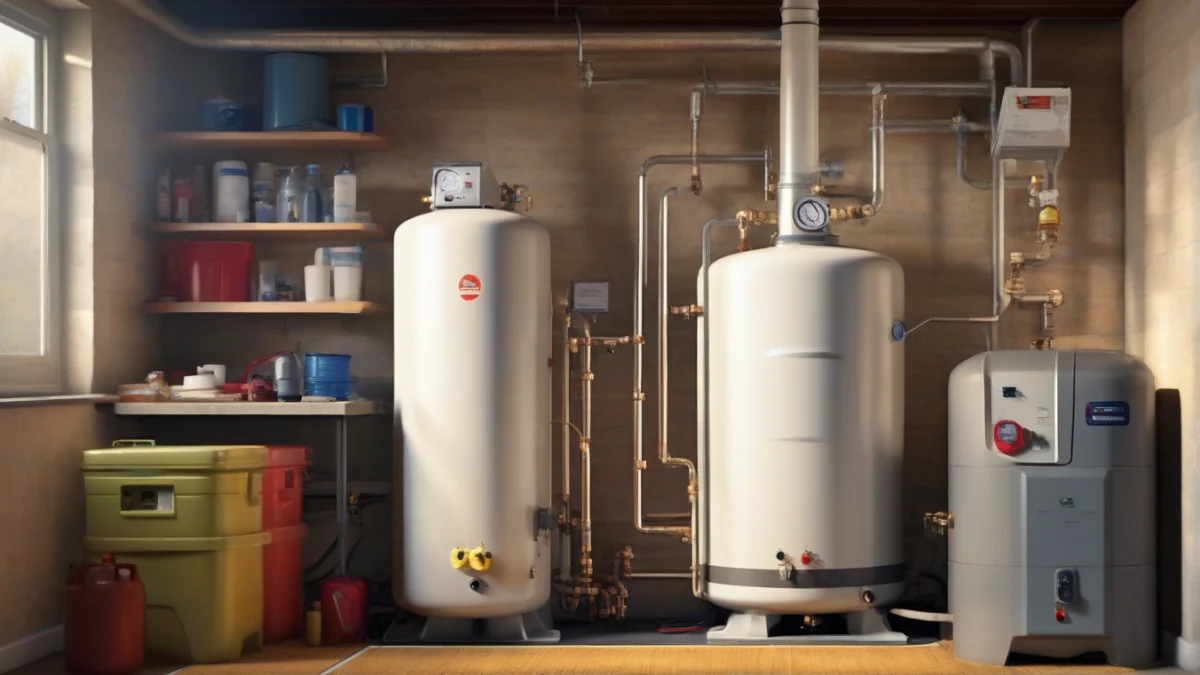
Inside the boiler, propane combusts in a sealed chamber, releasing about 93,000 BTUs per gallon burned. This combustion heats a metal heat exchanger through which cold water flows, transferring heat to the water without mixing combustion gases with it.
Efficiency varies widely from about 75% for older, standard models up to 98% for advanced condensing boilers. The latter capture extra heat by condensing water vapor from exhaust gases, minimizing wasted energy. This translates directly to lower fuel costs and better home comfort.
There are several propane boiler types designed for different needs. Standard boilers simply heat water; condensing boilers maximize thermal recovery for higher efficiency; combi boilers provide both home heating and domestic hot water on demand; and modulating boilers adjust their output continuously to match the home’s heat load, avoiding wasteful cycling.
Residential propane boilers are sized and installed to match the heating demands of typical homes, providing reliable, quiet, and clean heat from a fuel that stores easily and burns cleaner than oil or coal. Their compact design fits various home layouts, making propane fired boilers for home heating a versatile solution.

How To Choose The Right Size Propane Boiler

Choosing the right size propane boiler depends on your home’s square footage, insulation quality, and local climate. Boilers are rated by BTU output, which must match or slightly exceed your home’s heat loss to maintain comfort without wasting fuel.
Sizing a propane boiler depends on your home’s square footage, insulation quality, and climate. For example, a well-insulated 2,000 sq ft home in a moderate climate typically needs about 100,000 to 150,000 BTU output. Oversizing wastes fuel and money; undersizing leaves cold spots.
A rough guide is about 30 to 50 BTU per square foot for an average insulated home. For example, a 2,000-square-foot house might need between 60,000 and 100,000 BTUs. Colder climates push the need toward the higher end of that range.
For best results, have a heat loss calculation done by a professional or conduct a thorough energy audit including a blower door test and thermal imaging. These assess how much heat your home loses through walls, windows, and air leaks.
Say your 2,000 sq ft home is well insulated and located in a moderate climate. Using 35 BTU per sq ft, you’d need a boiler rated around 70,000 BTU. If the same home was poorly insulated or in a cold climate, sizing up to 90,000 or even 100,000 BTU might be necessary.
Medium homes typically use boilers rated between 60,000 and 100,000 BTU, while large homes can need 100,000 BTU or more. Choosing a modulating boiler helps match output to variable heat demand, improving comfort and reducing fuel bills.
Running Costs And Efficiency Compared To Other Heating
Propane boilers usually run at 75% to 98% efficiency. Condensing models reach the upper end by reclaiming heat from exhaust gases. Running costs depend on propane prices, which hover around $2.50 per gallon. Since a gallon of propane produces about 93,000 BTUs, a 100,000 BTU boiler running for one hour burns roughly 1.1 gallons, costing about $2.75 per hour.
A modulating propane boiler adjusts its output to match your home’s heat demand, avoiding the energy waste of on-off cycling. This can save 10% to 15% on fuel compared to standard models. Condensing boilers add another layer of efficiency by recycling heat from flue gases, pushing AFUE closer to 98%.
Comparing fuel costs, propane generally costs more per gallon than oil but burns cleaner and more efficiently. Electric boilers have 100% AFUE but the cost per BTU depends heavily on electricity prices. For example, a 1,500-watt electric boiler running 8 hours daily consumes 12 kWh; at 17 cents per kWh, that’s about $2.04 a day. Propane costs fluctuate regionally but often run lower per BTU in many US areas.
Cold-climate heat pumps can achieve a coefficient of performance (COP) around 3, meaning they deliver 3 units of heat for every unit of electric power used. This often makes them cheaper to run than propane boilers in places with moderate electricity costs. However, their efficiency drops as temperatures fall, while propane boilers maintain steady output regardless of outdoor temperature.
Environmental impact also matters. Propane burns cleaner than oil, producing less soot and fewer greenhouse gases per BTU. Still, it’s a fossil fuel, so emissions are higher than electric heat pumps running on renewables. Some of the best propane boilers on the market combine ENERGY STAR certification and modulating-condensing technology for top efficiency and lower emissions. For detailed model comparisons, see our guide to high-efficiency propane boilers residential.
 Winter Heating Bill CutterSee what every heater in your home really costs, heat the rooms you use, and cut the waste in 30 days.Cost-per-hour tables for every heaterThermostat schedule and draft-proofing planRunning-cost and bill calculator (Excel)
Maintenance And Lifespan Of Propane Boilers
Regular maintenance keeps a propane boiler running safely and efficiently for 15 to 30 years. Annual tasks include checking and cleaning burners, inspecting heat exchangers, and testing controls. Neglect can cause soot buildup, corrosion, or unsafe combustion, leading to higher fuel bills or even carbon monoxide risks.

Common failure points include the pilot light or ignition system, circulator pump, and heat exchanger. Dust buildup or corrosion in the burner chamber can reduce combustion efficiency and lead to costly repairs. Avoid these issues by scheduling yearly professional tune-ups and promptly addressing any unusual noises or performance drops.
Typical propane boiler lifespan ranges from 15 to 30 years, depending on usage, maintenance, and water quality. Hard water can accelerate internal scaling, shortening the boiler’s life. Investing in water treatment or filtration can delay this wear.
Maintenance costs generally run $150 to $300 annually, covering labor and minor part replacements. Major repairs like heat exchanger replacement can cost $1,000 or more. Reliable models with good reviews often have fewer breakdowns and lower overall repair bills. For reliability ratings and model performance, see our review section on propane boilers for home heating.
Safety And Installation Considerations For Propane Boilers
A propane boiler panel controls your system’s burner and safety features, which must be installed by a qualified technician. Propane heat system boilers rely on precise combustion and proper venting to prevent carbon monoxide buildup and ensure efficient heating.
Install propane boilers with proper venting to safely exhaust combustion gases outside. Follow local codes for clearances, gas line sizing, and combustion air supply. Only use indoor-rated models inside, and always have a working carbon monoxide alarm nearby. Professional installation reduces risks of leaks, poor combustion, or code violations.
Modern propane boilers come with flame sensors, automatic shutoff valves, and pressure relief devices. These safety features prevent gas leaks, overheating, and dangerous flame failure. Your installer will also check the propane tank and gas lines for secure connections.
Federal tax credits often apply to ENERGY STAR certified propane boilers with at least 95% AFUE. These credits reduce installation costs but require professional verification of the boiler’s efficiency rating and proper setup.
Integrating Propane Boilers With Renewable Energy Systems
Hybrid heating systems combine a propane boiler with a heat pump, using the heat pump for mild weather and the boiler as backup during cold spells. This setup cuts propane use without sacrificing comfort or reliability.
Solar thermal panels can preheat water for the boiler, lowering fuel consumption. Electric systems powered by solar panels can also run electric boilers or heat pumps, reducing propane dependence especially in sunny climates.
Cost-effectiveness of these hybrids depends on your climate and energy prices. In colder areas, propane boilers provide reliable heat when solar or heat pump output drops. Grid-tied solar setups allow you to draw electricity when needed and feed excess back to the grid.
Solar panels combined with electric boilers or heat pumps offer a clean alternative to propane, but require adequate panel capacity and battery storage to match heating demand. Many homeowners use propane boilers as a backup to maintain warmth during cloudy days or peak usage.