Product 1 is the best pick for most readers searching propane boilers for home heating because it gives you 150k BTU, 96% AFUE, and domestic hot water in one wall-mounted combi unit. If you only need space heat, Product 4 is the cleaner heat-only choice.
What to remember
Pick a combi boiler if you want both home heat and domestic hot water from one appliance.
Choose a heat-only boiler if your domestic hot water is already handled another way.
Match output to the home’s heat loss, not to square footage on a sales page.
96% AFUE matters most if the boiler runs many hours each winter.
Indoor propane boilers need proper venting, combustion air, and a working CO alarm.
The most common mistake is buying by BTU alone and skipping the load calculation. That can leave you with a boiler that short-cycles, wastes propane, and still misses the coldest rooms.
A second mistake is mixing up a boiler with a furnace or a water heater. A boiler heats water for baseboard, radiant floor, or a hydronic air handler; the wrong box in the basement is an expensive decoration.
Best Propane Boilers For Home Heating
#1Best For Most Homes
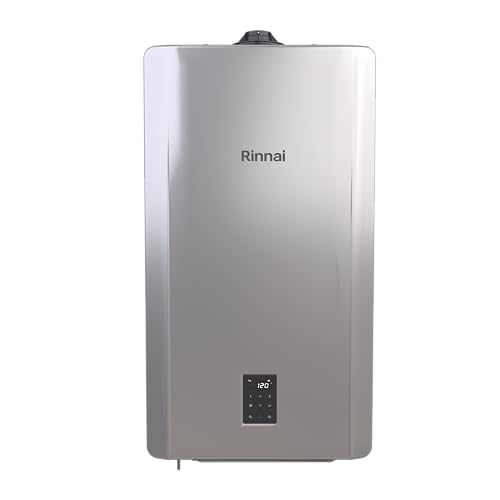
Rinnai 150k BTU Combi Boiler
Best for Homes needing space heat and domestic hot water in one unit
The 150k BTU combi unit provides home heating and domestic hot water, while its 96% AFUE rating makes it a strong fit for homeowners replacing separate heating and hot-water equipment. Smart Connect Wi-Fi and a front-panel display give you two ways to manage the system.
Heat output 150k BTUEfficiency 96% AFUEType Condensing combi heat boilerFuel Natural gas or propaneWarranty 15-year heat exchanger; 5-year parts and labor
Why it made the cut
Space heating and domestic hot water in one appliance
96% AFUE
Smart Connect Wi-Fi and front-panel display
Good to know
Combines heating and hot-water functions in one appliance
Skip it if Choose a heat-only boiler if you already have a separate water heater or don’t need domestic hot water from the boiler.
Best for Homes that need space heat without boiler-supplied domestic hot water
For a heat-only system, this 150k BTU solo boiler avoids adding a combi hot-water function you may not need. It offers up to 96% AFUE and four-zone capability, which suits homes that need separate heating control across multiple areas.
Heat output 150k BTUEfficiency Up to 96% AFUEType Condensing solo heat boilerFuel Natural gas or propaneWarranty 15-year heat exchanger; 5-year parts and labor
Why it made the cut
Heat-only solo-boiler design
Up to 96% AFUE
Four-zone capability
Good to know
Does not provide domestic hot water as a combi unit does
Skip it if Skip it if you want the boiler to supply both home heat and domestic hot water.
Best for Homes whose heating load calls for a 90k BTU combi boiler
The 90k BTU model pairs space heating with domestic hot water and carries a 96% AFUE rating. It has the same Smart Sense Gas Valve technology and Wi-Fi control as the other listed combi models, but its lower stated output makes a heat-loss calculation especially important before you choose it.
Heat output 90k BTUEfficiency 96% AFUEType Condensing combi heat boilerFuel Natural gas or propaneWarranty 15-year heat exchanger; 5-year parts and labor
Why it made the cut
Provides space heat and domestic hot water
96% AFUE
Smart Connect Wi-Fi and Smart Sense Gas Valve
Good to know
Lower stated heat output than the 150k and 199k BTU options
Skip it if Choose a higher-output model if a contractor’s heat-loss calculation shows 90k BTU won’t meet your home’s heating load.
Best for Homes whose calculated heating load calls for 199k BTU
This combi model has the highest listed output in this group at 199k BTU, along with 96% AFUE and domestic hot-water capability. Smart Sense Gas Valve technology and Smart Connect Wi-Fi are included; choose it based on a contractor’s load calculation, not the bigger number alone.
Heat output 199k BTUEfficiency 96% AFUEType Condensing combi heat boilerFuel Natural gas or propaneWarranty 15-year heat exchanger; 5-year parts and labor
Why it made the cut
199k BTU listed output
Provides space heat and domestic hot water
96% AFUE with Smart Connect Wi-Fi
Good to know
Its higher output may be more than a home’s calculated heating load requires
Skip it if Pick a lower-output boiler if the home’s heat-loss calculation doesn’t call for 199k BTU.
For propane boilers for home heating, the Rinnai IP150199C I-SERIES Plus is the best overall pick for most people who want one indoor appliance for space heat and domestic hot water. Among the best propane boilers for home heating, it combines 150,000 BTU input, 96% AFUE and combi operation; the best residential propane boilers still need to match your home’s heat loss and heating emitters, not just a number in the model name.
In short
Choose Product 1 if you want one unit for heat and hot water. Choose Product 4 if you want a heat-only hydronic boiler without combi hardware.
Myth
A higher BTU number means a better boiler for your home.
Fact
Boiler output has to suit the building’s heat loss, and the emitters—such as radiators or radiant-floor tubing—affect the water temperature the system needs. Picking by the number in the model name alone can leave you with a poor match.
That distinction also separates the two strongest choices here. Product 1, the Rinnai IP150199C, is a condensing combi boiler: it provides space heat and domestic hot water in one wall-mounted unit. Product 4, the Rinnai IP150S, is the heat-only option for a hydronic system that doesn’t need the boiler to make domestic hot water.
Your setup
Better fit
Why
You want space heat and hot water from one appliance
Product 1: IP150199C
Combi design serves both jobs
You already have a separate domestic hot-water system
Product 4: IP150S
Heat-only design avoids combi hardware
You’re comparing boiler sizes
Check heat loss and emitter type first
BTU class alone doesn’t establish fit
These propane-fired home heating boilers aren’t interchangeable just because they share a manufacturer.
A 90k Or 150k BTU Class Boiler?
Say one home has a smaller heating load and another has a larger one. A 90k-class boiler may be the more suitable size for the smaller load; a 150k-class boiler may suit the larger load if its calculated heat loss supports that choice. Without each home’s heat-loss figure and emitter details, neither size can be called right by the label alone.
Smaller loadCompare with 90k BTU class
Larger loadCompare with 150k BTU class
Deciding evidenceHeat loss and emitter type
Wall-mounted condensing boilers are common in propane hydronic systems. A licensed professional should handle gas piping, venting and combustion setup; those details aren’t a sensible place to improvise. If you’re still comparing fuels or boiler types, see our guide to best boilers for home heating.
From HeaterGuides · our own guidePage 4 sets boilers beside every other system, side by side.Heating System Upgrade PlannerChoose between a heat pump, a furnace, a boiler or a hybrid with your own numbers, and hire the right installer.Every system compared side by side25 questions for contractors, red flagsRunning-cost, payback and quote calculator (Excel)$14.99$9.99Get it for $9.99See what's inside and watch the 2-minute video →16-page printable PDF + Excel calculator · instant download · 30-day refund
How To Choose The Right Boiler
Choose the boiler by heat demand, water temperature and hot-water setup—not by the biggest BTU number on the page. A high-efficiency propane boiler usually means a condensing propane boiler, such as the Rinnai I-SERIES Plus models, which can recover more heat from exhaust when the return water is cool enough.
For propane boilers for home heating, output is the first comparison: the lineup ranges from 90,000 BTU to 199,000 BTU. A 90k model may suit a smaller or better-insulated home, while 150k and 199k models serve larger loads or heavier domestic hot-water demand. The correct size comes from a heat-loss calculation, not floor area alone.
Model
Output
Boiler type
Best fit
Rinnai IP090199C I-SERIES Plus
90,000 BTU
Combi
Smaller homes needing space heat and hot water
Rinnai IP150199C I-SERIES Plus
150,000 BTU
Combi
Homes needing space heat and domestic hot water
Rinnai IP199199C I-SERIES Plus
199,000 BTU
Combi
Higher heat or hot-water demand
Rinnai IP150S I-SERIES Plus
150,000 BTU
Solo heat
Homes with a separate water heater
Use output as a sizing limit, not a quality ranking.
AFUE tells you how much of the propane becomes useful heat over a heating season; the Rinnai IP150199C is rated at 96% AFUE. A propane hot water boiler, also called a propane hydronic boiler, sends heated water through baseboards, radiators or tubing instead of blowing heated air. Condensing operation works best when that water returns relatively cool.
Baseboard heat and radiant floor heat need low-water-temperature compatibility and proper zoning more than raw BTU. Radiant floors especially favor steady, cooler water, mixing controls and a boiler that can modulate without short-cycling. Ask the installer how the boiler will be reset and zoned; a large output number won’t fix poorly planned loops.
Combi models make sense when one wall-mounted appliance must provide space heat and domestic hot water. Solo heat models can be simpler when the home already has a separate water heater, because the boiler doesn’t need to produce household hot water on demand.
Myth
Higher BTU means better heat.
Fact
Higher BTU means more maximum output, not better comfort or lower fuel use. An oversized boiler can cycle more often, while a correctly sized boiler runs longer and matches the home’s heat loss. Choose the smallest model that covers the calculated load and hot-water demand.
Smart Connect Wi-Fi and Smart Sense controls on the combi models are useful for monitoring and adjustment, but they aren’t a reason to oversize. Product 4 adds four-zone capability, which can help separate bedrooms, living areas or radiant-floor circuits when the system is designed for it.
Useful for heat-only systems
Rinnai IP150S I-SERIES Plus 150k BTU Condensing Solo Heat Boiler
Choose the Rinnai IP150S I-SERIES Plus when you already have a separate water heater and want 150,000 BTU of space-heating output with four-zone capability.
Size a propane boiler to your home’s calculated heat loss, not its floor area alone; insulation, air leaks, climate, water temperature and domestic hot-water demand all change the answer. A propane boiler system heats water for radiators, baseboards or radiant-floor loops, while a furnace heats air and sends it through ducts. “Propane hot water furnace” is often used loosely, but a boiler and a furnace distribute heat differently.
The product’s BTU rating tells you its capacity, not what your home needs on the coldest design day. A 5,000 sq ft house is no BTU shortcut: a tight, well-insulated house can need less heat than a smaller drafty one in a colder climate. If the boiler also makes domestic hot water, peak shower and fixture demand can affect the model choice; a combi unit handles space heat and household hot water, while a heat-only boiler does not.
What 150,000 BTU Means
As a rough fuel-use illustration, assume a 150,000 BTU-per-hour input boiler runs at full input for four equivalent hours. At 96% AFUE, that’s about 576,000 BTU of useful heat. The fuel needed is about 6.56 gallons: 150,000 × 4 ÷ 91,500. Multiply 6.56 by your local propane price per gallon for an estimated fuel cost. AFUE is a seasonal rating, so this is a planning example, not a bill prediction.
Full-input runtime4 hours
Estimated propane use6.56 gallons
Cost calculation6.56 × your local price per gallon
The Rinnai IP150199C is listed at 150,000 BTU and 96% AFUE, but its nameplate capacity doesn’t mean it burns at full input all day. Actual use depends on the home’s load, boiler controls and run time. For a reliable monthly estimate, use your expected operating hours and local propane price; the delivered cost can vary substantially by location.
Bigger houses, draftier homes and radiant systems with long run times may justify higher output, but oversizing has a penalty: the boiler can satisfy a small heat demand quickly, shut off, then restart soon after. That short cycling wastes operating time and can increase wear. Wall-mounted propane heating systems can save floor space, but the mounting style says nothing by itself about the heat load or whether the boiler can meet it.
A propane combi boiler for a 5000 sq ft house might work if its space-heating capacity matches the calculated load and its hot-water output suits the household; square footage alone can’t confirm either. Ask a qualified installer for a heat-loss calculation and a check of your emitters, insulation and local winter design temperature before choosing among the 90,000, 150,000 and 199,000 BTU models.
Safety And Installation
A propane boiler is a fuel-fired boiler, not a propane boiler furnace in the usual forced-air sense: it heats water, while a furnace heats air. A propane-fired boiler, LP gas boiler for home heating and propane gas boiler all need the same basics: the manufacturer’s venting system, adequate combustion air and a working carbon monoxide alarm.
The propane boiler panel is the unit’s control panel; it doesn’t replace the safety devices or installation details specified in the manual. Have a licensed installer handle the gas connection, venting, condensate drain and electrical work—in most places, these aren’t do-it-yourself jobs. Check local code for permits and inspections before work starts.
Never improvise the vent
A blocked, damaged or incorrectly assembled flue can send carbon monoxide into the home. Use only the manufacturer’s approved venting parts and configuration; don’t adapt a different appliance’s flue or guess at clearances. Keep a working CO alarm in the home, and follow the boiler manual’s instructions for its location and maintenance.
Different appliance, different rules
Vent-free gas heaters aren’t boilers, and they’re restricted or prohibited in some states and cities. An outdoor or patio heater isn’t suitable for indoor use. Don’t bring one inside to heat a room, garage or workshop.
Treat AFUE and warranty registration as buying checks, not installation shortcuts. AFUE describes how efficiently a boiler converts fuel to heat under a test method; it doesn’t confirm that the boiler is sized, vented or installed correctly. Register the warranty as directed after installation, and keep the paperwork and commissioning details.
Before installation
Confirm the installer is licensed for the work required in your area.
Ask who will obtain permits and arrange any required inspection.
Check the manual’s venting, combustion-air and condensate requirements.
Confirm a working CO alarm is installed and maintained.
What To Do Next
The best propane boilers residential reviews can help you compare models, but a residential propane boiler should be chosen only after you know the home’s heat demand and hot-water setup. Use this order before buying a propane boiler for home heating.
1
Decide on heat-only or combi
Choose a combi if the boiler should also make domestic hot water; choose a heat-only model if hot water is handled separately.
2
Get the heat-loss figure
Ask for the home’s calculated heat loss, then note the existing radiators or other emitters and how the heating zones are laid out. The boiler has to work with the system you have.
3
Match the model to the job
Compare Products 1, 2 and 3 by required output if you want a combi. Product 4 is the heat-only option. Choose among them based on the load and whether domestic hot water belongs in the same appliance—not on the largest number alone.
4
Check the installation requirements
Before purchase, have the installer confirm the venting route, gas supply, condensate handling and local permit requirements. A model that can’t be vented or supplied properly isn’t a bargain.
5
Recheck recent changes
If you’ve remodeled, added insulation or changed the zones, ask for a Manual J or equivalent load check. Older sizing assumptions may no longer fit the house.
Have these ready
The heat-loss calculation and recent renovation details.
The existing emitter type and zone layout.
Whether hot water is separate or needs to come from the boiler.
Installer confirmation of venting, gas supply, condensate and permits.
Questions People Ask
What is the best propane boiler for home heating?
For most homes that need both space heat and domestic hot water, the Rinnai IP150199C I-SERIES Plus is the best fit: it combines 150,000 BTU input, 96% AFUE and combi operation in a wall-mounted unit. Choose a heat-only model instead if your home already has a separate water heater.
Do they make a propane boiler that heats your hot water?
Yes. A propane combi boiler provides space heating and domestic hot water from one appliance, while a heat-only boiler needs a separate water heater or indirect tank. Check the unit’s domestic hot-water flow rating against how many showers and fixtures you expect to use at once.
What size propane boiler do I need for a 5,000 sq ft house?
Floor area alone can’t determine the right boiler size; a well-insulated 5,000 sq ft home may need a different output from a drafty home of the same size. Ask a qualified heating contractor for a room-by-room heat-loss calculation and verify that the boiler can also meet your hot-water demand if it’s a combi.
Can a propane boiler replace an oil boiler for home heating?
Often, yes, but the replacement must match the home’s heat loss and the existing distribution system’s water-temperature needs. A contractor should also confirm propane supply capacity, venting, condensate drainage for a condensing model, and any required changes to piping or controls.
Is a propane condensing boiler worth it?
It can be, especially when your system can return cooler water to the boiler, which helps it recover more heat from exhaust gases. Compare the installed cost and rated efficiency with a non-condensing option, and have a contractor check that the system can run at temperatures that support condensing operation.
What is the difference between a propane boiler and a propane furnace?
A propane boiler heats water that circulates through radiators, baseboards or radiant tubing; a propane furnace heats air and sends it through ducts. The right replacement depends on your home’s existing distribution system, since switching between water and air heat requires substantial new equipment.
Before you go · a welcome giftGet the Heating System Upgrade Planner for $4.99Choose between a heat pump, a furnace, a boiler or a hybrid with your own numbers, and hire the right installer. Normally $14.99; your welcome price saves $10.00. We'll email your link right now.or buy it now for $9.99 without the gift →One email with your link now. We never share your address.

 Heating System Upgrade PlannerChoose between a heat pump, a furnace, a boiler or a hybrid with your own numbers, and hire the right installer.Every system compared side by side25 questions for contractors, red flagsRunning-cost, payback and quote calculator (Excel)