

You are in an uninsulated garage on a 30-degree morning. The electric space heater you dragged out blasts hot air but the room barely warms. The circuit breaker trips after twenty minutes. You know there is a better way.
This article walks through the real differences in energy efficiency between propane and electric heaters. Not marketing copy, but actual BTU-to-heat conversion, cost per million BTUs, and the conditions where each type makes sense. You will leave knowing which heater saves you money and which one wastes it.
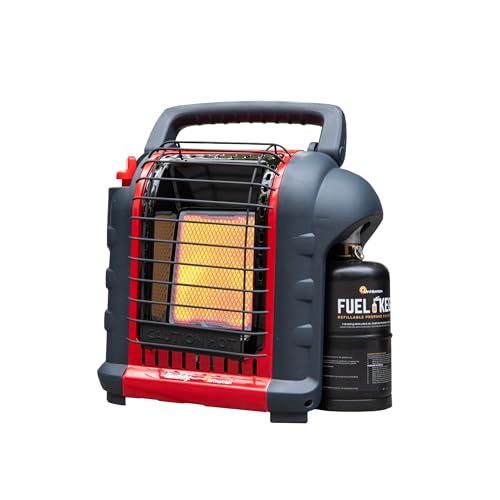
Mr. Heater
Mr. Heater 9,000 BTU Portable Buddy Radiant…
- Emits 4,000 or 9,000 BTU/hr radiant heat
- Designed and approved for indoor and outdoor use
- Heats up to approximately 225 square feet
The Mr. Heater 9,000 BTU Portable Buddy Radiant Propane Heater is a great example of what a well-designed propane unit can do. It puts out 4,000 or 9,000 BTU/hr, runs indoors or outdoors, heats roughly 225 square feet, and includes a low-oxygen shutoff. A unit like this shows why propane dominates in situations electric heaters struggle with.
The Real Measure of Heating Efficiency
Efficiency numbers get thrown around a lot. Electric resistance heaters are nearly 100% efficient at point of use. Every watt of electricity turns into heat. Sounds unbeatable, right?
But that 100% number ignores where the electricity came from. Most US electricity comes from natural gas or coal plants operating at 30-45% efficiency. Transmission losses add another 5-10%. The true well-to-heat efficiency of electric resistance heat sits around 30-40%.
Propane heaters burn fuel directly where you need heat. A modern radiant propane unit like the Portable Buddy converts 70-80% of the fuel’s energy into usable heat. Forced-air propane heaters hit 80-90%. The combustion process loses some energy through exhaust, but the overall system efficiency beats resistance electric when you account for power plant losses.
One more angle: propane delivers heat faster. Electric heaters take time to warm up the heating element. Propane produces heat within seconds of ignition. In a cold room, that difference matters.
Cost Per BTU: Why Propane Often Wins
Numbers tell the story. One gallon of propane contains about 91,500 BTUs. At $2.50 per gallon (national average fluctuates), you pay about $27 per million BTUs from propane.
One kilowatt-hour of electricity contains 3,412 BTUs. At $0.12 per kWh, you pay about $35 per million BTUs from electric resistance heat. That is roughly 30% more expensive than propane.
Regional differences matter. In the Northeast where electricity is $0.20/kWh, the cost gap grows even wider. In the Pacific Northwest with cheap hydro electricity, electric might be closer or cheaper. But for most of the US, propane wins on cost per heat unit.
There is a catch. Electric heat pumps can achieve 300% efficiency (COP of 3), dropping cost to around $12 per million BTUs. But you cannot get a portable heat pump small enough to roll into a garage. For portable heating, resistance electric is the only option.
So when people ask which heater is cheaper to run, the answer is almost always propane for portable units. You can verify current propane and electric rates in your area using the Energy Information Administration data.
When Electric Actually Beats Propane
Propane is not always the right choice. Electric heaters shine in specific situations.
First, ventilation. Propane burns and produces carbon monoxide and moisture. Even indoor-rated units need some airflow. Small, sealed rooms with no windows are dangerous for propane. Electric produces zero combustion byproducts.
Second, convenience. Propane tanks are heavy. Refills require a trip to the exchange station. Electric heaters plug in and run indefinitely as long as power is on. If you heat the same small room daily, electric might be worth the higher operating cost for the convenience.
Third, safety. Propane is a flammable gas. Leaks happen. Electric heaters have fewer explosion or CO risks. Modern propane units include low-oxygen sensors, but you still need basic common sense.
Fourth, noise. Radiant propane heaters are silent (no fan). But forced-air propane units produce fan noise. Electric heaters vary from silent oil-filled radiators to noisy fan-forced units.
Electric also wins for very small spaces. A 500-watt electric heater (1,700 BTU) is enough for a tiny bathroom or office. You will not find a propane heater that small.
| Factor | Propane Heater | Electric Heater |
|---|---|---|
| Point-of-use efficiency | 70-90% (combustion) | 100% (resistance) |
| Well-to-heat efficiency | ~78% (no grid loss) | ~35% (includes power plant losses) |
| Cost per million BTU (US avg) | $27-40 | $35-55 (resistance) |
| Indoor safety | Needs ventilation, CO risk | No combustion byproducts |
| Runs during power outage | Yes (if no electric fan) | No |
| Portable fuel storage | Requires propane tank | No fuel storage needed |
| Heat delivery speed | Immediate radiant heat | Slow warm-up (element) |
| Typical application | Garages, workshops, large rooms | Small rooms, offices, bedrooms |
Key Considerations for Choosing Between Propane and Electric
Fuel availability matters. If you live in an apartment with no propane storage, electric is your only option. If you have a detached garage and can keep a 20-pound tank, propane becomes practical.
Portability is not just about carrying the heater. Propane tanks add weight. A full 20-pound tank weighs about 37 pounds. The Mr. Heater Portable Buddy runs on a 1-pound cylinder (light) or can connect to a larger tank with a hose. That flexibility is useful.
For comparing propane vs electric heaters, look at how many BTUs you actually need. A 9,000 BTU propane heater handles a 225 sq ft space. An electric heater would need about 2,600 watts to match that output. Most 15-amp circuits can only handle 1,500 watts continuous. That means electric heaters cannot match propane’s output in typical household outlets.
Also consider the electric heater efficiency benefits in well-insulated spaces. If your room is tight and small, electric wins for convenience and safety. But for large, drafty garages propane is the only real option.
The Mr. Heater propane space heater review covers more details on this specific brand, but the principles apply across most propane models.
Frequently Asked Questions
Can a propane heater be used indoors?
Only if the unit is certified for indoor use. The Mr. Heater Portable Buddy is one such model. It includes a low-oxygen safety system that shuts off the heater if oxygen levels drop too low. Even with that, you need some ventilation. Crack a window or door an inch or two. Never use a non-indoor-rated propane heater inside a home, tent, or vehicle.
How efficient is a propane heater compared to an electric heater?
At point of use, electric resistance is 100% and propane is 70-90%. But when you factor in electricity generation and transmission losses, propane’s overall well-to-heat efficiency is about twice as high. That means propane uses less primary fuel to deliver the same heat. Plus, propane heat is often cheaper per BTU, as discussed above.
Is propane cheaper than electricity for heating?
In most areas, yes. Propane costs roughly $27-40 per million BTUs. Electric resistance heat costs about $35-55 per million BTUs. Regional rates vary. If you have a heat pump, that changes the calculation, but heat pumps are not portable. For portable heaters, propane usually wins on cost.
Do propane heaters need electricity to run?
Some do, some don’t. Radiant propane heaters like the Mr. Heater Portable Buddy use no electricity. They have a piezoelectric igniter and run purely on propane pressure. Forced-air propane heaters have a fan that plugs into a wall or runs on batteries. Check the model specs before buying.
What size propane heater do I need?
A common rule is 20-30 BTUs per square foot for a well-insulated space. For a 225 sq ft garage, 9,000 BTU is enough. For a drafty 500 sq ft shop, you will want 15,000-20,000 BTUs. Oversizing wastes fuel and makes the room uncomfortably hot. Undersizing leaves you cold.
What to Take Away
- Propane heaters deliver more heat output from a standard wall outlet than electric heaters ever can. That alone makes them the better choice for large spaces.
- The true energy efficiency of propane is higher than electric resistance when you include power plant losses. The numbers do not lie.
- Cost per BTU is lower for propane in most US regions. Check your local rates, but expect savings.
- Indoor safety requires proper ventilation, even with certified units. Do not skip this.
- Electric heaters make sense for small rooms, unventilated spaces, and situations where fuel storage is a problem.
- The Mr. Heater Portable Buddy is a solid, safe, portable propane heater that proves the technology works. Check the current price on Amazon before buying.
- Match heater size to room size. Too big wastes fuel, too small wastes your time.

I am a mechanical engineer and love doing research on different home and outdoor heating options. When I am not working, I love spending time with my family and friends. I also enjoy blogging about my findings and helping others to find the best heating options for their needs.
Related guides

How to Heat Large Spaces Efficiently With the Right BTU Sizing
Learn practical methods to heat large spaces efficiently, including BTU sizing, technology comparisons, and cost-saving tips for winter…

What Heating Doesn’t Need Electricity? 4 Types That Can Run
Gas, wood, and some oil systems can heat without electricity, but the safe choice depends on venting, fuel,…
Instant Electric Heating for Faucets and Showers Costs About 12 Cents an Hour
Instant electric heaters provide hot water in seconds for faucets and showers. Understand how they work, their costs,…
