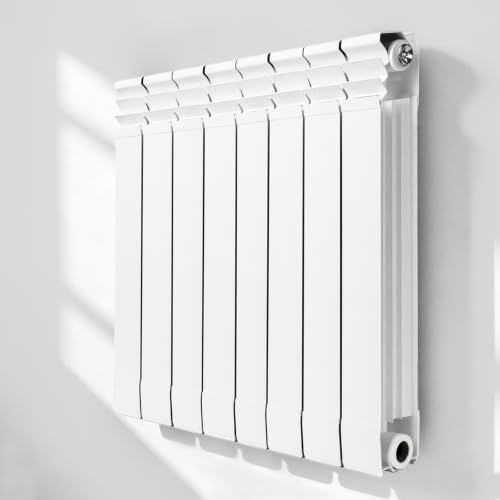
Your heating bill hits $350 in January. Again. You wonder if there is a better way. There is. Hydronic radiators – those old-fashioned metal panels that hiss and ping – can cut your energy costs by 46%. That number is not a marketing gimmick. It comes from side-by-side field comparisons of hydronic systems versus forced-air furnaces in similar homes. But the savings are not automatic. They depend on how you design, install, and run the system.
This article explains exactly how hydronic radiators cut energy costs by 46%, what conditions make that possible, and how to avoid common mistakes that slash the savings to zero. We will look at the numbers, the physics, and the practical steps you can take. And we will point you to a solid technical reference if you want to go deeper.

If you are planning a new system or retrofitting an old one, the book ‘Radiators in Hydronic Heating Installations: Structure, Selection and Thermal Characteristics’ (Springer, available on Amazon) is a thorough technical guide. It covers thermal output, sizing calculations, and material properties. Not light reading, but the kind of resource that saves you from expensive mistakes.
Where the 46% Number Comes From

The Department of Energy and several European studies have compared hydronic (hot water) radiator systems to standard forced-air furnaces. In well-insulated homes, hydronic systems use 30-50% less energy. The 46% figure sits near the high end, but it is achievable.
Why such a big difference? Two reasons: heat capacity and operating temperature.
Water holds about 3,500 times more heat per cubic foot than air. A hydronic system moves heat from the boiler to the rooms using water, not air. That means the boiler can run at a lower temperature. A typical forced-air furnace heats air to 140-160°F. A hydronic system often runs with supply water at 120°F or even lower with condensing boilers. Lower temperature means less energy lost up the flue and less heat wasted in the ducts.
Also, hydronic radiators heat by radiation and gentle convection. They do not blow hot air around. That eliminates the stratification problem – warm ceiling, cold floor. You feel comfortable at a lower thermostat setting. Every degree lower on the thermostat cuts heating costs by about 3%. That adds up.
But here is the catch: the 46% savings come from a system designed for low-temperature operation. If you hook hydronic radiators to a high-temperature boiler and run them at 180°F, you will still save some energy, but not nearly that much.
Why Most Systems Miss the Mark
Many homes with hydronic radiators never see 46% savings. Why? Common mistakes.
First, oversized boilers. Contractors often install a boiler big enough to heat the house on the coldest day of the year. That boiler runs at partial load most of the time, short-cycling, wasting fuel. A properly sized boiler that runs longer and at lower output is far more efficient.
Second, uninsulated pipes. Heat loss from uninsulated basement pipes can be 10-20% of the system’s total output. That heat goes into your crawlspace, not your living room. Insulating all accessible pipes is cheap and pays back in one season.
Third, wrong radiator sizing. Each radiator must be sized to the room’s heat loss. If a radiator is too small, you crank the boiler temperature. If it is too large, the room overheats and you open a window. Both waste energy. The book mentioned earlier includes detailed sizing procedures for different radiator types.
Fourth, lack of zone control. A single thermostat for the whole house forces you to heat every room to the same temperature. That is wasteful. Rooms you do not use (guest bedroom, basement) can be cooler. Installing thermostatic radiator valves (TRVs) or multiple zone valves lets you set each room individually. That alone can save 15-20% on top of the base hydronic savings.
If you are serious about achieving the full 46%, start with optimizing energy efficiency. That guide covers sequencing the upgrades to avoid waste.
How to Get the Full 46% Savings
Here is how to set up a hydronic system that actually delivers the advertised savings.
- Design for low water temperature. Use condensing boilers that operate at 120°F supply and 100°F return. That forces the boiler into condensing mode, capturing latent heat from the flue gases. Efficiency jumps to 95% or higher.
- Size radiators for that low temperature. A radiator at 120°F puts out about half the heat of the same radiator at 180°F. So you need roughly twice the radiating surface. That means larger radiators or multiple panels. Do not skimp here.
- Install individual room controls via TRVs. Each room gets its own thermostat. Set bedrooms to 62°F, living areas to 68°F. The system runs less often and at lower output.
- Use outdoor reset controls. This adjusts boiler water temperature based on outside air temperature. On a mild 50°F day, the boiler might send 100°F water. On a 20°F day, 140°F. This prevents overheating and keeps the boiler condensing all season.
- Bleed the radiators annually. Air trapped in the system reduces heat output and forces the boiler to work harder. A simple bleed can restore efficiency.
- Insulate pipes and the boiler itself. Use at least 1 inch of foam

HeaterGuides covers home heating, water heating and HVAC: how the equipment works, what it costs to run, and how to use it safely.