The DREO Space Heater with Hyperamics Technology offers fast, quiet, and energy-efficient heating with a precise thermostat and safety features, making it the best pick for most indoor heating needs.
Comparison of Cozy and Efficient Indoor Electric Heaters
Say your living room is 15 by 20 feet and you want to heat it efficiently without spiking your electric bill. A 1500W electric heater with energy-saving modes and a thermostat can keep you comfortable while cutting costs.
These heaters spread warmth evenly, run quietly, and include safety features that protect your home and family. We focus on models that balance cozy heat with energy efficiency and reliable controls.
Best Cozy and Efficient Electric Heaters for Indoor Use
#1Top Efficiency
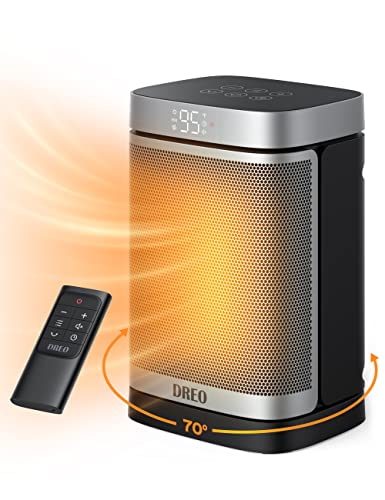
DREO Space Heater with Hyperamics Tech
Best for Most indoor rooms needing fast, quiet, energy-saving heat
The DREO Space Heater uses Hyperamics Technology for quick heat delivery and a precise thermostat adjustable from 41 to 95°F in 1-degree increments. Its ECO mode reduces energy use automatically while safety features include tip-over and overheat protection. It’s quiet enough for bedrooms and offices, making it a solid all-rounder for efficient indoor heating.
Heat Output 1500WSafety Features Tip-over, overheat protection, flame-retardant materialsNoise Level 37.5 dBOscillation 70°Thermostat 41-95°F adjustable in 1°F increments
Why it made the cut
Fast heat with 1500W PTC ceramic element
70° wide-angle oscillation covers large areas
Quiet operation at 37.5 dB for undisturbed sleep or work
Comprehensive safety with Shield360° protection
Good to know
Remote control and timer functions can be complex for some users
Oscillation may not suit very small rooms
Skip it if Skip if you want a heater quieter than 35 dB or with simpler controls.
Best for Bedrooms or offices where low noise is a priority
This DREO model combines a 1500W Hyperamics heating system with a new heat funnel for faster warmth and extends heat reach up to 200% farther than traditional heaters. It’s extremely quiet at 34 dB thanks to a brushless DC motor and winglet fan design. Safety features include an advanced tilt sensor and flame-retardant materials, ideal for quiet spaces.
Heat Output 1500WSafety Features Tilt-detection sensor, overheat protection, flame-retardantNoise Level 34 dBOscillation —Thermostat 41-95°F adjustable in 1°F increments
Why it made the cut
Very quiet at 34 dB, suitable for light sleepers
Accurate thermostat with 1°F increments from 41 to 95°F
Multiple heating modes including ECO and fan only
Portable design with handle for easy movement
Good to know
Remote control can be easily misplaced
Less oscillation coverage than some models
Skip it if Skip if you need wider heat coverage or simpler controls.
This heater heats up quickly with 1500W PTC ceramic and uses a trackball system for smooth 70° oscillation, boosting coverage by 20%. It operates quietly at 34 dB using oblique airflow technology and saves energy with smart ECO mode that adjusts power between 1000W and 1500W. Safety features include smart tip-over and overheat protection plus flame-retardant materials.
Heat Output 1500WSafety Features Tip-over, overheat protection, flame-retardant materialsNoise Level 34 dBOscillation 70°Power Levels 1000W and 1500W
Why it made the cut
Smooth oscillation with a long-lasting trackball system
Energy-efficient ECO mode with adjustable power levels
Quiet at 34 dB, suitable for bedrooms and offices
Multiple safety features including automatic power off
Good to know
No remote control included
Oscillation may be too wide for small rooms
Skip it if Skip if you want remote control or smaller oscillation range.
Best for Users needing multiple power levels and smart thermostat
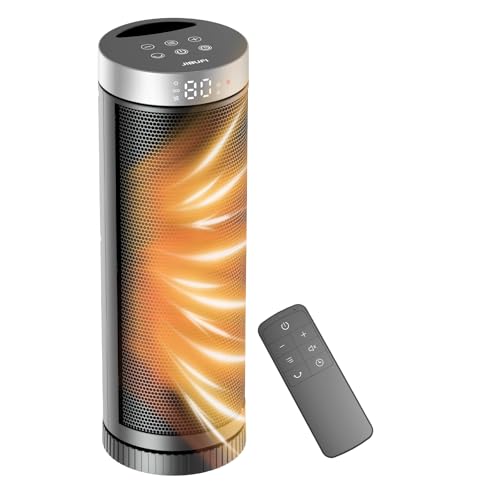
JIBUFI offers three power settings (700W, 1000W, 1500W) with a smart thermostat that adjusts heat output based on room temperature. It heats quickly with PTC ceramic elements and includes a 12-hour timer with remote control. Safety features cover tip-over and overheat protection, suitable for households with children or pets.
Best for Small rooms or desks needing portable warmth
The AUBKN heater offers three heating settings with a built-in thermostat and a 12-hour timer controlled via touch keys or remote. It prioritizes safety with overheat and tip-over protection and fits well in small spaces thanks to its compact design. It’s ETL-certified for peace of mind, making it a convenient option for personal use.
Heat Output 700W, 1000W, 1500WSafety Features Overheat, tip-over protectionTimer 12 hoursControls Remote and touch key
Why it made the cut
Compact and portable for easy room-to-room use
Three heating levels including energy-saving modes
Remote and touch key controls with digital display
Safety features include overheat and tip-over protection
Good to know
No oscillation to spread heat widely
Noise level not specified
Skip it if Skip if you want oscillation or very quiet operation.
Choose a Heater With Precise Thermostat and Energy Saving Modes
A heater with a precise thermostat and energy-saving modes uses less power by avoiding overheating and running only as long as needed.
Thermostats that adjust in small increments, like 1°F steps, prevent your heater from cycling on and off too often or running longer than necessary. That tight control keeps your room comfortable without wasting electricity.
Energy-saving or ECO modes lower power output or cycle the heater on and off to stretch its run time while maintaining warmth. This reduces overall consumption compared to running at full blast.
Ceramic heaters with positive temperature coefficient (PTC) elements heat up faster and maintain temperature efficiently. The PTC material self-regulates, drawing less current once it reaches set temperature, improving energy efficiency over metal coil heaters.
Oscillation features help spread heat evenly through the room instead of concentrating it in one spot. Even heat distribution means you avoid turning the heater higher than necessary, saving power.
Oil-filled radiators are among the most energy-efficient electric heaters because the oil retains heat well and releases it gradually, reducing cycling. They keep warming the room even after the element switches off.
Worked example
Say you set a ceramic heater with a 1°F thermostat increment and oscillation to heat a 150 sq ft room. The heater runs just enough to keep the room steady at 68°F, using less energy than a basic heater on full power.
Room150 sq ft
Thermostat increment1°F
ResultLess energy use through precise control
Why Ceramic Heaters Save Energy
PTC ceramic elements reduce current draw as they heat, which means they don’t overconsume electricity once the room reaches the set temperature.
Size Your Heater for the Room and Usage Patterns
You need about 10 watts of heating power per square foot of well-insulated space to stay cozy indoors.
Insulation and room layout affect how much power you actually need. A drafty, uninsulated room can need 20 watts per square foot or more, while a small, sunny room might get by with less.
Most portable plug-in heaters top out at 1,500 watts because that matches the maximum load for a standard 120 V, 15 amp circuit without tripping breakers. That’s enough for rooms up to about 150 sq ft under average conditions.
Timers and multiple power settings help save energy by letting you run the heater only when you’re in the room or need a quick warm-up. You can dial down power to avoid overheating smaller spaces.
Worked example
Imagine a 200 sq ft living room with average insulation. You’d need roughly 2,000 watts to heat it efficiently. Using a 1,500 watt heater there means it runs near max, so adding a timer to limit hours lowers your electric bill.
Heater Sizing Checklist
Measure your room’s square footage
Check insulation quality and windows
Choose a heater wattage close to 10 watts per sq ft
Use timers or adjustable settings for better control
Non-electric heaters for indoors are less common and usually fuel-based, like propane or kerosene, which need ventilation and CO alarms. Electric heaters remain the safest and most cost-efficient choice for most homes.
For the most cost-efficient home heating, match your heater size to the space and use features like timers and thermostats to avoid wasting energy on empty rooms.
If you want to explore heater options that fit your room size and usage habits, check the best electric heaters for home heating here.
Understand Safety Features and Certification for Peace of Mind
Safe, efficient electric space heaters rely on built-in protections like tip-over and overheat switches to prevent fires and damage. These shut the unit off instantly if it falls or gets too hot.
Oil-filled radiators are especially energy efficient because their heated oil retains warmth long after the element powers down, reducing cycling and risk of overheating.
Avoid Extension Cords
Never plug a space heater into an extension cord or power strip. These can overload and cause electrical fires. Always use a dedicated wall outlet rated for at least 15 amps.
Certification from ETL or UL means the heater meets strict safety standards for electrical and fire hazards. Look for these marks on every electric heater you consider.
Manufacturers use flame-retardant materials on housing and internal parts to reduce fire risk if something goes wrong. This is a must for indoor heaters where close contact with furniture or curtains is common.
Safety Checks Before Use
Confirm the heater has tip-over protection and an overheat sensor
Verify ETL or UL listing on the product label
Use only a dedicated, grounded wall outlet
Keep at least 3 feet clearance around the heater
Avoid using in damp or wet rooms unless rated for it
Quiet Operation Matters for Bedrooms and Offices
Quiet electric heaters make a big difference in bedrooms and offices, where noise disrupts sleep or concentration. Most operate between 40 and 55 decibels (dB), about the level of a soft conversation.
Brushless DC motors and carefully designed airflow paths reduce fan noise in many modern space heaters. Some models even use ceramic heating elements and convection alone for silent operation.
Choose Quiet if Noise Matters
If you work or sleep near your heater, pick a model with a noise rating below 45 dB. Ceramic or oil-filled units often run quieter than fan-forced heaters.
Quiet operation matters because even low-level noise can cause restless sleep or distract during focused work. A heater that hums or buzzes constantly may cost less to run but reduce your comfort.
Fan-driven heaters heat up rooms faster but tend to be noisier. You trade some quiet for speed and sometimes a lower price. Oil-filled radiators and convection panels run nearly silent but warm more slowly.
Non-Electric Indoor Heaters: Options and Limitations
Non-electric indoor heaters run on fuels like propane or kerosene and offer portable warmth without relying on your home’s electricity. These are often called portable heaters for indoor use non electric, or simply heaters for indoor use non electric.
Only specific indoor-rated models are safe to use inside. They include features like an oxygen depletion sensor (ODS) that shuts off the flame if oxygen drops too low, preventing carbon monoxide buildup. Using outdoor or indoor-unrated propane or kerosene heaters indoors is dangerous and can cause carbon monoxide poisoning.
Ventilation Is Mandatory
All non-electric indoor heaters require good ventilation. Even with an ODS, they produce combustion gases that must vent or dilute with fresh air. Running a window slightly open or using a vent fan reduces the risk of harmful buildup.
Propane and kerosene have different heat content and availability. A gallon of propane holds about 91,500 BTU, while kerosene contains roughly 135,000 BTU. Kerosene usually costs less per BTU but requires 1-K kerosene only, never gasoline or other fuels. Propane tanks can be swapped at many stores, while kerosene needs a fuel can and careful handling.
Fuel
BTU per Gallon
Typical Indoor Use Notes
Propane
91,500
Common, portable tanks; requires ODS and ventilation
Kerosene
135,000
Higher heat per gallon; must use 1-K kerosene; vent well
Fuel comparison for non-electric indoor heaters
Running costs depend on fuel prices and heater efficiency. A typical 15,000 BTU propane heater burning for 3 hours uses about 0.5 gallons (15,000 BTU × 3 hours = 45,000 BTU; 45,000 ÷ 91,500 ≈ 0.5 gallons). At $3.50 per gallon, that’s $1.75 per heating session. Kerosene costs vary but generally run lower per BTU.
Before Using a Non-Electric Indoor Heater
Confirm the model is indoor-rated with an oxygen depletion sensor
Ensure you have adequate ventilation to prevent CO buildup
Use only the recommended fuel type (1-K kerosene or propane)
Keep a working carbon monoxide alarm nearby
Never leave the heater unattended or run it overnight
More Questions, Answered
Are oil-filled radiators energy efficient compared to ceramic heaters?
Oil-filled radiators and ceramic heaters both convert electricity to heat with near 100% efficiency. However, oil-filled models retain heat longer after switching off, which can save energy if you cycle them on and off. Ceramic heaters heat up and cool down quickly, offering more precise control but less residual warmth.
Can I use a non-electric heater safely inside my home?
Non-electric heaters like propane or kerosene models can be used indoors only if they are specifically rated for indoor use and have proper ventilation. Always use an oxygen depletion sensor with propane heaters and never run outdoor-only units inside. Carbon monoxide alarms are essential whenever you burn fuel indoors.
What does ETL certification mean for space heaters?
ETL certification means the heater has been independently tested to meet North American safety standards. It covers electrical safety, fire resistance, and proper operation of built-in protections like tip-over switches. Choosing ETL-certified heaters reduces the risk of electrical fires and malfunctions.
How much electricity does a 1500W space heater use per hour?
A 1500-watt heater uses 1.5 kilowatt-hours (kWh) of electricity per hour running at full power. At a typical rate of 17 cents per kWh, that costs about 26 cents per hour. Running it for 8 hours a night adds up to 12 kWh and roughly $2.04.