For most home offices, the DREO 1500W ceramic heater is the best compact pick: it has a thermostat adjustable in 1°F steps, a remote and a listed noise level of 34 dB. That’s quiet enough for calls, while its full output suits a small room better than a low-watt desk heater.
A 1,500W plug-in heater draws about 12.5 amps on a standard 120V circuit. That number matters in an office: add a printer, computer and other high-draw equipment on the same circuit and the breaker may trip.
Choose based on where the heat needs to go. A 500W desk heater warms a smaller area at lower draw; a 1,500W model can add more heat to the room, but it still needs a wall outlet and clear space around it.
Compact Heaters for Home Offices
#1Best Overall
DREO 1500W Ceramic Space Heater
Best for Quiet heating with precise thermostat control in small offices
The DREO heater combines a 1500W PTC ceramic element with a precise thermostat adjustable in 1°F increments between 41-95°F, making it easy to maintain exact comfort. Its brushless DC motor and winglet fan keep noise down to 34 dB, quiet enough for calls and focused work. The remote and multiple modes add convenience for office use.
Best for Heating up to 200 sq.ft rooms quietly with child safety
This R.W.FLAME heater delivers instant heat in 2 seconds and covers up to 200 sq.ft, making it ideal for larger home offices or small basements. Its 35 dB noise level is quieter than page turning, and it includes a 24-hour timer and child lock for added safety. The remote and touch controls offer flexible operation.
Best for Small office spaces requiring multiple heat levels and a digital display
AUBKN’s heater offers three power settings (700W, 1000W, 1500W) to match different heating needs and a digital display for easy monitoring. It includes a built-in thermostat and a 12-hour timer controlled via remote. Safety features like overheat protection and auto shut-off on tip-over make it a reliable choice for homes with kids or pets.
Heat output 1500WTimer 12 hoursThermostat Built-inSafety features Overheat protection, tip-over auto shutoff
Why it made the cut
Multiple heat settings for energy flexibility
Digital display and remote control
Essential safety features including tip-over shutoff
Compact, easy to move between rooms
Good to know
Noise level unspecified
Timer limited to 12 hours
Skip it if Skip if you want a quieter model or a longer timer.
Best for Very small office spaces or desk use needing fast heat
This 500W heater is compact and designed for small spaces like desks or dorm rooms. It heats up in 2 seconds with a PTC ceramic element and runs quietly, suitable for personal use without overheating the room. Safety features include tip-over and overheat protection.
Heat output 500WSafety features Tip-over and overheat protection
Why it made the cut
Compact and lightweight
Quick heat in 2 seconds
Quiet operation
Basic safety features
Good to know
Only 500W, insufficient for larger rooms
No timer or remote control
Skip it if Skip if your office space needs more powerful heating or remote operation.
Best for Combining heating with ambiance in larger office spaces
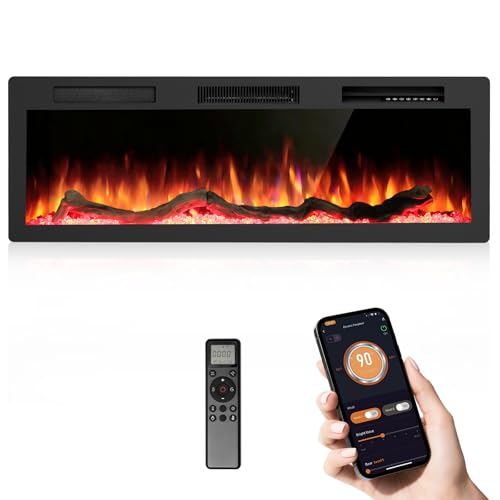
This 50-inch electric fireplace heater provides up to 1500W heat with two modes and adjustable temperature from 59-95°F. It adds ambiance with 12 flame colors and sound effects, controllable by remote, touch panel, smartphone, or Alexa. It suits offices that want warmth and decorative flair in one unit.
Heaters for Indoor Use Without Electricity: Know the Trade-Off
A non electric indoor heater can work, but none of the five picks here can: every model is electric, needs a wall outlet, and none is a solar or non-electric heater. An ordinary solar panel also doesn’t make a plug-in heater practical off-grid; a 1,500W heater needs a substantial continuous electrical supply while it runs.
For indoor fuel heat, choose only a heater explicitly rated for indoor use, follow its ventilation instructions and keep a working carbon-monoxide alarm nearby. Indoor propane heaters need an oxygen-depletion sensor. Vented natural-gas heaters need the correct venting and installation, while vent-free gas heaters are restricted or banned in some cities and states, so check local code before buying.
Keep Outdoor Heaters Outside
Never use a patio heater, construction heater or other outdoor-rated model indoors, in a tent or inside a vehicle cabin. Outdoor-rated equipment can produce carbon monoxide where it can’t safely disperse.
Before Choosing Indoor Heat Without Electricity
Confirm the heater is explicitly rated for indoor use.
Check the manual’s ventilation requirements.
Look for an oxygen-depletion sensor on an indoor propane model.
Install or test a working carbon-monoxide alarm.
Check local code before using a vent-free gas heater.
So the best indoor heater without electricity is a properly rated fuel heater only where its fuel supply, ventilation and local rules support it. For a home office, these compact electric models are the simpler match because they avoid combustion in the room—but they still need a suitable outlet.
Choose a Compact Heater by Noise and Controls
The DREO 1,500W ceramic heater is the best compact indoor heater for a home office when calls and room warmth matter: its listed 34 dB noise level, 41–95°F thermostat in 1°F increments, remote and 12-hour timer give you useful control without hovering over the heater.
700W, 1,000W or 1,500W; thermostat; remote; 12-hour timer; ETL certification
5. R.W.FLAME Smart Electric Fireplace
Smart controls in a wall format
50-inch fireplace format; 750W or 1,500W heat; poor fit beside a compact desk
The ranking matches office size, sound and control needs—not the longest feature list.
The Gaiatop is the small portable indoor heater for close desk-scale warmth, not a substitute for heating the whole room. Its 500W output and compact body suit personal heat, while overheat and 45° tip-over protection address the risks of a small unit near a desk.
Choose the R.W.FLAME Small Space Heater if a listed 35 dB alternative matters more than a one-degree thermostat. Its 1,500W output, thermostat, remote and 24-hour timer distinguish it from the DREO, even though the noise figures are close; the DREO gives finer temperature adjustment and a shorter timer.
The AUBKN is the answer to the long search for an AUBKN small portable electric heater with thermostat and remote: product 5 has three wattage settings—700W, 1,000W and 1,500W—plus a 12-hour timer and ETL certification. The available data supports three heat settings, not five modes.
The R.W.FLAME Smart Electric Fireplace belongs on the list only if smart controls and a 50-inch wall or recessed fireplace format are the point. Its 750W and 1,500W heat settings make it a poor compact desk heater, so skip it for a small office setup; readers focused on low noise can compare more options in this quiet small office heater guide.
Office Shortlist Check
Pick DREO for calls, fine thermostat adjustment and room-scale heat.
Pick Gaiatop for personal desk warmth only.
Pick R.W.FLAME Small Space Heater for the quietest listed alternative and a 24-hour timer.
Pick AUBKN when three output levels matter.
Skip the 50-inch fireplace format unless wall installation is the goal.
Measure the Room Before Choosing 500W or 1,500W
A 500W indoor heater is usually better for warming you at a desk than for heating a whole room; 1,500W puts out more heat, but it can’t guarantee a particular room temperature. For home office use, electric heaters can be cost-effective if you heat only the space you need, though the bill depends on how long the heater runs and your electricity rate.
A low-wattage indoor heater makes sense when you want close-range warmth and don’t expect it to raise the temperature across the room. Small room heaters for indoor use are safe only when the model is intended for indoor use and you follow its safety instructions.
Worked Example: Eight Hours at Full Power
Say a 1,500W heater runs continuously for an eight-hour workday. At an assumed electricity rate of $0.17 per kWh, it uses 12 kWh and costs $2.04 for the day. That rate is an example, not a national price.
Energy1,500W × 8 hours = 12 kWh
Example cost12 kWh × $0.17 = $2.04
A thermostat can switch the heater off as the room warms, so actual cost depends on its runtime and how quickly the room loses heat. The example assumes continuous operation; it isn’t a prediction of your bill.
12.5 A
Current drawn by a 1,500W heater at 120V
Two 1,500W heaters on one standard 15A, 120V circuit can overload it. Check what else is on the circuit and which breaker serves it before adding a second heater.
Check Safety Features and Plug the Heater Into the Wall
For indoor electric heat, choose a UL-, ETL- or CSA-listed model with tip-over and overheat protection. A listing indicates that the product has been evaluated to a safety standard; words such as “safe” in product marketing don’t replace a listed certification.
Indoor gas heaters aren’t automatically safe: use only a model specifically rated for indoor use, follow its ventilation instructions and keep a working carbon monoxide alarm nearby. Vent-free gas heaters are restricted or prohibited in some places, so check local code. An infrared electric heater can be used indoors if it’s indoor-rated and installed as its manual directs; infrared fuel-burning models still need the indoor-use and ventilation checks for their fuel type.
Before You Switch It On
Plug the heater directly into a wall outlet, never an extension cord or power strip.
Leave at least 3 feet of clearance from nearby objects.
Set it on a stable, level surface away from papers, curtains and foot traffic.
Don’t put it on a desk unless the manual permits that placement.
Don’t leave it running while you sleep or leave home unless the manufacturer says that model is designed for it.
Stop If the Plug or Outlet Gets Hot
Unplug the heater if its plug or outlet becomes hot, or if you notice scorching or a burning smell. Don’t keep using that outlet until the cause has been checked.
Keep Fan Noise and Warm Air Out of the Wrong Spot
For small office space heaters for desk use, the 500W Gaiatop is a better match for personal warmth than a 1,500W room heater running at full output, if its manual permits your intended placement. For best programmable indoor heaters, look for a model with a thermostat or timer; the DREO has an adjustable thermostat, so you can set a target temperature rather than leave it blasting.
Fan-forced ceramic heaters move warm air, and you may notice that airflow at your desk even when the listed sound level is low. Angle the outlet away from papers, your hands and your microphone, and keep both the intake and outlet clear. Follow the manual’s placement instructions.
Aim the heat, not the fan
A heater beside or behind your desk may feel less distracting than one pointed straight at you. Keep the required clearance around it, and plug it directly into a wall outlet.
Heat only the room you’re using
Set the thermostat or timer to reduce heating an empty office. An advertised energy-saving percentage isn’t a guaranteed reduction in your bill; actual savings depend on how you use the heater and your electricity rate.
More Questions, Answered
Can I use a small vented natural-gas heater in a home office?
Yes, if the heater is listed for indoor use, its vent terminates outdoors as the manual specifies, and local code allows the installation. Have a licensed professional handle gas piping and venting; a portable outdoor or construction heater is not a substitute.
Can a small ventless natural-gas heater be used indoors?
Only if the model is approved for indoor use and local code permits vent-free heaters; some states and cities restrict or ban them. Combustion products remain in the room, so follow the manual’s ventilation rules and use a working carbon monoxide alarm. For a closed home office, an electric heater avoids that combustion risk.
How do you mount an indoor gas heater?
Follow the model’s mounting instructions for wall material, clearances, venting and gas connection; the requirements vary by heater. Have a licensed professional install or check the gas line and vent, and don’t use the heater until the installation passes any required local inspection.
Are solar-powered indoor heaters practical for a home office?
Usually not as a direct, dependable heat source: a 1,500W heater needs 1.5 kWh for each hour it runs, before accounting for conversion losses or cloudy weather. Solar can contribute through a properly sized battery and inverter system, but the heater’s energy demand makes that setup much larger than a small desk device.
Is a battery-operated heater suitable for indoor office use?
Generally no for heating a room: resistive heat uses energy quickly, so a compact battery won’t run a full-size heater for long. Check the battery and heater ratings before buying; a low-power personal warmer may suit one person, but it won’t replace a room heater.
Does a 500W desk heater use less electricity than a 1,500W heater?
Yes, at the same run time, a 500W heater uses one-third as much electricity: 0.5 kWh per hour versus 1.5 kWh. The trade-off is lower heat output, so it’s better for personal warmth than for bringing a whole room up to temperature.