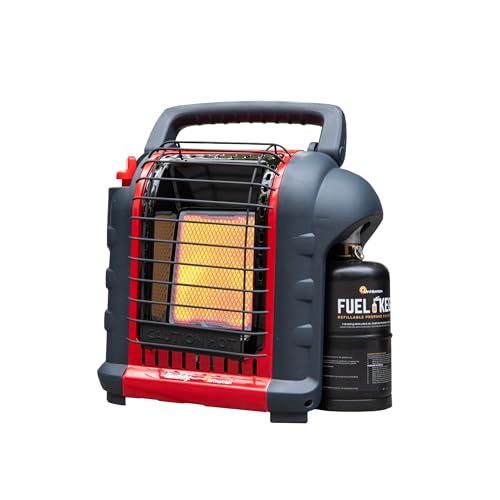
Propane heaters offer reliable heat for homes without duct systems, but not all models work the same way. Understanding how vented and ventless propane heaters operate helps you pick the safest and most efficient option.
Many believe ventless propane heaters are unsafe indoors, but with oxygen depletion sensors and proper ventilation, they can be both safe and efficient. This article clears up that misconception and guides you through sizing, installation, and alternatives.
Efficient Propane Heaters for Houses Without Ductwork
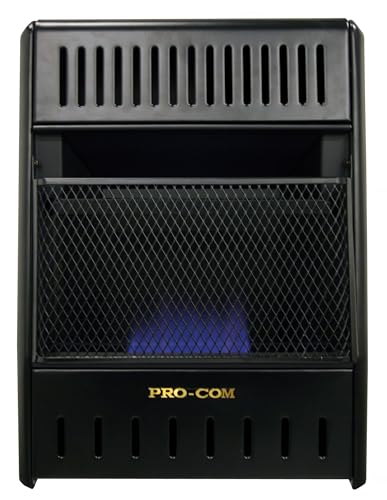
Direct vent and ventless propane heaters both heat homes without ductwork efficiently, but they do so in different ways and with distinct safety features. The most efficient direct vent propane heaters, like the Martin MDV series, operate with sealed combustion and vent exhaust outside, while ventless heaters, such as the ProCom Liquid Propane Ventless Ice House Heater, burn propane indoors and rely on oxygen depletion sensors for safety.
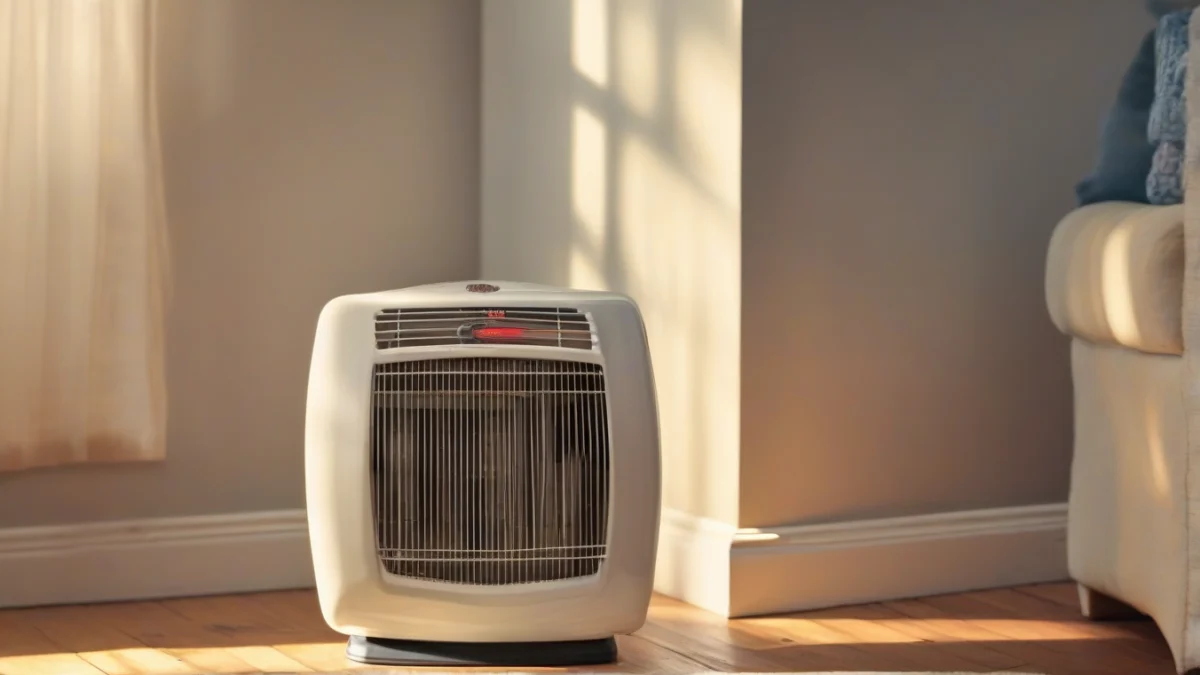
Direct vent propane heaters draw air from outside your home and exhaust combustion gases outdoors through a sealed vent, so they don’t affect indoor air quality. Typical models deliver from 8,000 to 20,000 BTUs and can heat medium to large rooms without ductwork. Their sealed system makes them the most efficient vented propane heaters for indoor use since no heated air escapes and combustion gases stay outside.
Ventless propane heaters burn propane directly in the room air without external venting. They use an oxygen depletion sensor (ODS) to monitor oxygen levels and shut off the burner if oxygen falls too low, preventing dangerous carbon monoxide buildup. These heaters often have tip-over shutoff switches as well. Ventless models typically range from 4,000 to 10,000 BTUs, suitable for small to medium rooms up to about 300 square feet.
Ventless heaters claim near 100% fuel efficiency because all combustion heat stays inside; however, they produce moisture and combustion byproducts indoors. Direct vent models are slightly less efficient, usually 80 to 90%, because some heat escapes with the vented gases. Still, direct vent heaters maintain better air quality and can be safer for continuous use in homes without ductwork.
Oxygen depletion sensors are crucial on ventless heaters. They monitor indoor oxygen and shut the heater off before unsafe carbon monoxide levels can occur. Direct vent heaters do not need ODS because their combustion is sealed and vented outdoors. Regardless of heater type, installing a carbon monoxide detector near any propane heater is non-negotiable for safety.
| Heater Type | BTU Range | Effective Room Size |
|---|---|---|
| Ventless | 4,000–10,000 | Up to 300 sq. ft. |
| Direct Vent | 8,000–20,000 | 300 to 1,000 sq. ft. |
How Propane Heaters Deliver Heat Without Ducts
Propane heaters vary in how they move heat through a room, and this affects comfort, efficiency, and running costs in homes without ducts. The most efficient indoor propane heaters often combine radiant and convection heating, but their mechanisms differ.
Radiant propane heaters warm objects and people directly, not the air, by emitting infrared radiation. This method feels immediate and cozy, especially in drafty spaces. Forced-air propane heaters, by contrast, heat air and distribute it with a blower, warming the whole room more evenly but at some energy cost to run the fan.
Infrared heating is a prime example of radiant heat. Instead of cycling air through a duct or blower, it targets surfaces and occupants directly, making it feel warmer at lower air temperatures. This reduces heat loss from ventilation or drafts, which is an advantage in ductless homes or cabins.
Running costs depend on how much propane the heater burns and how well it uses that heat. A typical direct vent propane heater rated at 15,000 BTU will burn about 1.5 pounds of propane per hour. At $3.50 per gallon and about 4.2 pounds per gallon, that’s roughly 0.36 gallons per hour or $1.26 per hour of operation.
Compare that to an electric resistance heater drawing 1,500 watts, which uses 1.5 kWh per hour. At 17 cents per kWh, that’s about 25 cents per hour—cheaper on electricity but dependent on your rates and electricity source. Ductless heat pumps, meanwhile, can use 60% less electricity by moving heat instead of creating it.
Blower assemblies in forced-air propane heaters add some energy use but improve heat distribution. Variable speed controls on these blowers help reduce electricity use and noise while maintaining comfort by adjusting airflow to the room’s needs.
Comfort differs between radiant and forced-air propane heaters. Radiant heat feels more direct and can reduce dry air issues since it doesn’t circulate air rapidly. Forced-air systems spread warmth evenly but can stir dust or allergens, which matters if you have sensitivities.
Among propane heaters, direct vent models that exhaust combustion gases outside while drawing fresh air from outdoors tend to be the most efficient and safest for indoor use without ductwork. Ventless heaters are efficient too but depend heavily on oxygen depletion sensors and ventilation to keep indoor air safe.
Say your living room is 12 by 14 feet with an 8-foot ceiling, about 1,344 cubic feet of space. A 15,000 BTU direct vent propane heater can warm this efficiently without ducts, running about $1.26 per hour in propane. That’s a practical balance of heat output and cost for many ductless homes.
For detailed mechanisms and models of radiant heat, infrared heating explained covers how this method works and why it’s efficient. If you want to compare costs for electric or propane setups, which space heater is truly efficient? lays out the power-to-heat math clearly.
Installation and Safety Requirements for Indoor Propane Heaters
Installing propane heaters in homes without ductwork demands careful attention to ventilation and safety features to prevent hazards like carbon monoxide buildup and oxygen depletion.
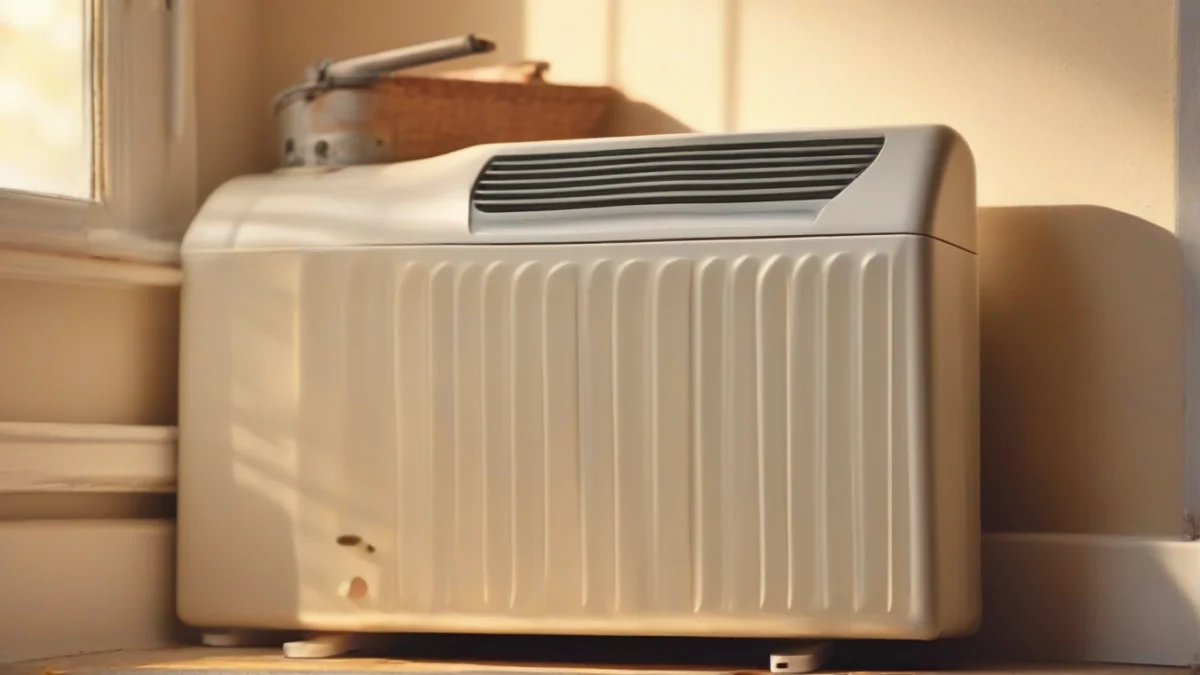
Ventless propane heaters rely on oxygen depletion sensors (ODS) to shut off the unit if oxygen levels drop too low, making adequate room ventilation non-negotiable. Without fresh air exchange, these heaters can cause dangerous indoor air quality. Direct vent heaters, by contrast, exhaust combustion gases outdoors through a sealed vent pipe, so they require less room ventilation but need professional installation to ensure tight seals and proper venting.
Propane heaters indoors must have safety features like tip-over shutoff switches that cut power if the heater falls, and carbon monoxide detectors installed in living spaces and bedrooms. These sensors create layered protection that’s essential in ductless homes where air circulation is limited.
Local codes often dictate clearances from walls and combustible materials, vent pipe installation standards, and restrictions on ventless heater use in bedrooms or bathrooms. Ignoring these can void insurance or lead to dangerous malfunctions. Placement should avoid high-traffic areas and ensure at least three feet of clearance on all sides for safe operation and maintenance access.
Ventless propane heaters can be used in bedrooms or living spaces without ducts if they have an ODS sensor and the room is ventilated to code. However, some local regulations prohibit ventless heater use in sleeping areas, so always check local laws before installation.
Integrating propane heaters with existing heating zones or thermostats requires compatible controls. Many direct vent models support integration with home thermostats, enabling centralized temperature management even without ductwork. Ventless models typically have built-in thermostats or remote controls but usually need separate zone control systems for whole-home heating coordination.
Sizing Propane Heaters for Homes Without Ductwork
A typical propane heater for a home without ductwork needs about 30 to 50 BTU per square foot, depending largely on insulation and climate. That means a 1,000 square foot home usually requires between 30,000 and 50,000 BTUs to maintain comfortable warmth.
Sizing starts with your home’s square footage. Multiply the area by the recommended BTU per square foot considering insulation quality—use 30 BTU for well-insulated homes and up to 50 BTU for poorly insulated or older buildings. For example, a 500 square foot room with average insulation might need 20,000 to 25,000 BTUs.
| Heater BTU Rating | Approximate Coverage (sq ft) |
|---|---|
| 4,000 | 100 to 125 |
| 9,000 | 200 to 300 |
| 20,000 | 500 to 700 |
Propane consumption relates directly to BTU output. A standard 20 lb propane tank holds roughly 4.7 gallons, containing about 675,000 BTUs of energy. Running a 20,000 BTU heater continuously would theoretically last about 33 hours (675,000 ÷ 20,000), though actual runtime varies with heat settings and cycling.
Planning for multiple heaters or zones means adding BTU requirements for each area. For example, heating a 1,500 sq ft home with two main zones might involve one 20,000 BTU heater for the living area and a 10,000 BTU heater for bedrooms. This approach helps maintain comfort and efficiency while avoiding oversized units.
Comparing Propane Heaters to Ductless Heat Pumps
Ductless heat pumps are typically more energy efficient than propane heaters, using up to 60% less electricity than standard electric resistance heaters and converting outdoor heat to indoor warmth with minimal energy loss.
Most propane heaters convert about 80% to 95% of propane’s energy into heat, depending on the model and venting type. Direct vent propane heaters typically reach efficiencies near 90%, while ventless models can approach 99% combustion efficiency but rely on indoor air for combustion.
Ductless mini split heat pumps offer steady, adjustable heating with no combustion emissions inside the home. That means no carbon monoxide, nitrogen oxides, or moisture buildup, which improves indoor air quality compared to propane heaters that burn fuel indoors.
| Feature | Propane Heaters | Ductless Heat Pumps |
|---|---|---|
| Energy efficiency | 80–99% combustion efficiency | Up to 300% heating efficiency (COP 3.0 or more) |
| Indoor air quality | Combustion emissions require ventilation and CO detection | No combustion, no emissions indoors |
| Installation complexity | Moderate: gas line, venting or ODS sensor needed | Higher: electrical work, refrigerant lines, wall mounting |
| Upfront cost | Lower to moderate, with costs varying widely by model and features | Higher, $2,000–$5,000 including installation |
| Fuel source | Propane (off-grid capable) | Electricity only |
| Heat delivery | Rapid radiant or forced air heat | Gentle, even air heating |
| Reliability off-grid | High (no electricity needed) | None (electricity required) |
Installation for propane heaters usually involves running a propane line and, for direct vent models, a vent pipe through an exterior wall. Ventless models need oxygen depletion sensors and clearances. Mini split heat pumps require certified HVAC technicians to install refrigerant lines and an outdoor compressor, which adds to cost and time.
Propane heaters produce combustion byproducts and water vapor that may degrade indoor air quality if ventilation is insufficient. Using carbon monoxide detectors and following ventilation guidelines are essential. Heat pumps avoid this issue entirely by transferring heat electrically without combustion.
Environmentally, electric heat pumps produce no onsite emissions, and when powered by renewable energy, their carbon footprint can be very low. Propane heaters emit CO2 and other combustion products, contributing to greenhouse gases, though propane burns cleaner than some other fossil fuels.
Propane heaters remain the go-to choice for off-grid homes without reliable electricity or for users needing fast, direct heat. They excel in emergency situations or when quick spot heating is necessary, offering portability and easy refueling.
What to Do Next: Choosing and Using Your Propane Heater Safely
Picking the right propane heater depends on your home’s layout, ventilation, and heating needs. Direct vent models like the Martin MDV series suit larger spaces with venting options, while ventless models such as the ProCom Liquid Propane Ventless Ice House Heater offer efficient heat without ductwork for areas up to 300 square feet.
Look for models with oxygen depletion sensors and tip-over shutoff switches to meet safety standards. Always install carbon monoxide detectors near propane heaters to catch any combustion issues early.
Professional installation is crucial. A licensed technician ensures proper venting, complies with local codes, and installs detectors correctly. This reduces risks associated with carbon monoxide and oxygen depletion, especially in tightly sealed homes.
Integrate your propane heater with smart thermostats or zoning controls for better comfort and efficiency. Many ventless models support thermostat connections, allowing you to set schedules or control multiple zones independently, reducing wasted energy.
Check local utility programs or government incentives, which sometimes offer rebates for installing efficient propane heaters or ductless systems. These can offset upfront costs and improve your return on investment.
More Questions, Answered
Can ventless propane heaters be safely used in bedrooms or living spaces without ducts?
How long will a standard 20 lb propane tank heat a typical house?
Which propane heater models are best suited for homes with no existing ductwork?
What safety features should be prioritized for indoor propane heaters?
How does propane heating efficiency compare to electric mini split heat pumps?
Are there rebates or incentives for installing propane heaters or ductless systems?

I am a mechanical engineer and love doing research on different home and outdoor heating options. When I am not working, I love spending time with my family and friends. I also enjoy blogging about my findings and helping others to find the best heating options for their needs.
Related guides

How to Install a Propane Fireplace in 1-2 Days Safely
Step-by-step guide for installing and venting propane fireplaces safely and efficiently, with tools, tips, and code requirements.

Why Is My Propane Heater Using So Much Gas?
Propane heaters may use excessive gas due to factors like improper sizing, inefficient burners, thermostat settings, or poor…
5 Best Cordless Propane Heaters for Outdoor Heat (Use Safely!)
What makes the best cordless propane heater? Our guide reveals top picks and key buying tips for reliable,…