For a faster diesel cold start, choose an engine heater that fits your engine: product 3 is the direct-fit option for the listed 1995–2003 7.3L V8 vehicles, while product 2 is a 400 W magnetic warmer for compatible iron or steel surfaces. A forced-air diesel heater warms a cabin, not the engine block.
The most common mistake is buying a diesel air heater because its name sounds right for a cold-start problem. It heats cabin air; it won’t warm engine oil or the block, so the engine may still crank hard.
These picks cover three different jobs: warming an engine, adding heat to an eligible metal surface, and heating a vehicle cabin. Check the job and fit before comparing wattage or controls.
Best Diesel Heaters by Job
#1Direct-Fit Pick
Generic 7.3L Engine Block Heater
Best for Listed 1995–2003 Ford V8 7.3L vehicles
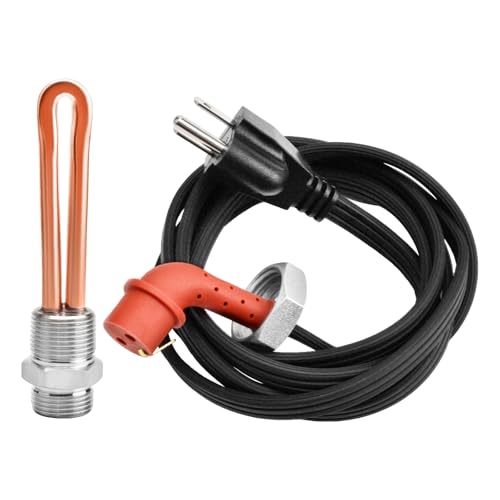
This 120V, 1000W replacement heater is listed for 1995–2003 F150, F250, F350 and F450 Super Duty models with the V8 7.3L engine. Its specified replacement part number, F7TZ-6A051-AA, gives you a concrete fit check before buying.
Voltage 120VPower 1000WFit 1995–2003 F150, F250, F350, F450 Super Duty and other V8 7.3Replacement part number F7TZ-6A051-AAConnection size 3/4″ NPT
Why it made the cut
Listed for specific 7.3L vehicles and model years
1000W heating unit with cable cord
Replacement part number provided
Good to know
Fit is limited to the listed vehicles and engine
Installation requires connecting the heater to the engine block
Skip it if Skip it if your vehicle or engine isn’t among the listed applications; check the part number and fit before ordering.
Best for Compatible iron or steel engine and equipment surfaces
For an engine or machine without a listed direct-fit heater, this magnetic 400W unit attaches to compatible iron or steel surfaces without drilling or bolting. Its thermostat cycles off at 130°C and resumes at 60°C; it won’t attach to aluminum.
Voltage 120VPower 400WSurface type Iron and steelThermostat off temperature 130°C (266°F)Thermostat resume temperature 60°C (140°F)
Why it made the cut
Magnetic base needs no tools on suitable surfaces
Automatic temperature control
Listed for engines, oil pans and other compatible metal components
Good to know
Only suitable for ferrous metal surfaces
Surface placement may not suit every engine
Skip it if Skip it if the intended mounting surface is aluminum or another non-magnetic material.
Best for Cabins or interiors listed at 161–215 sq ft
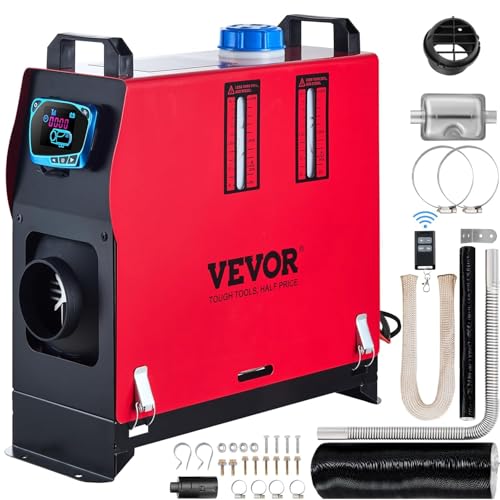
This is a cabin heater, not a block heater: its 8kW output and listed 161–215 sq ft area suit warming an RV, truck, boat or trailer interior. It runs on DC 12–24V and includes remote and LCD controls. Use it only with exhaust routed outside the occupied space and according to the manual.
Heater type Diesel air heaterPower 8kWSupply DC 12–24VListed area 161–215 sq ftFuel tank 5L (1.3gal)
Why it made the cut
Listed 161–215 sq ft heating area
Remote control and LCD switch
5L tank and stated fuel use of 0.18–0.36L/h
Good to know
Does not warm the engine block
Requires DC 12–24V power and safe exhaust installation
Skip it if Skip it if your goal is a faster engine start rather than a warmer cabin.
Best for Cabins or interiors listed at 161–215 sq ft
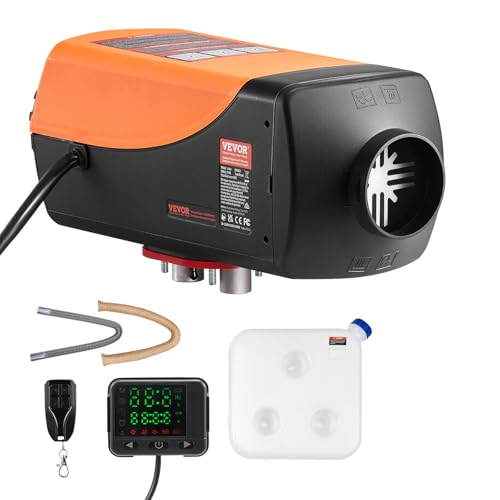
The 10L tank gives this 8kW air heater more stated capacity than the 5L version, while the listed heating area remains 161–215 sq ft. It has remote and color digital controls, plus stated overheat protection. Like any diesel air heater, it heats the cabin, not the engine block.
Heater type Diesel air heaterPower 8kWSupply DC 12–24VListed area 161–215 sq ftFuel tank 10L (2.6gal)
Why it made the cut
10L (2.6gal) fuel tank
Remote control and color digital display
Listed overheat protection at ≥518°F / 270°C
Good to know
Does not warm the engine block
Requires DC 12–24V power and safe exhaust installation
Skip it if Skip it if you need an engine block heater or don’t have a safe way to route exhaust outside the occupied space.
Best for Indoor personal heating in a listed 108–130 area
This plug-in ceramic heater is for indoor air, not diesel engines or vehicle cabins. It offers 950W and 1500W settings, a thermostat, and tip-over and overheat shutoff. Use it only as directed, plugged straight into a wall outlet.
Heater type Ceramic space heaterPower settings 950W / 1500WListed heating area 108–130Controls Thermostat and mode knobsSafety features Overheat and tip-over protection
Why it made the cut
Two heat settings: 950W and 1500W
Thermostat and tip-over and overheat protection
ETL certified
Good to know
Does not heat an engine block
Requires a wall outlet and is intended for indoor use
Skip it if Skip it if you need a heater for a vehicle, engine, or space without a suitable outlet.
Forced Air Heaters Run on Diesel, but Don’t Warm the Engine
A forced-air diesel heater warms the cabin, not the engine block. It burns diesel in a separate combustion chamber, then pushes heated air through a duct; that air never heats the engine coolant, oil or metal block.
An air heater in a diesel engine is a different part: the engine’s intake-air heater belongs to the vehicle’s cold-start system. If that system has failed, diagnose the vehicle and replace the correct component instead of buying a generic cabin air heater as a substitute.
Myth
A diesel heater running near the truck will warm the engine enough for a faster start.
Fact
A cabin heater moves heat into the occupied space. A block heater moves heat into the engine, while an intake-air heater assists the engine’s own starting system. They solve different problems.
Heater type
Where the heat goes
Cold-start job
Engine block heater
Engine block and coolant area
Warms the engine before cranking
Magnetic surface heater
The ferrous metal surface it touches
Adds localized heat to a suitable oil pan or engine surface
Forced-air cabin heater
Cabin air through a duct
Warms people and the interior, not the engine
Match the heat path to the problem you need to solve.
The VEVOR 8KW Diesel Heater All in One DC12-24V Fast Heating and VEVOR 8KW Diesel Heater are vehicle-style cabin heaters. Both are listed at 8 kW, use DC 12–24 V power, cover 161–215 sq ft, and include remote control. Their tank and display or control details differ by listing, so check those details against your installation before choosing one.
Radiant diesel shop heaters work differently: they warm nearby people and objects directly rather than relying on a broad stream of moving air. The listed VEVOR units are air heaters, not verified shop radiant heaters; compare radiant diesel heaters separately if that is the job.
Exhaust stays outside
A diesel cabin heater must discharge exhaust outside the occupied cabin, with mounting, ducting and ventilation installed exactly as its manual requires. Use a working carbon monoxide alarm. Never run an outdoor, patio or construction heater inside a vehicle, tent, garage or other occupied space.
Match the Heater to the Engine and Mounting Surface
For a block heater, magnetic oil pan heater for a diesel engine, tractor or truck, start with the exact vehicle, engine and part number—not the word “diesel” on the package.
Product 3 lists 1995–2003 Ford F-150, F-250, F-350 and F-450 Super Duty vehicles with the 7.3L V8, plus replacement number F7TZ-6A051-AA. Verify your engine and year before ordering; a similar-looking heater can still have the wrong thread, location or cord arrangement.
Part
What it needs
What it does not replace
Installed block heater
Correct engine-block opening and 120 V outlet
A vehicle’s intake-air heater
Product 2 magnetic heater
A clean, suitable ferrous-metal surface
An installed coolant or block heater
Intake-air heater
The vehicle’s exact engine and cold-start system
A portable cabin heater
The mounting surface and engine system determine compatibility.
Product 3 is a 120 V, 1,000 W, 3/4-inch NPT replacement block-heater assembly with a cord. Installation involves the engine block and electrical cord, so have a qualified technician handle uncertain fit or installation rather than forcing the heater into an opening.
Product 2 is a 120 V, 400 W magnetic heater for ferrous metal only. It won’t attach to aluminum, and it isn’t equivalent to an installed coolant or block heater. Confirm a flat, suitable mounting area and follow the heater maker’s instructions before use.
A heavy-duty diesel engine electrical intake-air heater for startability in cold conditions is a vehicle-specific engine component, and none of these products is that part. If the intake heater has failed, use the vehicle service information to diagnose the circuit and order the correct replacement.
Fit and setup checks
Confirm the vehicle year, engine and part number.
Check that a magnetic heater will contact ferrous metal, not aluminum.
Keep the heater and cord clear of wiring, fuel lines, belts, fans and moving parts.
Remove combustible debris from the mounting area.
Inspect the cord, plug and outlet before energizing the heater.
Power and installation
A 1,000 W heater on 120 V draws about 8.3 A; a 400 W heater draws about 3.3 A. Use a sound grounded outlet and the manufacturer’s connection instructions, and stop if the cord, plug or outlet shows heat damage.
Compare Heat Output, Coverage, and Runtime
For boat heaters diesel buyers, the 8 kW VEVOR units are cabin heaters; the 400 W and 1,000 W units are engine-heating choices. A cabin heater warms the air around you, while a block heater puts heat into the engine or its oil-pan mounting surface.
Product
Output
Voltage
Stated coverage
Tank / fuel use
Control type
1160 1160X Magnetic Block Heater
400 W
120 V
Not stated
Not stated
Not stated
Diesel Engine Block Heater Assembly Heating Unit with Cable
1,000 W
Not stated
Not stated
Not stated
Not stated
VEVOR 8KW Diesel Heater All in One DC12-24V Fast Heating
8 kW
DC 12–24 V
161–215 sq ft
5 L; around 0.18–0.37 L/h
Not stated
VEVOR 8KW Diesel Heater
8 kW
Not stated
161–215 sq ft
10 L; around 0.18–0.37 L/h
Not stated
R.W.FLAME Small Space Heater
1,500 W
Not stated
Not stated
Not applicable
Not stated
Only specifications stated for the listed products are shown.
The 161–215 sq ft coverage claim for the 8 kW cabin heaters is a manufacturer estimate, not a promise for every boat, truck, or camper. Insulation, drafts, cabin layout, and outside temperature can change the result quickly; a leaky boat cabin will give the heater a particularly rude workload.
Worked Example: Tank Runtime
Assume continuous operation at the listed fuel-use range. The 5 L tank on the VEVOR 8KW Diesel Heater All in One DC12-24V Fast Heating gives 5 ÷ 0.37 = about 13.5 hours at the higher burn rate, or 5 ÷ 0.18 = about 27.8 hours at the lower rate. The 10 L tank on the VEVOR 8KW Diesel Heater gives about 27.0 to 55.6 hours using the same arithmetic. Real runtime changes with thermostat cycling and the actual burn rate.
5 L tankAbout 13.5–27.8 hours
10 L tankAbout 27.0–55.6 hours
AssumptionContinuous running at 0.18–0.37 L/h
A boat installation also needs an exhaust route outside the cabin, shielding around hot exhaust parts, and compliance with the heater manual and applicable boat requirements. Keep the air heater separate from the engine-heating question; its fuel use and 8 kW output can’t tell you how quickly an engine will start.
The R.W.FLAME Small Space Heater is a 1,500 W electric ceramic room heater for indoor spaces, so don’t rank it as a diesel heater, engine heater, or enclosed-vehicle heater.
Budget for Electricity, Fuel, and Cold Starts
Operating cost depends on the heater’s input and runtime: for electricity, use watts ÷ 1,000 × hours × your electricity rate per kWh. The example below assumes $0.17 per kWh, eight hours per day, and 30 days; your utility rate and schedule may differ.
Heater
Watts
Per hour
Per day (8 h)
Per month (30 days)
1160 1160X Magnetic Block Heater
400 W
6.8¢
54¢
$16.32
Diesel Engine Block Heater Assembly Heating Unit w
1,000 W
17¢
$1.36
$40.80
Calculated at 17¢ per kWh. Example only: 8 hours per day for 30 days at $0.17 per kWh.
Diesel cabin-heater fuel is calculated separately: burn rate × operating hours. At the listed range of 0.18–0.37 L/h, eight hours uses 0.18 × 8 = 1.44 L at the low end or 0.37 × 8 = 2.96 L at the high end. Multiply those liters by the diesel price you actually pay; no local fuel price is assumed here. Battery electricity for a 12 V or 24 V heater is a separate load from the fuel cost.
Longer preheating isn’t automatically better. Follow the engine or heater manufacturer’s guidance, account for the local temperature, and use an outlet timer rated for the heater’s load; a best timer for diesel block heater can help avoid leaving an electric heater energized all night.
Myth
A cabin heater’s fuel consumption can show how much engine warm-up it provides.
Fact
It can’t. A diesel cabin heater warms cabin air, while an engine heater transfers heat into the engine or its oil-pan area, so their fuel use and warm-up results serve different purposes.
Even with an engine heater, a weak cold battery or oil unsuitable for the weather can still make starting difficult. Check the battery condition, oil grade and vehicle maintenance requirements before treating a heater as the whole cold-start plan.
Check Exhaust, Power, and Local Rules Before Use
Safe use depends on keeping electricity, fuel, and combustion exhaust where they belong. Diesel radiant shop heaters need the same close look at their listing and intended location as any other fuel-burning heater: an outdoor or construction model isn’t an indoor heater.
Before You Power It
For a 120 V electric heater, use an appropriate grounded outlet; inspect the cord and plug, and don’t use either if damaged.
Check that the circuit is suitable and not overloaded. Follow the heater’s instructions for duty cycle and required contact with the engine or mounting surface.
For a diesel cabin heater, follow the manual’s clearances and ventilation requirements, and plan for combustion exhaust to exit fully outdoors.
Keep a working carbon monoxide alarm in the occupied space.
Exhaust Must Stay Outside
Never run a diesel air heater with its exhaust discharging into a cabin, tent, or vehicle interior. Combustion air and heated cabin air stay separate only when the heater and installation are intact; a cracked, loose, or leaking exhaust connection can let carbon monoxide enter the space. Stop using the heater if you suspect a leak.
Myth
A diesel air heater’s exhaust is harmless once the heater is running.
Fact
The exhaust contains combustion gases, including carbon monoxide. Route it outside and keep the exhaust connection intact; a heater that warms the cabin isn’t safe to run with its exhaust in it.
For shop heat, check the product listing and local rules before using a fuel-burning heater indoors. Don’t repurpose a vehicle heater or patio heater for a shop unless the manufacturer approves that use. A permanent vehicle or boat installation is a job for a qualified installer if exhaust routing, fuel plumbing, or electrical work is outside your skill set.
1
Inspect the connections
Check the electric cord and plug, then inspect fuel and exhaust connections for visible damage, looseness, or leaks.
2
Check the route and space
Confirm exhaust discharges outdoors and that the installation meets the manual’s clearance and ventilation instructions.
3
Check the alarm
Test the carbon monoxide alarm before running a diesel-fired cabin heater.
Run This Checklist Before You Buy
Before ordering, confirm the heater type matches the job and that you can install and power it as instructed. A cabin heater won’t fix an engine-starting fault.
Purchase And Installation Check
Is your goal engine starting, cabin warmth, or shop heat? Choose an engine heater for the engine; choose a cabin heater for an occupied space only if it’s listed for that use.
For an installed engine heater, confirm the vehicle year, engine, part number, voltage, and physical fit. For a magnetic heater, confirm the mounting surface is ferrous and compatible with the product.
For cabin heat, check that the listed coverage suits the space and plan a safe route for combustion exhaust fully outside the occupied cabin before buying.
Confirm the outlet or vehicle power requirements, manual instructions, cord condition, and fuel arrangement. For a diesel-fired cabin heater, plan for a working CO alarm.
If an engine intake-air heater or installed block heater has failed, note the vehicle details and symptoms for a technician instead of substituting a cabin heater.
If fit, wiring, fuel plumbing, or exhaust routing is uncertain, gather the product instructions and vehicle or boat details before calling a qualified installer.
Frequently Asked Questions
Can a diesel air heater warm an engine before starting?
No. A diesel air heater heats cabin air; it doesn’t transfer meaningful heat to the engine block. Use an engine-compatible block, coolant, or oil-pan heater for easier cold starts.
What is an air heater in a diesel engine?
An air heater is a fuel-burning unit that warms air for a cab, boat cabin, or other enclosed space. It burns diesel separately from the engine, and its exhaust must be routed outside.
Are magnetic oil pan heaters suitable for aluminum engines?
Usually not as a magnetic attachment: magnets need a compatible ferrous surface, such as iron or steel. Check the heater maker’s instructions and your oil-pan material; don’t assume a magnet will hold on aluminum.
What does a 400-watt magnetic block heater attach to?
It attaches to a clean, flat iron or steel surface, commonly an oil pan, if the heater instructions approve that location. It needs firm contact; it isn’t a universal fit for every engine or pan.
Can a diesel heater be used on a boat?
Yes, if it’s a marine-suitable unit installed as its manufacturer directs, with combustion exhaust discharged safely outside the cabin. Keep the heater and fuel system away from water intrusion, and use a working carbon monoxide alarm.
How do I choose a diesel heater for a truck cabin?
Size it for the cab and choose a model intended for that installation, with a clear route for combustion exhaust outside. A cab heater provides occupant warmth; choose a separate engine heater if your goal is an easier cold start.