

Yes, solar water heaters can work in the rainy season, as they still capture sunlight, though efficiency may decrease due to cloud cover.
Many homeowners wonder if their solar water heater will keep working when monsoon clouds roll in. The short answer is yes – but with some important caveats about performance and backup systems you should know.

4Patriots
4Patriots Sun Kettle: Portable Solar Water Heater…
- BOIL WATER: The Sun Kettle uses solar power to boil your water. It traps sunlight & focuses it on the tempered glass tube in the m…
- PORTABLE & LIGHTWEIGHT: The Sun Kettle weighs 2.65 lbs. It's light enough to pack in a backpack, Bug-Out Bag or in a handbag. It's…
- 16.9 FLUID OUNCES: Each Sun Kettle holds up to 16.9 fluid oz of water. It's a great solar cooker for MRE meals, a couple of hotdog…
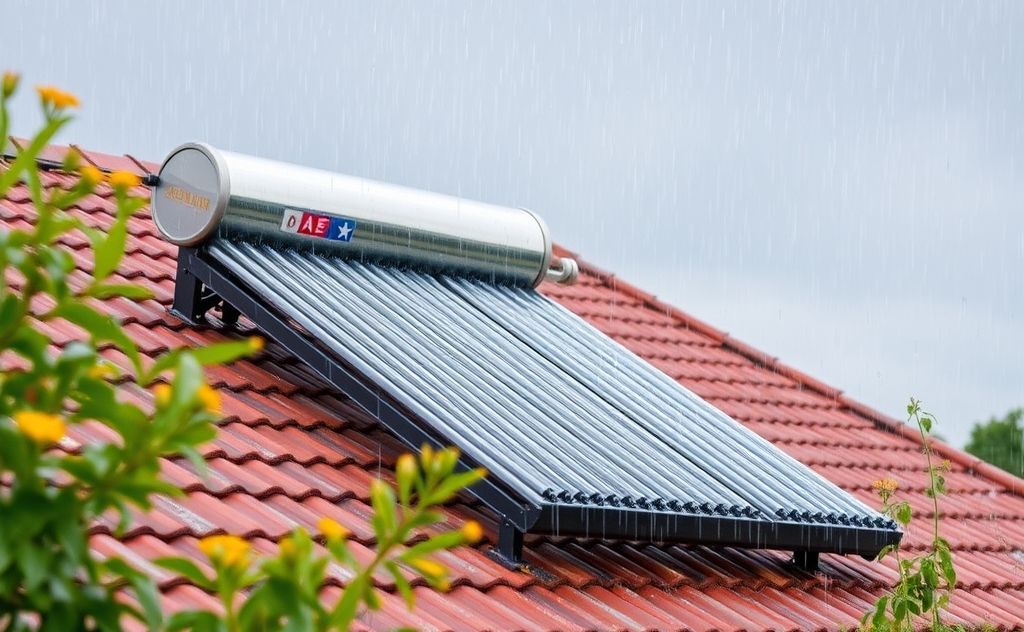
How Solar Water Heaters Function in Rainy Weather
Solar water heaters operate differently than photovoltaic solar panels. They use thermal collectors (either flat plates or evacuated tubes) to absorb sunlight and heat water directly. This gives them an advantage in cloudy conditions.
Performance in Different Weather Conditions
| Weather Condition | Efficiency | Water Temperature |
|---|---|---|
| Full sunlight | 80-90% | 140-180°F |
| Partly cloudy | 50-70% | 100-140°F |
| Heavy rain/overcast | 30-50% | 80-110°F |
The Cloud Magnification Effect
Contrary to popular belief, certain types of clouds can actually increase solar thermal collection through a phenomenon called the “cloud lens effect.” Thin clouds sometimes focus and diffuse sunlight across the entire collector surface.
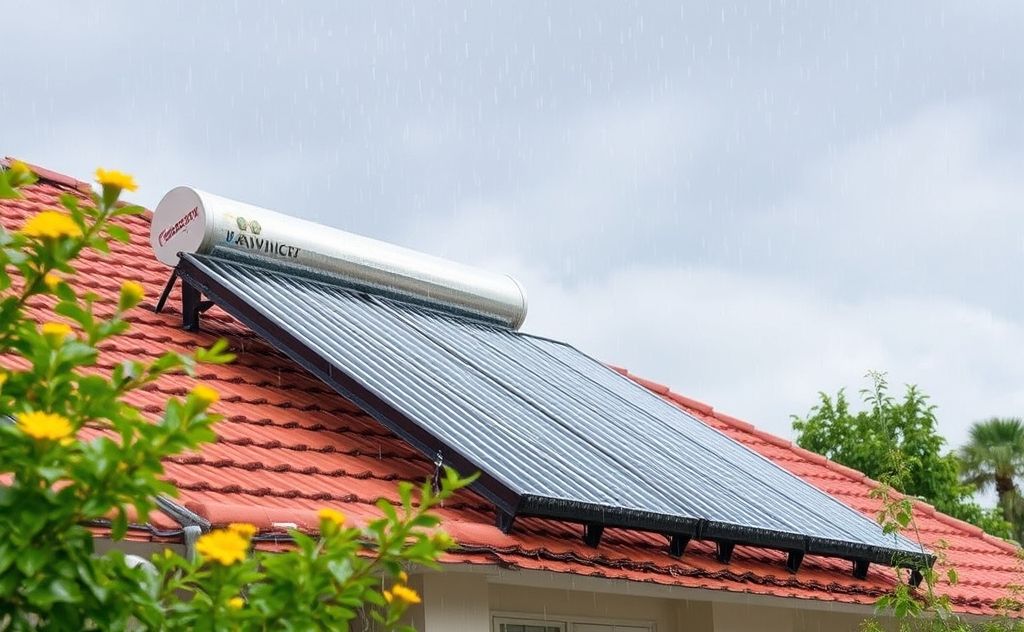
Key Factors That Affect Rainy Season Performance
1. Collector Type Matters
Evacuated tube collectors (ETC) outperform flat plate systems in cloudy conditions because:
- Vacuum insulation prevents heat loss
- Round tubes capture diffuse light from all angles
- Work at lower light levels than flat panels
For rainy climates, consider a high-efficiency ETC system designed for low-light conditions.
2. Storage Tank Capacity
Larger storage tanks (80-120 gallons) provide a buffer for multiple cloudy days. The insulation quality is critical – look for tanks with at least R-16 insulation.
3. Backup Heating Systems
Most quality solar water heaters include backup options:
- Electric resistance elements
- Gas/propane boosters
- Heat pump assist
For whole-home reliability, pairing with a tankless water heater creates an ideal hybrid system.
Maintenance Tips for Monsoon Season
Cleaning Considerations
While rain washes away some dust, it can leave water spots and mineral deposits. Clean collectors every 2-3 months with:
- Soft brush or sponge
- Distilled water
- Mild detergent (if needed)
Monsoon Preparation Checklist
Before rainy season begins:
- Inspect all seals and gaskets
- Check pipe insulation
- Test backup heating system
- Clear drainage areas
Real-World Performance Data
A 2022 study in Mumbai compared solar water heater output across seasons:
| Season | Average Daily Output | Backup Usage |
|---|---|---|
| Summer | 92 gallons at 165°F | 0% |
| Monsoon | 68 gallons at 120°F | 35% |
| Winter | 75 gallons at 140°F | 15% |
As shown, while monsoon performance decreases, the systems still provide significant hot water. For more technical details, see this Department of Energy report on solar thermal systems.
Choosing the Right System for Rainy Climates
For areas with extended rainy seasons, look for:
- ETC collectors with selective coatings
- Oversized storage (1.5x daily needs)
- Automated backup integration
- Corrosion-resistant materials
The Solar Reviews study confirms that proper system sizing can maintain 60-70% of normal output even during monsoon months.
Cost Considerations
While solar water heaters require higher upfront investment than conventional heaters, the long-term savings are significant:
| System Type | Initial Cost | 5-Year Savings |
|---|---|---|
| Electric | $500-$1,500 | $0 |
| Gas | $800-$2,000 | $300-$600 |
| Solar (with backup) | $3,000-$7,000 | $1,200-$2,500 |
Many areas offer rebates and tax credits that can cover 30-50% of system costs. When combined with energy savings, most systems pay for themselves in 4-7 years.
Related pick: Check today's price on Amazon

I am a mechanical engineer and love doing research on different home and outdoor heating options. When I am not working, I love spending time with my family and friends. I also enjoy blogging about my findings and helping others to find the best heating options for their needs.
Related guides

Solar Heaters for Commercial Spaces: Cost-Effective & Efficient
Yes, solar heaters can effectively be used in commercial spaces to reduce energy costs and provide sustainable heating…
Insulation’s Role in Solar Water Heaters Explained
Think about a solar water heater. It's a brilliantly simple concept. Sunlight heats a fluid, which then warms…
DIY Solar Water Heaters: Affordable Ways to Heat Water
High energy bills from heating water? A DIY solar water heater offers a practical, cost-saving solution. A DIY…
