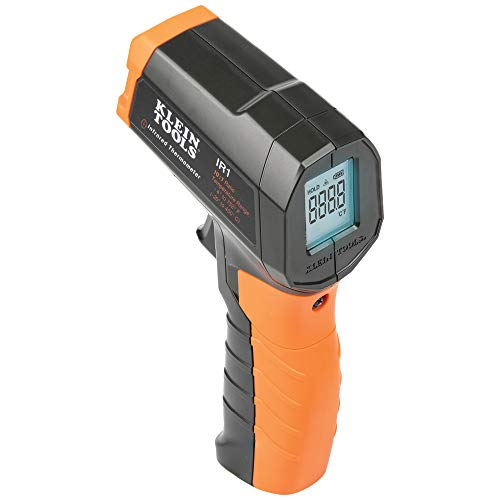
Infrared sensors measure surface temperature from a distance using emitted radiation, while contact sensors require physical contact to provide accurate temperature readings.
Temperature measurement is critical across industries from manufacturing to healthcare. Two main sensor types dominate: infrared (non-contact) and contact sensors. Each has unique strengths for different applications.

aqxreight
Mini Digital Infrared Thermometer, Contactless Pocket Temperature…
- Fast Contactless Reading : Mini infrared thermometer delivers quick surface temperature measurement without contact, improving saf…
- Wide Application Fitment : Portable thermometer pen suitable for kitchen surfaces engines air vents refrigeration units electronic…
- Durable Material Build : Pocket temperature pen made with sturdy ABS housing and precision infrared sensor, clear LCD display show…
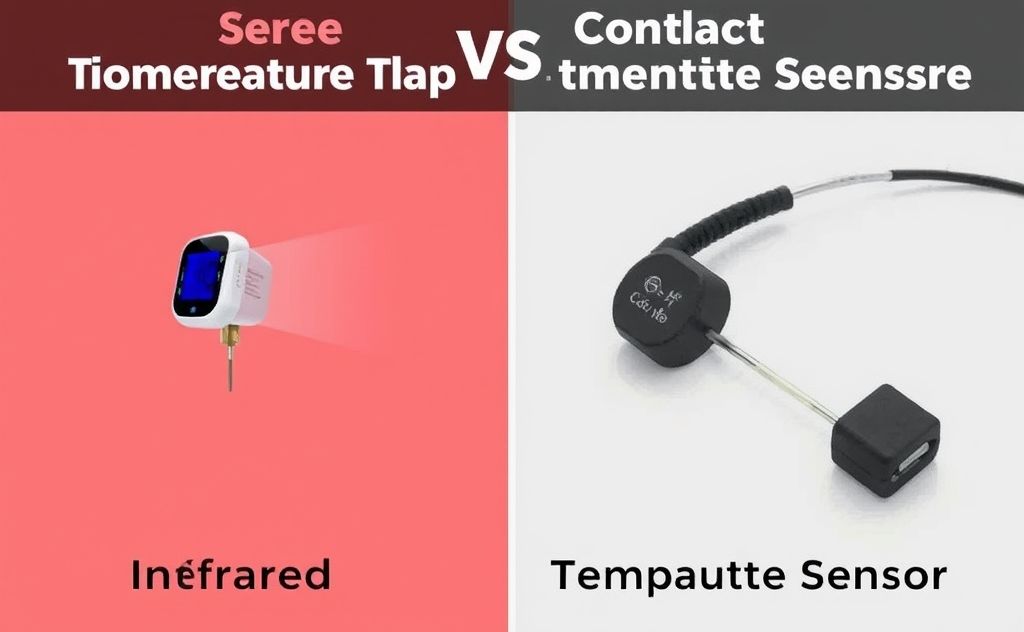
How Contact Temperature Sensors Work
Contact sensors require physical touch with the measured object. They transfer heat energy directly to the sensing element. Common types include:
Thermocouples
These use two dissimilar metals that generate voltage when heated. The voltage changes correlate to temperature. Thermocouples work in extreme temperatures (-200°C to 1750°C) making them ideal for industrial heating systems.
Thermistors
Semiconductor materials change resistance with temperature. They offer high accuracy (±0.05°C) in limited ranges (-90°C to 130°C).
RTDs (Resistance Temperature Detectors)
Platinum wires change resistance predictably with temperature. RTDs provide excellent stability and accuracy (±0.1°C) from -200°C to 850°C.
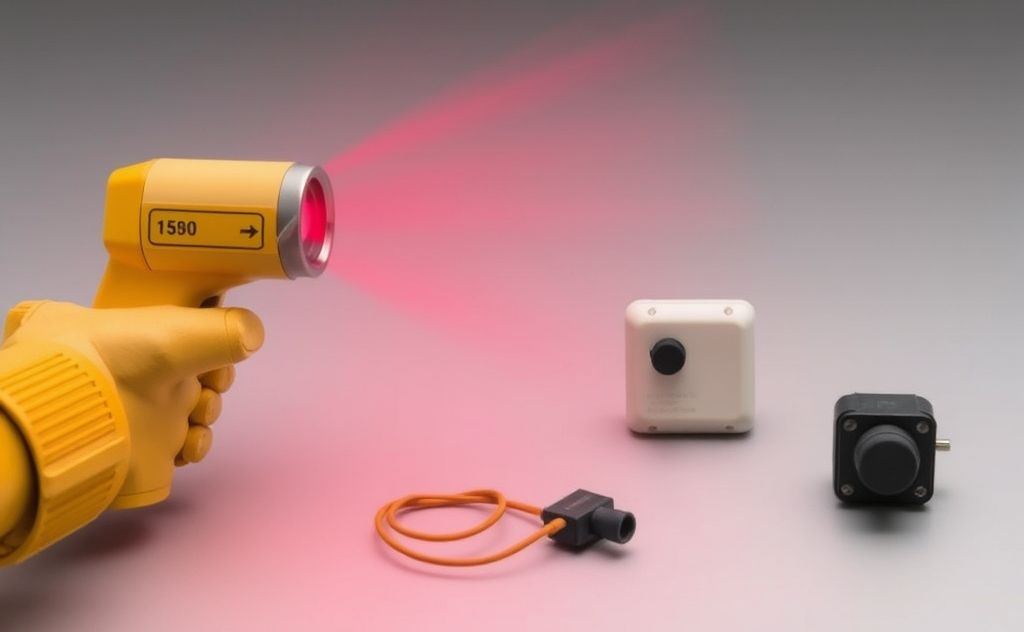
Infrared Temperature Sensors Explained
Non-contact IR sensors measure thermal radiation emitted by objects. Key components include:
- Optics to focus infrared energy
- Detector that converts IR to electrical signals
- Signal processing electronics
According to Apogee Instruments, high-end IR sensors achieve ±0.2°C accuracy when properly calibrated.
IR Sensor Types
| Type | Measurement Range | Typical Accuracy |
|---|---|---|
| Thermal Sensors | -40°C to 500°C | ±1°C |
| Pyrometers | Up to 3000°C | ±0.5% of reading |
| Thermal Imaging | -20°C to 1500°C | ±2°C |
Key Comparison Factors
Accuracy
Contact sensors typically offer better accuracy (0.1-1°C) than IR sensors (0.2-2°C). However, research-grade IR sensors can match contact accuracy.
Response Time
IR sensors respond instantly (milliseconds) while contact sensors need seconds to minutes for thermal equilibrium.
Applications
Contact sensors excel in:
- Liquid temperature measurement
- Precision laboratory work
- Water heater controls
IR sensors shine for:
- Moving objects (conveyor belts)
- Hazardous environments
- Medical fever screening
Medical Temperature Measurement Study
A 2020 study in Primary Care compared IR thermometers to traditional methods in children:
- IR thermometers showed good agreement with axillary measurements (±0.14°C average difference)
- Parents preferred non-contact methods for comfort and hygiene
- IR achieved 66.7% sensitivity for fever detection
This demonstrates IR’s growing role in healthcare applications where contact isn’t practical.
Choosing the Right Sensor
Consider these factors when selecting:
- Required accuracy level
- Temperature range needed
- Physical access to target
- Response time requirements
- Environmental conditions
For most industrial processes, a combination of both sensor types provides optimal temperature monitoring and control.
Related pick: Check today's price on Amazon

I am a mechanical engineer and love doing research on different home and outdoor heating options. When I am not working, I love spending time with my family and friends. I also enjoy blogging about my findings and helping others to find the best heating options for their needs.
Related guides

How Smart Temperature Sensors Slash Energy Bills by 30%
You set the thermostat to 72°F, but the living room feels like a sauna while the bedroom is…

How To Troubleshoot Temperature Sensors Like a Pro
You walk up to a panel that reads 250 F when the oven door is open and the…
How to Calibrate Temperature Sensors: A Step-by-Step Guide
Temperature sensor calibration is not just a box to tick. It's the foundation of reliable data in any…