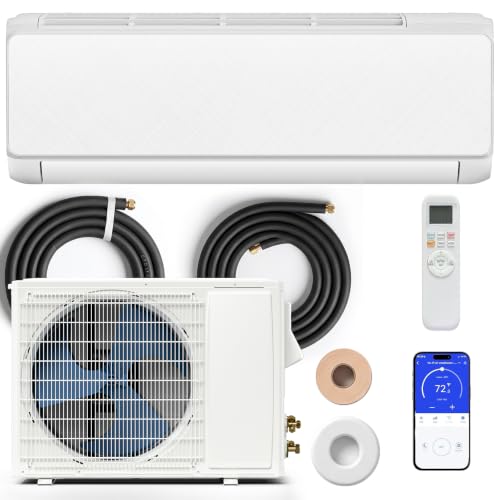
For most readers, a 12,000 BTU 115V mini split is the best way to heat and cool a garage because it gives year-round temperature control, quieter operation, and enough coverage for many insulated garages up to 750 square feet. A portable heater makes more sense for spot heat or occasional use.
The essentials
For most insulated garages, a mini split is the cleanest year-round answer because it both heats and cools without eating floor space.
A 1,500 W portable heater is for spot heat; a larger shop that needs real electric heat usually wants a dedicated 240 V circuit.
Cooling gets easier when you cut solar gain first, especially through west-facing glass and thin garage doors.
Do not extend your home’s HVAC into the garage, and leave mini split installation and new 240 V wiring to a licensed pro.
A plug-in heater tops out at 1,500 W, about 12.5 A on a standard 120 V outlet. That matters because it will warm a work zone, but it usually won’t make a leaky two-car garage feel like a finished room.
The old page had the right bones: insulation first, mini-splits for full-time comfort, and a warning not to tie the garage into house HVAC. The rewrite should keep those parts, drop the unsupported percentages, price claims, and made-up expert quote, and replace them with faster buying advice built around real product specs.
Best for Year-round control in insulated garages up to 750 sq. ft.
The 12,000 BTU heat pump cools and heats spaces up to 750 square feet, making it the strongest fit for a garage you use throughout the year. Inverter operation, 22 SEER2 efficiency, five modes, and app or remote control give you steadier temperature control than a plug-in heater. Sleep mode can run as low as 25dB, so it suits a garage office or workshop where fan noise gets old.
Coverage Up to 750 sq. ft.Capacity 12,000 BTUElectrical 115VEfficiency 22 SEER2Operating range 60°F to 90°F
Why it made the cut
Cools and heats up to 750 sq. ft.
22 SEER2 inverter operation
25dB sleep mode with app and remote control
Includes a pre-charged condenser
Good to know
A mini split needs indoor and outdoor units
The product data does not specify a certification
Skip it if Skip it if you only need occasional heat at one workbench or don’t want a wall-mounted system.
Best for Smaller garages needing heating, cooling, and dehumidification
Seven modes include cool, heat, dry, fan, auto, sleep, and ECO, so this unit handles more than a hot-weather garage. Its inverter adjusts compressor speed, while the 19 SEER2 rating and 42dB low setting suit regular use in a smaller space. Professional installation is required, and the package includes the indoor unit, outdoor unit, remote, and installation kit.
Best for Large, cold workshops that need powerful electric heat
The DR-988 puts out 5,600 watts and uses a fan to move heat through a shop faster than a small portable heater. Its thermostat adjusts from 37°F to 113°F, and the fan can run continuously or in AUTO mode. Choose it for serious heating only: it doesn’t cool the garage, and the dedicated NEMA 6-30R 250V 30 Amp outlet is a substantial electrical requirement.
Heat output 5,600WThermostat 37°F to 113°FPlug NEMA 6-30POutlet required NEMA 6-30R 250V 30 AmpCord length 6 feet
Why it made the cut
5,600W heating element
37°F to 113°F adjustable thermostat
Floor, wall, or ceiling mounting
UL and C-UL listed with auto overheat cut-off
Good to know
Heat only; no cooling function
Requires a dedicated NEMA 6-30R 250V 30 Amp outlet
Uses a NEMA 6-30P plug
Skip it if Skip it if your garage lacks the required dedicated outlet or you need summer cooling.
Best for Quiet, targeted warmth at a workbench or garage door
The carbon infrared element warms people and objects directly, which makes this a better match for spot heat than trying to warm the entire garage air volume. You can select 900W, 1,200W, or 1,500W, use the remote timer for up to 12 hours, and mount it overhead or on a wall to clear floor space. Tip-over and over-temperature protection add useful safeguards for a portable unit.
Power settings 900W, 1,200W, or 1,500WTimer Up to 12 hoursMounting Freestanding, wall, or ceilingHousing Rust-resistant aluminumCertification ETL Certified
Why it made the cut
900W, 1,200W, and 1,500W settings
Freestanding, wall, or ceiling mounting
12-hour programmable timer
ETL certified with tip-over protection
Good to know
Doesn’t provide whole-garage cooling
The product data does not state coverage in square feet
A 1,500W setting draws substantial power from a standard outlet
Skip it if Skip it if you need even temperature across the whole garage instead of warmth near one occupied area.
Best for Reducing sun and glare through smooth garage windows
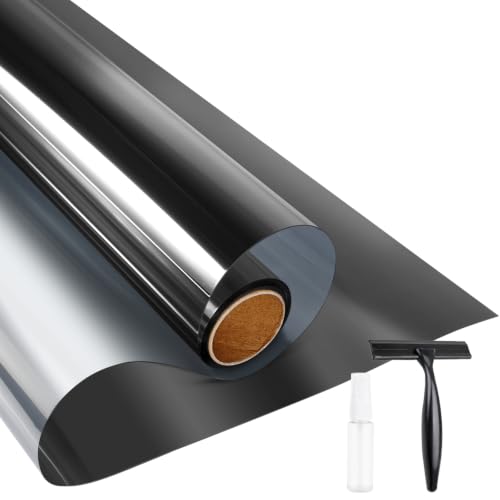
This black static-cling film blocks 90% of UV rays and 82% of infrared rays, helping limit solar heat and glare before they reach the garage. Its 12% VLT still allows some visible light, and installation uses water rather than adhesive. Use it as a heat-reduction step for sunny windows, not as a replacement for active heating or cooling.
Size 35.4 in × 8.2 ftUV blocking 90%Infrared blocking 82%Visible light transmission 12%Installation Static cling; spray a lot of water
Why it made the cut
Blocks 90% of UV rays
Blocks 82% of infrared rays
12% VLT reduces glare
Non-glue static-cling installation
Good to know
Daytime privacy protection only
Not for double-paned, frosted, cut, or curved glass
Doesn’t heat or cool the garage by itself
Skip it if Skip it if your garage has no smooth glass or needs temperature control after sunset.
For most garages that need winter heat and summer cooling, the best setup is an insulated, air-sealed garage with a properly sized mini split heat pump. A 12,000 BTU 115V unit such as the Electactic 12000 BTU Wifi Mini Split Air Conditioner & Heat can cover many insulated garages, while a portable heater is better when you only need warmth at a workbench or on occasional cold days.
Start with the building, not the equipment: seal gaps around the garage door, weatherstrip the side door, and insulate the ceiling and walls before buying more capacity. Heat or cool leaks away quickly through an unsealed garage, so a larger machine mostly works harder and costs more. Extending your home’s central HVAC into the garage is a poor shortcut because garage fumes and combustion gases can enter shared ductwork, and fire-separation and local-code requirements may prohibit the arrangement.
Your situation
Best fit
Why
Heating and cooling all year
Mini split heat pump
One system controls temperature in both seasons and avoids tying the garage to the home’s ductwork.
Heating a larger shop only
240 V electric heater
A fixed heater such as the DR. INFRARED HEATER DR-988 240V Electric Industrial Garage suits a dedicated heating circuit and regular shop use.
Short jobs or one work area
Portable infrared heater
Radiant heat warms people and nearby surfaces instead of trying to heat the entire garage.
Reducing summer sun through a window
Privacy window film
The KESPEN Window Privacy Film One Way Static Cling Tint can reduce glare and solar gain, but it isn’t an air conditioner.
Choose based on the space you need to condition and how often you’ll use it.
Portable heaters and fans feel useful for different reasons: a heater adds heat, while a fan only moves air and may make you feel cooler through evaporation. A mini split is the option that actively changes the garage temperature in both seasons. For spot heat, check that the portable model is approved for the garage and use a wall outlet directly—never an extension cord or power strip.
In short
Insulate and air-seal first, then choose a mini split for year-round garage heating and cooling. Pick a 240 V heater for heating-only shop use, or portable infrared heat when warming one person matters more than conditioning the whole room.
A niche exception
Radiant floor heat can work well during new construction or slab work, but it requires planning before the floor is finished and isn’t a fast buy-now answer for last year’s cold garage. For a deeper buying comparison, see the best way to heat a garage.
Garage Heating And Cooling Options That Fit Your Space
Garage heating and cooling options should be compared by insulation first, electrical supply second, and controls third. An attached garage with insulated walls, ceiling, and door has a very different load from a detached brick garage with an exposed ceiling and a drafty door, so the same heater can feel adequate in one and hopeless in the other.
Option
Best fit
What to check before buying
120 V plug-in heater
Short bursts at a bench, workout area, or small insulated garage
1,500 W limit, wall outlet, tip-over and overheat protection
115 V mini split
Regular heating and cooling in an insulated garage
Available circuit, indoor and outdoor unit placement, professional installation
240 V dedicated heater
Fast heat in a larger or poorly insulated garage
5,600 W load, NEMA 6-30R 250 V 30 A outlet, dedicated circuit
Window film
Glare and some solar heat through suitable glass
It reduces solar gain; it doesn’t cool the garage air
The practical systems to heat and cool garages fall into different electrical and installation categories.
12.5 A
What a 1,500 W heater draws at 120 V
That leaves little spare capacity on a standard 15 A circuit. A plug-in heater goes straight into a wall outlet, never a power strip or extension cord.
Power is the next fork in the road. A 120 V portable heater is easy to move but usually supplies spot heat, while a 115 V mini split such as the COSTWAY 9000BTU Mini Split Air Conditioner& Heater or Electactic 12000 BTU Wifi Mini Split Air Conditioner & Heat can provide fixed heating and cooling without occupying the floor. The DR. INFRARED HEATER DR-988 240V Electric Industrial Garage is a different class: its 5,600 W output needs a NEMA 6-30R 250 V 30 A outlet, so buying the heater before checking the panel and wiring can turn into an expensive metal wall decoration.
Inverter mini splits suit people who spend hours in the garage because the compressor can adjust output instead of repeatedly starting and stopping at full capacity. A portable infrared heater, including the DR. INFRARED HEATER Portable Infrared Indoor and Outdoor Sp…, makes more sense when you need warmth for a short session at one work area and don’t need summer cooling.
Good fit
Mini split for regular year-round use
120 V spot heater for occasional work
240 V heater where the dedicated circuit already exists
Poor fit
Plug-in heaters can’t heat every corner evenly
Mini splits require fixed installation
High-output 240 V heaters can require new wiring
Controls and noise can decide between otherwise similar systems. Check for an app, handheld remote, timer, thermostat range, and a published quiet mode; those details matter when you preheat the garage before work or leave a unit maintaining a set temperature. A window privacy film such as KESPEN Window Privacy Film One Way Static Cling Tint may cut glare and some sunlight through suitable glass, but it won’t replace air conditioning.
Before checkout
Look for a UL, ETL, or CSA listing on an electric heater; check AHRI information where it applies to a heat pump or air conditioner.
Keep at least 3 feet of clearance around a plug-in heater and connect it directly to the wall outlet.
Have a licensed electrician install a new 240 V circuit, where required.
Have a qualified HVAC professional install a mini split; refrigerant work and line-set connections aren’t a casual weekend plug-in job.
Check the circuit first
Don’t use a 5,600 W heater on a 120 V outlet or an improvised adapter. Mini split installation and new 240 V circuits are licensed-trade jobs in most places, and the garage panel may not have the capacity for either one.
How Big A Heater Or Mini Split For A Garage
For a 400 to 650 sq. ft. garage, a 9,000 or 12,000 BTU mini split is the sensible full-time class; a 1,500 W portable heater is mainly for one work area. A 500 sq. ft. shop generally points to the 12,000 BTU class, while a 20×20 garage needs more than a small plug-in heater if you want the whole room comfortable.
A 10×10 workspace inside a detached garage can often be treated like a small-room problem: use a 900 or 1,500 W electric heater for spot heat, or a small mini split if you also need regular cooling. For a 650 sq. ft. garage, the supplied product range makes the 12,000 BTU mini split the safer starting bin. A 30×40 garage is 1,200 sq. ft.; that is beyond what most people should size from a web page, especially with tall ceilings, weak insulation, large windows, strong sun load, or detached construction.
Garage situation
Starting class
What that means
10×10 workspace nook
900–1,500 W electric heat
Spot heat for the person and bench; cooling needs separate planning.
400 sq. ft. or 20×20 garage
9,000–12,000 BTU mini split
Choose the smaller class only for a well-insulated, modest-load space.
500 sq. ft. garage or shop
12,000 BTU mini split
A practical full-time heating and cooling starting point.
650–750 sq. ft. insulated garage
12,000 BTU mini split
The supplied product data places this class up to 750 sq. ft.
Large heating-only garage
5,600 W, 240 V heater
Heat only, with a suitable 240 V circuit; not a cooling system.
30×40 garage
Professional load calculation
The web-page shortcut ends here; ceiling height and construction can change the answer.
These are conservative product-class bins, not a replacement for a room-by-room load calculation.
Worked Example: Insulated Two-Car Garage
Say your attached garage is 20×25 feet, or 500 sq. ft., with ordinary ceiling height and decent insulation. Start by comparing 12,000 BTU mini splits such as the COSTWAY 9000BTU Mini Split Air Conditioner& Heater at its smaller class or the Electactic 12000 BTU Wifi Mini Split Air Conditioner & Heat at the 12,000 BTU class; for year-round use, the 12,000 BTU option gives you the more appropriate product bin from the supplied data. If you only need heat at one bench, a 1,500 W portable infrared heater can avoid conditioning the whole garage.
Garage20 × 25 ft = 500 sq. ft.
Full-room starting class12,000 BTU mini split
Bench-only heat1,500 W portable heater
Worked Example: Small Detached Workspace
Say the heated nook is 10×10 feet inside a detached garage. A 900 or 1,500 W electric heater can warm that occupied area, provided the heater is plugged directly into a wall outlet and operated with the clearance and safety rules in its manual. If the entire detached building needs summer cooling and winter heat, move up to a mini split rather than trying to make a portable heater do two jobs it was never assigned.
Workspace10 × 10 ft = 100 sq. ft.
Spot-heat class900–1,500 W
Whole-building optionMini split sized to the building load
Known wattage lets you calculate electric resistance heat; a mini split’s BTU label or breaker size doesn’t tell you its hourly cost. Inverter equipment ramps its compressor up and down, so actual draw changes with outdoor temperature, insulation, setpoint, and how hard the garage is working.
Heater
Watts
Per hour
Per day (8 h)
Per month (30 days)
900 W electric heater
900 W
15¢
$1.22
$36.72
1,500 W portable heater
1,500 W
26¢
$2.04
$61.20
5,600 W 240 V heater
5,600 W
95¢
$7.62
$228.48
Calculated at 17¢ per kWh. Assumes 8 hours of operation daily, 30 days, and electricity at $0.17 per kWh. Real thermostats cycle, so actual resistance-heater cost may be lower than running full power for all eight hours.
Know When To Stop Guessing
For a 30×40 garage, ask for a professional heat-loss and cooling-load calculation before buying equipment. A 5,600 W heater also needs the correct 240 V circuit and installation; don’t treat a large wattage number as permission to use an adapter, extension cord, or improvised wiring.
How To Cool A Hot Garage Without Buying Too Much AC
The best way to cool a garage is to block sun and stored heat before buying more air-conditioning capacity. A west-facing garage door, sunlit glass, a hot concrete slab, and a car that came home warm can keep releasing heat long after sunset, so a system that seems slightly undersized may be fighting the building rather than lacking a few BTUs.
For a hot garage, start with shade, air sealing, and pre-cooling, then let the mini split handle the remaining load. That approach also suits a garage workshop, where direct sun on the door and windows can make the work area uncomfortable even when the room thermostat looks reasonable.
Side windows and smooth, single-pane door glass are good places for the KESPEN Window Privacy Film One Way Static Cling Tint when glare and direct sun are part of the problem. The film offers daytime privacy only, and its product limits exclude double-paned, frosted, cut, and curved glass; check the glass before ordering, because cling film can’t negotiate with a pane it wasn’t made for.
Myth
A fan will cool the garage.
Fact
A fan cools your skin by moving air, but it doesn’t lower the room temperature once the air is already hot. Use it to move cooled air toward a workbench or break up stagnant air, not as a substitute for cooling capacity.
Humidity changes how the garage feels. In Florida and other muggy climates, a mini split’s dry mode, if provided on that model, can remove moisture while air movement keeps the space usable before the thermostat reaches a low setting; keep the condensate drain routed as the installation manual requires.
Cool Before The Heat Peaks
Close the garage door and shade sunny glass before the afternoon load arrives, then pre-cool the room ahead of the time you plan to work. Brick walls, thick slabs, and heavily insulated garages hold heat and release it slowly, so waiting until sunset to start cooling gives that stored heat a head start.
For A 900-Square-Foot Garage
An insulated 900-square-foot garage needs a sizing check based on ceiling height, windows, door exposure, air leakage, and climate—not a blind jump to the largest unit. In a brick garage or a sunny Florida garage, reducing solar gain and starting the cooling cycle early may do more than adding another portable fan.
The COSTWAY 9000BTU Mini Split Air Conditioner& Heater and Electactic 12000 BTU Wifi Mini Split Air Conditioner & Heat can make sense only after those conditions are measured against the room and the unit’s installation requirements. A portable unit such as the DR. INFRARED HEATER Portable Infrared Indoor and Outdoor Sp… provides spot heat, not summer cooling, so it won’t solve a hot garage.
Before You Buy, Plug In, Or Call An Installer
Before choosing a heating and cooling system for a garage, write down the room, the power, and the installation path; those details prevent most returns and wiring surprises. DIY garage heating and cooling systems can be simple for a listed plug-in heater, but a mini split is an installation project rather than a weekend appliance swap.
Measure Before Shopping
Square footage and ceiling height
Insulation in the walls, ceiling, and garage door
Attached or detached construction
Largest window and garage-door sun exposure
Existing outlet type and breaker size
Wall space for the indoor head unit
Outdoor-unit location, including snow and splash clearance
Line-set route and condensate drain route
Any door or lift track that could block airflow
1
Check The Electrical Supply
Match the product’s voltage and amperage requirements to the outlet and breaker already installed. Call a licensed electrician for a new 240 V circuit; don’t improvise with an adapter, extension cord, or power strip.
2
Check The Mounting Route
Confirm that the indoor head has clear wall space, the line set can reach the outdoor unit, and condensate can drain as required. The outdoor unit also needs protection from snow buildup and splash without being boxed in.
3
Pick The Right DIY Boundary
A level-floor portable electric heater can be a reasonable occasional option. An old HVAC motor isn’t a garage cooling plan, and ground-temperature or in-floor systems are specialty projects that need design, excavation, drainage, and controls—not a quick retrofit.
Portable Heater Rules
Keep 3 feet of clearance, set the heater on a level floor, plug it directly into a wall outlet, and never use an extension cord or power strip. Don’t leave it running while you sleep or leave the house unless the manufacturer says that model is designed for it. Fuel-burning garage heaters add carbon-monoxide risk: use only an indoor-rated model, provide the ventilation the manual requires, and keep a working CO alarm nearby.
A device such as Coolizi should heat a garage in winter only if its manual specifically gives it that indoor heating use, required room conditions, and safety instructions. Likewise, using an old HVAC motor to cool a garage won’t provide a controlled refrigeration cycle, and a ground-temperature system belongs with a qualified designer rather than a quick online workaround.
More Questions, Answered
What’s the best way to heat and cool a 10 x 10 room in a detached garage?
A small mini split is the best year-round choice if the room is insulated and you want steady heating and cooling. For occasional work, a 1,500 W electric heater can warm one area, but it won’t cool the room and must plug directly into a wall outlet with 3 feet of clearance.
How do you cool down an extremely hot garage?
Start with shade, weatherstripping, insulated doors, and a sealed ceiling before adding more air-conditioning capacity. Ventilation can remove some trapped heat when outdoor air is cooler, but opening the garage during a hot afternoon may add heat instead; a properly sized mini split gives controlled cooling and removes some indoor moisture.
Can a mini split heat a garage in winter months?
Yes, a heat-pump mini split can heat a garage in winter if the model is rated for the outdoor temperatures in your area. Insulation and air sealing determine how well it holds that heat, while the outdoor unit still needs clear airflow and a suitable mounting location; check the installation manual for low-temperature limits and required protection.
Can ground temperature or in-floor piping be a practical way to heat and cool a garage?
Ground-source systems can heat and cool a garage, but the buried loop, indoor equipment, excavation, and installation cost usually make them practical only during new construction or a major remodel. In-floor hydronic piping is mainly a heating method; cooling the slab can create condensation unless the system controls indoor humidity carefully, so it isn’t a simple air-conditioning substitute.
I am a mechanical engineer and love doing research on different home and outdoor heating options. When I am not working, I love spending time with my family and friends. I also enjoy blogging about my findings and helping others to find the best heating options for their needs.