The best pump for flushing a tankless water heater for most readers is a 1/6 HP kit with about 1,100 to 1,920 GPH, thermal overload protection, and hose connections that fit standard 3/4-inch GHT valves. That gives you enough flow to circulate descaler without overbuying a pump you only use once or twice a year.
The essentials
Match the pump to the heater, not to the biggest number on the box; 1/6 HP is the practical middle ground for most DIY flush kits.
Look for thermal overload protection and corrosion-resistant parts if you want the kit to survive repeated use with vinegar or citric acid.
Stainless steel hoses are worth paying for because they resist kinking and last longer than basic PVC hoses.
A kit with 3/4-inch GHT connections is easier to hook up to standard isolation valves.
If your water is full of scale or the heater is hard to reach, professional service can be cheaper than buying a kit you’ll barely use.
The common mistake is buying any cheap utility pump and assuming flow alone will do the job. A weak pump, leaky hose, or acidic descaler that eats the wrong fittings can turn a 30-minute flush into a puddle and a parts run.
Most readers need a kit that includes the pump, hoses, bucket, and the right adapters. Bare pumps can work, but only if you already have a compatible bucket, hoses, and valves on hand.
Best Pumps To Flush A Tankless Water Heater
#1Best Complete Kit
6699 Tankless Flushing Kit
Best for DIY flushing when you want the pump, hoses and bucket together
The 1/6 HP pump moves up to 1,100 GPH and includes thermal overload protection. Two 6-foot hoses, adapters, washers and a 3-gallon pail make this the most complete option for a typical DIY flush.
Pump power 1/6 HPMaximum flow 1,100 GPHMaximum lift 16.5 ftHoses Two 6 ft x 1/2-inch PVC hosesMaximum fluid temperature 95°F
Why it made the cut
Includes pump, two hoses and 3-gallon pail
Thermal overload protection
Adapters and washers included
Good to know
Pump’s maximum fluid temperature is 95°F
Hoses are 1/2-inch PVC
Skip it if Skip it if you need a pump that handles hotter fluid than 95°F or want to choose your own hose setup.
Best for DIYers who already have a bucket and compatible hose
This compact 1/6 HP submersible pump includes adapters for 3/4-inch garden hoses and 1-inch PVC lay-flat hoses. Thermal overload protection is included, but the kit doesn’t supply the bucket or hoses, so it suits you best if those are already on hand.
Pump power 1/6 HPMaximum flow 1,100 GPHGarden hose adapter 3/4-inch GHTPVC hose adapter 1 inchCord length 10 ft
Why it made the cut
Thermal overload protection
Includes 3/4-inch GHT and 1-inch hose adapters
Screened inlet keeps large solids out
Good to know
Pump only; hoses and bucket aren’t included
Not suitable for dirty water
Skip it if Skip it if you want a ready-to-connect flushing kit with hoses and a bucket included.
Best for Readers comparing a tankless water heater, not a flushing pump
This is a condensing tankless water heater, not a pump or flushing kit. Its Quick Flush feature may interest you if you’re comparing heaters, but it won’t circulate descaler through an existing unit.
Maximum flow 11.1 GPMInput 199k BTUEnergy factor UEF .98Fuel Natural gas or propaneWi-Fi control Controlr module not included
Why it made the cut
Quick Flush feature
Supports natural gas or propane
Indoor or outdoor installation
Good to know
Not a flushing pump or kit
Outdoor installation requires the RX-OVC vent cap
Skip it if Skip it if you came here to buy a pump for flushing your current tankless heater.
Best for Readers shopping for supplemental electric heat, not a pump
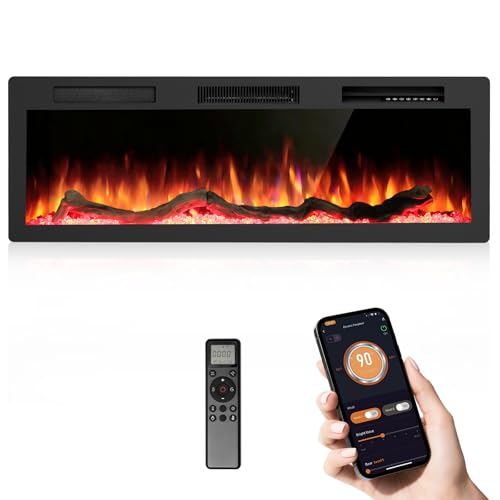
This is a wall-mounted or recessed electric fireplace, so it has no pump, flow rate or hose connections for a tankless flush. Its two heat settings and adjustable flame features are relevant only if you’re shopping for room heat and fireplace ambience.
Heating modes 750W and 1,500WDimensions 50 in L x 17.32 in H x 5.71 in WTemperature setting range 59–95°FListed heating coverage Up to 400 square feet
Why it made the cut
750W and 1,500W heating modes
Wall-mounted or recessed installation
Remote and touch controls
Good to know
Not a pump or flushing kit
Requires a suitable fireplace opening or wall installation
Skip it if Skip it if you need equipment to circulate descaler through a water heater.
Best for Readers looking for portable room heat, not water-heater service gear
This portable ceramic space heater has no pump or hose connections, so it can’t flush a tankless water heater. Its 1,500W setting, thermostat and tip-over shutoff are room-heating features, not flushing specs.
Power 1,500WListed coverage Up to 200 square feetTimer 24 hoursNoise level 35dBTip-over shutoff 45°
Why it made the cut
1,500W heating setting
Thermostat and 24-hour timer
45° tip-over shutoff and overheat protection
Good to know
Not a pump or flushing kit
No flow-rate, lift or hose data
Skip it if Skip it if your search is for a tankless water-heater flushing pump.
For tankless water heater flushing, choose a pump that can circulate descaler through the heat exchanger and connect to your isolation valves; for most homes, 1/6 HP is the practical middle ground. Flow rate and lift tell you more about the job it can do than horsepower alone, once the pump has enough pressure to keep solution moving.
A 1/8 HP pump can work in a compact kit with short hoses. Choose 1/4 HP if you need more lift or want a heavier-duty pump body; that extra horsepower alone doesn’t guarantee faster flushing. For context, the best tankless water heaters 2025 and the best tankless water heater depend on the home’s hot-water needs, not the flush pump. The best affordable tankless water heater or best budget tankless water heater is a separate choice, and the most reliable tankless water heater can’t be identified from pump specs. The Rinnai RX199iN is one heater in this guide; its presence isn’t a reliability ranking.
Pump pick
HP
Flow rate
Maximum lift
Included accessories noted
6699 flushing kit
1/6
About 1,100 GPH
Not specified
Two hoses
Superior Pump 91660
1/6
Up to 1,920 GPH
Not specified
Stainless steel hoses
FLUENTPOWER pump
1/4
About 1,900 GPH
Up to 23 ft
Not specified
Kelaro kit
1/8
Not specified
Not specified
Vinegar required; not included
Compare the stated specs; a blank means the available product details don’t specify it.
Check maximum lift against the height from your bucket to the heater, and account for hose length: long or raised hose runs add resistance and can slow circulation. Many kits use standard 3/4-inch GHT hose connections, which fit common garden-hose threads on isolation valves; confirm the fittings before buying rather than relying on a generic compatibility claim.
1,920 GPH
Stated maximum flow for the Superior Pump 91660
That figure is a pump rating, not a promise of flow through your installed heater. Hose length, lift and fittings affect the flow you get during a flush.
Durability details matter because the pump handles descaler, not clean tap water. Stainless steel hoses are more kink-resistant than standard PVC hoses, and corrosion resistance helps the pump tolerate acidic solution. Look for thermal overload protection, which can shut the motor down if it overheats during a longer cleaning session; don’t treat that safeguard as permission to ignore the manual.
In short
For most homes, start with a 1/6 HP kit and verify its flow, lift and 3/4-inch GHT fittings. Step down to 1/8 HP for a compact setup with short hoses; step up to 1/4 HP when lift or a heavier-duty pump body matters.
If you’re comparing pump sizes in more detail, use this guide to best pump size for flushing tankless water heaters. The numbers that settle the choice are the pump’s stated flow and lift, the hose run you’ll use, and whether the fittings match your heater’s isolation valves.
From HeaterGuides · our own guidePopping or rumbling? Page 6 is the step-by-step flush; page 12 explains every noise.Water Heater Owner's ToolkitFix the common faults yourself, keep it running for years, and know when a repair is money wasted.No-hot-water flowcharts, gas and electricFlush, anode, relief valve and descaling stepsRepair-or-replace calculator (Excel)$14.99$9.99Get it for $9.99See what's inside and watch the 2-minute video →18-page printable PDF + Excel calculator · instant download · 30-day refund
Submersible Or Utility Pump For Flushing
A submersible pump is usually the simpler choice for flushing: it sits in the bucket of descaler and pushes solution through the heater. A utility pump may suit you better if you want to reuse it for drainage jobs. Either can work when its flow, lift height, and materials suit your heater and hose run.
The main difference between 1/6 HP and 1/4 HP is capacity, not a guarantee of a better flush. A 1/6 HP pump moving about 1,100 GPH can be enough for a standard flush; around 1,900 GPH from a 1/4 HP pump gives more margin when hoses are longer or the heater’s flow path is more demanding. Match the pump to the job, not a favorite brand.
A Short Hose Run
For a typical flush with a short hose run, a 1/6 HP pump rated around 1,100 GPH can circulate descaler through the heater. Stretch the hoses or add more lift, and a pump rated near 1,900 GPH gives extra capacity to work with; check the pump’s maximum lift height against your setup.
Standard flush1/6 HP, about 1,100 GPH
Longer hose run1/4 HP, about 1,900 GPH
For lift height, check the pump’s maximum lift specification and compare it with the vertical distance in your setup; the FLUENTPOWER 1/4 HP model, for example, lists a maximum lift of up to 23 feet. Flow falls as a pump works against lift and hose resistance, so a high GPH rating alone doesn’t settle the choice. Most homeowners don’t need special skills, but you do need to follow the kit and heater instructions carefully.
Submersible Pump
Simple setup: place the pump in the bucket with the descaler.
A natural fit for a dedicated flushing kit.
Utility Pump
Less useful if you also want a pump for other drainage jobs.
Myth
A higher horsepower pump always cleans better.
Fact
More horsepower can provide extra flow margin on a longer hose run, but it doesn’t automatically improve a standard flush. Check the heater’s needs, hose length, and maximum lift height.
Noise depends on the whole setup, not just the motor: lower-flow pumps often sound less aggressive, while a rattling hose or a pump running dry can be much louder. Keep the pump submerged as directed and secure the hoses so they don’t knock against the bucket.
Choose The Right Descaler And Capture Debris
Regular vinegar can work for light scale, but a citric acid descaler is usually the cleaner choice for predictable results and less odor. Flushing removes mineral buildup from the heat exchanger, where scale can restrict water flow and reduce performance.
Hard-water homes usually need tankless water heater flushing once a year; in soft-water areas, flush less often unless your manufacturer specifies an interval. Check your manual before choosing a solution, since it may name an approved descaler or cleaning method.
A tankless water heater flush kit makes the job easier by circulating descaler and collecting the used solution, but the liquid still needs careful handling. If you’re comparing kits, see this tankless water heater flushing kit buying guide; for the solution itself, compare options in this citric acid descaler guide.
Keep Used Solution Out Of The Yard
Catch the used solution in a bucket, then inspect it for flakes and grit before disposal. Don’t dump sludge into a drain where it could clog plumbing, or onto grass and landscaping where it could cause damage. Follow the descaler label and local disposal guidance, especially if you have a septic system or sensitive landscaping.
Check The Label
A non-toxic descaler is a useful choice when you’re collecting and disposing of the waste carefully, particularly around a septic system or sensitive plants. Non-toxic doesn’t mean you should pour it anywhere; follow the product label and keep the solution out of storm drains.
Before You Choose A Descaler
Confirm the solution is compatible with your heater and the pump materials.
Choose vinegar for light scale if your manual permits it; choose citric acid descaler for a more predictable, lower-odor flush.
Set out a bucket large enough to catch the used solution and any loosened debris.
Plan disposal before you start, and don’t send sludge into a drain or onto the lawn.
Stop Leaks Before You Start The Pump
Prevent leaks during tankless water heater flushing by checking every hose connection, opening the isolation valves fully, and testing the pump with clean water before adding descaler. Tankless units are commonly installed in garages, utility rooms, basements, or outdoors; an indoor unit can be enclosed only if its installation instructions and local code allow it, with required clearances and service access left open.
1
Make the heater safe
Follow the heater manual’s flushing procedure, including whether to shut off power before you start. Keep the outlet and surrounding floor dry, and never plug the pump into a wet cord. If water reaches electrical parts, stop and dry the area before continuing.
2
Inspect the connections
Check the hose washers first: a missing, flattened, or crooked washer can leak as soon as the pump starts. Look for cracked garden-hose-thread (GHT) fittings, then confirm the isolation valves are fully open; valves left partly closed after winterizing can restrict flow and make the setup harder to diagnose.
3
Test with clean water
Fill the bucket with clean water and run the pump briefly before mixing in descaler. Watch the hose ends, pump connections, and isolation valves. A drip now is easy to fix; a drip in acidic solution makes a mess and wastes descaler.
4
Flush into a bucket
Keep the pump inlet submerged and send the return hose into the bucket. If scale or other debris appears, stop and screen it out rather than letting chunks recirculate through the pump inlet. Follow the heater and descaler instructions for the full flushing procedure and disposal.
Keep Water Away From Electricity
Never handle a wet plug or cord. Disconnect power only from a dry location, and stop the job if water is leaking toward an outlet, cord, or the heater’s electrical components.
Before Adding Descaler
Hose washers sit flat and every GHT fitting is intact.
Isolation valves are fully open, and the hoses reach them without strain.
The clean-water test shows no leaks.
The outlet, pump plug, and cord are dry.
The bucket can catch the return flow, with room to screen out debris.
An enclosed heater has enough clear service access for the hoses and valves.
A decorative cabinet or closet doesn’t make a tankless heater serviceable by itself: if you can’t reach the isolation valves or connect the kit, you can’t flush the unit safely. Leave the manufacturer’s required clearances and access in place, and check the installation instructions and local code before enclosing a heater.
DIY Kit Or Professional Service
A DIY flush kit makes sense if your tankless water heater has accessible isolation valves, standard hose connections, and no warning signs; otherwise, hire a qualified technician. Tankless water heater cost depends on the unit, fuel, venting, and plumbing changes, while tankless water heater installation is generally handled by a licensed plumber, with licensed electrical or gas work added as required locally. For ongoing maintenance, compare the kit’s purchase cost with the service-call cost in your area.
The 6699 Tankless Water Heater Flushing Kit is a practical pick if you expect to flush the heater yourself and its connections match your valves. A kit may pay off after a few flushes; if you only need one service every couple of years, paying a technician can cost less. The pump is only part of the job; your time, cleanup, and disposal matter too.
Compare The Real Cost
Say the kit costs K and a technician charges S per visit. If you expect N flushes, DIY is cheaper only when K plus your supplies and cleanup costs less than N × S. Use local quotes and the kit’s current purchase price; don’t count your time as free unless you’re happy to spend it.
DIY totalKit + supplies + cleanup
Service totalVisit cost × number of flushes
You don’t need special trade skills for a basic flush, but you do need to follow the exact procedure for your heater. To flush a Noritz tankless water heater, use the maintenance steps in that model’s manual; the same rule applies to how to flush a Rinnai tankless water heater. Brand-specific valve sequences and descaling instructions can differ, so the manual wins over internet lore.
Choose DIY when the isolation valves are easy to reach, the hoses fit standard 3/4-inch GHT connections, and the fittings show no leaks or corrosion.
Call a pro for heavy scale linked to poor water quality, hard-to-reach venting, an error code, or corrosion at the fittings.
Stop if you notice a gas smell, signs of combustion trouble, or water near electrical components; don’t treat a flush as a repair for those problems.
A technician is also the safer choice if you can’t identify the service valves or the manual calls for steps you can’t perform confidently. Tankless water heater installers are commonly licensed plumbers; check local licensing rules and ask who will handle any gas, venting, or electrical work before booking.
More Questions, Answered
How often should I flush my tankless water heater?
Flush it on the schedule in your heater’s manual; once a year is a sensible starting point for many homes. Hard water, reduced hot-water flow, or a rising temperature swing can justify flushing sooner. Shut off power or gas as directed before connecting the pump.
Can I use regular vinegar instead of specialized descaler?
Yes, plain white vinegar can work for light scale if your heater manual allows it. A citric acid descaler usually gives more predictable cleaning with less odor; never mix descalers or add other chemicals, and rinse the heat exchanger thoroughly afterward.
Is a submersible pump better than a utility pump for flushing?
A submersible pump is usually easier because it sits directly in the bucket and pushes solution through the heater. A utility pump can work just as well when its flow, lift height, hose fittings, and corrosion resistance match the job. The pump design matters less than those specifications.
What flow rate and lift height are optimal for flushing pumps?
For most residential heaters, a pump around 1/6 HP and roughly 1,100 to 1,920 GPH is sufficient. Choose a maximum lift height greater than the vertical distance from the bucket to the heater; the 23-foot rating on some 1/4 HP pumps is useful for a high or awkward setup, but extra lift doesn’t automatically clean better.
Before you go · a welcome giftGet the Water Heater Owner's Toolkit for $4.99Fix the common faults yourself, keep it running for years, and know when a repair is money wasted. Normally $14.99; your welcome price saves $10.00. We'll email your link right now.or buy it now for $9.99 without the gift →One email with your link now. We never share your address.




 Water Heater Owner's ToolkitFix the common faults yourself, keep it running for years, and know when a repair is money wasted.No-hot-water flowcharts, gas and electricFlush, anode, relief valve and descaling stepsRepair-or-replace calculator (Excel)


