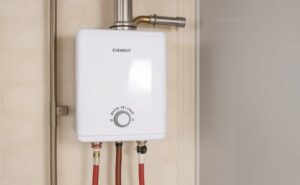
The optimal temperature for a tankless water heater is usually 120°F for an ordinary home, with 125°F to 130°F used when you want a little more margin for long runs or lukewarm taps. A tankless water heater is a unit that heats water only while it flows, so the setpoint changes both comfort and how hard the heater has to work.
A 120°F setting is the practical middle ground because it gives usable shower and sink water without pushing scald risk as high as 140°F. A 10°F change sounds small, but on a tankless unit it can mean more power draw, slower recovery at high flow, and a hotter pipe run from the heater to the tap.
The real answer depends on what you want out of the water: safer family use, a hotter kitchen sink, or enough outlet temperature to cover a long pipe run in winter. The number to remember is 120°F, because that is warm enough for most fixtures and low enough to avoid turning every hand wash into a timing exercise.
The essentials
Set most tankless water heaters to 120°F unless you have a specific reason to go higher.
Raise the setpoint only if distant fixtures feel lukewarm or the kitchen needs hotter water.
Keep 140°F away from ordinary family use unless the fixture, code, and scald protection all line up.
Higher temperature usually means higher power use, especially when incoming water is cold.
If you cannot get comfortable water at 120°F, the problem may be flow rate, pipe length, or heater size, not just the setpoint.
Optimal Temperature To Keep Tankless Water Heater Instant Heater
The optimal temperature to keep a tankless water heater or instant heater is usually 120°F for an ordinary home. The optimal temperature for a water heater—and the optimal hot water heater temperature for most taps—is 125°F to 130°F when distant fixtures feel slightly cool.
A tankless unit heats water only while it flows, so changing the setpoint changes outlet temperature, power demand, and comfort immediately. Start at 120°F, then raise it in 5-degree steps if a properly flowing shower or faucet still feels lukewarm.
Setpoint
Comfort
Scald risk
Typical use
120°F
Comfortable for most sinks and showers
Lower, though still hot
Ordinary household setting
125°F
A little hotter at the tap
Higher; use care with children and older adults
Longer pipe runs or slightly cool distant taps
130°F
More margin for heat loss
Higher; test water before bathing
Homes needing hotter delivery at remote fixtures
140°F
Very hot water
High; scald protection is essential
Special situations, not a casual default
Higher settings can improve delivery temperature, but the risk rises with the setpoint.
Check More Than The Display
Many tankless units let you set the temperature directly on the front panel or remote control. That number only tells part of the story: incoming water temperature and flow demand determine how much heating the unit must do before the water reaches the outlet.
Myth
Hotter is always better.
Fact
A hotter setting doesn’t fix a tankless unit that is too small, has restricted flow, or is receiving very cold inlet water. It can increase scald risk and may make shower mixing harder, so use the lowest setting that gives comfortable water.
In short
Choose 120°F first. If a far-away tap loses useful heat, try 125°F or 130°F and check the actual water temperature at that fixture; a tankless water heater temperature adjustment solution can help when the control itself is confusing.
Why The Setpoint Changes Comfort And Cost
For most homes, start at 120°F; colder winter inlet water makes the heater work harder to reach that setting. Raising the setpoint adds more heat to each gallon, so the unit uses more energy while running. The increase is modest per gallon, but it adds up over long showers or several fixtures running together.
A hotter setting can give you more hot water to mix with cold at the tap. But if the heater can’t supply enough hot water at the required flow, the mixer valve may need to reduce the flow, and the hotter setting won’t fix an undersized unit.
What A 10-Degree Increase Adds
Say a shower uses 20 gallons over 10 minutes and you raise the setpoint by 10°F. Heating those gallons by an extra 10°F takes about 1,668 BTU, or 0.49 kWh of heat in an ideal calculation. Actual energy use depends on the heater and its efficiency; this example shows the extra heat required, not a bill estimate.
Water used20 gallons
Setpoint increase10°F
Extra heatAbout 1,668 BTU
Kitchens often need hotter water for washing dishes, while long bathroom pipe runs can mean a cooler wait at the tap. Laundry needs depend on the cycle and appliance. A whole-house heater must cover simultaneous uses; a single-fixture unit only has to serve the fixture it’s connected to. If flow and temperature drop when multiple taps run, check the unit’s capacity before changing its setting.
Check The Furthest Tap
Measure the water at the tap farthest from the heater after it has run long enough to arrive. A hot reading at the unit doesn’t tell you what reaches a distant bathroom.
If the real problem is several fixtures competing for hot water, a higher-capacity unit may help, but its electrical requirements need checking first.
For high whole-house demand
Wintemp 27kW Tankless Water Heater Electric 240V WiFi, ETL Certified
This 27 kW electric unit lists up to 6.5 GPM and flow control, but its maximum current is 113A and it calls for three 40A double-pole breakers. Check your service and installation requirements with a qualified electrician; it won’t solve a capacity problem if your home can’t support it.
For an optimal hot water heater temperature, 120°F suits many homes; consider 130°F when long pipe runs or lukewarm starts are the problem. A 140°F setting is generally for a specific sanitation or system requirement, not everyday comfort.
Situation
Temperature choice
Point-of-use fixture, small children, or older adults at home
Stay near 120°F; lower tap temperatures reduce scald risk.
Long pipe run or persistent lukewarm starts
Consider 130°F, then check the furthest tap.
Specific sanitation or system requirement
Use the required setting; have a thermostatic mixing valve installed for routine household delivery.
Choose the lowest setting that meets the home’s actual needs.
140°F Raises Scald Risk
Scald risk rises above 120°F at the tap, and water set to 140°F can burn quickly. If a system requirement calls for 140°F, use a thermostatic mixing valve to temper water delivered to household fixtures. Have a licensed plumber handle the valve and any related plumbing work.
Homes with point-of-use heaters usually gain little from raising the whole system temperature, because the heater is already close to the fixture. For children and older adults, staying closer to 120°F is generally the safer choice unless a professional identifies a specific need for a higher setting.
Before You Raise The Setting
Confirm the lukewarm water isn’t caused by a long wait, a faulty fixture, or simultaneous demand.
Try 130°F only if a longer run or cool start is the issue, then measure at the furthest tap.
Use 140°F only for a stated sanitation or system requirement, with a thermostatic mixing valve for household delivery.
From HeaterGuides · our own guideTankless? Page 8 is the descaling routine, page 15 checks the size.Water Heater Owner's ToolkitFix the common faults yourself, keep it running for years, and know when a repair is money wasted.No-hot-water flowcharts, gas and electricFlush, anode, relief valve and descaling stepsRepair-or-replace calculator (Excel)$14.99$9.99Get it for $9.99See what's inside and watch the 2-minute video →18-page printable PDF + Excel calculator · instant download · 30-day refund
What Different Heater Types Mean
For a Kruger water heater or any other branded instant heater, start at 120°F and adjust from the tap; the same rule applies because the setting controls outlet temperature rather than keeping a reservoir hot. Tankless units heat water only as it flows, while storage heaters keep a tank hot between uses.
Heater type
Temperature behavior
Standby loss
Best fit
Tankless
Heats on demand; the setpoint controls the water leaving the unit.
Very little while idle.
Homes wanting continuous hot water, provided flow and electrical or gas capacity are adequate.
Storage tank
Stores water at the set temperature and mixes or delivers it through the plumbing.
Yes; the tank reheats water even when no tap is open.
Homes with predictable demand and an existing tank system.
Point-of-use instant
Raises water temperature at one fixture, usually with limited flow.
Little while idle.
A single sink, remote bathroom, or hand-washing station—not automatically a whole house.
The heater type changes what the temperature setting can fix.
A storage tank’s setting affects standby loss because the tank repeatedly replaces heat that escapes through its insulation. A tankless unit has no hot reservoir to maintain, so its temperature setting is mainly about tap comfort, scald protection, and the heat required while water is moving.
Small instant heaters
Check the flow rating before treating a point-of-use heater as a whole-house solution. A compact unit may work well at one sink yet deliver lukewarm water when a shower or second fixture demands more flow.
When A Bigger Unit Beats A Hotter Setting
If a tankless heater can’t hold its set temperature at your real flow rate, raising the setpoint only hides an undersized unit or a service limit; it won’t create more heating capacity. A higher dial can leave you mixing more cold water, and the problem returns when another fixture opens.
Start by measuring the demand that matters: a shower, kitchen tap, and clothes washer running together may require more flow than the heater can raise to your target temperature. Cold winter inlet water makes that load harder still, so sizing must use local inlet temperature and simultaneous flow rather than the advertised maximum alone.
If you’re shopping for a higher-capacity instant heater for several fixtures, choose a model whose flow rating and electrical requirements fit your house.
For several fixtures and 200-amp service
Wintemp 27kW Tankless Water Heater Electric 240V WiFi, ETL Certified
Product 1 is an electric whole-house unit rated for up to 6.5 GPM, with flow control and an 86°F-to-140°F temperature range. It suits a home that can support its electrical demand; it won’t solve inadequate household service or unusually high simultaneous flow.
Product 1 is a 27 kW, 240 V heater with a maximum current of 113 A and a stated recommendation for 200-amp household service. Its installation calls for three 40-amp double-pole breakers, so have a licensed electrician verify the service, panel space, wiring, and local requirements before purchase.
A higher-capacity heater also needs correctly sized water lines, shutoffs, and installation clearances. If the existing unit loses temperature only when several fixtures run, compare its actual flow and inlet temperature with its rating before changing the setpoint; the numbers usually point to the limit.
Capacity has a ceiling
Product 1 uses self-modulating power and can reduce energy use as flow falls, but demand beyond its capacity can still reduce outlet temperature. A 6.5 GPM figure is a maximum, not a promise of 6.5 GPM at every winter inlet temperature.
What To Do Next At Your House
The optimal water heater temperature and optimal hot water heater temperature are usually 120°F, so start by checking what your unit is actually set to rather than guessing from the tap.
1
Check the setpoint
Read the temperature on the tankless heater’s display or controller. Write it down before changing anything.
2
Measure the farthest fixture
Run the hot water at the fixture farthest from the heater until the flow is steady, then measure it in a cup with a thermometer. Compare that number with the display.
3
Name the problem
A low but steady reading points to comfort or pipe-run issues. A reading above 120°F raises scald risk. A temperature that falls during several fixtures running together points to flow, inlet-water, or heater-capacity limits.
4
Adjust in small steps
Change the setpoint by 5°F, run the same farthest fixture again, and wait until the water reaches a steady temperature before judging it. Repeat once if needed; don’t jump straight to 140°F.
A thermostatic mixing valve can make sense where the system needs hotter water upstream but safer delivery at the taps. Have a licensed plumber size and set it; a valve that is missing, misadjusted, or failing can create a scald hazard.
Stop Before Opening The Cover
Call a licensed plumber for gas work, venting changes, or repeated overheat codes. Call a licensed electrician for major wiring or electrical-service limits. A higher setpoint cannot fix a breaker, undersized circuit, blocked vent, or failing sensor.
In short
Check the setting, measure the farthest tap, then adjust by 5°F. If temperature still drops under normal demand, stop adjusting and arrange service.
Your Next Three Checks
Record the current setpoint.
Measure the farthest hot-water fixture.
Note whether the problem is comfort, scald risk, or capacity.
More Questions, Answered
What is the best temperature to set a tankless water heater?
For most homes, set the tankless unit to 120°F, then check the temperature at the fixtures you use. If a far tap runs cooler, diagnose the pipe run or flow before raising the setpoint.
Should I set my tankless water heater to 120°F or 140°F?
Choose 120°F for everyday use; 140°F increases scald risk and usually isn’t needed at the tap. If a specific use requires hotter stored or delivered water, follow the heater manual and use suitable mixing protection.
Why does my tankless water heater feel lukewarm at the far bathroom?
A long or poorly insulated pipe run can lose heat before water reaches that bathroom, and the line may need time to flush out cooled water. Check whether nearby taps reach the set temperature; if they do, the issue is more likely in the distant run than the heater.
Does a higher tankless water heater temperature use more energy?
Usually, yes: the heater must add more heat to each gallon, and hotter water can increase heat loss from pipes. The increase depends on your incoming water temperature, hot-water use and how far you raise the setpoint.
What temperature should a hot water heater be for a family with kids?
A 120°F setting is a sensible starting point for most households with children because hotter water raises the chance of a scald. Teach children not to adjust the controls, and check the temperature at the tap rather than relying only on the display.
Can I raise the temperature on an instant water heater to fix low hot water pressure?
No. Temperature controls heat, not water pressure, so turning it up won’t clear a clogged fixture aerator, restricted valve or plumbing bottleneck. Compare flow at other taps; if the problem affects the whole house, have a plumber check the supply and heater connections.
Before you go · a welcome giftGet the Water Heater Owner's Toolkit for $4.99Fix the common faults yourself, keep it running for years, and know when a repair is money wasted. Normally $14.99; your welcome price saves $10.00. We'll email your link right now.or skip the email and buy it now for $4.99 →One email with your link now. We never share your address.


 Water Heater Owner's ToolkitFix the common faults yourself, keep it running for years, and know when a repair is money wasted.No-hot-water flowcharts, gas and electricFlush, anode, relief valve and descaling stepsRepair-or-replace calculator (Excel)